Support

Algeria

About the Country

Algeria is Africa's largest country, stretching across the north of the continent from the azure waters of the Mediterranean Sea to the vast expanses of the Sahara Desert. It is a land of contrasts, where ancient traditions are interwoven with modernity, and the hospitality of the local people warms the hearts of travellers. The nation's capital, the vibrant city of Algiers, serves as the gateway to this fascinating world.
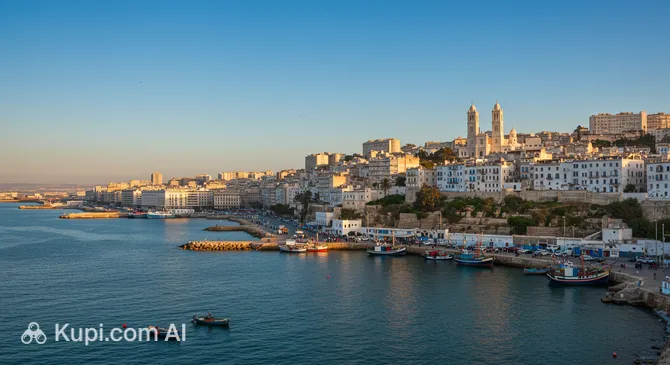
Algiers. Source: Kupi.com Binoculars

Algeria's history is rich and multifaceted, having left behind an impressive legacy. The country's deep-rooted Islamic heritage is evident in its stunning religious architecture. Here, you can discover magnificently preserved Roman ruins, majestic mosques and citadels from the Ottoman period, and elegant French colonial architecture. Cities such as Constantine, famed for its bridges suspended over a deep gorge, preserve the spirit of the ages and invite fascinating exploration.

Algeria's natural diversity is truly captivating, from its picturesque coastline with secluded coves to the majestic Atlas Mountains and the magical Sahara Desert with its life-giving oases. A visit to places such as the Hamma Botanical Garden in the capital offers a chance to enjoy lush greenery and tranquillity. Algeria offers a unique blend of cultural discovery and natural beauty, promising an unforgettable experience for every visitor.
Currency

The national currency of Algeria is the Algerian dinar (DZD). Dinar banknotes are typically adorned with images that reflect the country's rich history and culture, including historical figures, important events, and architectural landmarks. The coins also bear national symbols and images related to Algerian heritage.

It is advisable to exchange foreign currency for dinars at official banks or licensed exchange offices, which can be found at airports, in major cities, and at some hotels. It is strongly recommended to avoid exchanging money with street money changers, as this is illegal and carries the risk of fraud or receiving an unfavourable exchange rate. Credit card use in Algeria is limited; they are primarily accepted in large international hotels, some restaurants, and shops in tourist centres. For daily expenses, especially when visiting markets or smaller towns, it is preferable to carry a sufficient amount of cash in dinars.

Visa Requirements

For UAE citizens and residents travelling to Algeria, a visa is required and must be obtained in advance. Unlike some destinations, visa-free access is not available for UAE passport holders, and options for obtaining a visa on arrival are not standard practice. Therefore, it is essential to plan this aspect of your trip well ahead of time.

To apply, you will need to contact the Embassy of Algeria in Abu Dhabi or the Consulate General in Dubai. In addition to a completed application form, you will need a passport valid for at least six months, a copy of your UAE residence visa and Emirates ID, recent passport-sized photos, and a No Objection Certificate (NOC) from your employer. You may also be asked for proof of return tickets, hotel reservations, and travel insurance. It is crucial to verify the most current visa requirements and the full list of necessary documents on the official website of the Algerian embassy or consulate before you apply, as regulations can change.

We'll tell you if you need a visa

Specify where you are going, or
Your citizenship
Destination

Time Zones

It corresponds to GMT+1 (Central European Time, CET). This simplifies planning your travel between different cities and regions of the country, as the time will be the same everywhere.

How to Get There

The easiest way to get to Algeria is by air. The country has several international airports, the main one being Houari Boumediene Airport (ALG) in the capital city, Algiers. It serves as the primary hub for international flights. From the UAE, several airlines offer flights with connections to Algiers, often through major European or Middle Eastern hubs. For example, Emirates and Air Algérie operate flights from Dubai, while Etihad Airways offers services from Abu Dhabi. Regular air services also connect Algeria with many cities in Europe (especially France), the wider Middle East, and Africa.

For those who prefer to travel overland, it is possible to enter Algeria from neighbouring countries, particularly Tunisia, via car and bus routes. However, it is essential to check the current status of border crossings in advance. Given its long Mediterranean coastline, Algeria can also be reached by sea. Regular ferry services connect Algerian ports such as Algiers and Oran with cities in Southern Europe, for instance, Marseille in France or Alicante in Spain. Regardless of your chosen method of travel, it is recommended to book your tickets in advance, especially if your trip coincides with peak tourist seasons or public holidays, to secure the best prices and availability.

For your reference, here is a summary of the main airports:

Airport Name City Passenger Traffic
Houari Boumediene AirportAlgiersMajor
Rabah Bitat AirportAnnabaMedium
Ahmed Ben Bella AirportOranMedium
Mohamed Boudiaf International AirportConstantineMedium
Oued Irara–Krim Belkacem AirportHassi MessaoudMedium

Algeria is a country with a rich history and diverse landscapes, offering travellers a multitude of interesting cities and resort areas. As a predominantly Muslim nation, it presents a culture steeped in Islamic heritage. From bustling metropolises with ancient medinas to picturesque coastal towns, there is something for everyone here. The country's capital, the city of Algiers, is the main cultural and economic centre, striking visitors with its blend of Ottoman, French colonial, and modern architecture.

Algiers. Source: Kupi.com Binoculars

Among other popular destinations is Oran, the country's second-largest city, known for its Spanish-built Santa Cruz Fort and lively waterfront. Constantine, the "City of Bridges," impresses with its unique location on a rocky plateau, divided by a deep gorge and connected by several spectacular bridges. History and ancient ruin enthusiasts should visit Tipaza for its well-preserved Roman ruins on the Mediterranean coast. Meanwhile, the coastal city of Annaba attracts tourists with its beaches and the Basilica of Saint Augustine.

Top Attractions

Algeria is a country with a rich history and diverse landscapes, offering travellers a wealth of interesting places to visit. From ancient ruins to modern monuments and natural beauty, there is something here for everyone. Let us discover some of its most iconic attractions.

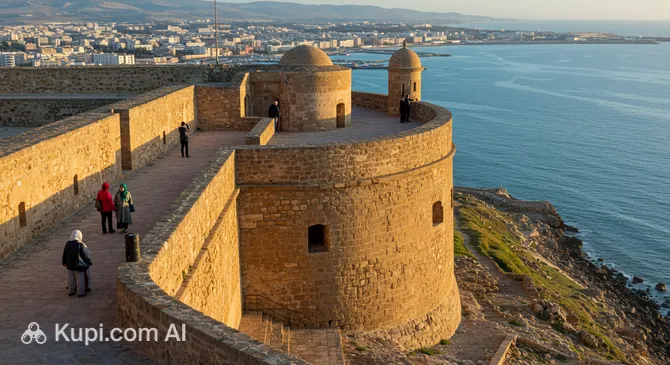
One of the most impressive historical structures is the Fort Santa Cruz in Oran. This majestic fort, perched on a hilltop, offers not only an immersion in history but also breathtaking panoramic views of the city and the Mediterranean Sea. Its powerful walls and towers bear witness to the many historical events of the region.

Fort Santa Cruz. Source: Kupi.com Binoculars

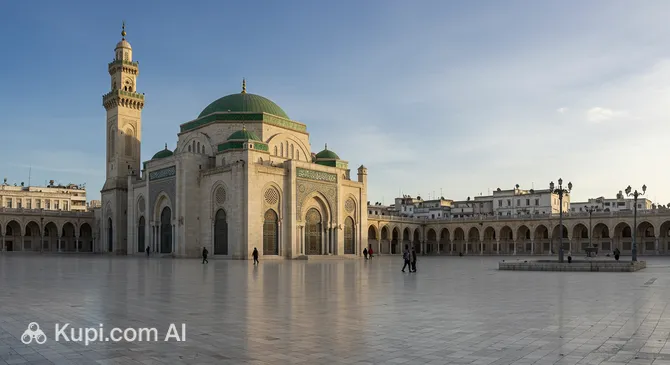
In the city of Constantine rises the magnificent Emir Abdelkader Mosque. It is one of the largest and most beautiful Islamic places of worship in North Africa. The mosque is striking for its grand scale, exquisite architecture, two towering minarets and richly decorated interior, serving as an important spiritual and cultural centre. Visitors are advised to dress modestly when visiting this sacred site.

Emir Abdelkader Mosque. Source: Kupi.com Binoculars

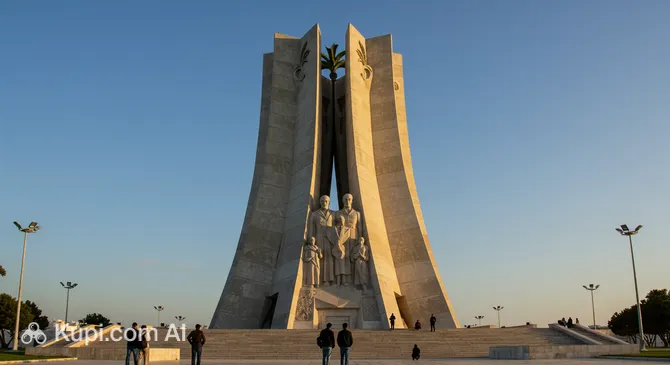
The symbol of the nation's capital, Algiers, is the Martyrs' Memorial (Maqam Echahid). This monumental structure, erected to commemorate the fighters for Algeria's independence, is fashioned in the shape of three stylised palm leaves converging upwards. At its base, there is an Eternal Flame and a museum dedicated to the national liberation struggle.

Martyrs' Memorial. Source: Kupi.com Binoculars

A must-visit for nature lovers is the Gouraya National Park, located on the Mediterranean coast. This UNESCO Biosphere Reserve is renowned for its picturesque mountains, dense forests, diverse flora and fauna, as well as its beautiful beaches and excellent opportunities for hiking.

Gouraya National Park. Source: Kupi.com Binoculars

Best Time to Visit

When planning a trip to Algeria, it's important to consider the country's climate, which varies noticeably depending on the region and time of year. Generally, the best time to visit the northern coastal regions, including the capital Algiers, is during the spring (March to May) and autumn (September to November). During these periods, the weather is most pleasant: warm but not oppressively hot, with temperatures ranging from +20°C to +28°C. This is the ideal time for exploring ancient cities like Constantine or Tlemcen, and for relaxing on the coast in places such as Oran or Tipaza. The high season typically coincides with these months, which may mean more tourists and slightly higher prices for accommodation and services. Furthermore, these seasons can offer delightful cultural events: in spring, some regions host festivals dedicated to blossoms, such as the Strawberry Festival in Jijel, while in autumn you can witness the traditional Date Harvest Festival in oases like Taghit. It is also important to remember that the dates of major religious holidays, such as Eid al-Fitr and Eid al-Adha, are based on the lunar calendar and can affect the availability of some services and the opening hours of institutions.

Summer (June to August) in Algeria, especially in the central and southern desert regions, is characterised by extremely high temperatures, often exceeding +40°C. Trips to the Sahara during this time can be very strenuous. However, on the coast, a sea breeze helps to moderate the heat, making a beach holiday possible. Winter (December to February) in the north of the country is cool and rainy, with a possibility of snow in the mountainous regions. At the same time, winter is a relatively comfortable season for visiting the Algerian Sahara, when daytime temperatures are more moderate. It is also the time for celebrating the Berber New Year, Yennayer (usually in January), which is particularly vibrant in the Kabyle regions. The low season (summer for the Sahara, winter for the north) attracts fewer tourists and offers potentially lower prices. However, you should be prepared for the weather conditions and bear in mind that during this period, some tourist attractions or establishments may have reduced operating hours or be temporarily closed. It is always advisable to check the weather forecast for your specific region before travelling, as the climate in Algeria is very diverse – from Mediterranean in the north to desert in the south.

Traditions

When travelling to Algeria, you will immerse yourself in a culture where traditions and respect are highly valued. Greetings play an important role here: a handshake is common, especially between men, and is often followed by placing the right hand over the heart as a sign of sincerity. A common greeting is "As-salamu alaykum" (peace be upon you). When interacting with locals, try to maintain eye contact, but avoid staring, particularly at members of the opposite sex, to prevent being misunderstood. It is important to dress modestly: when visiting mosques and religious sites, women should cover their heads, shoulders, and knees, while men should wear long trousers and shirts. Even in major cities like Algiers, a conservative style of dress will help you feel more comfortable and show respect for local customs.

Algerians are renowned for their exceptional hospitality. If you are invited to someone's home, it is a great honour, and it is customary to bring a small gift for the hosts, such as sweets, pastries, or fruit. At the dining table, remember to take food with your right hand, as the left hand is considered unclean. As Algeria is a predominantly Muslim country, halal food is the standard and is widely available. It is considered impolite to refuse refreshments offered to you, and you should try a little of each dish if several are served. Key dates in Algeria's cultural calendar include Independence Day (5 July), which is celebrated on a grand scale, and religious festivals such as Eid al-Fitr, which marks the end of the holy month of Ramadan, and Eid al-Adha. To show respect, avoid public displays of affection between men and women, always ask for permission before photographing people, and during Ramadan, refrain from eating and drinking in public places during daylight hours.

Entertainment

Algeria offers its guests a wide range of entertainment to suit all tastes. Fans of active recreation will find plenty of opportunities here: from trekking through the picturesque Atlas Mountains and exploring the mysterious Sahara Desert to enjoying water sports on the Mediterranean coast. Cities such as Oran and Tighzirt are popular for diving, snorkelling, and boat trips.

The cultural programme in Algeria is just as rich. The country boasts a rich historical heritage, which is reflected in its numerous museums, ancient ruins, and architectural monuments, especially in cities like the capital Algiers, Constantine, and Tlemcen. In the evening, major cities offer a variety of leisure options, from visiting theatres and concert halls to dining in restaurants with traditional Algerian cuisine, which is generally halal. Evening entertainment is mainly concentrated in the big cities, offering a choice of vibrant cafés and more tranquil lounge areas.

For those who cannot imagine a trip without shopping, Algeria offers vibrant markets and modern shopping centres, which are often equipped with prayer facilities. Here you can purchase authentic souvenirs such as leather goods, ceramics, Berber jewellery, handmade carpets, and aromatic spices. Family holidays are also well-catered for: the country has several amusement parks, like Mostaland in Mostaganem, as well as water parks and well-equipped beach areas perfect for spending quality time with children.

Currency rates

Planning a trip? That's wonderful! To ensure the financial aspects of your journey don't come as a surprise, it's important to remember that currency exchange rates are constantly changing. Therefore, we strongly advise you to monitor the current rates both before you depart and throughout your trip. For this, you can use the data provided below—we monitor currency rates 24/7 and strive to provide the most up-to-date information.

DZD currency exchange rate as of 02.01.2026

1 AED
~ 35.08 DZD
2.96 AMD
~ 1 DZD
1 AUD
~ 85.97 DZD
1 AZN
~ 75.78 DZD
1 BYN
~ 43.82 DZD
1 CAD
~ 93.86 DZD
1 EUR
~ 151.31 DZD
1 GBP
~ 173.56 DZD
2.54 HUF
~ 1 DZD
1 INR
~ 1.43 DZD
1 KGS
~ 1.47 DZD
11.21 KRW
~ 1 DZD
3.94 KZT
~ 1 DZD
1 PLN
~ 35.89 DZD
1 RUB
~ 1.63 DZD
1 SAR
~ 34.35 DZD
1 SGD
~ 100.19 DZD
1 TRY
~ 3.00 DZD
1 UAH
~ 3.05 DZD
1 USD
~ 128.82 DZD
93.26 UZS
~ 1 DZD

Reached the end of the page?

That means the route is fully explored