Support

Mauritania

Cities in the country

About the Country

Mauritania, located in north-west Africa on the shores of the Atlantic Ocean, is a land of contrasts where the vast expanses of the Sahara Desert meet a unique culture. This is a destination for those seeking something special, far from the well-trodden tourist paths, and who are ready to immerse themselves in a world of ancient traditions and astonishing landscapes.

The heart of the country is its capital, Nouakchott, a relatively young but rapidly growing city. Mauritania holds a rich historical heritage linked to the ancient trans-Saharan trade routes and the spread of Islam. Here, you can touch history by visiting ancient oasis towns such as Chinguetti, which was once an important centre for Islamic scholarship and caravan trade.
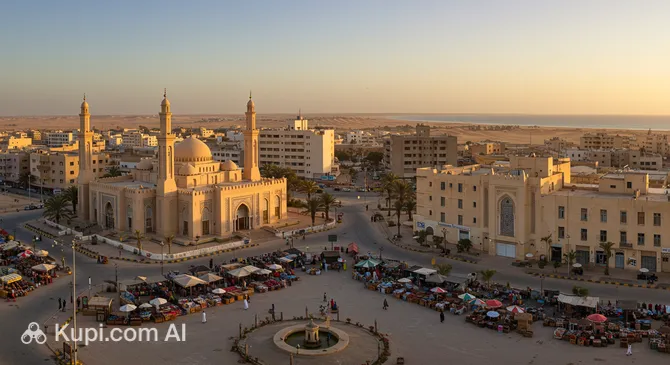
Nouakchott. Source: Kupi.com Binoculars

Mauritania's nature is not only about the majestic dunes of the Sahara but also the unique Banc d'Arguin National Park, a UNESCO World Heritage site, which is one of the world's most important wintering grounds for migratory birds. A journey through Mauritania offers a sense of adventure and discovery, allowing you to experience the hospitality of the local people and witness a life that flows at a different, unhurried pace. To explore the country's coastal life, you can visit the city of Nouadhibou, the second-largest economic centre.

Currency

The national currency of Mauritania is the Mauritanian ouguiya (international code: MRU). In 2018, the country underwent a redenomination, introducing a new ouguiya that replaced the old version (MRO) at a rate of 10 to 1. The modern banknotes issued after this reform are made from polymer, which enhances their durability. Banknote denominations are 20, 50, 100, 200, 500, and 1000 ouguiyas. Coins are also in circulation, including a unique 1/5 ouguiya piece known as a "khoums".

For travellers from the UAE, it is best to carry major foreign currencies, such as US dollars or euros, to exchange for ouguiyas upon arrival. It is highly recommended to exchange currency at official banks or licensed exchange offices, which are found in the capital, Nouakchott, and other large cities. You should avoid exchanging money with street vendors due to the risk of fraud and unfavourable rates. The use of credit cards in Mauritania is limited and generally restricted to major hotels, some restaurants, and airlines in the capital. For most daily expenses, especially outside of Nouakchott, having cash is essential. ATMs are not common and do not always accept international cards, so it is wise to ensure you have sufficient cash with you in advance.

Visa Requirements

To visit Mauritania, citizens of the United Arab Emirates are required to obtain a visa prior to their arrival. As of early 2025, Mauritania has introduced an electronic visa (eVisa) system, which is the recommended method for securing entry. This online process allows travellers to apply and receive their visa confirmation electronically before their trip. Some sources may still refer to a visa on arrival, but to ensure a smooth journey, applying for an eVisa in advance is the most reliable option.

For a successful entry into the country, you will need a passport valid for at least six months beyond your intended period of stay. It is also highly advisable to carry proof of onward or return travel, confirmation of your hotel booking, and adequate medical insurance, as these may be requested by immigration officials. Visa regulations are subject to change, so it is strongly recommended to verify the latest visa requirements and application procedures on the official Mauritanian government visa website or with the nearest embassy before you travel.

We'll tell you if you need a visa

Specify where you are going, or
Your citizenship
Destination

Time Zones

When planning a trip to Mauritania, you will not have to worry about changing time zones within the country. The entire nation operates on a single time zone, Greenwich Mean Time (GMT), also referred to as UTC+0. This means the local time corresponds to Coordinated Universal Time and does not change for daylight saving. For travellers from the UAE, it is useful to know that Mauritania is four hours behind UAE time (GST, UTC+4).

Therefore, the time in the nation's capital, Nouakchott, is the same as in any other region of Mauritania. This simplifies planning for internal travel and communication, as you do not need to account for time differences between various parts of the country.

How to Get There

There are several ways to get to Mauritania, but for most travellers, air travel is the most common and convenient option. The country has international airports, the main one being Nouakchott International Airport, which serves the capital city, Nouakchott. For travellers from the UAE, there are no direct flights, but convenient connections are available. Popular routes from Dubai and Abu Dhabi often involve a single stop with airlines such as Turkish Airlines, Qatar Airways, and Royal Air Maroc. It is advisable to check flight schedules and options in advance, as they can change depending on the season.

For those who prefer overland travel or combined itineraries, entry into Mauritania is possible via land borders with Senegal, Mali, and the territory to the northwest. Travel is mainly by road; international rail services in the region are poorly developed or non-existent. Sea travel to Mauritania is primarily used for cargo, and passenger ferry services are not a common option for tourists. In any case, when planning your trip, especially during peak season, it is wise to book your tickets well in advance to secure the best prices and availability.

For clarity, here is a summary of the main airports:

Airport Name City Passenger Traffic
Nouakchott International AirportNouakchottMajor
Nouadhibou AirportNouadhibouMedium
Néma AirportNémaSmall

Mauritania, a land where unique desert landscapes meet ancient culture, offers travellers not only the endless sands of the Sahara but also colourful cities, each with its own history and atmosphere. Here you can find both lively centres and quiet oases holding the secrets of centuries, attracting history enthusiasts and adventure seekers alike.

The principal city and the starting point for many journeys across the country is its capital, Nouakchott. A relatively young but dynamic city, it is where you can experience modern Mauritanian life, visit bustling markets, including the famous Fish Market, and feel the pulse of the nation.

Nouakchott. Source: Kupi.com Binoculars

Another important centre is Nouadhibou, the second-largest city and a major port on the Atlantic coast. It attracts not only business travellers but also those interested in marine life and its proximity to the renowned Banc d'Arguin National Park. For those seeking authenticity and an immersion in desert history, must-visit destinations include Atar, the gateway to the Adrar region with its impressive rock formations and prehistoric sites. The legendary Chinguetti, an ancient oasis city and UNESCO World Heritage site, is also essential viewing. Considered the seventh holy city of Islam, it was a historic centre for Islamic scholarship and a gathering point for pilgrims on their way to Mecca. Its ancient libraries, which house priceless manuscripts on science, law, and theology, and its unique clay architecture, stand as a testament to its rich Islamic heritage.

Top Attractions

Mauritania is a country rich in unique attractions that reflect its profound history and impressive natural landscapes. While a detailed list with specifics such as images or direct links for each attraction is not currently available, we can highlight several key places that traditionally draw travellers and offer a glimpse into the treasures of this land.

Among Mauritania's main historical jewels are its ancient ksour (fortified oasis towns), such as Chinguetti, Ouadane, Tichitt, and Oualata. These cities, listed as UNESCO World Heritage sites, were once vital centres on the trans-Saharan trade routes and hubs of Islamic scholarship. Their mud-brick architecture and ancient libraries containing precious manuscripts transport visitors deep into centuries past.

A natural wonder of Mauritania is the Banc d'Arguin National Park, which is also under UNESCO protection. Located on the Atlantic coast, this reserve is one of the world's most important wintering sites for millions of migratory birds, including spectacular colonies of flamingos and pelicans. Its unique landscapes of shallow seas, islands, and mangrove swamps are ideal for ecotourism and wildlife observation.

And, of course, a journey to Mauritania would be incomplete without experiencing the majestic Sahara desert. Its endless sand dunes, rocky plateaus, and sparse oases create unforgettable scenery and offer a unique opportunity to immerse oneself in a harsh yet mesmerising natural environment. To complete the country's cultural mosaic, a visit to the capital, Nouakchott, is recommended. Here, the National Museum and lively markets provide a closer look at the life and traditions of the Mauritanian people. As Mauritania is a deeply Islamic country, visitors are advised to dress modestly, particularly when exploring ancient towns and religious sites. These and many other places make Mauritania a destination for profound and vivid experiences.

Best Time to Visit

The best time to visit Mauritania is from November to March, which is considered the high season. During this period, the weather is most comfortable for travel, with pleasant daytime temperatures and cool nights, especially in the desert regions. These conditions are ideal for exploring ancient cities like Chinguetti or Atar, and for trips into the Sahara. Although Mauritania is not a mass-tourism destination, you can expect a slightly higher number of travellers and potentially higher prices for some services during this time.

The low season, from April to October, is characterised by very hot weather, especially in the central and northern parts of the country where temperatures can reach extreme levels. In coastal cities such as Nouadhibou or the capital, Nouakchott, the heat can be somewhat moderated by the ocean breeze. A brief rainy season, mainly affecting the southern regions, occurs from July to September. Travelling during the low season may mean fewer tourists and lower prices, but be prepared for intense heat and possible sandstorms, known as the harmattan. While these winds are strongest from late November to mid-March, they can occur at other times. Mauritania has few major international festivals with fixed dates; however, local cultural events and celebrations, such as those related to the date harvest (typically in autumn), can be an interesting addition to your trip. It is advisable to check the weather conditions for the specific regions you plan to visit, as the climate can vary.

Traditions

Mauritania is a country with deep-rooted Islamic traditions that permeate every aspect of daily life. Hospitality is a revered custom; declining an invitation for tea, which is traditionally served in three rounds from bitter to sweet, can be perceived as disrespectful. Greetings can be lengthy and involve asking about the health and affairs of the family. Handshakes are common, particularly between men, and the right hand is always used, as it is also considered the 'clean' hand for eating and passing items—a familiar etiquette for those in the UAE.

When visiting Mauritania, it is important to be mindful of modest dress, a principle well-understood in the UAE. Women are advised to cover their shoulders, arms, and legs, and to cover their heads when entering a mosque. Men should also avoid overly revealing clothing in public places. When eating with hands, only the right hand is used. Public displays of affection between men and women are not customary. It is also essential to ask for permission before photographing people, especially women. The main holidays are religious, such as Ramadan and the following Eid al-Fitr, alongside Independence Day. Showing respect for elders and avoiding criticism of local customs or religion is key to a pleasant and trouble-free journey.

Entertainment

Mauritania offers travellers a unique range of entertainment, far from standard tourist packages. Here, the focus shifts to immersing oneself in ancient culture and exploring the magnificent natural landscape. Active recreation in Mauritania primarily involves unforgettable adventures in the Sahara Desert, from thrilling 4x4 safaris across sand dunes to meditative camel treks. While activities like mountaineering or diving are less developed, exploring the vast desert expanses and learning about the nomadic way of life offers equally vivid experiences. The cultural programme revolves around discovering the country's rich historical heritage. Ancient oasis cities, such as Chinguetti, preserve centuries-old manuscripts and unique architecture. Attending local festivals, should they coincide with your travel dates, provides a deeper immersion into Mauritanian traditions and arts.

Cultural entertainment in Mauritania is largely intertwined with daily life and traditions. Instead of conventional theatres and concert halls, you can witness impromptu musical performances or storytelling by elders. Museums, particularly in the capital, Nouakchott, offer a better understanding of the country's history and culture. Shopping in Mauritania is an opportunity to purchase authentic handcrafted goods. In the bustling markets, you can find colourful fabrics, traditional clothing, leather goods, silver jewellery, and unique souvenirs that reflect the nomadic spirit and African motifs. Haggling is an essential and colourful part of the experience.

Nightlife in Mauritania is quite subdued and is mainly centred in the larger cities like Nouakchott or Nouadhibou. It consists mainly of restaurants where you can enjoy local cuisine in a relaxed atmosphere. As Mauritania is an Islamic country, visitors can be assured that food options are halal. Loud nightclubs and bars are few and far between, which aligns with the country's cultural values. Family entertainment also has its own unique character. Instead of theme parks, Mauritania offers families shared adventures in the desert, opportunities to discover the Sahara's fascinating wildlife (such as fennec foxes or gazelles, if you are lucky enough to spot them), and an immersion into a completely different culture, which can be an unforgettable educational experience for children.

Currency rates

Planning a trip? That's wonderful! To ensure the financial aspects of your journey don't come as a surprise, it's important to remember that currency exchange rates are constantly changing. Therefore, we strongly advise monitoring the latest rates, both before you fly and throughout your trip. You can use the data provided below for this; we monitor currency rates 24/7 and strive to provide the most up-to-date information.

Reached the end of the page?

That means the route is fully explored