Support

Burkina Faso

Cities in the country

About the Country

Burkina Faso, a country located in the heart of West Africa and often called the "land of honest people," offers travellers a unique combination of ancient traditions and a vibrant modern culture. Its capital, Ouagadougou, is the nation's pulsating centre, where one can experience local character and art.
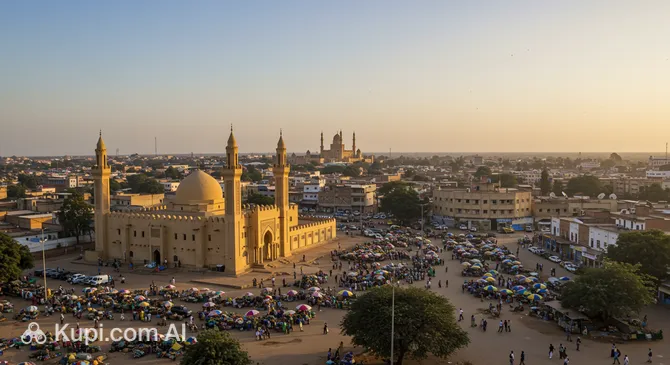
Ouagadougou. Source: Kupi.com Binoculars

The cultural heritage of Burkina Faso is rich and diverse, reflected in its music, dance, and the famous biennial Panafrican Film and Television Festival of Ouagadougou (FESPACO). The country is renowned for its distinctive Sahel-style architecture, especially its mud-brick mosques, a striking example of which is the Grand Mosque of Bobo-Dioulasso. This heritage is carefully preserved by the country's many ethnic groups, each contributing to the colourful mosaic of the Burkinabé identity.

The natural landscape of Burkina Faso is predominantly savannah and Sahelian scenery, which has its own unique charm. Travellers can explore cities such as Bobo-Dioulasso, the country's second-largest city, known for its relaxed atmosphere, markets, and proximity to natural wonders like the Karfiguéla Falls. Despite its challenges, the country welcomes visitors with unwavering warmth and hospitality, leaving them with fond memories of the "land of honest people."
Currency

The national currency of Burkina Faso is the BCEAO CFA franc (international code: XOF). This currency is used in the eight countries of the West African Economic and Monetary Union. CFA franc banknotes and coins come in various denominations and designs, often depicting cultural symbols or important aspects of the region's economy. It is recommended to exchange currency at official banks or licenced exchange offices, which can be found in the capital, Ouagadougou, and other major cities. Avoid exchanging money with street money changers due to the risk of fraud or receiving an unfavourable exchange rate.

The use of credit cards in Burkina Faso is limited. They are primarily accepted in large hotels, some restaurants, and supermarkets in the capital. In smaller towns and rural areas, payments are made predominantly in cash. Therefore, before travelling to regions outside of Ouagadougou, ensure you have enough CFA francs in cash to cover your expenses. ATMs are also not widely available, and it is best to confirm their location in advance, especially if you are planning to travel around the country.

Visa Requirements

For travellers from the UAE, entry into Burkina Faso is generally straightforward. Based on a mutual visa waiver agreement, holders of UAE passports are exempt from pre-entry visa requirements and can enter the country visa-free.

To ensure a smooth entry upon arrival, you will need a valid passport with a minimum of six months' validity from your date of travel. It is also standard practice to carry copies of your return or onward flight tickets, confirmation of your hotel booking, and proof of medical insurance. As visa and entry policies can be subject to change, it is strongly recommended that you always check the most current information with the relevant official authorities or the Embassy of Burkina Faso before finalising your travel plans.

We'll tell you if you need a visa

Specify where you are going, or
Your citizenship
Destination

Time Zones

The country observes Greenwich Mean Time (GMT), which corresponds to Coordinated Universal Time (UTC+0). This means the time in Burkina Faso is four hours behind the UAE. This consistency simplifies planning, as the time in the capital, Ouagadougou, will be the same as anywhere else in the country.

How to Get There

When planning a trip to Burkina Faso, most travellers opt for air transport. The country's main aviation gateway is Ouagadougou International Airport, located in the capital, Ouagadougou. There are currently no direct flights from the UAE to Burkina Faso. However, travellers from the UAE can take convenient one-stop flights via major African and regional hubs. Popular connecting airlines include Ethiopian Airlines via Addis Ababa, Turkish Airlines via Istanbul, and Qatar Airways via Doha. Besides the capital's airport, the country has others that serve domestic and some international routes, such as the airport in Bobo-Dioulasso.

For those who prefer overland travel or are combining trips across West Africa, Burkina Faso is accessible via land borders with its neighbouring countries: Mali, Niger, Benin, Togo, Ghana, and Côte d'Ivoire. The primary modes of transport for crossing these borders are buses and cars. It is advisable to check the latest information on border crossing operations and visa requirements in advance. The country's railway network is not extensively developed and has limited international significance. As Burkina Faso is a landlocked nation, sea transport is not an option for arriving in the country.

Regardless of your chosen method of travel, it is recommended to book tickets well in advance, particularly if your trip coincides with the peak tourist season or major national festivals. This will not only help you secure a better price but also guarantee availability. Furthermore, be sure to check the latest visa requirements for your nationality long before your intended date of departure.

For your reference, here is a summary of the main airports:

Airport Name City Scale
Ouagadougou International AirportOuagadougouMajor
Bobo-Dioulasso AirportBobo-DioulassoMedium

Burkina Faso, a country of rich culture and distinct traditions, invites travellers to discover its unique cities. Each one reflects the soul of West Africa in its own way, offering both an immersion into vibrant urban life and an encounter with ancient history.

The heart of the country and its main political and cultural centre is Ouagadougou. The capital is appealing for its colourful markets, such as the Grand Market, where you can find everything from traditional fabrics to local artisan crafts, as well as its museums, like the National Museum of Music. It is an excellent place to begin your exploration of the country. As a majority-Muslim nation, finding halal food is generally straightforward, particularly in the larger cities. No less significant and interesting to visit is Bobo-Dioulasso, the second-largest city, known for its Grand Mosque—a unique example of Sudano-Sahelian architecture—and the old Kibidwe district. When visiting the mosque, it is advisable for all visitors to dress modestly, covering shoulders and knees, with women also covering their hair as a sign of respect. For those seeking natural beauty, Banfora, located in the southwest, is well worth a visit. This region is famous for the picturesque Karfiguéla Waterfalls and the impressive Fabédougou Domes, offering opportunities for ecotourism and hiking.

Ouagadougou. Source: Kupi.com Binoculars

In addition to these key destinations, cities such as Koudougou, an important industrial and educational hub, and Ouahigouya, with its rich history as the capital of the ancient Yatenga Kingdom, also offer unique experiences for curious travellers wishing to gain a deeper understanding of the culture and daily life of Burkina Faso.

Top Attractions

Burkina Faso, a country with a rich culture and history, offers travellers unique attractions that reflect its distinct identity. Here, one can see impressive examples of traditional architecture as well as places connected to modern art and daily life.

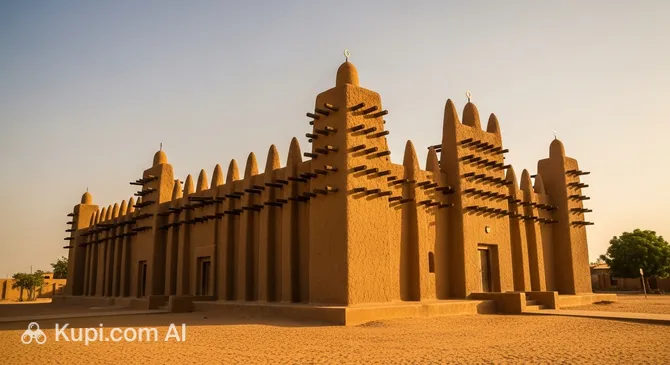
One of the country's most iconic structures is the Grand Mosque of Bobo-Dioulasso. This impressive mud-brick building, constructed in the Sudano-Sahelian style in the late 19th century, is striking for its monumentality and unique architecture. The mosque is a vital religious and cultural centre, attracting both worshippers and tourists interested in West African architecture. Visitors are advised to dress modestly as it is an active place of worship.

Great Mosque of Bobo-Dioulasso. Source: Kupi.com Binoculars

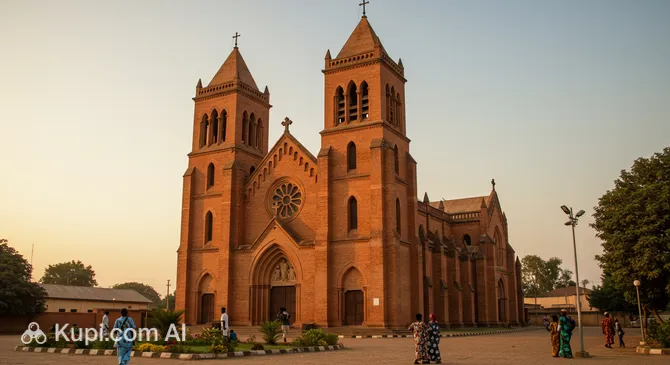
In the nation's capital, Ouagadougou, the Ouagadougou Cathedral is a prominent landmark. Built in the 1930s, this Roman Catholic cathedral is one of the largest in West Africa. Its architecture, which blends European and local motifs, and its impressive scale make it an important feature of the city.

Ouagadougou Cathedral. Source: Kupi.com Binoculars

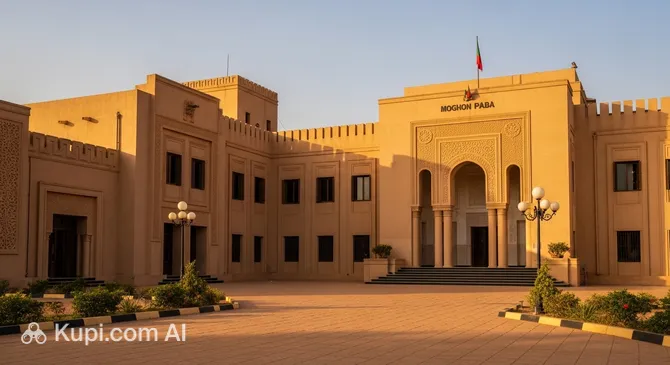
Another point of interest in Ouagadougou is the Moro-Naba Palace. While the palace itself is not always open to the public, it serves as the residence of the Moro-Naba, the emperor of the Mossi people, and symbolises the centuries-old traditions of this nation. On Fridays, you can witness the colourful Moro-Naba Ceremony, an ancient ritual that attracts many spectators.

Mogho Naba Palace. Source: Kupi.com Binoculars

Best Time to Visit

The best time to plan a trip to Burkina Faso is during the dry season, which typically lasts from October to April. During this period, the weather is most favourable for travelling and exploring the country, with sunny and dry days that are ideal for visiting national parks and attractions. The temperatures are generally pleasant, though they can climb significantly in March and April. It is also worth noting that the Harmattan, a dry and dusty wind from the Sahara, is active during this season and can occasionally reduce visibility, similar to sandstorms experienced in the Gulf region. It is during this time, in late February to early March of odd-numbered years, that the capital, Ouagadougou, hosts the renowned Pan-African Film and Television Festival (FESPACO), attracting visitors from across the continent.

The low season, or rainy season, in Burkina Faso occurs from May-June to September. During this time, the weather is characterised by high temperatures, significant humidity, and frequent, sometimes heavy, downpours. Travel in some regions can be challenging due to washed-out roads. However, a trip during this period has its advantages: the landscape transforms, becoming lush and vibrant green, the number of tourists decreases noticeably, and accommodation prices may be lower. In the autumn, typically in October-November of even-numbered years, another major event takes place in Ouagadougou – the International Art and Craft Fair (SIAO). Although the climate across most of Burkina Faso is relatively uniform, it is advisable to check the specific weather conditions for the region you plan to visit before your trip.

Traditions

Burkina Faso is a country with rich cultural traditions, where respect for elders and hospitality play a key role. Greetings here are not just a formality but an important part of communication. Be prepared for handshakes that may last longer than you are used to, accompanied by questions about your health and well-being. It is important to use your right hand for greetings, as well as for giving and receiving items, a custom that is common in the UAE and the wider Islamic world. The local people are very hospitable; if you are invited to a home, a small token of appreciation, such as fruit or sweets for the children, will be valued, although it is not strictly required.

Regarding clothing, it is advisable to choose modest attire, especially outside the capital, Ouagadougou, and when visiting religious sites. Women should cover their shoulders and knees, and men are also advised to avoid overly casual clothing (such as sleeveless tops in official buildings). At the dining table, if food is served on a communal dish and eaten by hand, use only your right hand, as the left is traditionally considered unclean. Important events that reflect the country's culture include the National Day (Proclamation of Independence Day, 5 August), as well as major Muslim and Christian holidays, which are celebrated with great enthusiasm. To show respect, always ask for permission before taking photographs of people and avoid loud behaviour or public displays of affection, which may be viewed unfavourably.

Entertainment

Burkina Faso offers travellers a unique experience, where entertainment is closely interwoven with the country's rich culture and traditions. You will not find standard tourist attractions in the conventional sense, but you can immerse yourself in the authentic atmosphere of West Africa, full of vivid impressions and discoveries.

Fans of active recreation can explore the country's diverse natural landscapes, although there is no developed infrastructure for extreme sports. The main focus is on cultural entertainment: Burkina Faso is famous for its music, dance, and crafts. You can visit traditional villages, learn about local customs, and see iconic sites such as the Grand Mosque of Bobo-Dioulasso or the Mogho Naba Palace in the capital, Ouagadougou. In the cities, you can also find small museums and galleries showcasing local art. When visiting mosques and other religious sites, it is important to dress modestly, with clothing that covers the shoulders and knees.

Nightlife in Burkina Faso is mainly concentrated in large cities such as Ouagadougou and Bobo-Dioulasso. Here you can find restaurants offering both local and international cuisine, as well as cafes where you can enjoy a relaxed evening. As Burkina Faso is a predominantly Muslim country, halal food options are widely available. Shopping in the country is, above all, an opportunity to purchase unique handmade items: famous masks, bronze statuettes, vibrant batik fabrics, and traditional musical instruments. The best places to buy souvenirs are the lively local markets, where you can not only find interesting items but also haggle to experience the local flavour.

For a family holiday, Burkina Faso can offer an immersion into a completely different culture, which in itself will be an exciting adventure for children and adults. Although there are no large theme parks, learning about local traditions, music, and crafts, and attending cultural events like festivals (if your trip coincides with one) can be an unforgettable educational experience. Overall, the country offers not so much a standard set of entertainments as an opportunity to connect with authentic African life and its unique, vibrant heritage.

Currency rates

Planning a trip? Excellent! To ensure the financial aspects of your journey do not come as a surprise, it is important to remember that currency exchange rates are constantly changing. Therefore, we strongly advise you to monitor the latest rates both before your departure and throughout your trip. To do this, you can use the data provided below — we monitor currency exchange rates 24/7 and strive to provide the most current information available.

XOF currency exchange rate as of 02.01.2026

1 AED
~ 151.31 XOF
1 AMD
~ 1.46 XOF
1 AUD
~ 370.86 XOF
1 AZN
~ 326.88 XOF
1 BYN
~ 189.02 XOF
1 CAD
~ 404.81 XOF
1 EUR
~ 652.90 XOF
1 GBP
~ 748.70 XOF
1 HUF
~ 1.70 XOF
1 INR
~ 6.17 XOF
1 KGS
~ 6.35 XOF
2.60 KRW
~ 1 XOF
1 KZT
~ 1.10 XOF
1 PLN
~ 154.80 XOF
1 RUB
~ 7.05 XOF
1 SAR
~ 148.16 XOF
1 SGD
~ 432.24 XOF
1 TRY
~ 12.94 XOF
1 UAH
~ 13.14 XOF
1 USD
~ 555.57 XOF
21.62 UZS
~ 1 XOF

Reached the end of the page?

That means the route is fully explored