Support

Mauritius

Cities in the country

About the Country

Mauritius is a picturesque island nation nestled in the southwestern part of the Indian Ocean, approximately 900 kilometres east of Madagascar. A convenient getaway from the UAE, direct flights take around six and a half hours. This volcanic island, encircled by coral reefs, entices travellers with its pristine white beaches, turquoise lagoons, and lush tropical greenery. Mauritius is more than just a beach holiday; it is a world of its own, filled with an atmosphere of tranquillity and exotic charm.

The culture of Mauritius is a unique kaleidoscope of traditions, shaped by European, African, Indian, and Chinese settlers. This diversity is reflected in the local cuisine, where halal food is widely available due to the significant Muslim population. The country's capital, the bustling Port Louis, is the economic and cultural centre, where colonial architecture blends harmoniously with modern buildings. Its lively markets and the historic Jummah Mosque offer a true taste of the island's spirit.
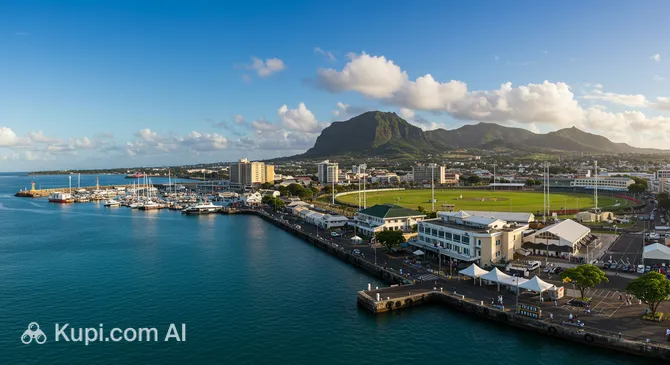
Port Louis. Source: Kupi.com Binoculars

The natural beauty of Mauritius extends far beyond its coastline. Inland, breathtaking landscapes await, from emerald valleys and dormant volcanoes to spectacular waterfalls like Chamarel. The mild tropical climate makes the island an attractive, family-friendly destination almost all year round. Numerous mosques and prayer facilities are available across the island for Muslim visitors. Fans of active recreation will appreciate the opportunities for diving and snorkelling, while resort areas such as Grand Baie offer well-developed infrastructure and famous beaches like Mont Choisy Beach.
Currency

The national currency of Mauritius is the Mauritian Rupee, which has the international code MUR. The colourful banknotes feature not only portraits of the country's prominent figures but also unique examples of local flora and fauna, as well as the island's iconic landscapes. The coins also reflect the rich natural and cultural heritage of Mauritius and are often considered small works of art.

For travellers from the UAE, it is recommended to exchange currency for Mauritian Rupees upon arrival. The best exchange rates are often found at the licensed exchange offices at the airport, which can be more favourable than those offered at hotels. Avoid exchanging money with unauthorised individuals to ensure a secure transaction at a fair rate. While major credit cards like Visa and MasterCard are widely accepted in most hotels, restaurants, and large shops, particularly in tourist areas, carrying some cash is essential. You will find cash useful for purchases at local markets, in smaller shops, or for tipping.

Visa Requirements

When planning a trip to Mauritius, it's essential to be aware of the visa requirements. For citizens of the United Arab Emirates, the good news is that no advance visa is required for tourist visits. UAE passport holders are granted visa-free entry upon arrival in Mauritius for a stay of up to 90 days. To ensure a smooth entry, you must have a valid passport that covers your entire period of stay and has at least one blank page. You may also be asked to provide proof of a return or onward ticket, confirmed accommodation booking, and sufficient funds for your trip.

While the visa policy is accommodating for UAE nationals, travel regulations can change. It is always highly recommended to confirm the latest entry requirements before your departure. For official information, you can check with the nearest diplomatic mission of Mauritius. There is a Consulate General of Mauritius in Dubai. Verifying these details in advance will help you avoid any unforeseen issues and ensure your travel preparations are stress-free.

We'll tell you if you need a visa

Specify where you are going, or
Your citizenship
Destination

Time Zones

When planning your trip to Mauritius, you will not have to worry about changing time zones within the country. The entire territory of Mauritius observes a single time zone — Mauritius Time (MUT), which is GMT+4. Conveniently for travellers from the UAE, this is the same as Gulf Standard Time (GST), meaning there is no time difference at all.

This means the time is consistent across all corners of the island, including the capital, Port Louis, and popular resort areas. This uniformity makes it much simpler to plan excursions and travel around the island, allowing tourists to fully enjoy their holiday without needing to calculate time differences.

How to Get There

The easiest way to reach Mauritius, a paradise island in the Indian Ocean, is by air. The country's main international gateway is Sir Seewoosagur Ramgoolam International Airport, located near the capital city of Port Louis. For travellers from the UAE, Emirates offers convenient direct flights from Dubai. Regular flights also operate from other major hubs in the Middle East, Asia, and Europe, with some routes offering direct services while others may require a connection.

As an island nation, Mauritius does not share land borders with other countries, so travelling by train or bus is not possible. However, for those who enjoy sea travel, the island is occasionally a port of call for cruise liners, offering an alternative, albeit less common, way to arrive. Whatever your mode of travel, it is highly recommended to book your flights and accommodation in advance, especially during the peak tourist season, to secure the best rates and availability.

For clarity, here is a summary of the main airports:

Airport Name City Passenger Traffic
Sir Seewoosagur Ramgoolam International AirportPort LouisMajor
Rodrigues Island AirportRodriguesMedium

Mauritius offers more than just idyllic beaches; it is a destination of colourful towns and charming resort villages, each providing a unique experience. From the bustling capital to tranquil coastal hamlets, the island promises a diverse range of attractions. You will discover opportunities for exciting activities and entertainment, alongside serene spots for a peaceful retreat in nature.

Port Louis. Source: Kupi.com Binoculars

The nation's capital, Port Louis, serves as the economic and cultural heart of Mauritius. The city is appealing for its historical architecture, a vibrant central market where you can immerse yourself in the local culture, and landmarks such as the Citadel Fort and the Champ de Mars racecourse. For those seeking beach relaxation and water-based activities, Grand Baie on the north of the island is an ideal choice. This popular resort is renowned for its turquoise lagoons, excellent diving and snorkelling, and vibrant evening atmosphere.

To discover another side of Mauritius, venture to Curepipe, one of the island's largest towns, situated on the central plateau. It is known for its cooler climate, botanical gardens, and the Trou aux Cerfs volcanic crater. On the southern coast, the scenic village of Souillac awaits, drawing visitors with its untamed nature, the dramatic Gris-Gris cliffs, and the famous "Weeping Rock". Each of these Mauritian locations has its own unique charm, ready to be explored.

Top Attractions

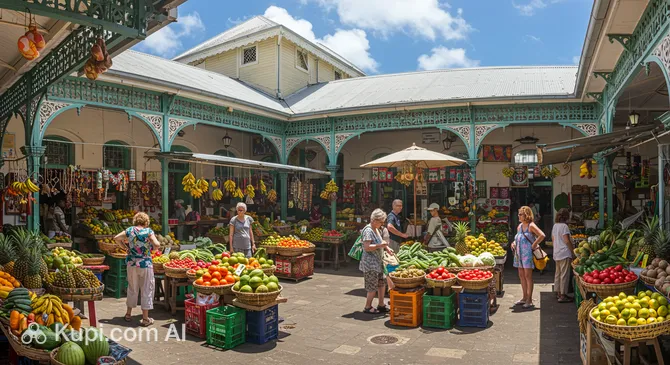
One of the most iconic landmarks is the Central Market in Port Louis. This is the heart of local life, where you can immerse yourself in an authentic atmosphere, find exotic fruits, spices, handmade souvenirs, and try the local street food. Many vendors offer halal options, but it is always best to confirm. Bustling, colourful, and full of aromas, it offers a unique experience of Mauritian culture.

Central Market. Source: Kupi.com Binoculars

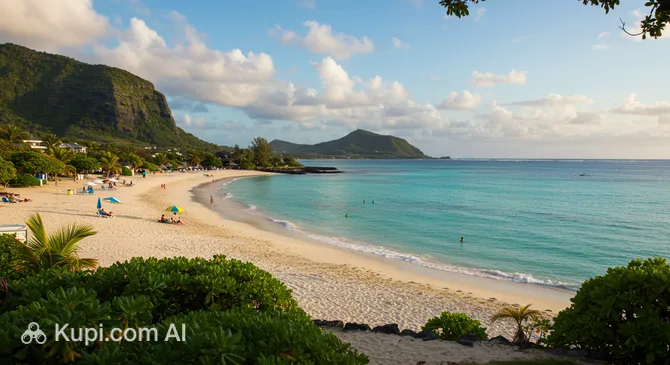
For beach lovers, Mont Choisy Beach is a true gem. It is one of the longest and most beautiful beaches on the island, fringed with casuarina trees. Its soft white sand and calm, turquoise waters are ideal for swimming, sunbathing, and simply relaxing.

Mont Choisy Beach. Source: Kupi.com Binoculars

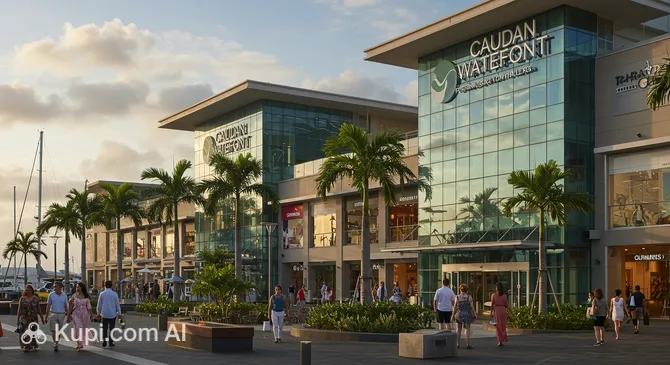
In the capital, Port Louis, a visit to the Caudan Waterfront is a must. This modern and lively waterfront area features a wide array of shops, restaurants, cafés, a cinema, and a casino. It is a delightful place for a stroll, enjoying views of the harbour, and shopping for souvenirs. Prayer facilities are also available within the complex.

Caudan Waterfront. Source: Kupi.com Binoculars

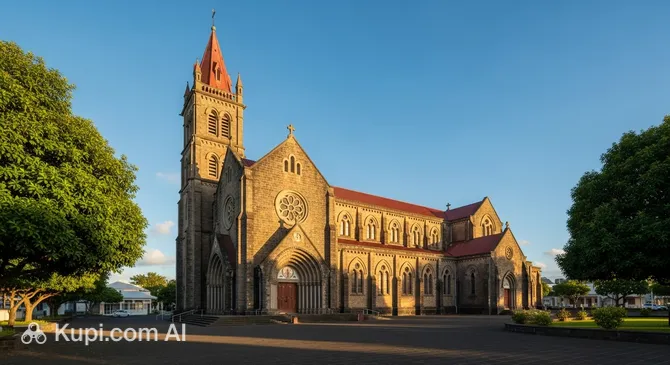
On Rodrigues Island, which is also part of Mauritius, Saint Gabriel Cathedral stands out. It is not only an important religious building but also an architectural landmark that reflects the island's history and culture. When visiting, it is advisable to wear modest and respectful attire. A visit here offers a glimpse into the spiritual life of the local population.

St Gabriel Cathedral. Source: Kupi.com Binoculars

Best Time to Visit

Mauritius is an island of perpetual summer, but it has two distinct seasons, each offering unique advantages for travellers. The high season, which is the Mauritian winter, runs from May to October. This period brings the most comfortable weather: it is dry, sunny, and pleasantly warm, with air temperatures around +20-26°C. This makes it an ideal time for sightseeing, outdoor activities, hiking in the national parks and, of course, relaxing on the beach. For residents of the UAE, this season offers a perfect escape from the intense summer heat. However, be aware that this is the peak tourist season, meaning prices for accommodation and flights can be higher, and popular beaches and attractions may be more crowded.

The low season, or Mauritian summer, is from November to April. During this time, the weather is hot and humid, with average air temperatures between +25-31°C. The ocean is very warm, which is excellent for swimming, diving, and snorkelling. This period can experience brief tropical showers, particularly from January to March, when there is also a chance of cyclones, although direct hits on the island are rare. The advantages of this season include fewer tourists (except during the Christmas and New Year holidays) and more affordable prices. Furthermore, this is when Mauritius hosts vibrant festivals, such as the Hindu festival of Diwali (October-November), the colourful Thaipusam Kavadi (January-February), and Chinese New Year celebrations, which are especially prominent in Port Louis.

Ultimately, the best time to travel to Mauritius depends on your preferences. If you are looking for perfect sunny weather and are not deterred by higher prices, the period from May to October is your best choice. If you prefer hot, tropical weather, a warm ocean, and the opportunity to experience local festivals, then November to April will suit you well, but be prepared for the possibility of rain. Although the island is small, the eastern coast can be windier during the winter months (May to October), which is a bonus for fans of certain water sports like kitesurfing.

Traditions

In Mauritius, with its wonderful blend of cultures, interactions usually begin with a friendly handshake and direct eye contact. The local people are very hospitable, and being invited into their home is considered a sign of great respect. A small symbolic gift, such as fruit or sweets, is a pleasant gesture, though not strictly required. While the official languages are English and French, Mauritian Creole is widely spoken, and any attempt to say a few words in the local language will be warmly welcomed. Due to the significant Muslim population, halal food is widely available across the island, from street food stalls to fine-dining restaurants and major international fast-food chains.

When visiting Mauritius, it is important to be mindful of certain cultural nuances, particularly regarding dress and behaviour. At temples, mosques, and other religious sites, you must dress modestly by covering your shoulders and knees. In daily life, especially at resorts, light summer clothing is perfectly acceptable; however, topless sunbathing on public beaches is not permitted. To show respect for local residents, try to avoid taking photographs of people without their prior permission and refrain from loud behaviour or public arguments. Politeness and tact are highly valued here.

Mauritian culture is rich with festivals that reflect its diverse population. Among the most significant are Independence Day (12 March), celebrated nationwide with parades and festivities, and the colourful Hindu festival of Diwali (the festival of lights), which takes place in autumn and symbolises the victory of good over evil, illuminating the island with thousands of lights. Islamic festivals such as Eid-ul-Fitr are also recognised as public holidays and are celebrated by the local Muslim community. There are no strict rules for table etiquette, but if you eat traditional food with your hands (such as Indian cuisine), it is customary to use your right hand. Overall, Mauritians are very friendly and open, and showing basic courtesy and a sincere interest in their traditions will make your journey even more pleasant and memorable.

Entertainment

Mauritius offers tourists a diverse range of leisure and entertainment opportunities to suit every taste. Fans of outdoor activities will appreciate the magnificent conditions for water sports: diving amongst coral reefs, snorkelling, windsurfing, kitesurfing, and catamaran sailing trips. The island's inland areas attract visitors with hiking trails through lush forests, opportunities to explore waterfalls and gorges, as well as world-class golf courses. For those seeking a more relaxed pastime, the numerous beaches are ideal for unwinding and enjoying the sun.

The cultural experiences in Mauritius are just as rich. Travellers can discover the island's rich heritage by visiting Hindu temples, colonial mansions, small museums detailing the history and nature of Mauritius, and local markets, such as the vibrant Central Market in Port Louis. When visiting religious sites, modest dress is appreciated. Shopping in Mauritius is an opportunity to purchase unique handmade souvenirs, model ships, textiles, spices, and local crafts. Major shopping areas and modern malls, such as Caudan Waterfront or La Croisette, offer a wide selection of goods, with prayer facilities often available in larger centres.

Evening entertainment in Mauritius is mainly concentrated in tourist hubs like Grand Baie, where you can find many restaurants with diverse cuisine, including a wide array of halal options. The atmosphere is generally relaxed and perfect for pleasant socialising. For a family holiday, the island offers safe beaches with gentle slopes into the water, nature parks where you can observe animals and birds, and various water attractions. Many hotels also provide kids' clubs and entertainment programmes for younger guests, making a holiday in Mauritius comfortable for the whole family.

Currency rates

Planning a trip? That's wonderful! To avoid any financial surprises during your journey, it's important to remember that exchange rates are constantly changing. Therefore, we highly recommend keeping an eye on the latest rates, both before you depart and throughout your stay. You can use the data provided below to help with this — we monitor exchange rates 24/7 to provide the most up-to-date information possible.

MUR currency exchange rate as of 02.01.2026

1 AED
~ 12.52 MUR
8.30 AMD
~ 1 MUR
1 AUD
~ 30.70 MUR
1 AZN
~ 27.06 MUR
1 BYN
~ 15.65 MUR
1 CAD
~ 33.51 MUR
1 EUR
~ 54.03 MUR
1 GBP
~ 61.98 MUR
7.11 HUF
~ 1 MUR
1.96 INR
~ 1 MUR
1.90 KGS
~ 1 MUR
31.40 KRW
~ 1 MUR
11.03 KZT
~ 1 MUR
1 PLN
~ 12.81 MUR
1.71 RUB
~ 1 MUR
1 SAR
~ 12.26 MUR
1 SGD
~ 35.78 MUR
1 TRY
~ 1.07 MUR
1 UAH
~ 1.09 MUR
1 USD
~ 46.00 MUR
261.18 UZS
~ 1 MUR

Reached the end of the page?

That means the route is fully explored