Support

Zimbabwe

Cities in the country

About the Country

Zimbabwe is a remarkable country in Southern Africa, attracting travellers with its breathtaking landscapes, rich wildlife, and unique cultural heritage. This landlocked nation offers unforgettable experiences for adventure seekers and lovers of authenticity. The country's capital, Harare, is a vibrant centre where modernity meets tradition.
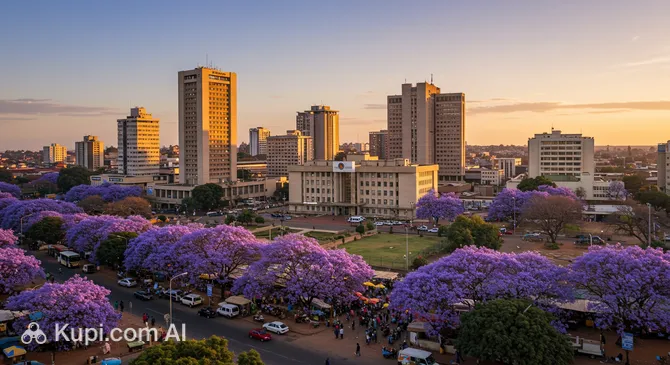
Harare. Source: Kupi.com Binoculars

The crown jewel of Zimbabwe is undoubtedly the majestic Victoria Falls, one of the Seven Natural Wonders of the World, located on the border with Zambia. The town of Victoria Falls serves as the gateway to exploring this marvel, as well as visiting the famous Victoria Falls Bridge. Beyond the falls, the country is renowned for its national parks, such as Hwange, where you can go on a safari to see Africa's "Big Five" in their natural habitat. Zimbabwe's climate is predominantly subtropical, with a warm, wet summer and a mild, dry winter, making it an attractive year-round destination.

Zimbabwe is not only about stunning nature but also profound history. The ancient stone ruins of Great Zimbabwe, which gave the country its name, are evidence of an advanced civilisation that existed long before the arrival of Europeans. The name Zimbabwe is derived from a Shona term meaning "houses of stones". Zimbabwe's modern culture is expressed through vibrant music, energetic dances, and distinctive crafts, which can be seen in local markets and villages. The atmosphere in the country is generally hospitable, and local people are often happy to share their culture and traditions, creating a warm and memorable travel experience.
Currency

The official currency of Zimbabwe, as of April 2024, is the Zimbabwe Gold (ZiG). This new currency was introduced to stabilise the country's economy which has been affected by hyperinflation. However, due to previous economic instability, the US Dollar (USD) remains widely used and is often preferred, particularly within the tourism sector. It is highly advisable for travellers from the UAE to convert AED to US Dollars before their trip and to carry the cash in small denominations for ease of payment. ZiG banknotes are in circulation but may be unfamiliar as the currency is new.

Foreign currency should only be exchanged for ZiG at official banks or licenced exchange bureaus found in cities and tourist centres. You should strictly avoid exchanging money on the street due to the high risk of fraud and arrests. Credit card acceptance (mainly Visa and Mastercard) is very limited and typically restricted to large hotels, some restaurants, and supermarkets in the capital, Harare, and popular tourist areas like Victoria Falls. Even where cards are accepted, they are often for lodging expenses only, not for other services. For most day-to-day expenses, especially outside major cities and at local markets, cash is essential. It is always best to confirm beforehand if card payments are accepted.

Visa Requirements

When planning a trip to Zimbabwe, it's important to familiarise yourself with the visa requirements beforehand. For citizens of the United Arab Emirates, a visa is required to enter Zimbabwe. However, travellers can obtain this upon arrival. Alternatively, you can apply for an electronic visa (e-visa) in advance through Zimbabwe's official immigration portal.

To receive your visa and enter the country, you will need a valid passport with a validity of at least six months beyond your planned departure date from Zimbabwe. You may also be asked for return tickets, proof of accommodation, and travel insurance. It is strongly recommended to verify the current visa rules and required documents on the official websites of Zimbabwean embassies or consulates before your trip, as visa policies can change.

We'll tell you if you need a visa

Specify where you are going, or
Your citizenship
Destination

Time Zones

When planning a trip to Zimbabwe, you will not have to worry about changing time zones within the country. The whole of Zimbabwe operates on a single time zone – Central Africa Time (CAT), which is UTC+2. This means that the time in the capital, Harare, is the same as in any other part of the country. For travellers from the UAE, it is useful to know that Zimbabwe is two hours behind Gulf Standard Time (GST), which is the time zone used in the Emirates (UTC+4).

How to Get There

The primary way to reach Zimbabwe is by air. For travellers from the UAE, this typically involves a connecting flight through a major hub in the Middle East or Africa. Major airlines such as Emirates, Qatar Airways, and Ethiopian Airlines offer regular flights to Zimbabwe from Dubai and Abu Dhabi. While direct flights are not always available, one-stop services make the journey convenient. Emirates, for instance, operates several flights per week to the nation's capital.

The country has several international airports, the main one being Robert Gabriel Mugabe International Airport, which serves the capital city, Harare. This airport was formerly known as Harare International Airport. Direct flights may also be available from some southern African countries.

For travellers who prefer overland routes or are on a combined tour of Southern Africa, it is possible to enter Zimbabwe via land borders with neighbouring countries like South Africa, Zambia, Botswana, and Mozambique. International bus services connect Zimbabwe with cities in these nations. Rail services also exist but can be less predictable and comfortable for tourists compared to buses or flights. Regardless of your chosen method of travel, it is recommended to book your tickets in advance, especially if your trip falls within the peak tourist season, to secure the best prices and availability. As Zimbabwe is a landlocked country, arrival by sea is not an option.

For your reference, here is a summary of the main airports:

Airport Name City Passenger Traffic
Robert Gabriel Mugabe International AirportHarareLarge
Victoria Falls AirportVictoria FallsMedium
Bulawayo AirportBulawayoSmall

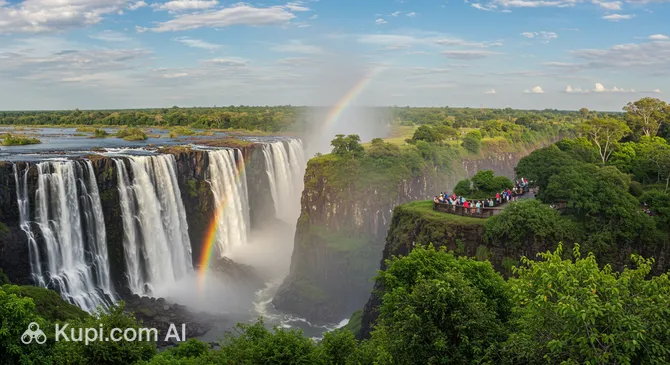
Zimbabwe is a country of amazing contrasts, offering tourists both an immersion into the bustling life of its cities and unforgettable encounters with wild nature. Without a doubt, the main point of attraction is the town of Victoria Falls, located by one of the world's most majestic waterfalls. This destination is a true magnet for adventure enthusiasts and lovers of breathtaking scenery.

Victoria Falls. Source: Kupi.com Binoculars

The nation's capital, Harare, is a lively metropolis where you can experience the modern culture of Zimbabwe, visit markets and galleries, and enjoy the atmosphere of a vibrant African city. For those interested in history and culture, a visit to Bulawayo is a must. As the country's second-largest city, it has preserved many monuments of colonial architecture and is the region's cultural centre. And if you dream of a waterside holiday with opportunities for wildlife watching, head to Kariba, a resort town on the shores of the vast lake of the same name, famous for its stunning sunsets, fishing, and water safaris.

Top Attractions

Zimbabwe attracts travellers with its diverse attractions, from natural wonders to significant cultural sites. Here, everyone will find something of interest while discovering the rich heritage and beauty of this African country.

One of the most exciting and world-famous attractions is the Victoria Falls Bridge. This impressive engineering feat, stretching across the gorge of the mighty Zambezi River, offers not only a strategically important crossing but also absolutely incredible views of the famous Victoria Falls. For the brave, extreme activities such as bungee jumping are available here, making this place even more appealing.

Victoria Falls Bridge. Source: Kupi.com Binoculars

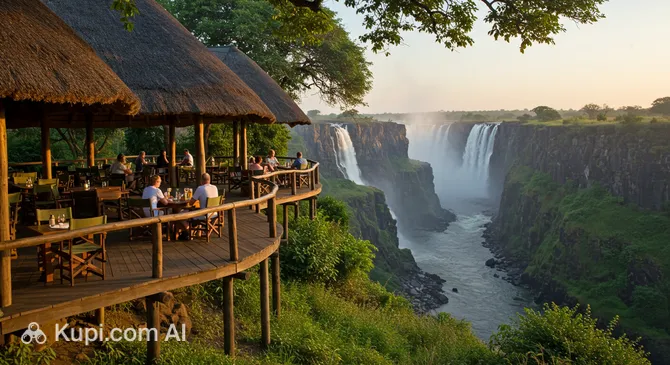
While in the Victoria Falls area, a visit to the Lookout Cafe is a must. This is not just a restaurant but a true viewing deck, offering stunning panoramic views of the Batoka Gorge and the waterfall itself. The menu features a range of international and local dishes, and while specific halal-certified options are not guaranteed, vegetarian and vegan choices are clearly labelled and available. An especially unforgettable experience awaits those who spend time here at sunset, watching the play of colours over one of nature's greatest wonders.

The Lookout Cafe. Source: Kupi.com Binoculars

For wildlife enthusiasts wishing to see African fauna in its natural habitat, Mukuvisi Woodlands is an excellent choice. This nature reserve, located near the capital city of Harare, provides a unique opportunity to observe zebras, giraffes, various species of antelope, and a multitude of birds. Visitors can explore the area on foot along specially marked trails or embark on a fascinating horse ride.

Mukuvisi Woodlands. Source: Kupi.com Binoculars

To gain a deeper understanding of the country's history and culture, it is recommended to visit the Joshua Mqabuko Nkomo Statue in the city of Bulawayo. This majestic statue is dedicated to one of the key figures of Zimbabwe's independence movement, Joshua Nkomo, who is often called the "Father of Zimbabwe". The monument serves as an important symbol of national unity, the struggle for freedom, and the historical memory of the people.

Joshua Mqabuko Nkomo Statue. Source: Kupi.com Binoculars

Best Time to Visit

When planning a trip to Zimbabwe, it's important to consider the climatic seasons to make the most of your journey. The high season typically falls during the dry period from May to October. During this time, the weather is most comfortable, with warm, sunny days and cool nights. This is the ideal time for a safari, as animals gather around water sources and are easier to spot due to the sparse vegetation. Victoria Falls is also impressive, although the water level may not be at its peak towards the end of the dry season. The downsides of this period can be higher prices for accommodation and excursions, as well as a greater number of tourists at popular attractions.

The low season, or rainy season, lasts from approximately November to April. It is characterised by higher temperatures, humidity, and frequent but usually brief afternoon downpours. The landscapes become emerald green during this time, which is especially beautiful for photographs, and it is the best time for birdwatching as many migratory species arrive. Prices for tours and accommodation are generally lower, and there are significantly fewer tourists. However, some roads in the national parks can become difficult to travel on, and wildlife viewing can be challenging due to the dense foliage. Victoria Falls reaches its maximum power during this period, especially from February to May, creating impressive clouds of spray. It is also worth noting events such as the Harare International Festival of the Arts (HIFA) in Harare, which usually takes place in late April to early May and can be a vibrant addition to your trip.

Traditions

The culture of Zimbabwe is rich with traditions, and understanding them will make your journey more comfortable and respectful. Greetings play an important role; a standard handshake is often accompanied by holding your right elbow with your left hand or using both hands, which is a sign of deep respect. Polite address and a sincere interest in a person's family before getting to the main topic of conversation are highly valued. Zimbabweans are famous for their hospitality; being invited into a home is a great honour. A small, symbolic gift for the hosts will be gratefully accepted. Openness and respect for elders are key aspects of communication. Important national holidays, such as Independence Day (18 April) and Heroes' Day (held on the second Monday of August), vividly demonstrate the country's cultural pride and history.

In daily life, especially outside major cities and tourist centres like Harare, it is advisable to adopt a modest style of dress; women are encouraged to cover their shoulders and knees. This is particularly important when visiting villages or official buildings. At the dinner table, when trying local dishes like the famous sadza, you may see people eating with their right hand after washing their hands. Always ask for permission before taking photographs of local residents. Avoid public displays of strong negative emotions. Also, remember that the left hand may be considered 'unclean' in some situations, so for greetings, passing food, or giving gifts, try to use your right hand or both hands. Showing tact and an interest in local customs, many of which will feel familiar, will help you to more deeply understand and appreciate the unique culture of Zimbabwe.

Entertainment

Zimbabwe offers travellers a wonderful variety of entertainment to suit a wide range of tastes. Fans of outdoor activities will find a wealth of opportunities here: from exciting safaris in world-renowned national parks, where you can watch wild animals in their natural habitat, to extreme adventures at the famous Victoria Falls, including white-water rafting on the Zambezi River and bungee jumping. Scenic walks and hiking along picturesque mountain trails and in nature reserves offering magnificent views are also popular.

For those who appreciate cultural experiences, cities such as the capital Harare and the historic Bulawayo have museums showcasing the country's rich history and art, as well as art galleries and craft markets where you can see and buy works by local artisans. In the evening, you can enjoy the local social scene, from quiet dinners in restaurants offering local and international cuisine to lively cafés and venues in major cities and tourist centres, which often feature live music. Halal food is available in major cities like Harare and Bulawayo, with some restaurants and hotels offering halal-certified or accommodating menus upon request.

Shopping in Zimbabwe is, above all, an opportunity to purchase unique, handmade souvenirs that reflect the country's culture and traditions. Items of particular popularity include stone carvings (the famous Shona sculpture), carved wooden figures of animals and people, vibrant ceramics, textiles with traditional patterns, and intricately crafted beadwork. For a family holiday, the country offers the unforgettable experience of wildlife watching. Many national parks and reserves are perfectly suited for trips with children, and some safari lodges provide special, adapted programmes and entertainment for young explorers, making the trip both educational and exciting for the whole family.

Currency rates

Planning a trip? That's wonderful! To ensure the financial aspects of your journey do not come as a surprise, it is important to remember that currency exchange rates are constantly changing. Zimbabwe, in particular, has a history of currency instability and introduced a new gold-backed currency, the Zimbabwe Gold (ZiG), in April 2024. Therefore, we strongly advise you to monitor the latest rates both before you fly and throughout your trip. You can use the data provided below for this purpose — we monitor currency rates 24/7 and strive to provide the most up-to-date information.

Reached the end of the page?

That means the route is fully explored