Support

Bulawayo Airport

About the Airport

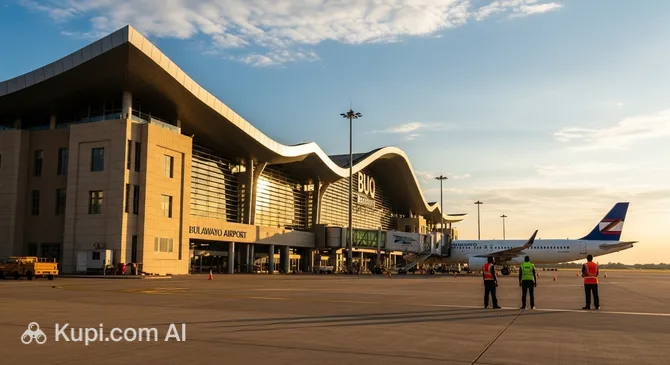
Bulawayo Airport. Source: Kupi.com Binoculars

Joshua Mqabuko Nkomo International Airport is the main aerial gateway to the Matabeleland region and an ideal starting point for journeys through southern Zimbabwe. Named after one of the country's most revered political figures, this airport combines modern comfort with a colourful design inspired by local traditions. Thanks to recent modernisation and moderate passenger traffic, a peaceful atmosphere prevails here, allowing tourists to complete all formalities without unnecessary hustle or queues.

IATA Code BUQ
ICAO Code FJVN
City Bulawayo
Distance to Centre 25 km
Status International
Annual Passengers Approx. 150,000 - 180,000
Schedule Scheduled flights

Despite its compact size, Bulawayo Airport boasts several features that make it convenient for travellers:

  • Modern Terminal: The building, officially opened in 2013, is designed to handle up to 1.5 million passengers per year. With current traffic levels, this guarantees spacious waiting lounges and rapid passport control processing.
  • Unique Architecture: The terminal's design is inspired by the shape of a traditional Ndebele warrior's shield, giving the building a recognisable and symbolic appearance.
  • Strategic Location: The airport is located just a 20–30 minute drive from the city centre and serves as a convenient hub for those heading to the famous Matobo National Park or the Khami Ruins.
  • Comfort and Safety: Due to low traffic volume, staff pay maximum attention to every passenger, and security screening and check-in processes are conducted promptly and in an organised manner.

Contact Information

Below you will find essential contact information for Joshua Mqabuko Nkomo International Airport (BUQ), serving the city of Bulawayo. It is recommended to verify the currency of this data on official resources before your trip.

  • Official Website: The airport is managed by the Civil Aviation Authority of Zimbabwe (CAAZ). Up-to-date information can be found on their website: www.caaz.co.zw.
  • Help Desk Phone: +263 29 2886427 or +263 29 271311. Numbers may change, so it is worth confirming them on the CAAZ website.
  • Address: Joshua Mqabuko Nkomo International Airport, Airport Road, Bulawayo, Zimbabwe.
  • Email: For general enquiries, you may use contact forms or addresses listed on the CAAZ website, for example, pr@caaz.co.zw.
  • Social Media: Dedicated social media pages for the airport may not exist. Please follow news on the official CAAZ operator website.
  • Lost Luggage Information: For all issues related to lost or damaged luggage, you must contact your airline directly. Airport services do not handle passenger luggage tracing.
  • Passenger Support Contacts: For on-site assistance, you may approach the information desk in the main terminal or use the help desk telephone.

How to Get to the Airport

Bulawayo Airport (Joshua Mqabuko Nkomo International Airport) is located approximately 25 kilometres northeast of the city centre. The journey usually takes about 20-30 minutes by car, depending on traffic conditions. There are several ways to get from the city to the airport, suitable for different budgets and comfort levels.

The most convenient and popular way to reach the airport is by taxi or pre-booked transfer. Many taxi services operate in the city of Bulawayo. It is recommended to use official carriers and always agree on the fare before the trip begins, as not all vehicles are equipped with meters. Many hotels and tour companies also offer transfer services, which is a reliable and comfortable option, especially if you are travelling with large luggage or visiting the city for the first time.

For a more budget-friendly journey, public transport can be considered, although it is less predictable. There are no direct bus routes to the airport, but route taxis known as "kombis" actively circulate throughout Zimbabwe. This is the cheapest method of travel, but it may be inconvenient for tourists with bulky luggage due to limited space and the lack of a fixed schedule. You will likely need to make a transfer, so this option is more suitable for experienced and undemanding travellers.

If you value independence and flexibility, car rental is a good solution. Both international and local rental companies are represented in Bulawayo. The road to the airport is well-signposted, and navigation will not cause difficulties. For those arriving in their own or rented vehicle, parking is available within the airport grounds, offering both short-term and long-term options.

Thus, the choice of transport depends on your priorities. Taxi offers a balance of speed and comfort. A private transfer is the most carefree option. Car rental provides freedom of movement, while "kombis" allow you to save money and immerse yourself in the local atmosphere. For maximum peace of mind, especially when flying early in the morning or late at night, we recommend booking a transfer in advance through your hotel or a reliable transport company.

Terminals and Map

Bulawayo Airport, also known as Joshua Mqabuko Nkomo International Airport, features one modern passenger terminal which has been significantly upgraded. This terminal handles both domestic and international flights, making the airport structure simple and convenient for passengers.

The airport layout is quite logical and intuitive. Since all operations are concentrated in one building, you do not need to worry about transferring between terminals. Departure and arrival zones are clearly separated. Upon arrival, you enter the arrivals hall on the ground floor, where immigration counters and the baggage claim area are located. The departure zone includes check-in counters, a security screening point, and a comfortable waiting lounge.

Navigating the terminal is easy thanks to clear signage in English. It is recommended to arrive at the airport well in advance to complete check-in and security screening. For international flights, arrive at least 2-3 hours before departure, and for domestic flights, 1.5-2 hours. This time is usually sufficient to complete all pre-flight formalities without rushing.

Overall, thanks to its compactness and thoughtful layout, Bulawayo Airport does not create difficulties for travellers. Even if you are here for the first time, you will be able to quickly orient yourself and find all necessary services — from check-in counters to boarding gates.

Airport History

The history of Joshua Mqabuko Nkomo International Airport, better known as Bulawayo Airport (BUQ), is inextricably linked with the development of the eponymous city and the entire country of Zimbabwe. The airport was founded in 1959, becoming the country's second most significant air hub after the capital's airport in Harare. Initially, it was built to serve the growing industrial centre of Bulawayo and ensure transport connectivity with other regions.

One of the key moments in the airport's history was its renaming. In 2001, it received its current name in honour of Joshua Mqabuko Nkomo — a prominent figure in the national liberation movement and Vice President of Zimbabwe. This step was a tribute to his contribution to the country's history. The airport became a symbol of national pride and memory.

The most massive modernisation stage in the airport's history was the construction of the new terminal. The project, started in 2003, was intended to radically update the infrastructure and increase capacity. Despite a number of delays, the new terminal was officially opened in 2013. This reconstruction transformed the airport into a modern complex capable of serving up to 1.5 million passengers a year and accommodating large aircraft.

Today, Bulawayo Airport plays an important role as a gateway to the southern part of Zimbabwe. It not only serves vital domestic and regional flights but is also a key point for tourists heading to landmarks such as the Matobo National Park, which is listed as a UNESCO World Heritage Site. The airport's history is a reflection of the region's aspiration for development, modernisation, and openness to the world.

Services and Amenities

Joshua Mqabuko Nkomo Airport (BUQ) offers passengers a range of essential services to make waiting for flights comfortable. Despite its relatively small size, the airport has everything necessary for travellers arriving in Bulawayo or departing from it.

Within the terminal, you will find several cafes and refreshment areas where you can have a snack, drink coffee, or enjoy soft drinks. There are also shops selling souvenirs, travel essentials, and local press. While the selection may not be as extensive as in major international hubs, the basic needs of travellers are catered for.

For passengers preferring enhanced comfort, the airport features a VIP lounge. Wi-Fi access is provided within the terminal, allowing you to stay connected. Charging stations for electronic devices can be found in the waiting areas to prepare your gadgets for the flight.

The airport operates currency exchange points and ATMs where cash can be withdrawn. If necessary, passengers can seek medical assistance at the first aid station. For travellers with children, mother and child rooms are provided, and a barrier-free environment including ramps and specially equipped restrooms has been created for passengers with reduced mobility. Airport staff are always ready to provide necessary assistance.

There are no hotels directly on the airport grounds, however, the nearest hotels are located in Bulawayo itself, a few minutes' drive away. Regarding business services, conference facilities within the airport itself are limited, so for business meetings, it is better to use conference halls in city hotels.

Where to Eat

Dining options at Joshua Mqabuko Nkomo International Airport (BUQ) correspond to its relatively small size. Although the selection here is not as wide as in major global hubs, passengers can find everything needed to have a snack before departure or a full meal.

The main catering establishment is a cafe-restaurant located in the main terminal hall, in the public area (landside), before passport control and security screening. This makes it convenient for both departing passengers and those seeing them off. Here you can order coffee, soft drinks, sandwiches, pastries, and several hot meal options, representing a mix of simple international and local cuisine. Opening hours are usually tied to the flight schedule, and the establishment is open during the day when there are departures.

After passing security control, in the departure zone (airside), the choice is more limited. Typically, a small refreshment stand or kiosk operates here, where you can purchase beverages, packaged snacks (chips, chocolate), and possibly sandwiches. This is a good option for those with little time remaining before boarding.

If you wish to try something from the local cuisine, pay attention to the offers in the main restaurant. Sometimes you can find dishes such as sadza with meat or vegetable sauce. Regarding special dietary needs (vegetarian, gluten-free), the selection will likely be limited. It is recommended to clarify the ingredients with the staff; a salad or vegetable side dish may be the most probable option.

Prices for food and drinks at Bulawayo Airport are higher than in the city, which is standard practice for airports. For a quick snack, a sandwich or pastry from the cafe is ideal, while for a full lunch or dinner, it is best to settle in the main restaurant before passing security control.

Tips for Travellers

Travelling through Bulawayo Airport can be a pleasant and calm beginning or conclusion to your trip to Zimbabwe. To ensure everything goes smoothly, use our tips which will help you save time, money, and avoid stress.

Arrival Time: The airport in Bulawayo is not as busy as major international hubs, but it is better not to take risks. Arrive 2-3 hours before international flights and 1.5-2 hours before domestic ones. This will give you enough time for check-in, baggage drop, and passing controls without rushing.

Check-in and Security: If possible, complete online check-in in advance — this will save you time at the airport. At security control, be ready to present liquids (in containers up to 100 ml, packed in a transparent bag) and remove laptops and other large electronics from your hand luggage. The staff are generally friendly, and the process moves quite quickly.

Seat Selection: If you have the opportunity to choose a seat, consider your preferences. A window seat will offer you breathtaking views of African landscapes during takeoff and landing. An aisle seat provides more legroom and allows you to stand up freely during the flight.

Hand Luggage: Standard international rules apply here. It is prohibited to carry sharp objects, weapons, flammable liquids, and aerosols over 100 ml in hand luggage. If you are carrying local crafts as souvenirs, ensure they do not violate aviation security rules (for example, spears or large figurines are best checked into hold luggage).

Transit Passengers: If you have a connecting flight, clarify at check-in whether your luggage will be sent to the final destination. In most cases, when transferring from an international to a domestic flight (or vice versa), you will need to collect your luggage and undergo check-in and control again.

Customs Control: Upon arrival in the country, you will need to complete a customs declaration. Honestly declare all goods subject to declaration, including large amounts of cash, expensive electronics, and agricultural produce. This helps avoid misunderstandings and fines.

Saving Time and Money: Pre-book a transfer from the airport or use official taxi services to avoid inflated prices. Prices for food and drinks at the airport are higher than in the city, so you may bring a light snack with you. To save time, keep your passport, tickets, and other documents close at hand.

In Case of Flight Delay: In the event of a delay or cancellation, immediately contact your airline representative. Inquire about your rights to provisions of food, drinks, or even hotel accommodation (depending on the length of the delay). Having travel insurance can significantly simplify resolving such issues. Remain calm — in a small airport, resolving problems may take some time.

Airports in nearby cities

Reached the end of the page?

That means the route is fully explored