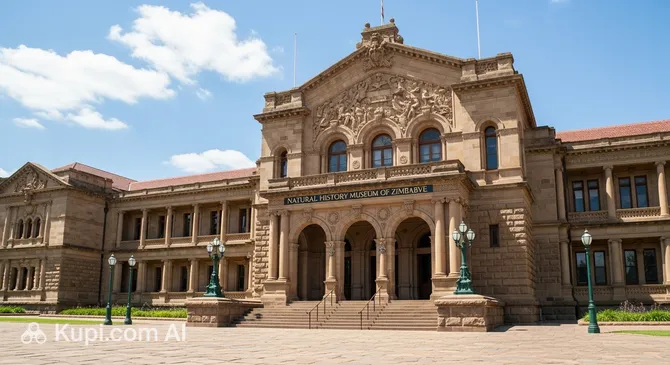
A unique circular building in the heart of Centenary Park houses the Natural History Museum of Zimbabwe — a true treasure trove of knowledge and one of the largest scientific centers on the continent. Located in the city of Bulawayo, this museum is proudly ranked as the fourth largest museum in Africa.
Natural History Museum of Zimbabwe. Illustration.
Source: Kupi.com AI
Traveler photos:
Inside, more than 75,000 exhibits are organized across nine exhibition galleries. Zimbabwe is rightfully proud of this collection, as it covers almost every aspect of the region's natural heritage: from ancient fossils to the rich flora and fauna of today.
The museum gained particular fame for its most celebrated "resident" — the world's second-largest mounted elephant, which amazes visitors with its sheer scale. In addition to the exhibitions, eight research departments operate here, making this place not just a tourist location, but a living center of science.
Contacts
For more information before your visit, you can use the following contact details:
Visitors can expect a fascinating journey through the ages. On the ground floor, you can come face-to-face with the inhabitants of the African savanna: here you will find impressive wildlife dioramas and a live exhibit of local snakes. The butterfly and insect collection also deserves special attention — it is considered one of the most comprehensive in Southern Africa.
For lovers of antiquity, the paleontology halls are open, where the skeletons of dinosaurs such as Syntarsus and Vulcanodon "come to life." The museum's geological section is equally interesting: here you can see the rare orbicular granite from the Matobo Hills and ancient stromatolites that are an incredible 3 billion years old.
Moving up to the upper floors, guests are immersed in the human history of the region. The displays cover the path from the Stone Age to the events of the colonial period. Thanks to detailed descriptions and an interactive approach to the display design, even a self-guided tour becomes an engaging history and natural science lesson.
Getting There
Finding the Natural History Museum of Zimbabwe is easy — it is located in the picturesque Centenary Park at the intersection of Park Road and Leopold Takawira Avenue. Thanks to its central location, the museum is just a 3-minute drive from the city's central business district.
Tourists can easily reach the site by taxi or private car from anywhere in the city. If you prefer public transport, city minibuses run regularly towards the park, and a walk from the central streets takes very little time and allows you to get a feel for the rhythm of the local neighborhoods.
Nearest city: Bulawayo
History & Facts
The origins of this scientific treasure house date back to 1901, when Cecil Rhodes supported the idea of creating a space in Bulawayo to house mineralogical collections. The official founding date is January 1, 1902, with the renowned geologist F.P. Mennell serving as its first curator.
The museum did not take on its current appearance immediately. In 1910, a building designed by the famous architect Sir Herbert Baker was constructed for it. Later, in the 1960s, the unique circular building was erected, which is now considered an architectural landmark of the city. The official opening of this modernist pavilion in Centenary Park took place on March 20, 1964.
In 1982, the museum underwent a major transformation when all of Zimbabwe's national natural science collections were moved here. It was then that it received its current name, solidifying its status as the primary center for paleontological and zoological research in the region.
Time Needed
To thoughtfully explore all nine galleries and discover the extensive collection, most travelers need about 2–3 hours. This is quite enough time to leisurely examine the giant dinosaur skeletons and unique ethnographic artifacts.
If you are a passionate geology or entomology enthusiast, it is worth setting aside half a day. The museum features such detailed exhibits that a careful study of each display case can take much longer than it might first appear.
Working Hours
The museum doors are open to guests daily, including weekends and public holidays. The operating hours are standard: from 09:00 to 17:00, making it easy to fit a visit into your Bulawayo itinerary.
Despite the consistent schedule, it is recommended to check the museum's official website before your trip. This will help ensure that no special events or technical maintenance in specific galleries are planned for the day of your visit.
09:00–17:00
Nearby
After immersing yourself in the world of nature and history, it is worth taking a stroll around the surrounding area. The district around Centenary Park offers pleasant spots to relax and experience the local atmosphere.