Support

Congo

Cities in the country

About the Country

The Republic of the Congo, located in the very heart of Central Africa, is a land of contrasts where pristine nature meets bustling urban centres. Covering a significant territory washed by the waters of the mighty Congo River and the Atlantic Ocean to the southwest, the country offers a unique immersion into African exoticism. An atmosphere of authenticity and warm hospitality awaits you here, opening the door to a world of rich culture and incredible natural beauty.

The Congo's cultural heritage is woven from the traditions of its many ethnic groups, which is reflected in its music, dance, and crafts. The nation's capital, Brazzaville, sprawling on the banks of the Congo River, is not only the administrative but also the cultural heart of the nation. It is a dynamic city where you can feel the pulse of modern African life and discover local art and history. Near the capital, you can visit unique natural sites that showcase the full diversity of the local flora and fauna.
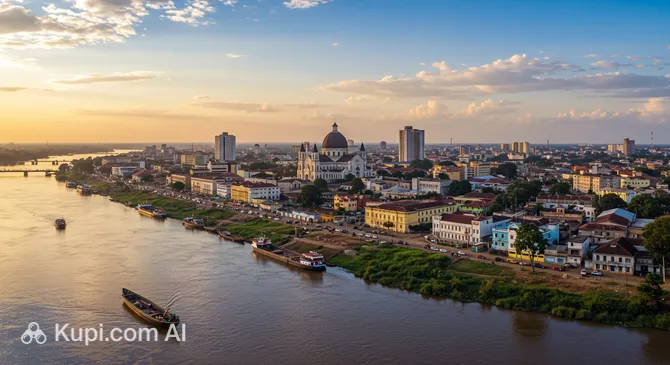
Brazzaville. Source: Kupi.com Binoculars

The Congo's greatest asset is undoubtedly its nature. Vast tropical rainforests, part of the Congo Basin—the second-largest tropical forest area in the world—are home to an incredible diversity of wildlife, including forest elephants, gorillas, and chimpanzees. The equatorial climate ensures lush vegetation all year round. Besides the capital, another important economic and tourist centre is the city of Pointe-Noire, located on the Atlantic coast and known for its beaches.

Currency

The national currency of the Republic of Congo is the Central African CFA franc (international code: XAF). This currency is also used in several other Central African countries, including Cameroon, the Central African Republic, Chad, Equatorial Guinea, and Gabon. CFA franc banknotes and coins come in various denominations and often feature motifs that reflect the region's culture, nature, and economy. You will see images of local animals, scenes from daily life, or portraits of important figures.

It is advisable to carry a sufficient amount of cash, especially when travelling outside of major cities. You can exchange foreign currency for CFA francs at banks and official exchange bureaus, which are mainly located in major cities like Brazzaville. Try to avoid exchanging money with street money changers due to the risk of fraud or receiving an unfavourable exchange rate. Credit card use in Congo is limited; they are primarily accepted in large hotels, some restaurants, and supermarkets in the capital and other big cities. For daily expenses, purchases at markets, and paying for services in smaller towns, cash is preferred.

Visa Requirements

For UAE citizens travelling to the Congo (the Republic of the Congo), a visa is typically required, but it can be obtained on arrival for a stay of up to 30 days. While a visa does not need to be arranged in advance, you will still need to present several documents upon entry. These generally include a valid passport with a validity of at least six months beyond your planned departure date from the country, proof of onward or return tickets, hotel booking confirmations, and potentially proof of medical insurance.

As visa regulations can change, it is strongly recommended to confirm the most current entry requirements before planning your trip. Since there is no embassy or consulate for the Republic of the Congo in the UAE, you should check for the latest information via the country's nearest diplomatic mission. This will help you avoid any unforeseen complications and ensure your travel preparations are smooth and stress-free.

We'll tell you if you need a visa

Specify where you are going, or
Your citizenship
Destination

Time Zones

When planning your trip to the Republic of the Congo, you will not need to worry about changing time zones within the country. The entire territory of the Republic of the Congo is in a single time zone — West Africa Time (WAT), which is UTC+1. This means the time in the capital, Brazzaville, is the same as in all other regions of the country. For travellers from the UAE, it is useful to know that the UAE is three hours ahead of the Republic of the Congo, as the UAE observes Gulf Standard Time (GST), which is UTC+4.

Thanks to this single time zone, you will not have to adjust your watch when travelling around Congo, which simplifies planning for internal journeys and excursions. Simply set your watch upon arrival in the country, and you will always know the correct local time.

How to Get There

Getting to Congo is easiest by air. The country's main gateway is Maya-Maya International Airport, located in the capital, Brazzaville. While there are no direct flights from the UAE, convenient connections are available from a number of European and African cities. Travellers from the UAE can expect a layover, with airlines like Ethiopian Airlines, Royal Air Maroc, and Air France offering routes to Brazzaville. The airport in Pointe-Noire is also an important transport hub, serving the coastal region.

Although air travel is the most common way to get to Congo, land routes through neighbouring countries theoretically exist; however, these can be less predictable and comfortable for tourists. Sea travel, for example, via the port of Pointe-Noire, is mainly focused on freight transport, but passenger options may occasionally be available. In any case, when planning your trip, it is advisable to book tickets well in advance, especially if your journey falls during the peak tourist season, to secure the best prices and availability.

For your reference, here is a summary of the main airports:

Airport Name City Passenger Traffic
Maya-Maya AirportBrazzavilleSignificant
Pointe-Noire AirportPointe-NoireSignificant

Congo offers travellers an amazing variety of experiences, from bustling urban centres to serene natural havens and coastal resorts. There is something for everyone, whether you are seeking cultural immersion, a relaxing coastal getaway, or an exploration of the country's unique natural landscapes.

The heart of the country is undoubtedly its capital, Brazzaville. This dynamic city, situated on the banks of the mighty Congo River, captivates with its unique atmosphere where modernity intertwines with colonial heritage. Here, you can wander through bustling streets, visit colourful markets, and discover local art. For those who appreciate beach holidays and the ocean breeze, the primary destination is Pointe-Noire, the country's largest port city and a popular resort with expansive sandy beaches.

Brazzaville. Source: Kupi.com Binoculars

If you are seeking to connect with nature, consider visiting Loango, famous for its namesake national park. Here, you can witness the unique spectacle of wild animals, including elephants and buffalo, on the Atlantic coast. The country's inland regions also offer fascinating destinations, such as the city of Oyo, which provides an opportunity for a deeper immersion into local culture and traditions, away from the hustle and bustle of major tourist hubs. Each of these locations possesses its own distinct charm, promising to create unforgettable memories.

Top Attractions

The Congo offers travellers a unique combination of natural wonders and cultural discoveries. The country is rich in national parks where you can observe wildlife in its pristine state, as well as interesting urban attractions that reflect its history and modern life.

One of the country's main treasures is the Nouabalé-Ndoki National Park. This vast tropical rainforest is a true paradise for nature lovers, offering a unique opportunity to see western lowland gorillas, forest elephants, and many other rare species of animals and birds in their natural habitat. The park is part of the Sangha Tri-National Landscape, a UNESCO World Heritage Site, and is famous for its untouched landscapes, making it an important centre for scientific research and ecotourism.

In the nation's capital, Brazzaville, the Basilica of Saint Anne, built in the mid-20th century, is a prominent landmark. This impressive structure, with its emerald-green tiled roof and unique architecture blending European and African motifs, stands as one of the city's symbols. Its vibrant appearance and richly decorated interior attract both worshippers and architecture enthusiasts. As with any place of worship, visitors are advised to dress modestly out of respect.

For those seeking refreshing natural scenery, a visit to the Loufoulakari Falls is a must. Located not far from the capital, these picturesque waterfalls offer beautiful views and a chance to enjoy the cool water and the beauty of the surrounding nature. It is a popular spot for family picnics and short nature excursions.

Best Time to Visit

When planning a trip to the Congo, it is important to consider its equatorial climate. The best time to visit is during the long dry season, which typically runs from June to September. During this period, the weather is more predictable with less rainfall, making it ideal for wildlife viewing—such as gorilla trekking in the national parks—and for travelling more comfortably around the country. The air becomes slightly less humid, although the high temperatures, which will be familiar to residents of the UAE, remain. The country's main national holiday, Independence Day, falls on 15 August, which can add local colour to your trip. Although the Congo does not experience a huge influx of tourists, there may be slightly more visitors during the dry season, and prices for some services, particularly safaris and excursions, may be higher.

The low season corresponds with the long rainy season from March to May, and the short rainy season from October to December. At this time, rainfall is heavy, which can make travelling in some regions difficult, especially on unpaved roads. However, there are advantages: nature is in its most lush and green state, there are significantly fewer tourists, and prices for accommodation and some services may be lower. The short dry season (January to February) can also be a good option for a trip, offering a compromise between the amount of rainfall and tourist activity.

Regardless of when you choose to go, it is worth remembering that the climate in the Congo is hot and humid all year round. It is advisable to check the weather conditions for the specific regions you plan to visit, as the climate on the Atlantic coast, for example, near Pointe-Noire, can differ somewhat from that of the central regions. Also, keep an eye on announcements for cultural events; major festivals such as the Pan-African Music Festival (FESPAM) are sometimes held in Brazzaville and could be a vibrant addition to your journey.

Traditions

When planning a trip to Congo, it is worthwhile to familiarise yourself with local cultural etiquette to ensure your stay is comfortable and respectful of the residents. Greetings play an important role here: a handshake is common and can be quite lengthy. Special reverence is shown to elders, and it is customary to greet them first. While direct eye contact often signifies confidence in Western culture, in Congo, especially when speaking with elders or people of high status, it may be perceived as a challenge; a modest gaze is more appropriate. In terms of dress, particularly outside the capital, Brazzaville, modesty is valued. When visiting religious sites or official institutions, clothing that covers the shoulders and knees is recommended. Remember, it is always best to ask for permission before photographing people.

Hospitality is one of the key features of Congolese culture. Being invited into a home is a great honour. A small gift for the hosts (such as fruit, sweets, or something for the children) will be a pleasant gesture, though it is not a strict requirement. Refusing offered food or drinks is considered impolite. At the table, especially if food is served from a communal dish, it is customary to eat with your right hand. People usually wait for the host or the eldest person to begin the meal. Try to avoid public displays of anger or impatience, as this can be perceived negatively. It is also best to refrain from discussing sensitive political topics unless your conversational partner initiates such a discussion.

Among the important national holidays in Congo, Independence Day stands out. It is celebrated on 15 August with great fanfare, including parades and public festivities that reflect pride in the country's sovereignty. Understanding and respecting local traditions, such as the unhurried pace of life (sometimes called "African time"), will help you build warm relationships with local people and gain the most positive impressions from your trip. Showing a genuine interest in the culture and customs is always appreciated and opens the door to a deeper understanding of this amazing country.

Entertainment

Congo offers travellers a unique experience, where entertainment is closely intertwined with rich nature and distinctive culture. Fans of active recreation will appreciate the opportunities to explore national parks, trek through tropical rainforests and observe wildlife. Although the country is not a classic destination for diving or skiing, its vast rivers and untouched landscapes provide ample opportunities for adventures such as a safari on the Congo River or hiking to waterfalls.

The cultural programme in Congo focuses on getting to know the local traditions. Instead of large theatre complexes, here you can immerse yourself in an authentic atmosphere by attending traditional music and dance performances, which often take place during local festivals or in cultural centres. The few museums that exist tell the story of the region's history and ethnography. As for shopping, visitors to Congo typically bring back handicrafts made by local artisans: wooden masks, sculptures, vibrant textiles and woven goods. The best places to find such souvenirs are the local markets, especially in Brazzaville and Pointe-Noire.

The evening entertainment in Congo is most prominent in the capital, Brazzaville, and the city of Pointe-Noire. Here you can find restaurants and lively establishments playing local and contemporary music, offering national cuisine and a range of beverages. While many restaurants serve traditional Congolese food, which is rich in fish, chicken, and vegetables, it is advisable to inquire about halal options. The atmosphere is usually vibrant and welcoming, perfect for socialising. For a family holiday, Congo primarily offers the shared exploration of nature – visiting reserves where you can see monkeys, gorillas and other animals in their natural habitat, which can be an unforgettable adventure for children and adults alike. There are few specialised theme parks; the emphasis is on natural and cultural experiences.

Currency rates

Planning a trip? Wonderful! To ensure the financial aspects of your journey do not come as a surprise, it is important to remember that currency exchange rates are constantly changing. We therefore strongly advise you to track the latest rates, both before you fly and throughout your trip. You can use the data provided below for this, as we monitor currency rates 24/7 and strive to provide the most current information available.

XAF currency exchange rate as of 02.01.2026

1 AED
~ 151.31 XAF
1 AMD
~ 1.46 XAF
1 AUD
~ 370.86 XAF
1 AZN
~ 326.88 XAF
1 BYN
~ 189.02 XAF
1 CAD
~ 404.81 XAF
1 EUR
~ 652.90 XAF
1 GBP
~ 748.70 XAF
1 HUF
~ 1.70 XAF
1 INR
~ 6.17 XAF
1 KGS
~ 6.35 XAF
2.60 KRW
~ 1 XAF
1 KZT
~ 1.10 XAF
1 PLN
~ 154.80 XAF
1 RUB
~ 7.05 XAF
1 SAR
~ 148.16 XAF
1 SGD
~ 432.24 XAF
1 TRY
~ 12.94 XAF
1 UAH
~ 13.14 XAF
1 USD
~ 555.57 XAF
21.62 UZS
~ 1 XAF

Reached the end of the page?

That means the route is fully explored