Equatorial Guinea is a fascinating and little-explored destination where African flavor meets Spanish heritage. Located partly on the mainland and partly on the volcanic islands of the Gulf of Guinea, the country offers travelers a unique combination of pristine tropical forests and evolving modern architecture. It is the only country in Africa where Spanish is an official language, giving its culture a special charm.
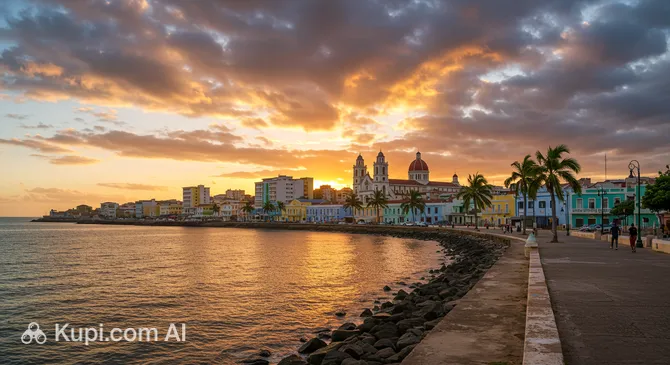
The heart of the state is its capital — the city of Malabo, located on the picturesque Bioko Island. Here you can stroll through cozy squares surrounded by colonial buildings or head to the Atlantic coast. On the mainland, the lively Bata awaits tourists; it is the country's largest city, known for its spacious embankments and the incredible energy of a port hub.
Illustration.
Source: Kupi.com AI
Equatorial Guinea's nature is breathtaking: from extinct volcanoes and high-mountain lakes to dense jungles inhabited by rare primate species. The atmosphere here is filled with tranquility and hospitality, making it an ideal place for those seeking seclusion away from mass tourist routes.
Currency
The national currency of Equatorial Guinea is the Central African CFA franc (international code — XAF). This currency has a fixed exchange rate to the Euro, which makes financial planning for your trip more predictable. The banknotes are vibrantly colored and often decorated with images reflecting the richness of African nature and culture.
Travelers should keep in mind that cash payments dominate in the country. You can exchange money at bank branches in Malabo or Bata, with Euros being the most widely accepted. The use of bank cards outside of large international hotels and capital supermarkets is extremely limited, so it is always recommended to carry a sufficient amount of cash for daily expenses and trips to smaller towns.
Visa Requirements
To visit Equatorial Guinea, most foreign tourists, including citizens of Russia and CIS countries, require a tourist visa. The process usually takes place at the consular sections of the country's embassies. It is important to prepare a set of documents in advance: you will definitely need a valid passport that expires no earlier than six months after the completion of your trip.
Usually, to apply for a visa, they also request confirmation of a hotel booking, return flight tickets, and an international certificate of vaccination against yellow fever. Visa rules can be quite strict and change periodically, so before purchasing tickets, it is strongly recommended to check current requirements on the official websites of diplomatic missions or at verified visa centers.
We’ll tell you if you need a visa
Enter where you’re going, or
Your citizenship
Destination
Timezones
Equatorial Guinea operates on West Africa Time (WAT), which corresponds to the GMT+1 time zone. All regions of the country, including the island part with the capital Malabo and the mainland part with the city Bata, are in the same time zone.
For tourists, this means there is no need to change their clocks when moving within the country. This time zone is very convenient for travelers from Europe, as the difference with most countries in the region is minimal, helping to avoid jet lag and immediately start exploring local attractions.
Getting There
The easiest way to reach Equatorial Guinea is by air. The main international hub is Malabo Airport, located on Bioko Island. It regularly receives flights from major European capitals such as Madrid and Paris, and maintains stable connections with key African metropolises. Another important arrival point on the mainland is Bata Airport, which serves both international and domestic destinations.
Land travel is possible through borders with neighboring Cameroon and Gabon; however, this method of travel requires thorough preparation of documents and consideration of local road conditions. Regular maritime connections are established between the island and mainland parts of the country: ferries and high-speed boats connect Malabo and Bata, offering tourists a scenic journey across the ocean.
When planning your trip, it is recommended to book flights in advance, especially if your travel coincides with major holidays. Domestic flights between cities are operated by local airlines, allowing for quick and comfortable travel across the country.
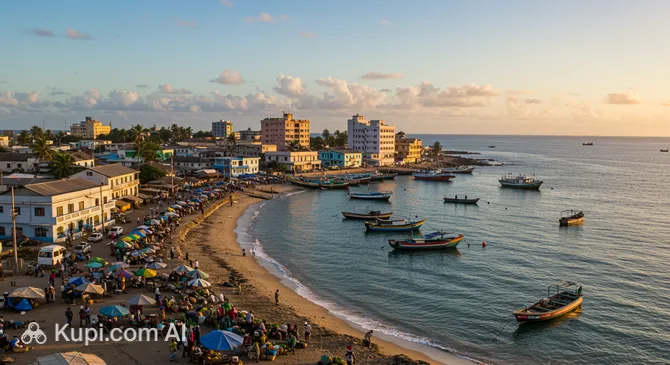
The geography of Equatorial Guinea offers an amazing variety of locations: from modern metropolises to cozy coastal villages. The main center of attraction remains mainland Bata, which impresses with its dynamics, wide boulevards, and endless ocean horizons. It is an ideal place for those who want to feel the rhythm of modern Africa and enjoy a holiday on the coast.
Illustration.
Source: Kupi.com AI
Equally interesting is the island-based Malabo, where gems of colonial architecture are hidden among lush tropical greenery. Those seeking peace and authenticity should head to Mbini — a small town at the mouth of a river, famous for its white sand beaches and calm atmosphere. Lovers of mountain landscapes and the cool of the jungle will enjoy Evinayong, located on an upland in the heart of the country's mainland.
For a deeper immersion into the region's culture, you can visit Luba with its picturesque bays or the modern city of Djibloho, which is being built as a new high-tech capital deep within the country. Each of these places reveals Equatorial Guinea from a new and often unexpected perspective.
Top Attractions
One of the country's most majestic natural attractions is Pico Basile. This extinct volcano rises above Bioko Island to a height of over 3,000 meters. On a clear day, its summit offers breathtaking views of Malabo and the endless expanses of the Gulf of Guinea. The mountain slopes are covered with cloud forests, teeming with rare endemic plant and animal species.
In the very heart of the capital lies the Santa Isabel Cathedral — an architectural masterpiece in the Neo-Gothic style, whose terracotta facade has become a symbol of the city. The cathedral impresses with its elegance and detail, serving as a reminder of the Spanish influence on the country's culture. A walk around it allows you to touch history and feel the calm atmosphere of the city's central square.
For true adventure seekers, the Monte Alen National Park on the mainland is a must-see. This is a vast territory of untouched jungle with trails laid out for wildlife observation. Here you can encounter forest elephants, gorillas, and hundreds of species of exotic birds. The park is considered one of the best places in Central Africa for ecological tourism and full immersion in the tropical atmosphere.
Another amazing place is Corisco Island, famous for its white sandy beaches and crystal-clear water. It is a true paradise for those seeking seclusion and dreaming of a "Bounty-style" holiday. The island is surrounded by coral reefs, making it attractive for diving and snorkeling enthusiasts who wish to explore the underwater world of the Gulf of Guinea.
Best Time to Visit
To plan the perfect trip to Equatorial Guinea, it is best to choose the dry season period, which falls in December, January, and February. During these months, air humidity becomes moderate and rainfall is minimal, creating excellent conditions for trekking in the forests of Evinayong or relaxing on the golden beaches of the town of Mbini.
The low season is characterized by heavy tropical downpours, particularly pronounced between May and October. At this time, the country's nature flourishes in all its glory, turning the jungle into an emerald ocean, though traveling on unpaved roads can be difficult. Nevertheless, the shoulder season attracts fans of secluded relaxation and those who want to witness unique natural cycles, such as the migration of certain bird species.
It is important to remember that due to its proximity to the equator, the climate here is consistently hot throughout the year. If your goal is to climb Pico Basile or visit remote nature reserves, aim for the winter months when the sky is more likely to remain clear, providing stunning visibility for panoramic photos.
Traditions
The culture of Equatorial Guinea is a colorful fusion of Fang and Bubi traditions with Spanish influence. When communicating with locals, politeness and calm are very important. Greetings are usually accompanied by a handshake, and it is customary to maintain eye contact as a sign of respect. Hospitality here is elevated to a high art, and if you are invited into a home, it is a small but pleasant gesture to bring the hosts sweets or souvenirs from your country.
In matters of dress, residents of Equatorial Guinea adhere to moderate conservatism. When visiting religious sites or official institutions in Malabo, it is recommended to choose modest clothing that covers the shoulders and knees. In public places, a neat appearance is highly valued and helps win the favor of those around you. It is also worth noting that photographing people without their prior consent may be perceived negatively, so it is always better to politely ask for permission.
Among the significant holidays, Independence Day (October 12) stands out, celebrated on a grand scale with songs and dances. It is important for tourists to remember that there are certain rules of etiquette at the table, where it is often customary to share dishes. Showing respect for local customs and a sincere interest in the culture will help you make new friends and make your journey truly unforgettable.
Entertainment
Entertainment in Equatorial Guinea is primarily geared towards nature lovers and ecotourism. One of the most exciting activities is hiking in national parks, where you can see forest elephants and gorillas in their natural habitat. For those who prefer the water, the coastline in the Luba and Mbini areas offers excellent opportunities for deep-sea fishing and snorkeling in the crystal-clear waters of the Gulf of Guinea.
Cultural life is concentrated in the major cities. In Malabo, you can visit theaters and cultural centers that regularly host performances by local musical groups and exhibitions of contemporary African art. The nightlife here features cozy bars and restaurants offering exquisite seafood dishes accompanied by traditional rhythms.
Shopping in the country mostly involves visiting the colorful markets in Bata, where you can purchase authentic souvenirs. Tourists often bring home intricate wood carvings, woven goods, and the famous local coffee. Family vacations are perfectly complemented by walks along modern embankments equipped with rest areas and playgrounds for children.
Currency rates
Planning a trip? Excellent! To ensure the financial aspects of your journey do not come as a surprise, it is important to remember that currency exchange rates are constantly changing. Therefore, we strongly advise monitoring the latest rates both before you fly and throughout your trip. To do this, you can use the data provided below — we monitor exchange rates 24/7 and strive to provide the most current information.