Support

Malabo Airport

About the Airport

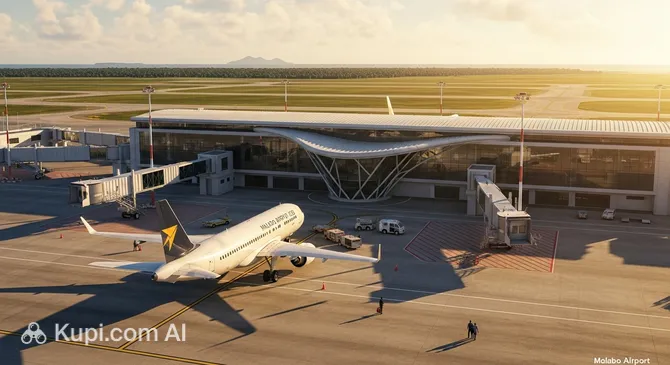
Malabo Airport. Source: Kupi.com Binoculars

Malabo International Airport (IATA: SSG), also known as Saint Isabel Airport, is the main aerial gateway to Equatorial Guinea. Located on the picturesque island of Bioko, it serves as a key transport hub connecting the country's capital with cities in Africa and Europe. Having undergone significant modernization, today the airport is a modern complex capable of handling large international airliners. It is the starting point for exploring the exotic nature and culture of this country located on the equator.

IATA Code SSG
ICAO Code FGSL
City Malabo
Distance to centre approx. 9 km
Status International
Annual passengers approx. 500,000 (2017 data)
Popular Airlines Air France, Ethiopian Airlines, Turkish Airlines
Schedule Malabo Airport online board

Malabo Airport, despite its relatively small size, offers passengers all necessary services for a comfortable journey. There is a modern waiting hall, several cafes, a currency exchange point, as well as car rental agency desks. The air harbour serves as a base for national carriers such as CEIBA Intercontinental and Cronos Airlines, and receives flights from major European and African airlines. For passengers who value enhanced comfort, a VIP lounge is available. Transport connections to the city are provided mainly by taxi; a trip to the centre of Malabo will take about 15-20 minutes.

Contact Information

  • Official Website: The airport is managed by Aeropuertos de Guinea Ecuatorial (A.D.G.E. S.A.). It is recommended to look for up-to-date information on their official website: adge-sa.com.
  • Help Desk Phone: +240 333 098 102 / +240 333 098 104. Please note that for urgent questions related to your flight, it is most reliable to contact your airline's representative office directly.
  • Airport Address: Carretera del Aeropuerto, Malabo, Bioko Norte, Equatorial Guinea.
  • Email: For general inquiries, you can write to the management company: info@adge-sa.com. For questions regarding booking, tickets, and flight status, you should contact your airline.
  • Social Media: At this moment, Malabo Airport does not have official pages on popular social networks. We recommend being wary of unofficial accounts and trusting only information from your airline.
  • Lost Baggage Information: All issues related to lost, delayed, or damaged baggage are handled by the Lost & Found service of your airline. Please contact the carrier's counter in the arrivals hall.
  • Passenger Support Contacts: To obtain the most accurate information about flight status, schedule changes, carriage rules, and other questions concerning your flight, you should contact your airline's support service directly.

How to Get to the Airport

Malabo Airport (SSG) is located just 9 kilometres west of the city centre, making the journey there quick and convenient. The main ways for travellers to reach the terminal are by taxi or rental car, as public transport has its specificities.

Taxi and Transfer. This is the most reliable and comfortable option. A trip from the centre of Malabo to the airport will take approximately 20-30 minutes, depending on the time of day and traffic. It is strongly recommended to use official taxis or book a transfer through your hotel in advance. Be sure to agree on the fare with the driver before starting the journey, as meters are not always used.

Car Rental and Parking. If you value independence and plan to explore Bioko Island, renting a car is an excellent solution. Both international and local rental companies operate in the city and at the airport itself. Note that the driving style may differ from what you are used to. There is parking at the airport where you can leave your car during your trip.

Public Transport. Route taxis (colectivos) operate in Malabo, serving as the most budget-friendly means of transport. However, for tourists with luggage, this method may prove inconvenient due to the lack of a fixed schedule, undefined routes, and frequent overcrowding. There is no direct bus service between the city centre and the airport.

When planning routes across West-Central Africa, it is useful to know about other airports in the region. Relatively nearby are Douala Airport (DLA) in Cameroon, as well as the Nigerian airports Calabar Airport (CBQ), Akwa Ibom Airport (QUO), and Port Harcourt International Airport (PHC). Additionally, Bata Airport (BSG) is located on the mainland part of Equatorial Guinea.

Terminals and Map

Malabo Airport (SSG) has been significantly transformed with the opening of a new modern passenger terminal, which today handles all passenger flights. The old airport building is no longer used for these purposes, so all navigation for travellers is concentrated in one large and convenient complex. This simplifies orientation and makes transfers and movement around the airport intuitive.

The airport structure is quite simple. The New Terminal is a single building divided into several levels and functional zones for servicing both international and domestic flights. Typically, the departure zone with check-in counters and pre-flight security is located on the upper floor, while the arrival zone with passport control and baggage claim is on the lower floor. Since all operations take place under one roof, there is no need to transfer between terminals, saving passengers time and effort.

Procedures at Malabo Airport are standard. Upon arrival at the departure zone, you check in for your flight, drop off your luggage, and then proceed to security and passport control. It is recommended to arrive at the airport well in advance: approximately 2-3 hours before an international flight and 1.5-2 hours before a domestic one. Although the terminal is modern and processes are organized efficiently, queues are possible during peak hours.

To navigate the terminal, follow the signs, which are usually duplicated in several languages (including Spanish and English). The airport layout is logical: after passing all formalities, you enter the secure area with waiting lounges, shops, and cafes. Finding your boarding gate will not be difficult. Thanks to the compact and well-thought-out layout, even an inexperienced traveller can easily orient themselves at Malabo Airport.

Airport History

The history of Malabo Airport (SSG), also known as Saint Isabel Airport, is inextricably linked with the colonial past of Equatorial Guinea. It was built in the 1940s by Spanish authorities on Bioko Island (formerly Fernando Po). Initially, the airfield served military and administrative purposes, ensuring communication with the mainland and Spain. Its strategic location on Punta Europa made it an important regional transport hub from the moment of its foundation.

The airport received a significant impetus for development after the country gained independence and, in particular, after the discovery of large oil deposits in the 1990s. The economic boom led to a sharp increase in international traffic — business people, engineers, and workers from all over the world began to arrive in the country. The old infrastructure could no longer cope with the increased passenger flow and new service requirements, making modernization inevitable.

The early 2000s were marked by large-scale reconstruction. In 2004, a new, modern passenger terminal was opened, capable of serving a significantly larger number of passengers. Simultaneously, the runway was lengthened and strengthened, allowing it to receive large long-haul aircraft. These changes transformed Malabo Airport into the country's modern aerial gateway, meeting international standards.

One interesting fact in the airport's history is related to events in the late 1960s when it was used as a base for international humanitarian missions delivering aid to neighbouring regions. Today, the airport is the main base for the national airline CEIBA Intercontinental and continues to play a key role in the economic and social life of Equatorial Guinea, connecting it with Africa, Europe, and other parts of the world.

Services and Facilities

Malabo International Airport (SSG), the main aerial gateway of Equatorial Guinea, offers passengers all necessary services for a comfortable wait for their flight. In the terminal, you can have a snack in a cafe or restaurant serving both local and international dishes. For those wishing to shop, there are stores, including a duty-free zone, where you can purchase souvenirs, perfumes, and other goods.

General waiting lounges are provided for passengers waiting for their flights. Those preferring enhanced comfort can use the VIP lounges, offering a more private atmosphere, snacks, and beverages. To stay connected, travellers can connect to the Wi-Fi network and use charging stations for electronic devices located in various parts of the terminal.

For the convenience of arriving and departing passengers, currency exchange points and ATMs operate at the airport. If you need assistance or information, you can always approach the information desk, where staff are ready to answer your questions regarding flight schedules, airport services, and transport to the city.

Malabo Airport cares for passengers with special needs. Mother and child rooms are equipped for travellers with children. Passengers with reduced mobility are provided with necessary assistance; to receive it, it is recommended to notify your airline in advance. A first aid post is also available within the terminal.

For travellers who need to rest between flights, several hotels of varying comfort levels are located in the immediate vicinity of the airport. Although specialized conference rooms may be absent, business travellers can find necessary conditions for work, such as internet access and quiet zones, in the business lounges.

Dining

At Malabo International Airport (SSG), passengers can find several options to have a snack or wait for a flight over a cup of coffee. Although the selection of establishments here is more modest than in major global hubs, it is quite sufficient to satisfy hunger and relax before departure.

The main dining points are concentrated in the main terminal, both in the public area before security control (landside) and in the departure zone (airside). These are mainly small cafes and kiosks. The standard menu includes sandwiches, pastries, salads, as well as hot and cold beverages. For a more substantial meal, at least one establishment offers full hot dishes.

For those wishing to experience local cuisine, some cafes offer simple but tasty dishes. You can try chicken with rice and spicy sauce, fresh fried fish, or a popular side dish — fried plantains. This is a great opportunity to feel the flavour of Equatorial Guinea before departure. Passengers with strict dietary restrictions (vegetarianism, gluten-free diet) should note that finding specialized dishes may be difficult, so it is recommended to bring snacks with you.

Prices at the airport are expectedly higher than in the city. The opening hours of most cafes and bars are oriented towards the schedule of international flights. This means that during quiet periods or late at night, some of them may be closed. It is recommended to check the schedule directly on site.

Travel Tips

Travelling through Malabo International Airport (SSG) will be easier and more comfortable if you familiarize yourself with its features in advance. Here are a few tips to help you orient yourself and avoid unnecessary hassle during your trip to Equatorial Guinea.

Arrival Time at the Airport. It is recommended to arrive at the airport at least 3 hours before an international flight and 1.5–2 hours before a domestic one. Despite the relatively small size of the terminal, registration and control procedures may take longer than expected, especially if several flights depart simultaneously.

Check-in and Security. To save time, use online check-in if your airline provides this option. Have your passport and ticket ready at the check-in counters. The screening procedure is standard, but security staff may ask you to switch on your electronic devices, so ensure they are charged. Remain calm and politely follow the staff's instructions.

Seat Selection on the Plane. If it is possible to choose a seat during check-in, consider your preferences. Window seats will give you beautiful views of Bioko Island during takeoff and landing. Aisle seats ensure more freedom of movement and quick access to the exit after landing. On flights by local airlines operated on small aircraft, be prepared that you might be reseated for proper vessel balancing.

Hand Luggage. Be sure to put all valuables, documents, money, bank cards, electronics, and necessary medications in your hand luggage. Remember international rules for carrying liquids — containers no more than 100 ml each, packed in one transparent bag. Sharp objects and flammable substances are strictly prohibited. Before departure, always check the hand luggage allowance on your airline's website.

Transit Passengers. If you have a connecting flight in Malabo, check in advance whether you need to collect your luggage and check in for the next flight yourself. The transit zone of the airport may be limited in terms of amenities, so be prepared for this. Check visa rules in case exiting the transit zone is required for the transfer.

Customs Control. Upon entering the country, customs inspection can be thorough. Be prepared to clearly answer questions about the purpose of your visit, declare large sums of currency and expensive technology. It is recommended to have a return ticket and hotel booking confirmation with you, as you may be asked to present them.

Saving Time and Money. Completed online check-in and prepared documents are the best way to save time. To avoid spending extra money, bring an empty reusable water bottle, which can be filled after passing security control, and a light snack. Prices for food and drinks at the airport are generally inflated.

In Case of Flight Delay. In the event of a flight delay or cancellation, immediately contact your airline's representative counter. Find out the reason for the delay and what services (food, drinks, hotel accommodation) you are entitled to under the carrier's rules. Having travel insurance will help compensate for unforeseen expenses.

Reached the end of the page?

That means the route is fully explored