Support

Port Harcourt International Airport

About the Airport

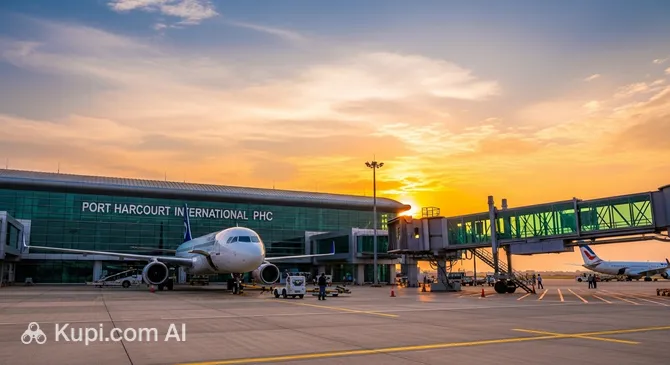
Port Harcourt International Airport. Source: Kupi.com Binoculars
Port Harcourt International Airport (PHC) is the main aerial gateway to Nigeria's "oil capital" and one of the busiest transport hubs in the country. The airport plays a key role for business travellers, serving as the primary arrival point for oil and gas industry specialists heading to the Niger Delta region. It presents an interesting mix of contrasts: a modern, gleaming glass international terminal, opened quite recently, sits alongside an older domestic building that retains the atmosphere of past decades. Despite its strictly business reputation, the airport strives to offer guests increasingly comfortable conditions for beginning their acquaintance with southern Nigeria.
IATA Code PHC
ICAO Code DNPO
City Port Harcourt
Distance to Centre ~30 km
Status International
Annual Passengers ~1.2 million (2024)
Schedule Recommended to check the official FAAN website or online flight board

Airport Features and Services

Terminals and Infrastructure. The airport has two terminals with conditions that differ significantly. The pride of the air harbour is the new International Terminal, opened in 2018. This modern two-storey building is equipped with boarding bridges, air conditioning systems, and spacious waiting halls, ensuring a decent level of comfort for international passengers. The old terminal, serving domestic flights, is much simpler and can be congested during peak hours, although modernization works are also being conducted there.

Transport and Accessibility. The airport is located in the Omagwa area, approximately 30 kilometres northwest of the centre of Port Harcourt. The journey to the city usually takes about 30–45 minutes, but travel time may increase due to traffic jams. For transfers, it is strongly recommended to use official yellow airport taxis or a pre-booked transfer from your hotel, avoiding private unlicensed carriers for safety reasons.

Passenger Service. Given the specifics of the region, the airport is oriented towards business travellers. VIP lounges are available here, offering a quieter atmosphere for waiting for flights. Duty Free shops and several cafes operate in the new terminal. Travellers should note that food options in the domestic departure zone may be limited, so it is better to bring a light snack with you.

Contact Information

For your convenience, we have compiled the main contact information for Port Harcourt International Airport (PHC). We recommend verifying the accuracy of the data on official resources before your trip.

  • Official Website: The airport is managed by the Federal Airports Authority of Nigeria (FAAN). All current information about flights, services, and regulations can be found on their official portal: faan.gov.ng.
  • Helpline Phone: For immediate information, you can call the general FAAN number: +234 807 777 6836.
  • Airport Address: The airport is located at: Omagwa, Port Harcourt, Rivers State, Nigeria.
  • Email: For general inquiries, you can use the contact email of the Federal Airports Authority of Nigeria: info@faan.gov.ng.
  • Social Media: You can follow news and updates from FAAN on their official pages on X (Twitter) and Facebook.
  • Lost Luggage Information: If your luggage has been lost or damaged, you should immediately contact the Lost and Found service of your airline. Representative counters are located in the arrival hall.
  • Passenger Support Service: Assistance with general questions can be obtained at information desks located in the airport terminal or via the helpline phone.

How to Get to the Airport

You can get to Port Harcourt International Airport (PHC) from the city centre of Port Harcourt in several ways, each with its own features. The choice of the optimal option depends on your budget, time, and comfort requirements.

Taxi and Transfer. This is the most popular and recommended method for tourists. You can use the services of official airport taxis or book a private transfer in advance through a hotel or a specialized company. The trip from the city centre to the airport takes approximately 45–60 minutes, but the time can increase significantly due to traffic congestion. It is strongly recommended to agree on the trip cost with the driver before starting the journey to avoid misunderstandings. Using ride-hailing apps like Bolt is also possible, which allows you to know the estimated price in advance.

Car Rental. Both local and international car rental companies operate in the city. Renting a car gives freedom of movement, but driving in Nigeria can be challenging due to intense traffic and specific traffic rules. Many travellers prefer to rent a car along with the services of a local driver who knows the roads well and can help avoid stressful situations. Parking is available at the airport where you can leave a car for a short or long term.

Public Transport. There is no direct bus or rail connection between the city centre and the airport oriented towards tourists. Local shared taxis (minibuses) exist, but they are often overcrowded, do not have a fixed schedule, and may be unsafe for travellers with luggage. This option is suitable only for very experienced and budget-conscious tourists familiar with local realities.

General Recommendations. To ensure safety and comfort, the best choice would be a pre-booked transfer or a trip in an official taxi. Always plan your trip with extra time, especially during peak hours, to avoid missing your flight.

Terminals and Map

International Airport Port Harcourt (PHC), one of the key aviation hubs of Nigeria, has two main passenger terminals that differ in their purpose and level of equipment. Understanding their structure will help you easily orient yourself upon arrival or before departure. The airport consists of a new international terminal and an old domestic terminal. Initially, the division was strict, but today the new terminal serves all international flights and some domestic ones, especially those operated by major airlines. The old terminal continues to be used primarily for domestic flights, mainly by budget and regional carriers. It is extremely important to check with your airline in advance from which terminal your flight operates.

The new international terminal is a modern and more spacious building. Navigation here is intuitive thanks to clear signs in English. The check-in area is located on the ground floor, after which passengers proceed to the first floor to pass through security and passport control (for international flights), and then enter the waiting lounges. The old terminal is significantly smaller and simpler in structure; all main zones are located on one level, which makes it less confusing but also more cramped during peak hours.

The terminals are located in separate buildings a short distance from each other. You can cover this distance on foot in 5-10 minutes. If you have a lot of luggage or limited time, it is more convenient to use taxi or shuttle services that circulate between the buildings.

For international flights, it is recommended to arrive at the airport 2.5-3 hours before departure, and for domestic ones — 1.5-2 hours prior. Lines for check-in and security screening can be long, especially in the morning and evening hours. Procedures in the new terminal are more organized, but passenger flow is also higher there. In the old terminal, the process may seem chaotic, but due to the smaller size of the aircraft, queues move relatively quickly. Arrival zones in both terminals are equipped with baggage claim belts and exits to taxi stands and car rental points.

Airport History

The history of Port Harcourt International Airport (PHC) is closely linked to the development of the oil and gas industry in Nigeria. The airport was built in the late 1970s and officially opened for flights in 1980 to serve the capital of Rivers State, the city of Port Harcourt, and to become the main aerial gateway to the oil-rich Niger Delta region.

One of the most dramatic and pivotal moments in the airport's history occurred on December 10, 2005. Following the crash of Sosoliso Airlines flight 1145, the airport was closed for an extended period. This tragic event served as a catalyst for major reconstruction. During the works, the runway was completely repaired, and security systems and navigation equipment were modernized. The airport began to gradually resume operations in late 2007, first for daytime and then for round-the-clock flights.

The next important stage of development was the modernization of infrastructure. In 2018, the new international terminal was ceremoniously opened. This modern complex was built to increase capacity and improve passenger service quality, allowing the airport to meet international standards. The old terminal was reoriented to serve domestic and regional flights.

Today, Port Harcourt International Airport is one of the busiest in the country, second only to the airports of Lagos and Abuja. It plays a critically important role in Nigeria's economic life, providing transport accessibility for thousands of specialists working in the oil industry, and serving as a vital cargo and passenger hub for the entire southern region.

Services and Amenities

International Airport Port Harcourt (PHC) offers passengers all necessary services for a comfortable wait for their flight. Conditions have been created in the terminal for both short-term stays and long layovers, so that your journey through Nigeria begins and ends with maximum convenience.

For those feeling hungry, various restaurants and cafes operate in the airport, where you can try local and international dishes or simply drink a cup of coffee. In the shops, you will find souvenirs, travel goods, press, and sweets. Special comfort is offered by VIP lounges, where passengers can relax in a quiet environment and avail themselves of complimentary snacks and drinks.

Staying connected will not be difficult: Wi-Fi is available on the airport premises, and numerous charging stations for electronic devices are located in the waiting halls. For financial matters, bank branches, ATMs, and currency exchange points are provided, where you can exchange money upon arrival or before departure.

The airport cares for all categories of travellers. Mother and child rooms are equipped for passengers with children. Travellers with reduced mobility can count on special assistance: ramps, accessible toilets, and escort services are provided for them, which are recommended to be booked in advance through the airline. In case of necessity, a medical centre is operating at the airport, ready to provide first aid.

Although there are no hotels directly within the terminal building, many hotels for every taste and budget are located in the immediate vicinity of the airport. For business travellers, some premium lounges may offer basic business services, such as work zones and access to office equipment, allowing for effective use of time before departure.

Where to Eat

At International Airport Port Harcourt (PHC), travellers can find diverse dining options, from a quick snack to a full meal. Establishments are located both in the public area before security control and in the sterile departure zone, which is convenient for both passengers and those seeing them off.

To experience the authentic cuisine of Nigeria, it is worth visiting local restaurants such as Kilimanjaro Restaurant or The Promise, which often have branches in airports. Here you can taste the famous Jollof rice, spicy meat skewers known as Suya, or hearty Egusi soup with pounded yam. This is a wonderful opportunity to enjoy the vibrant flavours of West Africa before your flight. A full meal will cost approximately 15-25 USD.

If you are short on time, there are several cafes and fast-food points in the airport. You can buy sandwiches, Nigerian meat pies, pastries, and drinks there. This is an excellent option for a snack, which will cost within the range of 5-10 USD. Most establishments operate according to the flight schedule, opening early in the morning and closing after the departure of the last flights.

Options can also be found for passengers with special dietary preferences. Vegetarians can order rice with vegetables or fried plantains (dodo). Many chicken and beef dishes in restaurants oriented towards local cuisine are Halal, however, it is recommended to verify this with the staff before ordering. Regardless of your preferences, you will be able to find a suitable place to refresh yourself comfortably.

Traveller Tips

To ensure your journey from International Airport Port Harcourt goes as comfortably as possible, make use of these helpful tips. It is recommended to arrive at the airport well in advance: for international flights — 2.5-3 hours before departure, for domestic flights within Nigeria1.5-2 hours prior. This will give you a sufficient margin of time to pass through all formalities without rushing.

To save time, use online check-in if your airline provides such a service. Keep your passport and boarding pass ready at the airport. When passing through security control, be prepared to remove laptops, tablets, and liquids from your hand luggage. We remind you that liquids are allowed in containers with a volume of no more than 100 ml, packed in a single transparent bag.

When choosing a seat on the plane, be guided by your preferences: a window seat will offer you scenic views, while an aisle seat ensures more freedom of movement. If you wish to leave the aircraft among the first upon arrival, choose seats in the front part of the cabin.

If you have a connecting flight, follow the "Transfer/Connections" signs upon arrival at the airport. Check with your airline in advance whether you will need to collect and re-check your luggage in Port Harcourt or if it will be sent directly to your final destination.

At customs control, be prepared to clearly answer questions about the purpose of your trip and present the contents of your luggage for inspection if required. Declare all goods subject to mandatory declaration to avoid delays and fines.

To save money, you can have a snack before the trip to the airport, as prices in the terminal are usually higher. Also, take an empty water bottle with you, which can be filled at drinking fountains after passing security control.

In case of a flight delay, first of all, seek information from your airline representative. Depending on the duration of the wait, you may be offered vouchers for food, drinks, or even hotel accommodation. Having travel insurance and a charged power bank will help make the wait more comfortable.

Reached the end of the page?

That means the route is fully explored