Support

Asaba Airport

About the Airport

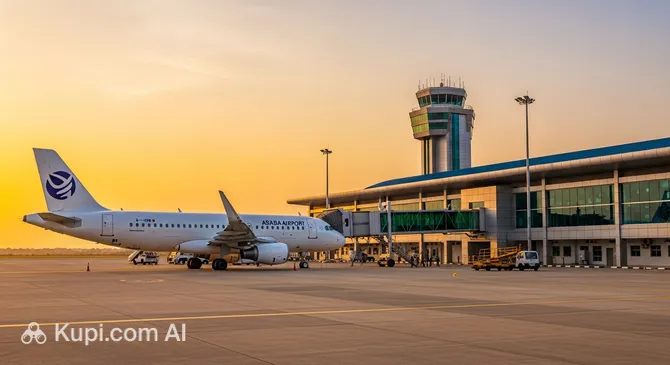
Asaba Airport. Source: Kupi.com Binoculars

Welcome to Asaba International Airport — a strategically important and modern transport hub serving as the gateway to the dynamically developing Delta State. Located in close proximity to the River Niger, this airport serves as a convenient alternative for travellers wishing to reach not only Asaba but also major commercial cities in south-eastern Nigeria, such as Onitsha. Recent modernisation and the transfer of management to a professional consortium have transformed it from a modest regional airfield into a comfortable starting point for your African journey.

IATA Code ABB
ICAO Code DNAS
City Asaba
Distance to Centre Approx. 11 km
Status International
Annual Passengers Over 200,000 (estimated)
Schedule Check the official website

Asaba Airport boasts a number of features and advantages that distinguish it favourably from other regional hubs:

  • Strategic Location: The airport is located just a few minutes' drive from the famous River Niger Bridge. This makes it an ideal choice for those heading to the region's largest commercial centre — the city of Onitsha — allowing them to avoid long transfers from more distant airports.
  • Upgraded Infrastructure: Following extensive reconstruction, the airport received a new runway capable of accommodating even large aircraft such as the Boeing 747. A modern airfield lighting system was also installed, allowing the airport to safely service night flights.
  • Effective Management: The transition to management by a private consortium has significantly increased the quality of service. Passengers note more organised check-in and security screening processes, as well as improved navigation and cleanliness in the terminal compared to many state-run airports in the country.

Contact Information

Below you will find current contact information for Asaba International Airport (ABB), which will help you plan your trip and orient yourself upon arrival.

  • Official Website: The latest information on flight schedules, services, and passenger regulations can be found on the official website: asabaairport.com.
  • Help Desk Phone: For general enquiries and immediate information, you can call one of the following numbers: +234 902 721 3945 or +234 815 313 0177.
  • Airport Address: The airport is located at: Asaba International Airport, Along Asaba-Benin Expressway, Asaba, Delta State, Nigeria.
  • Email: For written enquiries and requests, please use the email address: info@asabaairport.com.
  • Social Media: Follow airport news and updates on official social media pages. Look for "Asaba International Airport" accounts on Facebook, X (formerly Twitter), and Instagram.
  • Lost Luggage Information: If your luggage has been lost or damaged, first contact your airline's service counter in the arrivals hall. It is the air carrier that bears responsibility for tracing baggage.
  • Passenger Support Contacts: For all questions related to your stay at the airport, you may contact the general phone number or email address listed above.

Please note: contact details are subject to change. We recommend verifying information on official airport resources before your trip.

How to Get to the Airport

Asaba Airport (ABB) is located near the city centre, making the journey there quite quick and convenient. Travellers can choose from several transport options, each with its own cost and comfort level.

Taxi or Private Transfer — the most popular and reliable way to get to the airport. You can hail a taxi on the street or book a car through local services. For greater convenience, it is recommended to arrange a transfer in advance through your hotel or a trusted transport company. The trip from the centre of Asaba usually takes 20-40 minutes depending on traffic conditions. Important: always agree on the fare with the driver before starting the journey if the taxi is not equipped with a meter.

Car Rental — an excellent option for those who value independence and plan to move around the region extensively. Several car rental companies operate at the airport and in the city. Having a rental car will allow you to travel at your own pace. Please note that an international driving permit may be required for driving. The airport provides parking where you can leave your vehicle for short or long periods.

Regarding Public Transport, there may not be direct bus routes to the airport. Locals often use shared taxis or *keke napep* (three-wheeled motorcycle taxis) and minibuses. This is the most budget-friendly way to travel, though it may not be very convenient for tourists with large luggage and requires a readiness for the local experience. Schedules for such transport are usually non-existent, and they depart as they fill up.

If you are planning your trip and considering alternative arrival points, there are several other airports in the region. The nearest ones are Enugu Airport (ENU) approximately 104 km away and Sam Mbakwe International Airport (QOW) 105 km away. You can also consider flights to Warri Airport (QRW), Benin City Airport (BNI), or the larger Port Harcourt International Airport (PHC), which is located at a distance of about 136 km.

Terminals and Map

Asaba International Airport (ABB) is characterised by a modern and relatively simple structure, making it convenient for passengers. All operations with travellers are concentrated in one main passenger terminal, which serves both domestic and international flights.

The terminal has a very straightforward layout, which simplifies navigation. It is a single building, logically divided into two main zones: for domestic and international flights. Such a compact layout significantly simplifies orientation — it is virtually impossible to get lost here. Check-in counters are located in a common hall, after which passengers proceed to the respective security and control zone.

Since there is only one terminal, there is no need to transfer between buildings. This is particularly convenient for transit passengers or those travelling with a large amount of luggage. All key areas — check-in, security screening, departure lounges, and baggage claim — are within walking distance of each other.

The departure zone is organised according to a standard scheme: after check-in and baggage drop, passengers pass through security control (for domestic flights) or passport and customs control (for international ones). The waiting halls are equipped with seating, and there are several small cafes and shops where you can purchase beverages, snacks, and souvenirs.

The arrival zone is also divided into international and domestic sectors. Those arriving on international flights first pass through immigration control, then collect their luggage and undergo customs inspection. Domestic flight passengers head straight to the baggage claim hall after disembarking. The exit to the city is located in the general arrivals area, where travellers are met by taxis and private transport.

Thanks to the small size of the airport, completing all formalities usually takes less time than in major hubs. Nevertheless, it is recommended to adhere to standard rules:

  • For domestic flights, arrive 1.5-2 hours before departure.
  • For international flights, arrive 2.5-3 hours before departure to calmly pass through all control stages.

To navigate the airport, follow the signs, which are primarily in English. Staff are always ready to assist and direct you. Keep your boarding pass and documents handy — this will help speed up the completion of all procedures.

Airport History

The history of Asaba Airport (ABB) is an example of modern aviation infrastructure development in Nigeria. Its construction was initiated by the Delta State government to stimulate economic growth in the region. The airport was officially opened for commercial flights in 2011, becoming an important aerial gateway for the state capital, the city of Asaba, and surrounding territories.

In the initial stages of its existence, the airport faced certain difficulties. At times, its status was reviewed by aviation authorities due to non-compliance with certain operational requirements, particularly regarding the runway. These challenges highlighted the need for further investment and modernisation to fully unlock its potential.

A turning point in the airport's history was the signing of a concession agreement with a private consortium in 2021. This event marked the beginning of extensive reconstruction and modernisation. Within the framework of this partnership, significant works were carried out: a new passenger terminal and control tower were built, the runway was upgraded, and modern navigation equipment was installed. These steps were aimed at bringing the airport into compliance with international standards.

Thanks to the modernisation undertaken, the airport achieved significant success — it was awarded international status. Today, it is known as Asaba International Airport and plays a key role in the region's transport system. It not only serves domestic flights, connecting Asaba with other major cities in Nigeria, but also receives international charter and cargo aircraft, contributing to the development of business and tourism in Delta State.

Services and Amenities

Asaba International Airport (ABB) offers passengers all necessary services for a comfortable wait for their flight. Whether you are arriving, departing, or transferring, here you will find amenities to make your journey more pleasant. The terminal is designed to ensure convenience and accessibility of essential services for all categories of travellers.

For those wishing to have a bite to eat or buy something for the road, the airport features cafes and restaurants offering both local Nigerian dishes and more familiar international snacks. In the shops, you can purchase souvenirs, essentials, newspapers, and beverages. This is an excellent opportunity to buy gifts for loved ones or useful items for the flight.

For passengers preferring enhanced comfort, VIP lounges are available. They offer a secluded and quiet atmosphere, comfortable seating, complimentary beverages and snacks, as well as fresh newspapers. To stay connected, Wi-Fi access is provided within the terminal. Additionally, the waiting lounges are equipped with charging stations for mobile phones and other gadgets.

At Asaba Airport, you can also handle financial matters. ATMs and currency exchange points are located here, which is particularly convenient for foreign tourists arriving in Nigeria. In case of unforeseen health situations, a medical point operates in the terminal to provide first aid. For passengers with children, mother and child rooms are equipped, where you can care for little ones in a calm environment.

The airport also caters to passengers with reduced mobility, providing ramps and special assistance upon prior request. Although there are no hotels directly on the airport grounds, several hotels of varying comfort levels are located in the immediate vicinity. For business travellers, conference rooms and business services may be available, allowing for meetings or work while waiting for departure.

Dining

When planning a flight through Asaba Airport (ABB), it is important to understand that this is a small regional airport, and the choice of dining establishments here will be more modest than in major international hubs. Nevertheless, travellers can find several options to have a snack before departure.

In the main airport terminal, you will find a few small cafes and kiosks. They are located primarily in the public area before security control (landside). The selection here focuses on quick and simple options: packaged snacks, sandwiches, pastries, and various beverages. The operating hours of these establishments are generally tied to the flight schedule, so they are open during the airport's peak activity hours.

For those wishing to try something local, it is worth paying attention to typical Nigerian snacks. In the cafes, you can find meat pies, sweet puff-puff doughnuts, or Jollof rice — a popular West African dish. This is a great opportunity to get acquainted with local gastronomy without even leaving the airport. For a full meal, the choice is limited, but a portion of rice with chicken or beef may be available in one of the small cafes.

Travellers with strict dietary restrictions (vegans, vegetarians, people with gluten intolerance) may find it difficult to find suitable food. Specialised menus are generally absent here. The safest options might be fresh fruit (if available for sale), packaged nuts, or plain rice. If you have specific dietary needs, it is strongly recommended to bring food with you.

Prices at Asaba Airport, as in most airports around the world, are slightly higher than in the city but remain within reasonable limits. A quick snack will be inexpensive, while the cost of a hot meal will be comparable to prices in a simple city cafe. Overall, the airport offers basic facilities to satisfy hunger before a flight, but one should not expect a wide gastronomic selection.

Travel Tips

To ensure your journey through Asaba city airport goes smoothly and without unnecessary worry, make use of our tips. Planning is the key to a comfortable flight, especially if you are flying from Nigeria for the first time. We have collected useful recommendations that will help you at every stage — from arriving at the airport to boarding the plane.

Arrival and Check-in. It is recommended to arrive at the airport at least 2-3 hours before an international flight and 1.5-2 hours before a domestic one. This will give you enough time to complete all formalities without rushing. To save time, use online check-in if your airline provides this option. At security counters, be ready to present your boarding pass and passport, and pack all liquids over 100ml in checked baggage in advance, as well as prepare to remove electronics from your hand luggage for screening.

Seat Selection and Hand Luggage. When choosing a seat on the plane, consider your preferences: a window seat offers beautiful views during take-off and landing, while an aisle seat allows you to move freely without disturbing neighbours. Regarding hand luggage, standard rules prohibit carrying sharp objects, flammable substances, and liquids in containers larger than 100ml. All liquids must be packed in a single transparent bag. Always check the exact baggage and hand luggage allowances on your airline's website, as they may differ.

Transfers and Customs. If you have a connecting flight, immediately upon arrival at the transit airport, verify whether you need to collect your luggage or if it will be automatically forwarded to the next flight. Also, find information on the departure gate for your next flight on the display boards. When passing through customs control, have your passport, visa (if required), and completed declaration ready. Honestly declare all goods subject to accounting to avoid fines and delays.

Economy and Unforeseen Situations. To save money, bring an empty water bottle with you, which can be filled after passing security, and a light snack. In case of a flight delay, first contact your airline representative to learn about the reasons and next steps. Depending on the length of the delay, you may be provided with vouchers for food or even hotel accommodation. Keep your phone charged and monitor updates on the information screens.

Reached the end of the page?

That means the route is fully explored