Support

Benin City Airport

About the Airport

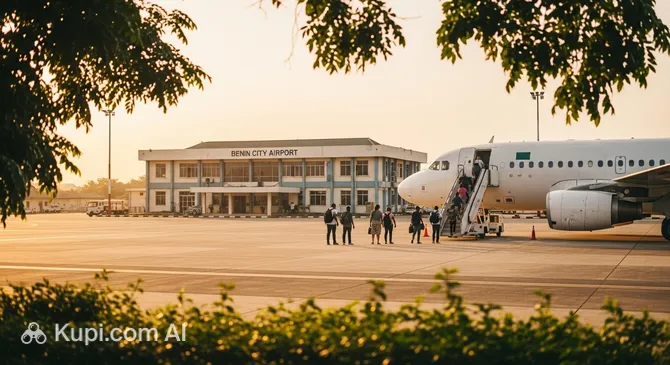
Benin City Airport. Source: Kupi.com Binoculars

Benin City Airport is not merely a regional aviation hub, but a true aerial gateway to the heart of one of Africa's most historically significant regions. This compact and welcoming airport serves as the starting point for immersing yourself in the culture of the ancient Kingdom of Benin, greeting travellers with an atmosphere of hospitality even before they step out into the city. Thanks to its strategic location and recent modernisations, it ensures dynamic and comfortable connectivity between Edo State and Nigeria's major metropolises.

IATA Code BNI
ICAO Code DNBE
City Benin City
Distance to Centre 5 km
Status Domestic
Annual Passengers Over 300,000
Schedule Check airline websites

Airport Features and Highlights

Exceptional proximity to the city. One of the airport's main highlights is its location practically within the city limits. You can reach central areas, such as the famous Ring Road or the GRA (Government Reservation Area), by taxi in just 10–15 minutes, which is a rarity for major aviation hubs.

Speed of service. Due to the small size of the single terminal, all pre-flight formalities are completed as quickly as possible. Long queues, typical of capital city airports, are rare here, allowing passengers to save time and avoid stress before departure.

Technical facilities. The airport is equipped with modern Instrument Landing Systems (ILS) and updated runway lighting. This allows for flights to be received in poor visibility conditions and during hours of darkness, significantly increasing the reliability of air travel in the region.

Contact Information

Below you will find the main contact information for Benin City Airport (BNI). Please note that the airport is managed by the Federal Airports Authority of Nigeria (FAAN), so many contact details are general for the entire agency.

  • Official Website: The airport does not have a separate website. All official information is published on the Federal Airports Authority of Nigeria (FAAN) portal: faan.gov.ng.
  • Information Desk Phone: A direct public telephone number for the airport is not provided. For questions regarding flight schedules, check-in, or other flight details, it is recommended to contact your airline directly.
  • Airport Address: Airport Road, Oredo, Benin City, Edo State, Nigeria.
  • Email: For general enquiries, you can use the official FAAN e-mail: info@faan.gov.ng.
  • Social Media: You can follow general news for all Nigerian airports on the official FAAN pages on social networks such as X (formerly Twitter) and Facebook.
  • Lost Luggage Information: If your luggage has been lost or damaged, you should immediately contact the Lost & Found service of the airline you flew with. Airline representatives are located in the arrival hall.
  • Passenger Support Service: Assistance with general questions can be obtained at the information desk within the airport terminal. Support regarding bookings, ticket changes, and other specific flight details is provided by your airline.

How to Get to the Airport

Getting to Benin City Airport (BNI) from the city centre is quite simple, as it is located just a few kilometres away. Travellers can choose from several methods depending on their budget, amount of luggage, and comfort preferences.

Taxi or Private Transfer is the most popular and recommended method for tourists. It is convenient, safe, and relatively inexpensive. Ride-hailing app services (such as Bolt and Uber) operate in Benin City, allowing you to know the cost of the trip in advance. The estimated price will be 1,500–3,500 Nigerian Naira (NGN). You can also use local taxi services, but in this case, it is strongly recommended to negotiate the price before starting the trip. The journey from the city centre usually takes 15–25 minutes depending on traffic conditions.

Public Transport in the form of minibus taxis and motorcycle taxis ("okada") is the most budget-friendly option. The cost of a trip is usually 200–500 NGN, making this the most affordable method. However, it is more suitable for experienced travellers without large luggage. A trip on an "okada" will be fast but is considered less safe. If you decide to use public transport, be prepared for a lack of a strict schedule and potential overcrowding.

Car Rental offers maximum freedom of movement around the city and its surroundings. You can rent a car from one of the local rental companies; prices start from approximately 25,000 NGN per day. Given the specifics of local traffic, many tourists prefer to rent a car with a driver, which will cost slightly more. This option ensures comfort and safety, especially if you are unfamiliar with the roads in Nigeria.

Airport Parking is available for those arriving in their own or rented vehicles. There are zones for both short-term and long-term parking. The cost depends on the duration: short-term parking is usually charged hourly (estimated from 200-400 NGN per hour), while daily rates apply for long-term parking. This is a convenient option if you plan to leave your car for the duration of your absence.

Terminals and Map

Benin City Airport (BNI) is a compact and functional aviation hub serving primarily domestic flights. Its key feature is simplicity and clarity for travellers, as all operations are concentrated in a single terminal. This saves passengers from the need to move between different buildings and makes navigation extremely easy.

The structure of the single terminal is logical and straightforward. It is divided into two main functional zones: departures and arrivals. The departure zone sequentially houses check-in counters, a security screening point, and a waiting lounge before the boarding gate. The arrival zone consists of the baggage claim hall and the exit to taxi stands and the car park. Thanks to the small size of the building, all these zones are within walking distance of each other.

Completing pre-flight procedures at Benin City Airport usually happens quite quickly. Nevertheless, it is recommended to arrive at the airport at least 1.5–2 hours before departure. This buffer allows you to calmly check in for your flight, drop off luggage, and pass through security control, especially if your departure falls during morning or evening peak hours.

The main advice for navigation is not to worry. It is practically impossible to get lost in this airport. All important facilities are clearly visible, and the small number of flights and passengers creates a calm atmosphere. Follow the standard "Departures" and "Arrivals" signs, and you will easily find your way from the building entrance to the boarding gate.

Airport History

The history of Benin City Airport (BNI) began in the mid-20th century when it was built and opened in 1956 to serve the region of that time. Initially, it was a small airfield created for the needs of the colonial administration and the first commercial flights connecting Benin City with other major cities in Nigeria. From the very beginning, it became an important transport hub for a region known for its rich history and culture.

Over the years, the airport has undergone several stages of development. From a modest runway, it gradually transformed into a full-fledged transport complex. Key expansions included lengthening and strengthening the runway, which allowed it to accommodate larger and heavier aircraft. The terminal building has also been modernised repeatedly to increase capacity and improve passenger comfort.

Benin City Airport has played a strategic role in various periods of Nigeria's history, particularly as a key logistics centre for the Midwest Region (now Edo and Delta States). Its uninterrupted operation provided a vital link between the region and the rest of the country, supporting both economic and administrative functions.

One of the most significant reconstructions took place in the 2010s. During these works, the runway was completely renovated, modern navigation equipment was installed, and the terminal building was upgraded. These improvements allowed the airport to meet international safety standards and accept modern liners, such as the Boeing 737, which contributed to an increase in passenger traffic and attracted new airlines.

Interesting fact: Benin City Airport is one of the oldest operating airports in Nigeria. Today, it is not just a transport hub but also a kind of "gateway" to the historic heart of the country — the former Kingdom of Benin — attracting both business travellers and tourists wishing to explore the unique cultural heritage of this region.

Services and Facilities

Benin City Airport (BNI) is an important regional aviation hub serving domestic flights across Nigeria. Passengers are offered a set of basic services ensuring a comfortable wait for their flight.

Dining and Shopping: In the terminal, you will find several small cafes and eateries where you can have a snack or drink coffee. There are also kiosks offering beverages, snacks, newspapers, and souvenirs. The selection may be limited, but the basic needs of travellers are met.

Waiting Lounges and Wi-Fi: General waiting areas are equipped for passengers. Some airlines may offer access to their own or partner VIP lounges for business class passengers, but it is best to verify this information when purchasing your ticket. Free Wi-Fi may be available, though its stability is not always guaranteed. There are power outlets in the waiting areas for charging electronic devices, but their number may be limited.

Financial and Other Services: There are typically ATMs on the airport premises for cash withdrawals. Currency exchange points are rare, as the airport is oriented towards domestic travel. For emergencies, there is a medical unit where first aid can be provided.

Services for Special Categories of Passengers: Mother and child rooms may be available for travellers with children. Passengers with reduced mobility are provided with assistance in moving around the terminal and boarding the aircraft. It is recommended to notify your airline in advance regarding the need for special assistance.

Accommodation and Business Services: There are no hotels within the airport itself, but plenty of accommodation options can be found in Benin City, which is a few minutes' drive away. Specialised conference halls or business centres are absent at the airport.

Where to Eat

Benin City Airport (BNI) is a relatively small regional hub, so the choice of establishments here is primarily oriented towards a quick and convenient snack before departure. Although you won't find a wide range of haute cuisine restaurants here, you certainly won't go hungry.

Most food outlets are small cafes and kiosks located in the main terminal building. They are available both in the public area before security control (landside) and in the secure departure zone (airside). This is convenient if you are seeing someone off or are already waiting for your flight at the gate. For a full lunch or dinner, it is recommended to eat at one of the city's numerous restaurants before arriving at the airport.

If you want to try something from the local cuisine, look out for popular Nigerian snacks. In the airport cafes, you can often find fresh meat pies, sausage rolls, and sometimes simple hot dishes, such as a portion of Jollof rice. This is an excellent option for a quick, filling, and authentic bite. For those in a hurry, sandwiches, pastries, and packaged snacks will be the best choice.

Passengers with strict dietary requirements, such as a vegan or gluten-free diet, should arrange food in advance and bring it with them, as specialised options may be absent at the airport. Vegetarians may find it easier to find vegetable snacks. regarding prices, they are generally moderate, although slightly higher than in establishments outside the airport. The opening hours of cafes and eateries are usually tied to the flight schedule — they open with the first flights and close after the departure of the last one.

Traveller Tips

To ensure your journey through Benin City Airport, a key hub for domestic airlines in Nigeria, goes smoothly, make use of our tips. The airport is notable for its compactness, which makes all pre-flight procedures fast and convenient, but a little preparation never hurts.

Arrival Time at the Airport: Since the airport mainly serves domestic flights, it is recommended to arrive 1.5–2 hours before departure. This time will be more than sufficient to check in, drop off luggage, and pass through security without rushing, as queues here are usually short.

Check-in and Security: If possible, check in for your flight online — this is the best way to save time. If you do this at the airport, thanks to the small size of the terminal, the process will not take long. During security screening, be prepared to remove laptops and other large electronic devices from your hand luggage. Pack liquids (up to 100 ml) in a separate transparent bag.

Seat Selection: If the airline allows you to select a seat when booking, consider your preferences. Window seats are ideal for those who enjoy viewing the scenery from above. Aisle seats are more convenient if you plan to get up during the flight without disturbing your neighbours.

Hand Luggage: Be sure to check the current hand luggage allowances of your airline, as they may vary. Sharp objects, weapons, and flammable substances are standardly prohibited. For liquids, the "100 ml per container" rule applies.

Transfer Passengers: If you have a connecting flight to another city in Nigeria, clarify at check-in whether your luggage will be automatically transferred to the final destination. At the airport, follow the "Transfers" or "Connecting Flights" signs to quickly find the necessary boarding gate.

Saving Time and Money: Online check-in and travelling light are proven ways to save time. To save money, bring an empty water bottle and fill it at a drinking fountain after security, and also bring non-perishable snacks to avoid buying them at a premium while waiting for your flight.

Flight Delays: In case of a flight delay or cancellation, contact your airline representative for information. Depending on the length of the wait, you may be offered beverages or meals. A book, headphones, and a portable power bank in your hand luggage will help pass the time.

Reached the end of the page?

That means the route is fully explored