Support

Sierra Leone

Cities in the country

About the Country

Sierra Leone is a remarkable country in West Africa, bordered by the waters of the Atlantic Ocean. It attracts travellers with its picturesque beaches, lush tropical rainforests, and rich history. The nation's capital, Freetown, situated on a peninsula, serves as the gateway to this undiscovered land of contrasts and discoveries.
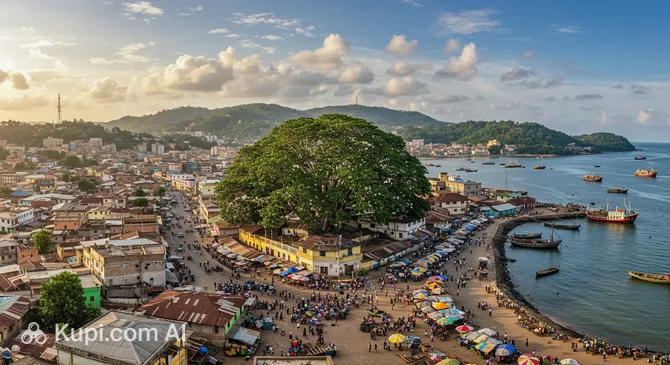
Freetown. Source: Kupi.com Binoculars

The culture of Sierra Leone is a vibrant mosaic of traditions from numerous ethnic groups, each contributing to the country's unique character. Here, you can discover unique crafts, lively dances, and melodic music. Beyond its cultural heritage, the country is famed for its natural beauty – from national parks that are home to rare animal species, to majestic mountains. For those wishing to delve deeper into the country's life, a visit to cities such as Bo, known for its bustling market, or Kenema, surrounded by cocoa and coffee plantations, is highly recommended.

Sierra Leone enjoys a warm tropical climate year-round, making it an attractive destination for fans of beach holidays and water sports. This is a destination for those seeking not just a holiday, but a true adventure—an opportunity to connect with authentic African culture and enjoy untouched nature. The welcoming and friendly atmosphere created by the local people will make your journey truly unforgettable.

Currency

The national currency of Sierra Leone is the leone (international code: SLE). In 2022, the country underwent a redenomination, which resulted in the "new leone" replacing the old banknotes. The modern banknotes feature important historical figures and iconic national symbols that reflect its culture and heritage. It is advisable to carry a sufficient amount of cash, as it is the primary method of payment in most parts of the country.

You can exchange foreign currency, preferably US dollars or euros, for leones at banks and official exchange bureaus, which are mainly concentrated in the capital, Freetown, and other major cities. Try to avoid exchanging money with street money changers due to the risk of fraud and unfavourable exchange rates. The use of credit cards in Sierra Leone is very limited and is primarily possible in large international hotels, some restaurants, and supermarkets in Freetown. Outside the capital, you can hardly expect to pay by card, so cash will be your main financial tool during your trip.

Visa Requirements

For travellers from the UAE, a visa is required to enter Sierra Leone. However, passport holders of the United Arab Emirates have convenient options available, as they can obtain either a visa on arrival or an electronic visa (e-visa) online before travelling. Citizens of ECOWAS member states are exempt from this requirement.

In addition to a visa, you will need a valid passport with at least six months of remaining validity from your date of entry. You may also be asked to provide proof of your travel itinerary, such as return flight tickets, hotel booking confirmations, and evidence of sufficient funds for your stay. As visa regulations and entry requirements can change, it is strongly recommended to verify the most current information with official sources, like the Sierra Leone e-visa portal or the nearest embassy, before your trip.

We'll tell you if you need a visa

Specify where you are going, or
Your citizenship
Destination

Time Zones

When planning a trip to Sierra Leone, you will not need to worry about changing time zones within the country. The entire territory of Sierra Leone operates on a single time zone, Greenwich Mean Time (GMT), which corresponds to UTC+0. For travellers from the UAE, this means Sierra Leone is four hours behind Gulf Standard Time (UTC+4). For example, when it is 12:00 PM in Dubai, it is 8:00 AM in Freetown.

The country does not observe daylight saving time, so the local time remains consistent all year round. Therefore, the time in Freetown and other cities will be the same. This simplifies planning for internal travel and activities, as you do not need to account for time differences between various regions.

How to Get There

The easiest way to get to Sierra Leone is by air. The country's main gateway is Lungi International Airport (FNA), located near the capital, Freetown. While there are no direct flights from the UAE, several airlines offer convenient one-stop connections. Popular routes for travellers from the UAE include flights with Turkish Airlines via Istanbul, Ethiopian Airlines via Addis Ababa, and Kenya Airways via Nairobi. It is advisable to explore various route options in advance to find the most suitable connection.

For those who prefer to travel overland, it is possible to enter Sierra Leone via the land borders with neighbouring Guinea and Liberia. This option may appeal to adventure seekers; however, it is important to note that road conditions can be variable, and crossing the border will require the appropriate documents and visas. Sea travel for tourists to Sierra Leone is underdeveloped and mainly limited to cargo shipments, making it an uncommon method of arrival. Regardless of your chosen method of travel, it is recommended to book tickets and plan your logistics well in advance. For travellers from the UAE, an e-visa or a visa on arrival is available. It is essential to verify the latest visa requirements before your journey to avoid any unexpected issues.

For your reference, here is a summary of the main airport:

Airport Name City Passenger Traffic
Lungi International AirportFreetownMedium

Sierra Leone offers travellers a kaleidoscope of experiences, from its vibrant capital to its more tranquil provincial centres. The main draw for tourists and business travellers is undoubtedly Freetown. This city, stretching along the Atlantic coast, is famous for its historical landmarks, colourful markets, and beautiful beaches, such as Lumley Beach. As a majority-Muslim country, halal food is widely available in the capital, and the atmosphere is noted for its high degree of religious tolerance. Freetown is the heart of the nation, where one can deeply immerse themselves in its culture, history, and modern life.

Freetown. Source: Kupi.com Binoculars

Beyond the capital, Sierra Leone has other interesting cities, each with its own unique atmosphere. For example, Bo, the country's second-largest city, is an important educational and commercial hub in the southern region. Kenema, located in the east, is known as the centre of the diamond mining industry and attracts those interested in the country's economy. Meanwhile, the city of Makeni in the north offers an introduction to the more traditional way of life and culture of the northern provinces. These cities, along with other settlements like Kabala with its picturesque hills, reveal the different facets of Sierra Leone.

Top Attractions

Sierra Leone is ready to surprise travellers with its diverse attractions, from idyllic beaches to protected reserves rich in wildlife. One of the country's gems is River No. 2 Beach, known for its pristine white sand, crystal-clear water, and picturesque mangrove forests. This location is often called one of the most beautiful beaches in West Africa, ideal for tranquil relaxation, swimming, and enjoying the tropical scenery. Some may even recognise it from the famous "Bounty" chocolate bar advertisement.

For wildlife and ecotourism enthusiasts, a visit to Outamba-Kilimi National Park is a must. Located in the north of the country, this park is home to various animal species, including forest elephants, chimpanzees, hippos, and a multitude of bird species. The park offers unique opportunities for safaris, trekking through the savannah and gallery forests, and observing animals in their natural habitat.

Not far from the capital, Freetown, lies the Tacugama Chimpanzee Sanctuary. This vital institution plays a key role in the rescue, rehabilitation, and protection of chimpanzees, many of whom have fallen victim to poaching or the illegal pet trade. Visitors can learn fascinating details about these incredible primates, their behaviour, and conservation programmes, while seeing the rescued animals in a semi-wild environment.

For those seeking a blend of history, adventure, and beach relaxation, the Banana Islands are a true discovery. This small archipelago, located off the coast of the Freetown Peninsula, is appealing for its secluded beaches, excellent opportunities for diving and snorkelling among coral reefs and shipwrecks, and historic ruins that recall its colonial past and the sombre history of the slave trade.

Best Time to Visit

When planning a trip to Sierra Leone, it is important to consider the two main climate seasons. The high season falls during the dry period, which typically lasts from November to April or early May. During this time, the weather is predominantly sunny and warm with minimal rainfall, making it ideal for beach holidays on the Atlantic coast, exploring national parks, and wildlife watching. This is particularly true in the vicinity of cities such as Makeni or Kabala. Roads are more passable during this period, which makes travelling around the country easier, including trips to the capital, Freetown. Although Sierra Leone is not yet a mass-tourism destination, a slightly higher number of travellers can be expected during the dry season.

The low season, or rainy season, begins in May or June and continues until October or November. This period is characterised by frequent and intense tropical downpours, which are especially heavy in July and August, and high humidity. The advantages of travelling at this time can include lower prices for accommodation and fewer tourists. Nature comes alive, becoming incredibly lush and green. However, heavy rains can make travelling around the country difficult, especially on unpaved roads, and some tourist services may be limited. Outdoor activities, such as trekking or beach holidays, may be less comfortable.

The climate in Sierra Leone is generally tropical monsoon, and while there are no significant regional differences, the coast can be slightly breezier. The country has few world-renowned festivals tied to a specific time of year, but the dry season offers the best conditions for most types of outdoor activities and cultural exploration. For example, visiting cities like Bo or Kenema will be more comfortable during this period. If your goal is birdwatching, it is possible all year round, but the dry season may offer more pleasant conditions for longer excursions.

Traditions

Immersing yourself in the culture of Sierra Leone will enrich your journey, and understanding local customs will help you build warm relationships with its residents. Greetings play an important role here: a handshake is customary, often accompanied by a respectful form of address and a smile. Direct, but not intrusive, eye contact is appreciated during conversation. Hospitality in Sierra Leone is more than just a formality; if you are invited into a home, it is considered a great honour. A small gift for the hosts, such as fruit or sweets for the children, will be gratefully accepted, although it is not a strict requirement. Always try to ask for permission before photographing people, and avoid using your left hand to give or receive items, as this can be considered impolite.

In public places, especially outside of large cities and tourist areas, as well as when visiting religious sites like mosques and churches, it is advisable to adopt a modest style of dress, covering your shoulders and knees. This is a sign of respect for local traditions. If you are invited to share a meal, remember that food is often eaten with the hands, using the right hand. Even if you are offered cutlery, showing a willingness to follow local customs will be appreciated. One of the main national holidays is Independence Day (27 April), which is celebrated throughout the country with parades and cultural events. Major Christian and Muslim holidays are also widely celebrated, reflecting the country's religious diversity. Overall, openness, friendliness, and a sincere interest in the local culture will help you avoid misunderstandings and make your stay in Sierra Leone truly memorable.

Entertainment

Sierra Leone offers travellers a variety of leisure options, especially for those who appreciate a blend of natural beauty and cultural immersion. Fans of outdoor activities will find opportunities for hiking through picturesque hills and national parks, as well as relaxing on the extensive Atlantic beaches, swimming, or snorkelling in the crystal-clear waters. Although there are no specialised ski or diving resorts, the coastal areas are ideal for a relaxed beach holiday and water-based fun.

The country's cultural life is vividly expressed through its music, dance, and traditional crafts. In the capital, Freetown, and other major cities, you can find small museums detailing the region's history and culture, as well as galleries showcasing local artists. Evening entertainment is mainly centred in Freetown, along with cities like Bo and Kenema. Here, you will find restaurants offering local cuisine, with many providing halal options for visitors. There are also venues with live music that create an authentic and lively atmosphere. While there are few formal world-class theatres or concert halls, cultural events and festivals offer a fantastic opportunity to engage with local arts.

For those interested in shopping, Sierra Leone offers unique handmade souvenirs. Items of particular popularity include wooden carvings, traditional fabrics (such as 'gara' – a form of tie-dye), masks, and jewellery. The best places for such purchases are the local markets, like Freetown's historic Big Market, where you can not only find interesting items but also experience the vibrant local life. Family holidays in Sierra Leone often revolve around nature and beaches, which can be both exciting and educational for children, though specialised theme parks or water parks are not common.

Currency rates

Planning a trip? Wonderful! To avoid any financial surprises during your travels, it's important to remember that currency exchange rates are constantly changing. Therefore, we strongly advise monitoring the latest rates, both before you fly and throughout your stay. You can use the data provided below for this purpose; we monitor currency rates 24/7 to provide the most current information available.

Reached the end of the page?

That means the route is fully explored