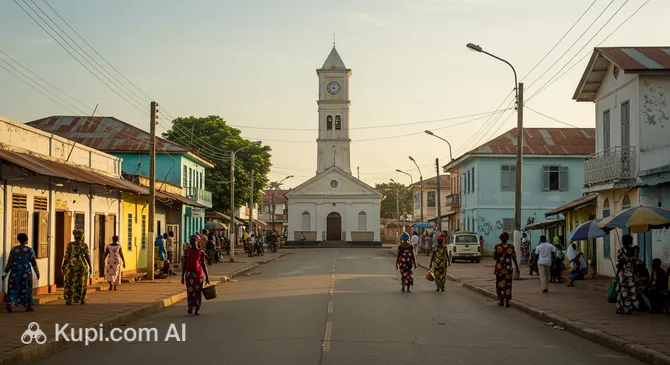
Welcome to Bo—the second largest city in Sierra Leone, affectionately known by locals as "Sweet Bo." Unlike the bustling and chaotic capital, Bo offers travelers a more relaxed and cozy atmosphere characteristic of a major provincial center. The city serves as the administrative heart of the Southern Province and an important commercial hub where trade routes filled with the aromas of palm oil, coffee, and cocoa converge.
Geographically, Bo is located in the country's interior on flat terrain, making it a vital transport junction. With a population of over 230,000, the city combines the features of a dynamic trading hub and an educational center. Bo. Illustration.
Source: Kupi.com AI
The city's rich history is inextricably linked to the development of the railway and the establishment of the regional education system, which has left its mark on its architectural appearance and culture.
Bo's main features are its famous educational institutions, such as Njala University and the historic Bo School, as well as its modern stadium, which has become a center of social life. Although the tourism infrastructure is still developing, Bo attracts visitors with its authenticity and the opportunity to see the real life of modern Africa without embellishment. We invite you to explore this "green" city and feel its leisurely pace.
Weather Overview
The weather in Bo is determined by its tropical location in the interior of Sierra Leone. A hot climate prevails here, with a distinct alternation of dry and wet seasons. If you are planning a trip, be sure to check what weather in Bo is expected in the near future so you can pack your suitcase correctly.
The city's typical climate is characterized by high temperatures year-round, which often fluctuate between 25°C and 35°C. The hottest months are February and March, when the air can warm up to 36°C. The rainy season lasts from May to October, peaking in August and September. During this period, expect frequent and powerful tropical downpours accompanied by high humidity, which makes the heat feel more intense than in coastal Freetown.
The dry season, lasting from November to April, is considered the most favorable time to visit the city, as precipitation practically stops. However, it is worth noting that during this time, the Harmattan wind can blow in from the Sahara, bringing fine dust, which sometimes reduces visibility and air quality. Overall, Bo is a sunny and hot city where the greenery of university campuses serves as a pleasant escape from the heat within the dense urban environment.
Average monthly temperature
Average monthly precipitation
Interesting Facts
The city of Bo holds many fascinating stories that make it an important place on the map of West Africa. Here are some notable facts about it:
Capital Status: Between 1930 and 1961, Bo served as the capital of the Protectorate of Sierra Leone, remaining an administrative center until the country gained independence.
Railway Heritage: The city's rapid growth began in 1889 thanks to the construction of the railway, which transformed the small settlement into a key transport and trade hub.
Forge of Talent: Founded in 1906, Bo School is one of the oldest and most respected educational institutions in West Africa; it is often called the "Eton of Sierra Leone" for its contribution to raising the country's political and intellectual elite.
Regional Diamond Capital: The city is considered one of the largest diamond trading centers, attracting dealers and prospectors from all over the surrounding area.
Chinese Gift: The city stadium, a source of pride for locals, was built and donated to the city by the Chinese government in 2006 as a symbol of friendship between the nations.
How to Get There
The transport accessibility of Bo makes it a vital link between the capital and the interior regions of Sierra Leone. The city is located approximately 250 kilometers southeast of Freetown, and land transport is the primary way to get here. If you are planning a trip, detailed information about routes and tickets can be found on the page about how to get to the city.
Although Bo has its own Bo Airport (IATA code: KBS), it currently serves mostly rare domestic or charter flights. Most international travelers arrive at the country's main airport near Freetown and then continue their journey by car or bus. The drive along the highway takes between 4 to 6 hours depending on road conditions and traffic intensity, which can increase significantly during the rainy season.
Historically, Bo developed as an important railway hub, but currently, regular passenger rail service in the region is not active. The main public transport for intercity travel consists of state buses and private minibuses, known as "poda-podas." From the neighboring city of Kenema, Bo can be reached in just 1-2 hours, covering about 60 kilometers on a fairly decent highway.
Station
Passenger traffic
Distance
1
275 km
Main Attractions
The city of Bo is not a typical tourist destination with classic monuments, but it offers several unique sites that reflect its status as the educational and sporting heart of the region. One of the most notable places is the Bo National Stadium. This modern facility, seating about 4,000 spectators, serves as the main arena for football matches and large-scale cultural events, bringing citizens together during national celebrations.
Another iconic landmark is the campus of Bo Government Secondary School (simply known as Bo School). Founded in 1906, this school boasts a vast park-like territory and preserves the spirit of the colonial era. A walk through its shaded alleys allows you to touch the history of education in Sierra Leone and see the old academic buildings, which are still considered among the most prestigious in the country.
For those who want to feel the pulse of the city, Bo's central markets are a must-visit. There is no exquisite architecture here, but the bustling trade in palm oil, rice, and traditional fabrics creates a unique local flavor. Additionally, fans of an academic atmosphere can visit the grounds of Njala University, whose green zones serve as oases of silence amidst the dense urban development.
Local Cuisine
The cuisine of Bo is a vivid reflection of Mende traditions and the rich resources of the southern part of Sierra Leone. The basis of almost any meal is rice, served with various sauces and stews. The gastronomic symbol of the region is plasas—a thick sauce made from cassava or sweet potato leaves, prepared with palm oil, fish, and hot spices. This dish has a rich flavor and is very popular among locals.
On the streets and markets of the city, you should definitely try the local version of jollof rice, as well as freshly caught fried fish. A special place in the diet is occupied by dishes based on palm oil, which gives the food a characteristic reddish tint and a specific aroma. For those looking for something exotic, Bo offers palm wine, known here as "pampo" or "poyo." This natural, low-alcohol beverage is collected straight from the trees and is the best refreshment on a hot tropical day.
Dining culture in Bo is centered around markets and small street eateries where food is cooked over an open fire. There are few European-style restaurants here, so tourists are encouraged to try authentic dishes at reliable local establishments. A gastronomic adventure in Bo is a great way to get to know the culture of Sierra Leone through simple but hearty and spicy dishes made from the freshest tropical ingredients.
Travel Tips
A trip to Bo promises to be a truly authentic adventure, and to ensure your visit is as comfortable as possible, we have prepared several practical recommendations.
Clothing and Essentials: Choose light clothing made from natural fabrics, as it is hot and humid in the city year-round. In the dry season, be sure to bring sunglasses and a hat, and for visiting official institutions or churches, prepare a modest, conservative outfit.
Transport: The fastest way to get around Bo is by moto-taxi, but for safety, it is better to use "poda-podas" or regular taxis during the day. Avoid motorcycle rides after sunset.
Finance: The main currency is the Leone. ATMs in Bo are rare and do not always accept international cards, so always carry a sufficient supply of cash. It is better to change money at banks or officially authorized exchange points.
Health: Drink only bottled water and avoid ice in drinks. It is recommended to carry a basic first-aid kit and insect repellent, as the region is malarial.
Communication: The official language is English, but most residents communicate in Krio or Mende. Learning a few phrases in Krio, such as "How body?" (How are you?), will instantly win over the locals.
Local Etiquette: Sierra Leoneans are very friendly. Always greet people when entering a shop or starting a conversation. A greeting is the key to successful communication.
What to Avoid: Do not photograph government facilities, bridges, or police officers without permission. Also, do not engage in deals with street diamond traders—this can lead to serious legal problems.
Connectivity: SIM cards from local operators (e.g., Orange or Africell) can be bought at any major market; Wi-Fi is only available in decent hotels.
By following these simple rules, you will be able to fully enjoy the hospitality of "Sweet Bo" and take home only positive emotions from your trip!
Entertainment & Nightlife
The entertainment scene in Bo is modest and largely oriented toward the local community and students. The main center of attraction for fans of active leisure is the Bo National Stadium, which regularly hosts football matches that draw thousands of fans. After sunset, the city quietens down significantly, taking on a sleepy and calm atmosphere, though life continues to simmer in small local bars and hotel establishments.
Nightlife is concentrated in several areas around the center and university campuses. Here you can find cozy bars serving refreshments and local palm wine, with popular African music playing from the speakers. The dress code in such places is usually very casual, and the atmosphere is friendly and laid-back. If you are looking for larger parties and nightclubs, locals often recommend a trip to the capital, as Bo itself focuses on quiet gatherings.
During the day, entertainment includes walking through the scenic grounds of Bo School or attending student events at Njala University. Safety in the central areas in the evening is at an acceptable level, but it is highly recommended to call a taxi or use trusted transport services for night travel. Bo is a place for those who appreciate authentic relaxation and the opportunity to observe the everyday life of the region without excessive fuss.
Parks & Museums
In Bo, there are no traditional art galleries or historical museums in the classic sense, but the roles of cultural and natural oases are played by the grounds of the oldest educational institutions. The main "parks" of the city are rightfully considered the campuses of Njala University and Bo School. These are extensive green zones with ancient trees and well-kept lawns, which serve as the primary places for relaxation and walks for the city's residents.
A walk through the grounds of Bo School is interesting not only for its nature but also from an architectural point of view. The old buildings, preserved since the early 20th century, are open-air exhibits in themselves, telling the story of British influence and the development of education in Sierra Leone. These sites are often used for public events and celebrations, becoming the center of Bo's cultural life.
Despite the city's dense and chaotic development, the university gardens remain important ecological zones where one can escape the heat and noise of the commercial streets. For travelers seeking peace, these green territories are the best place for a leisurely introduction to the city. The lack of museums is more than compensated for by the living history that can be felt by interacting with students and teachers in these academic parks.
Getting Around
The public transport system in Bo reflects its status as an important regional hub, but it lacks subways or trams. The basis of urban travel is poda-podas—small and often overcrowded minibuses that run along the city's main arteries. This is the most affordable way to get around, although it requires a certain amount of patience and readiness for tight spaces from the tourist.
For faster and more maneuverable travel, locals and tourists most often use moto-taxis (known as "okadas"). This is a popular mode of transport that allows you to easily bypass traffic jams near the markets, but you should always keep safety in mind and agree on the fare in advance. Standard taxis also operate in Bo, which can be called by phone or found at special ranks in the city center.
Fares are always paid in cash directly to the driver or conductor. Fixed tariffs for the private sector often do not exist, so we advise clarifying the cost of the trip before you get into the vehicle. The city is quite compact, and many central areas can be explored on foot, though roads can be very dusty in the dry season and difficult to navigate after tropical downpours. Bicycle rentals or car-sharing as commonly understood are not currently available in Bo.
Accommodation
Accommodation in Bo is primarily geared toward business travelers, humanitarian mission workers, and students. You won't find large luxury hotel chains here, but the city offers a decent selection of guesthouses and mid-range hotels that provide basic comfort and a hospitable atmosphere. Most housing options are concentrated in the city center and in areas adjacent to the main educational institutions.
If you value convenience for moving around, we recommend choosing hotels near the National Stadium or the main shopping streets. Here, the infrastructure is more developed, and access to transport and cafes is much easier. For those planning a longer stay, such as for study or research purposes, apartments and rooms for rent are often offered near the Njala University campuses, allowing for a deeper immersion into local life.
Given that Bo is a transit and educational hub, hotel availability can decrease quickly during major university events or sports matches at the stadium. We recommend booking accommodation in advance through specialized websites or directly. The cost of living here is generally lower than in the capital, and payment is most often accepted in cash in the local currency, although some larger hotels are beginning to implement card terminals.
Nearby Cities
The city of Bo is an excellent starting point for exploring the southern regions of Sierra Leone, offering convenient access to several interesting locations. Neighboring towns and villages allow tourists to see provincial life in all its diversity, from bustling marketplaces to quiet farming communities.
Just 19 kilometers away is the small town of Bumpe, which is perfect for a short trip to get acquainted with the traditional lifestyle of local tribes. A bit further, at 40 kilometers, lies Mongeri, known for its picturesque surroundings. Also worth mentioning is Newton; the road there takes longer but allows you to enjoy the changing landscapes of the savanna and tropical forests.
City
Population
Distance
Bumpe
16 123
19 km
Mongeri
14 273
40 km
Gandorhun
12 288
45 km
Newton
35 300
56 km
Benguema
30 268
57 km
For more extensive journeys, many choose a trip to the city of Kenema, located an hour's drive away, which is another important trade center in the region. Exploring the surroundings of Bo provides a unique opportunity to see the non-touristy side of the country, meet hospitable people, and discover natural beauties hidden away from the main highways.
Shopping & Souvenirs
Shopping in Bo is primarily an immersion into the atmosphere of traditional African markets, as large Western-style shopping centers are virtually non-existent in the city. The main shopping venue is the central markets, where life bustles from early morning. Bo is famous as an important trading hub, and here you can find goods that the entire Southern Province is proud of: from high-quality palm oil to aromatic coffee and cocoa beans.
A special category of goods in Bo is gemstones. The city is a recognized diamond center, and numerous legal dealers operate here. However, tourists should be extremely cautious and only make such purchases in certified stores with all the necessary documents for export. For more traditional souvenirs, look for local "gara" fabrics with unique hand-dyed patterns, as well as wooden masks and woven items created by Mende craftsmen.
Shops in Bo typically operate from Monday to Saturday, opening around 8-9 AM and closing at dusk. Sunday is the traditional day off, when only small convenience stalls are open. Payment almost everywhere is made in cash in the local currency (Leone). Be prepared for the fact that bargaining is customary in the markets—it is not just a way to save money, but also an important part of the local communication culture, allowing you to strike up a friendly conversation with the seller.