Support

Conakry Airport

About the Airport

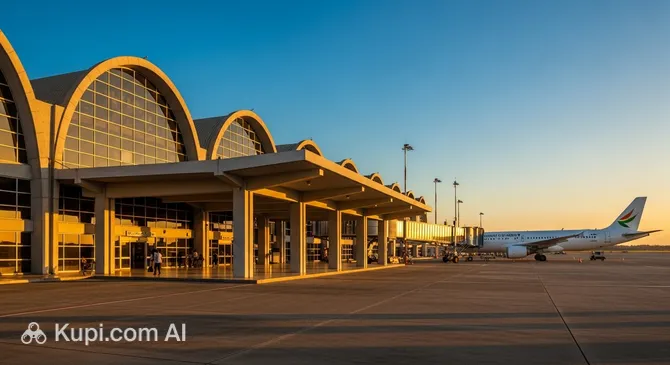
Conakry Airport. Source: Kupi.com Binoculars

Ahmed Sékou Touré International Airport (CKY), also known as Gbessia Airport, serves as the primary air gateway to Guinea and the main transport hub of its capital. Located on the Atlantic coast, it offers a warm welcome to travellers arriving in West Africa. The airport boasts a rich history: following a reconstruction in 1961, it became capable of handling heavy aircraft, which strengthened its strategic importance in the region. Today, it is a vital hub connecting Guinea with cities across Europe, Africa, and the Middle East.

IATA Code CKY
ICAO Code GUCY
City Conakry
Distance to Centre 12 km
Status International
Annual Passengers 724,000 (in 2023)
Popular Airlines Brussels Airlines, Air France, Royal Air Maroc
Schedule Conakry Airport online flight board

Conakry Airport is actively developing to meet international standards and ensure passenger comfort. Currently, a large-scale modernization and expansion project is underway, aiming to increase capacity to three million passengers per year. Essential amenities are already available for travellers: the main departure lounge features free Wi-Fi, currency exchange points, a VIP lounge, and mother-and-child rooms. The airport is divided into international and domestic terminals, simplifying navigation. An interesting feature of the airport is its parking area, which, thanks to its bright lighting, has become a popular spot for local students to study for exams.

Contact Information

  • Official Website: www.aeroportdeconakry.com
  • Help Desk Phone: +224 657 33 33 11
  • Address: Ahmed Sékou Touré International Airport, Commune de Matoto, Conakry, Republic of Guinea
  • Email: contact@aeroportdeconakry.com
  • Social Media: The airport maintains an official Facebook page where current news and important information for passengers are published.
  • Lost Luggage Information: For all issues related to lost or damaged luggage, it is recommended to contact your airline's representative directly. Lost & Found counters are located in the arrivals hall.
  • Passenger Support: To receive advice and assistance, you can use the help desk phone number or fill out the feedback form on the airport's official website.

How to Get to the Airport

Conakry International Airport (Gbessia International Airport, CKY) is located approximately 13 kilometres northeast of the city centre. There are several ways to reach it, but the best choice depends heavily on your budget, time, and comfort preferences. The main factor to consider when planning your trip is the unpredictable traffic in the capital of Guinea, which can significantly alter travel time.

Taxi and Transfer — the most popular and convenient method for tourists. You can hail a taxi on the street or order a car through your hotel. It is strongly recommended to use official taxi services or book a transfer in advance. A key point: always agree on the fare in advance, as taximeters are rarely used. The journey from the centre of Conakry to the airport will take from 30-40 minutes to 2 hours depending on traffic congestion. This is the most reliable way to ensure you do not miss your flight.

Public Transport in Conakry consists mainly of shared taxis (taxi-brousse) and minibuses. This is the most budget-friendly option, but also the least comfortable. Vehicles are often overcrowded, do not follow a strict schedule, and make many stops along the way. This method is suitable for experienced travellers who wish to save money and are ready for an adventure. For tourists travelling with luggage, this may cause inconvenience.

Car Rental and Parking. Car rental agencies operate at the airport and in the city. This option is convenient if you plan to travel around the country independently. However, it is worth remembering that driving in Conakry can be a real challenge due to chaotic traffic and road conditions. Many tourists prefer to rent a car with the services of a local driver. The airport has a parking lot where you can leave your car for a short or long term.

Regardless of the chosen method, leave for the airport with plenty of time to spare — at least 3-4 hours before your flight departure. This will help avoid unnecessary stress associated with potential traffic jams.

Terminals and Map

Conakry International Airport (CKY), also known as Gbessia Airport, has a simple structure that is easy for passengers to understand. It consists of one passenger terminal that handles all domestic and international flights. This makes navigation within the airport very convenient, as you do not have to move between different buildings or complexes.

The terminal layout is logical and intuitive. The building is functionally divided into departure and arrival zones. In the departure zone on the ground floor, you will find airline check-in counters, after which passengers proceed to the first floor for passport control and security screening. The arrival zone is located on the ground floor and includes immigration control counters, the baggage claim hall, and the customs area.

Since there is only one terminal, transitions between zones are made on foot within the same building. Distances here are short, and it is practically impossible to get lost. Signs are primarily in French, but are often duplicated in English, which helps tourists orient themselves.

For check-in and pre-flight screening, it is recommended to arrive at the airport 2.5-3 hours before an international flight. Although the airport is not very large, queues can form during peak hours or when check-in opens simultaneously for several popular flights. After passing through control, you enter the secure area with a small number of Duty-Free shops, cafes, and waiting lounges.

Airport History

The history of Ahmed Sékou Touré International Airport (CKY), formerly known simply as Conakry International Airport, is closely intertwined with the history of the formation and development of Guinea. Its construction began after World War II, in the mid-1940s, during the colonial period. Since its opening, it has served as the country's main air gateway and its most vital link to the rest of the world.

After Guinea gained independence in 1958, the airport acquired key strategic importance for the young republic. A significant milestone in its history was its renaming in 1985 after the country's first president, Ahmed Sékou Touré, which emphasized its national status. For decades, the airport has been a silent witness to major events in the life of the state, serving flights from various corners of the planet and reflecting the country's changing international relations.

A serious stage of airport modernization occurred in the early 2010s. During a large-scale reconstruction, the runway was significantly lengthened, and the passenger terminal was renovated and expanded. These improvements allowed the air harbour to receive larger long-haul aircraft and meet modern international standards of safety and passenger comfort.

One of the most significant moments in the airport's recent history was its role during the Ebola epidemic in 2014–2016. During this difficult period, Conakry Airport functioned as a key humanitarian hub, through which the delivery of vital medicines, equipment, and the arrival of international specialists were carried out. This fact highlights not only the transport but also the immense social significance of the airport for the entire country.

Services and Amenities

Conakry International Airport (CKY), also known as Gbessia Airport, offers passengers all necessary services for a comfortable wait before their flight. Despite its modest size, the terminal is well-equipped and ready to satisfy the basic needs of travellers.

The airport features several cafes and restaurants where you can have a snack before departure, drink coffee, or try local cuisine. For those wishing to shop, Duty Free stores are open, offering perfumes, beverages, and souvenirs. Here you can purchase memorable gifts from Guinea.

For a more comfortable wait, the airport has business and VIP lounges. They offer a secluded atmosphere, complimentary drinks and snacks, as well as the latest press. Free Wi-Fi is available to passengers throughout the terminal, and special stations and sockets are provided for charging gadgets.

Financial services are represented by bank branches, currency exchange points, and ATMs where you can withdraw local currency. In case of necessity, passengers can visit the medical point for first aid. For travellers with children, a mother-and-child room is provided, and special assistance during boarding and disembarking is available for passengers with reduced mobility.

Although there are no hotels directly on the airport grounds, comfortable hotels are located a few minutes' drive away, easily accessible by taxi or transfer. For business travellers, basic business services such as document copying and faxing may be available in the VIP lounges, though full-scale conference halls may not be present at the airport.

Dining

Conakry Airport (CKY) offers passengers basic dining options to help pass the time while waiting for a flight. Although the selection here is not as vast as in major international hubs, you will be able to find places for a quick snack or a more substantial meal.

Most establishments are concentrated in the main terminal. Before passing passport control (landside), several small cafes usually operate where you can have coffee or a snack while seeing off or meeting passengers. The main dining points for departing passengers are located after the security zone (airside). Here, cafes and small bars are situated where you can sit comfortably while waiting to board your flight.

The menus of local establishments most often feature simple and filling dishes. For a quick snack, sandwiches, pastries, and snacks are perfect. If you have time for a full meal, look for counters offering hot dishes — typically rice with various sauces, chicken, or fish. Do not miss the opportunity to try something from the cuisine of Guinea, even in a simplified "airport" version: this could be meat skewers (brochettes) or refreshing drinks made from local fruits and plants, for example, ginger juice or hibiscus (bissap).

Travellers with special dietary needs should be prepared for a limited selection. Finding vegetarian dishes is possible (for example, rice with vegetable sauce), but specialized vegan or gluten-free options are practically absent. It is recommended to carry necessary snacks with you. At the same time, most meat dishes are likely to comply with Halal standards, due to local cultural traditions.

Prices for food and drinks at the airport are noticeably higher than in the city. The opening hours of most cafes and bars are tied to the flight schedule, especially international ones. They open a few hours before departure and close after the last planes have left, so even with a night flight, you will have the opportunity to get a snack.

Travel Tips

Travelling through Conakry Airport can be comfortable and predictable if you prepare in advance. To ensure your experience is as positive as possible, use these tips to help orient yourself in the airport and avoid unnecessary stress.

Arrival Time and Check-in. For international flights, it is recommended to arrive at the airport at least 3 hours before departure. This gives you a sufficient buffer of time in case of traffic jams on the way to the airport and queues at check-in counters or security. If possible, check in for your flight online — this will save you time. Security and passport control procedures may take longer than expected, so please be patient.

Seat Selection and Hand Luggage. When choosing a seat on the plane, be guided by your preferences: a window seat offers beautiful views during takeoff and landing, while an aisle seat allows you to move freely without disturbing neighbours. Liquids in containers up to 100 ml, packed in a transparent bag, are allowed in hand luggage. Sharp objects are prohibited. Ensure that power banks and other devices with lithium batteries are in your hand luggage, not in checked baggage.

Customs Control and Transit. When passing through customs control, have all documents ready: passport, visa (if required), and, most importantly for Guinea, an international vaccination certificate (especially against Yellow Fever). Be prepared to declare large sums of currency or valuable items. If you are flying in transit, check with the airline whether you need to re-check your luggage yourself. Passengers with long layovers should find out in advance if a visa is needed to exit into the city.

Saving Money and Unforeseen Situations. To save on taxis from the airport, use the services of official carriers or arrange a transfer with your hotel in advance. Keep a small amount of local currency (Guinean Francs) for minor expenses. In case of a flight delay or cancellation, immediately contact your airline representative for information on further actions and the provision of food or accommodation. Remain calm and clarify your rights as a passenger.

Reached the end of the page?

That means the route is fully explored