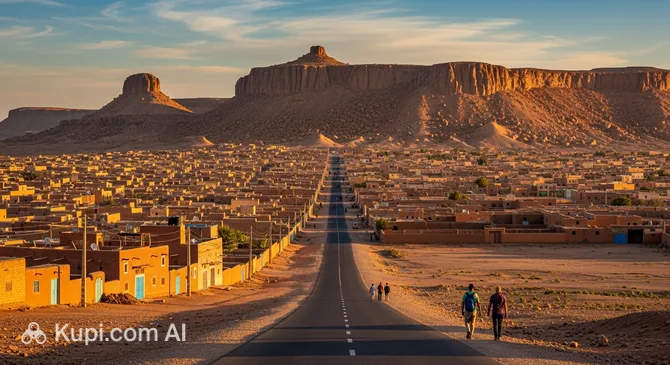
Shopping in Nema offers a raw and authentic immersion into the commercial life of the Sahel. Unlike the polished retail experiences found in global capitals, commerce here is driven by necessity and tradition. The city serves as a crucial supply hub for the entire Hodh Ech Chargui region, meaning that shops are stocked primarily with practical goods intended for locals, nomads, and travelers preparing for desert crossings. Visitors will find that shopping here is less about browsing window displays and more about engaging with the vibrant, dusty bustle of a key trading post.
The primary commercial activity is concentrated along the main thoroughfare where the Route de l'Espoir terminates and merges into the city center. This area serves as the town's open-air high street, lined with small concrete boutiques and stalls. Here, merchants sell everything from mobile phone credit and hardware to imported electronics and household staples. It is a chaotic but fascinating strip where 4x4s load up with supplies and traders negotiate deals on the sidewalk.
Travelers looking for large, air-conditioned shopping malls will not find them in Nema. The retail landscape is devoid of department stores or international brand franchises. Instead, the "mall" experience is replaced by the general stores (boutiques) that are often family-owned and packed from floor to ceiling with an eclectic mix of inventory. This absence of modern consumerism preserves the town's traditional character and encourages visitors to interact directly with local shopkeepers.
The heartbeat of the city's economy is the Central Market (Marché Central). This sprawling marketplace is the most interesting spot for tourists to visit. It is a sensory overload of sights and smells, featuring sections dedicated to fresh produce, grains, and meats. For a truly local experience, wander through the livestock area on the outskirts of the market, where camels, goats, and sheep are traded—a scene that has remained largely unchanged for centuries.
When it comes to souvenirs, Nema offers unique items that reflect the nomadic culture of the region. The most popular purchase is traditional Mauritanian fabric, particularly the indigo-dyed cloth used for men's turbans (chech) and the colorful, lightweight veils (melfa) worn by women. You can also find durable leather goods, such as handmade sandals, pouches, and gris-gris (amulets), crafted by local artisans. Dates are another excellent buy; as a desert gateway, Nema often has high-quality dates that make for a sweet and portable gift.
Store hours in Nema are generally from around 8:00 AM to sunset, though many shopkeepers take a break during the hottest part of the afternoon (roughly 2:00 PM to 4:00 PM). Friday is the holy day, so expect the market and most shops to close for the congregational prayer in the early afternoon, with some reopening later in the day. Payment is exclusively in cash (Mauritanian Ouguiya). Credit cards are not accepted in markets or small shops, so it is essential to carry sufficient local currency in small denominations to facilitate bargaining.
Tax-free shopping or VAT refund schemes are not available in Nema. The price you negotiate is the final price, and receipts are rarely issued in the formal sense. Bargaining is standard practice in the market and for souvenirs, but it should always be done with a smile and a sense of respect for the trader's livelihood.