Support

Djanet

About

Welcome to Djanet, a captivating oasis city nestled in the southeastern part of Algeria. Often referred to as the "Pearl of the Tassili," this unique destination offers travelers a gateway to some of the most spectacular desert landscapes on Earth. With a population of approximately 14,000 inhabitants, it maintains a serene and authentic atmosphere, far removed from the bustle of major urban centers.

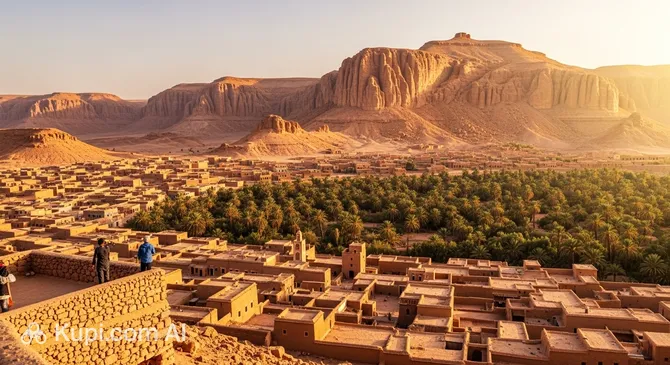
Geographically, Djanet is situated in a valley at the foot of the Tassili n'Ajjer mountain range. The climate here is typical of the Sahara—hot and dry during the day, with cooler nights that allow for incredible stargazing. The city itself is a lush patch of green palm groves amidst the golden sands and dark rock formations, creating a striking visual contrast that has enchanted visitors for decades.

Djanet. Source: Kupi.Binoculars

The region is steeped in culture and tradition. Exploring the history of Djanet reveals its deep roots as a settlement inhabited by the Tuareg people, known for their indigo veils and rich heritage. The city serves as the perfect base for expeditions into the Tassili n'Ajjer National Park, a UNESCO World Heritage site famous for its prehistoric rock art and lunar-like geological formations.

Visitors should not miss the chance to see the famous "Crying Cows" rock engraving at Tegharghart, a masterpiece of Neolithic art located nearby. For those seeking adventure, the vast dunes of Erg Admer offer unforgettable sunsets and 4x4 excursions. Whether you are a history buff or a nature lover, Djanet promises an unforgettable journey into the heart of the Sahara.

Weather Overview

Djanet is characterized by an arid desert climate, offering sunny days and clear skies throughout most of the year. Visitors planning a trip should be aware that the weather in Djanet varies significantly between seasons, shifting from intense heat to crisp, cool air.

The summer months, particularly June through August, are hot, with average daily highs reaching approximately 36°C. Conversely, the winter season from December to February brings much cooler temperatures, where the average lows can drop to around 4°C in January. Rainfall is extremely scarce in this region, with almost every month recording 0mm of precipitation, ensuring dry conditions for travel.

Expect hot, dry summers and mild winters with cool nights, perfect for desert expeditions.

Interesting Facts

Beyond the golden dunes and famous engravings, Djanet holds ancient traditions and natural wonders that surprise even the most seasoned travelers. This desert oasis is not just a gateway to the Tassili n'Ajjer but a living museum of unique customs and rare biodiversity.

  • The Sebeiba Ritual: Djanet is home to the Sebeiba festival, a UNESCO Intangible Cultural Heritage event celebrated annually during the Ashura period. This ancient ritual involves a ceremonial dance battle between the inhabitants of two local districts, Zelouaz and El Mihane, commemorating a peace pact sealed centuries ago by their ancestors.

  • Living Fossils: The mountainous regions surrounding the city are the only place in the world where the Saharan Cypress (Cupressus dupreziana) grows naturally. These rare, endangered trees are considered living fossils; some specimens are estimated to be over 2,000 years old and survive in the arid climate with virtually no rainfall.

  • A City of Three Ksour: Historically, Djanet was not a single settlement but a collection of three distinct fortified villages, or ksour: El Mihane, Zelouaz, and Adjahil. These were strategically built on rocky heights rather than the valley floor to preserve every square meter of fertile land for the palm groves and to protect homes from occasional flash floods.

  • Mysterious "Round Heads": While the rock art of the region is famous, the specific period known as the "Round Head" style features particularly enigmatic figures. Found in the caves near Djanet, these paintings depict strange, floating humanoids with large, round heads, which have sparked endless fascination and theories about their symbolic meaning among archaeologists.

How to Get There

Reaching the remote oasis of Djanet is an adventure that takes you deep into the heart of the Sahara. Due to the vast distances involved, air travel is the most practical method for most visitors. For a detailed overview of all transport options and routes, you can read more about how to get to Djanet.

The primary gateway to the region is Inedbirenne Airport (DJG), which is located approximately 29 km from the city center. This airport welcomes flights connecting the oasis to the capital and other major hubs. Upon arrival, the journey to the town by taxi or shuttle is generally a short drive through the desert terrain. Alternatively, some travelers might consider Illizi Airport (VVZ), though it is situated in the city of Illizi, roughly 255 km away from Djanet. Choosing this airport would require a long overland transfer across the desert landscape.

For clarity, here is a summary of the main airports:

Airport Name City Passenger Traffic Km from City
Inedbirenne Airport Djanet Small 29.1
Illizi Airport Illizi Small 255.5

Main Attractions

Djanet is the gateway to a world of geological marvels and prehistoric history. While the town itself is a peaceful oasis, the surrounding desert holds some of the most extraordinary sights in the Sahara. From towering stone forests to hidden canyons teeming with life, the attractions here offer a profound connection to nature and ancient civilizations.

One of the most visually stunning regions to explore is Tadrart Rouge. Often compared to the surface of Mars, this area is famous for its intense red sands that contrast sharply with dark, jagged rock formations. It is a photographer's paradise where the play of light and shadow creates a shifting landscape of deep oranges and crimsons. Visitors are drawn here not only for the surreal scenery but also for the numerous prehistoric rock paintings and engravings hidden among the cliffs.

For a unique geological experience, a visit to Tikoubaouine is essential. This site is renowned for its "forest of stone," a vast labyrinth of sandstone needles, towers, and arches that have been sculpted by the wind over millennia. The most iconic feature is a massive natural arch that frames the desert horizon, offering one of the most memorable photo opportunities in the region. Wandering through this maze of rock gives travelers a sense of the immense scale and age of the Tassili n'Ajjer.

Hidden away from the harsh sun is the lush Essendilene Canyon. This deep gorge feels like a secret garden in the middle of the desert, lined with oleanders, acacias, and tamarisks that thrive in the cool shade. A hike through the canyon leads to a crystal-clear guelta (water pool) nestled at the base of towering cliffs. It is a perfect spot for a midday break, offering a rare and tranquil atmosphere where the sound of wind is replaced by the rustle of leaves and bird songs.

For history enthusiasts willing to make the climb, the plateau of Jabbaren offers an unparalleled glimpse into the past. The name translates to "The Giants," referring to the large, mysterious figures depicted in the ancient rock art found here. As one of the richest sites for prehistoric art in the world, it features thousands of paintings showcasing cattle herds, wildlife, and human figures, providing a vivid record of life in the Sahara when it was a green savannah.

Local Cuisine

The culinary landscape of Djanet is deeply rooted in the traditions of the Tuareg people and the resources of the Sahara. Food here is simple, hearty, and designed to sustain travelers across the arid desert, yet it is prepared with a level of hospitality that turns every meal into a welcoming ceremony. The local diet relies heavily on grains, dairy, meat, and the abundant dates harvested from the surrounding palm groves.

One dish that every visitor must try is Taguella, the signature bread of the Tuareg. This thick, disc-shaped flatbread is traditionally kneaded from semolina and water, then buried in hot sand and embers to bake. Once cooked, it is often broken into small pieces and mixed with a rich sauce made from vegetables, spices, and meat—typically goat, lamb, or occasionally camel. Another staple is couscous, which in this region is often served with dried meat and a variety of desert truffles when in season.

No culinary experience in Djanet is complete without participating in the traditional tea ceremony. Tuareg tea is a strong, sweet green tea brewed with mint and poured from a height to create a thick layer of foam. It is customarily served in three rounds: the first is said to be "bitter as death," the second "sweet as life," and the third "soft as love." This ritual is the heartbeat of social interaction, offered to guests in shops, homes, and around campfires.

Dining in Djanet offers a mix of experiences, from small, modest restaurants in the town center serving grilled meats and stews to the unforgettable atmosphere of eating under the stars. For many tourists, the highlight of the local food culture is the meals prepared by guides during desert expeditions. Gathering around a fire to share fresh dates, goat cheese, and hot stew while surrounded by the silence of the Tassili n'Ajjer is the truest way to taste the spirit of the Sahara.

Travel Tips

Preparing for a trip to Djanet requires packing for both the harsh desert environment and the warm local hospitality. These practical tips will help you navigate the unique logistics of this Saharan oasis with ease and respect for its traditions.

  1. Clothing and Gear: Pack for extremes, as the desert shifts from scorching days to freezing nights. Bring lightweight, breathable fabrics for the daytime and warm thermal layers or a fleece for the evenings. Since Algeria is a conservative country, dress modestly by covering your shoulders and knees; a scarf or traditional chech is excellent for sun protection and blending in. Sturdy hiking boots are essential for exploring the rocky Tassili plateaus.

  2. Transportation: Within the town of Djanet, distances are short and often walkable, but there is no formal public transport network like metros or trams suitable for tourists. For any excursion outside the town center or into the desert, a 4x4 vehicle with a driver is mandatory. Most travelers arrange these logistics through local travel agencies, as self-driving in the deep Sahara is not recommended for the inexperienced.

  3. Finances: The local economy operates almost entirely on cash using the Algerian Dinar (DZD). Credit cards are rarely accepted in shops, restaurants, or by local guides. It is crucial to bring sufficient foreign currency (Euros or US Dollars) to exchange upon arrival. While there is a post office and a bank, ATMs may not always accept international cards or might be out of service, so do not rely on them as your sole source of funds.

  4. Health and Safety: The primary health risks here are dehydration and sunstroke. Always carry more water than you think you need and wear high-SPF sunscreen. Pharmacies are available in the town center for basic supplies, but medical facilities are limited, so bring any prescription medication with you. Djanet is generally very safe for tourists, but you should always follow the advice of your local guide regarding routes and wildlife.

  5. Communication: The main languages spoken are Arabic and Tamahaq (the Tuareg language), with French being widely understood by those in the tourism industry; English is less common. You can purchase a local SIM card (Mobilis is often recommended for coverage) in town for internet access. Be aware that once you leave the city for the desert, you will likely have zero signal for days, offering a true digital detox.

  6. Local Etiquette: Greetings are important; a handshake and a polite "Salaam" go a long way. When offered tea—which happens frequently—it is polite to accept at least the first glass, as refusing can be seen as a rejection of hospitality. If you are invited into a home or a tent, remove your shoes at the entrance unless told otherwise.

  7. What to Avoid: Never take photographs of people, especially women, without asking for explicit permission first. It is also strictly forbidden to photograph military installations, police checkpoints, or government buildings. Additionally, avoid walking on the prayer mats if you see people praying outdoors.

  8. Mandatory Guides: To visit the Tassili n'Ajjer National Park, you are legally required to be accompanied by an official guide. You cannot explore the deep desert or the rock art sites on your own. This is not just a rule but a safety necessity, as the terrain is vast and navigating the dunes requires expert local knowledge.

By keeping these tips in mind, you can focus on the breathtaking beauty and silence of the Sahara without worrying about logistics. A little preparation ensures that your adventure in Djanet remains a fond memory of starry nights and warm Tuareg welcomes.

Entertainment & Nightlife

Entertainment in Djanet is a world away from the neon lights and bustling venues of modern metropolises. Here, leisure is defined by cultural immersion, traditional festivities, and the serene beauty of the Sahara. Visitors seeking nightlife will find it in the glow of a campfire and the rhythm of Tuareg drums rather than in clubs or theaters.

The most spectacular event in the city's calendar is the Sebeiba Festival. Held annually during the Islamic month of Muharram, this ancient celebration brings the community together in a vibrant display of heritage. Men dressed in ceremonial warrior attire and women in colorful robes engage in traditional dances and songs, creating a mesmerizing atmosphere that transports observers back in time. It is a profound cultural experience that attracts travelers from across the globe.

Music is the heartbeat of the desert, and attending a local musical performance is a highlight for many. The region is famous for its distinct sounds, ranging from the haunting melodies of the imzad—a single-stringed violin played traditionally by women—to the energetic beats of the tindé drum. Impromptu concerts often take place in the evenings, offering an intimate glimpse into the artistic soul of Algeria's south, often accompanied by the famous Tuareg tea.

For those who enjoy shopping for unique treasures, the local artisan markets offer a chance to admire exquisite craftsmanship. The artisans of Djanet are renowned for their skill in working with silver and leather. Visitors can find beautiful Tuareg crosses, intricate jewelry, and hand-tooled leather goods. Browsing these stalls is not just a shopping trip but an opportunity to interact with local craftsmen and learn about the symbolism behind their designs.

Finally, the night sky itself serves as the ultimate theater. With virtually zero light pollution, the area offers some of the best stargazing conditions on the planet. Spending an evening lying on the soft sand, tracing constellations, and watching shooting stars streak across the Milky Way is a form of entertainment that is both humbling and unforgettable.

Parks & Museums

Djanet is often described as an open-air museum where the boundaries between urban life, ancient history, and raw nature dissolve. While you will not find manicured city parks in the traditional sense, the city is enveloped by one of the world's most spectacular protected areas, and its cultural venues are deeply connected to the heritage of the Sahara.

The crown jewel of the region is the Tassili n'Ajjer Cultural Park. This massive protected area, which encompasses the city and its surroundings, is a UNESCO World Heritage site renowned for its geological formations and prehistoric art. Unlike a typical city park, this is a vast landscape of "stone forests" and towering sandstone plateaus. It serves as a sanctuary for rare flora, such as the Saharan Cypress, and offers visitors a chance to hike through terrain that feels like another planet.

For a greener and more tranquil experience within the city limits, the Djanet Palm Grove (Palmeraie) is the heart of the oasis. Containing thousands of date palms, this lush area provides a stark, refreshing contrast to the surrounding desert sands. It is crisscrossed by an ancient irrigation system known as foggaras, creating a cool, shaded environment perfect for a relaxing walk. The sound of running water and rustling palm fronds makes it a peaceful retreat from the midday sun.

To understand the depth of the region's history before heading into the desert, a visit to the Musée du Parc National du Tassili (Tassili National Park Museum) is essential. Located in the town center, this museum serves as an interpretive gateway to the wonders of the Tassili n'Ajjer. It houses a collection of artifacts, including Neolithic tools, pottery, and reproductions of the famous rock paintings and engravings found in the nearby mountains. It provides crucial context that enriches the experience of seeing the actual sites.

Another cultural highlight is the Maison de l'Artisanat (House of Craftsmanship). Functioning as both a gallery and a workshop, this venue showcases the artistic traditions of the Tuareg people. Visitors can admire intricate silver jewelry, leatherwork, and traditional weapons. It is an excellent place to observe local artisans at work and to appreciate the symbolic meanings behind the geometric patterns used in Tuareg art.

History enthusiasts should explore the Ksar of El Mihane, one of the three original fortified villages that make up Djanet. Perched on a hill to protect against floods and invaders, this site features crumbling mud-brick architecture and narrow, winding alleyways. Walking through the ruins offers a tangible connection to the medieval history of the trans-Saharan trade routes. Nearby, the colonial-era Fort Serriez stands atop a ridge, offering panoramic views of the oasis and the valley below.

For a truly authentic experience, try to visit the gardens of the Palmeraie in the early morning when the locals are tending to their plots. You might be invited to taste fresh mint tea or just-harvested dates, offering a glimpse into the daily life of the oasis that few tourists get to see.

Getting Around

The public transport system in Djanet is quite different from what you might expect in a large metropolitan area. Given the city's modest size and remote location, there is no complex network of metros, trams, or city buses. Instead, the local transportation infrastructure is informal and straightforward, designed primarily to serve the daily needs of the local population moving between the town center and the surrounding residential districts.

The most common form of motorized transport within the city is the taxi. These are typically standard vehicles that can be hailed on the street or found at designated stands in the town center, particularly near the market area. It is common for taxis here to operate on a shared basis, meaning the driver may pick up other passengers along the route who are heading in the same direction. This makes the service very affordable, though it may add a few minutes to your journey.

Regarding payment, the system is entirely cash-based. There are no travel passes, smart cards, or mobile ticketing apps available in this region. You will need to pay the driver directly in the local currency upon reaching your destination. Fares are generally fixed for trips within the town limits and are quite inexpensive. It is highly recommended to carry small change, as drivers may not always have enough cash to break large banknotes.

For those looking to travel between the central oasis and the outlying villages or ksour (fortified villages) like Azellouaz or El Mihane, small minibuses serve as the main public link. These vehicles do not run on a strict timetable but rather depart when they are full. While they offer an authentic glimpse into local life, they can be unpredictable for tourists with tight schedules. Stops are not always clearly marked, so you may need to ask locals where the nearest boarding point is.

Walking is a viable and pleasant alternative for getting around the town center, especially during the cooler morning or evening hours. Many of the key shops, the museum, and the main market are located within a relatively short distance of each other. Exploring on foot allows you to navigate the narrow lanes of the palm groves and the old quarters at your own pace, which is often the best way to soak in the atmosphere of the oasis.

It is important to note that for the main purpose of most visits—exploring the surrounding desert and the Tassili n'Ajjer National Park—standard public transport is non-existent. Tourists typically rely on 4x4 vehicles arranged through local travel agencies. These off-road vehicles are essential for navigating the sandy and rocky terrain outside the city limits. While not "public transport" in the traditional sense, this is the primary mode of travel for any visitor wishing to see the attractions beyond the town center.

Accommodation

Accommodation in Djanet is designed to support the adventurous spirit of travelers visiting the Sahara. Unlike major metropolitan areas with international hotel chains and high-rise luxury resorts, the lodging options here are modest, authentic, and deeply integrated into the local environment. The primary choices range from simple hotels and guesthouses (often called auberges) to the unique experience of desert camping.

For those staying within the city, hotels and guesthouses typically offer basic but comfortable amenities. These establishments often feature traditional architecture, with courtyards and gardens that provide a cool retreat from the desert heat. Rooms are generally equipped with air conditioning, which is essential during the warmer months. Staying in the town center or near the palm grove (Palmeraie) is convenient for accessing local markets, the museum, and travel agencies.

However, for many visitors, the "accommodation" of choice is the desert bivouac. Since the main attraction of Djanet is the surrounding Tassili n'Ajjer National Park, most tourists spend the majority of their nights camping under the stars. These mobile camps are usually organized by local tour operators and range from simple sleeping bags on the sand to comfortable tents with mattresses. This option offers the unparalleled luxury of silence and a view of the Milky Way that no five-star hotel can match.

Booking Tip: Djanet is a seasonal destination, with the peak tourist season running from October to April when temperatures are milder. During this period, accommodation in town can fill up quickly, especially during the Sebeiba Festival. It is highly recommended to book your stay or tour package well in advance.

Regarding prices and booking, costs are generally affordable and fall into the budget to mid-range categories. It is important to note that online booking platforms are not widely used by smaller local establishments. Most arrangements are best made through registered travel agencies as part of an expedition package, or by contacting hotels directly via phone or email. Be prepared to pay in cash (Algerian Dinar), as credit card facilities are rare at accommodation front desks.

Nearby Cities

For those looking to explore the surroundings, Djanet serves as an excellent base for day trips to several interesting nearby locations:

While the vastness of the Sahara means that major metropolitan centers are quite distant, there are smaller settlements and natural wonders within reach that offer a deeper insight into life in the desert. One of the most rewarding excursions is to the oasis village of Iherir. Located in a canyon to the north, it is famous for its traditional stone huts (zeribas), lush palm groves, and a series of crystal-clear gueltas (natural pools) where water flows year-round—a rare sight in this arid region.

Another notable stop is the small town of Bordj El Haouas, often visited en route to Iherir or Illizi. It serves as a crossroads for travelers and is surrounded by impressive rock formations that are characteristic of the Tassili n'Ajjer. For those willing to venture further, Tamanrasset lies to the west; although it is a significant journey, it is the cultural capital of the Hoggar region and offers a different landscape of volcanic mountains compared to Djanet's sandstone plateaus.

City Population Distance (km)
El Oued 134699 1010
Ouargla 133024 915
Ghardaia 120000 1049
Tamanrasset 76000 447
Adrar 68276 1044

These nearby destinations offer a glimpse into the diverse culture and landscapes of the region.

Shopping & Souvenirs

Shopping in Djanet is a unique cultural experience that contrasts sharply with the commercialized retail therapy found in modern cities. Instead of high-end fashion boutiques or sprawling department stores, visitors will encounter small, family-run shops and vibrant market stalls. The city is renowned for its authentic Tuareg craftsmanship, making it an excellent destination for travelers seeking genuine, handmade artifacts that reflect the heritage of the Sahara.

The main shopping activity is concentrated in the town center, particularly along the primary avenue that runs through the heart of the oasis. This area serves as the commercial lifeline of Djanet, where you can find everything from daily necessities to specialized artisan workshops. Strolling down these streets offers a relaxed atmosphere where shopkeepers are friendly and often willing to share the stories behind their wares over a glass of tea.

Travelers looking for large shopping malls will not find them here. Djanet preserves its traditional character, and the retail landscape is defined by modest, standalone stores rather than commercial complexes. This absence of global chains adds to the charm of the city, ensuring that the products you buy are locally sourced and support the community directly.

The heartbeat of local commerce is the Central Market (Souk). This bustling area is where the locals do their daily shopping, and it is a feast for the senses. Here, you can find piles of aromatic spices, dried herbs, and fresh produce grown in the nearby gardens. It is also the best place to purchase high-quality dates, particularly the famous Deglet Nour variety, which are harvested from the surrounding palm groves and make for a delicious, edible souvenir.

When it comes to souvenirs, Djanet is famous for its exquisite Tuareg jewelry. Local silversmiths are masters of their craft, creating intricate pieces using traditional techniques passed down through generations. The most iconic item to look for is the Southern Cross (Croix du Sud), a silver pendant that comes in various designs representing different Tuareg towns and families. Additionally, leather goods such as sandals, bags, and camel saddles are widely available and are known for their durability and decorative geometric patterns.

Another popular item to bring back is the Chech, the traditional long scarf worn by the men of the desert to protect against the sun and sand. Available in a variety of colors—though indigo is the most traditional—it serves as both a practical accessory for your trip and a beautiful textile memory. For those interested in music, you might also find traditional instruments or recordings of local desert blues bands.

Regarding opening hours, stores in Djanet typically operate on a split schedule to accommodate the desert heat. Shops usually open around 8:00 AM or 9:00 AM and close for a midday break around 1:00 PM. They reopen in the late afternoon, around 4:00 PM or 5:00 PM, and stay open until the evening. On Fridays, which is the holy day, many shops may be closed or have reduced hours, particularly during prayer times.

Payment methods are almost exclusively cash-based. Credit cards are rarely accepted in shops or markets, so it is essential to carry sufficient Algerian Dinars. Bargaining is a common practice in the souk and artisan shops; it is expected and considered part of the social interaction. However, it should always be done with a smile and respect for the artisan's skill. Tax-free shopping or VAT refund schemes are not available for tourists in Djanet.
Nearby cities

Reached the end of the page?

That means the route is fully explored