Support

Tiaret

About

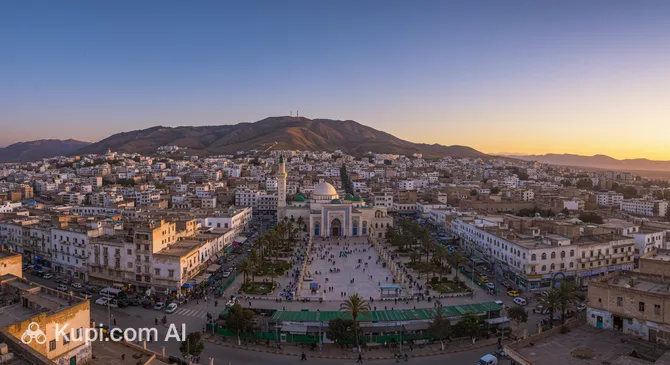
Tiaret is a captivating city located in the central part of northern Algeria, serving as a vital bridge between the fertile coastal regions and the high plateaus of the south. Nestled in the Tell Atlas mountains on the Sersou Plateau, the city sits at an elevation that provides a cooler, continental climate compared to the surrounding desert areas. With a population of approximately 178,000 residents, it is a bustling regional hub that maintains a welcoming and authentic atmosphere, deeply rooted in its agricultural traditions.

Tiaret. Source: Kupi.Binoculars

The region is steeped in a rich cultural heritage that dates back centuries. The history of Tiaret is fascinating, having served as a strategic crossroads for various civilizations, including the Romans and the medieval Rostemid dynasty. The city's name, which means "station" or "lioness" in the Berber language, reflects its enduring importance as a meeting point for trade and culture throughout the ages.

For visitors, Tiaret offers unique attractions that distinguish it from other Algerian cities. It is widely renowned as the capital of the Arabian horse in the Maghreb, home to the prestigious Chaouchaoua Stud Farm, which attracts equestrian enthusiasts from around the world. Nearby, travelers can explore the mysterious Jedars, a group of ancient Berber funerary monuments located on hilltops, offering both historical intrigue and panoramic views of the landscape.

Whether you are drawn by the grace of purebred horses or the allure of ancient archaeology, Tiaret provides a memorable glimpse into the heart of the country. It is an excellent destination for those looking to explore the diverse landscapes and deep-rooted heritage of the region.

Weather Overview

The climate in Tiaret is marked by significant seasonal contrast, influenced by its position on the high plateaus. Visitors will find that the weather shifts from cool, damper winters to hot, dry summers. Generally, you can expect scorching heat during the middle of the year and brisk, chilly days during the winter months.

Summer peaks in July with average temperatures around 29.0°C and highs reaching up to 36.4°C, accompanied by very little precipitation. Conversely, January is the coldest month, where the average temperature dips to 7.9°C and nightly lows can fall to 3.0°C. Spring brings moderate warmth, though March sees the highest frequency of wet days. To help you pack appropriately for your visit, check the detailed weather in Tiaret overview.

Interesting Facts

Beyond the main attractions, Tiaret holds many fascinating secrets that reveal its depth as a historical and cultural center. The city is more than just a gateway to the desert; it is a repository of ancient legacies and unique geographical features.

  • A Capital of Resistance: Just a few kilometers from the modern city center lie the ruins of Tagdemt, a site chosen by the legendary Emir Abdelkader to be his capital in the mid-19th century. He built a fortress, a mosque, and even a mint for currency here, utilizing the strategic location to organize resistance efforts before the city was destroyed.

  • Home of the Barbary Lion: While the name "Tiaret" translates to "lioness" in Berber, this is not merely symbolic. The region was historically a natural habitat for the majestic Barbary lion, a subspecies that is now extinct in the wild. These high plateaus once teemed with the wildlife that inspired the city's enduring identity.

  • The Versailles of Horses: The famous Chaouchaoua Stud Farm is often compared to a royal estate due to its grandeur. Established in 1877, it is one of the oldest and most prestigious stud farms in Africa, playing a critical role in preserving the purebred Barb horse lineage, which is celebrated for its endurance and hardiness.

  • The Granary of the Region: The Sersou Plateau, where the city is situated, has been known since antiquity as a breadbasket for the Mediterranean. During the Roman era, this fertile land was a primary source of wheat for the empire, and it remains a vital agricultural engine for Algeria today.

How to Get There

Reaching Tiaret is primarily done by road, offering a scenic journey through the high plateaus of the Tell Atlas. While the city is served by the local Abdelhafid Boussouf Bou Chekif Airport, commercial flight schedules can be limited. Consequently, most international and regional travelers prefer flying into larger hubs nearby and completing the trip via ground transport. For detailed routes and advice, you can read more about how to get to Tiaret.

The most convenient option for many is Chlef International Airport (CFK), located approximately 93 km north of the city. It is the closest facility with regular connections, and a taxi or private transfer from here typically takes between 1.5 to 2 hours, making it a popular choice for those looking to minimize travel time.

For a wider array of international flights, visitors often choose Houari Boumediene Airport (ALG) in Algiers or Es Senia Airport (ORN) in Oran. Algiers is situated about 225 km away, with a travel time of around 3.5 to 4 hours, while Oran is roughly 179 km to the west, taking about 3 hours by car. Both airports offer extensive services, including car rentals and bus connections.

Below is a summary of the airports within reach of the city:

Airport Name City Passenger Traffic Km from City
Houari Boumediene Airport Algiers Large 224.8
Es Senia Airport Oran Large 178.5
Zenata Airport Tlemcen Medium 255.5
Chlef International Airport Chlef Small 93.4

Upon arrival at any of these airports, shared taxis (known locally as "louages") and intercity buses are the most common and affordable ways to complete the journey. The road network connects these coastal and regional centers to Tiaret, allowing for a smooth transition to the city's unique landscape.

Main Attractions

The city and its surroundings offer a fascinating journey through time, boasting archaeological treasures that span from late antiquity to the Islamic Golden Age. While the city center has its own modern charm, the most compelling sites are found in the immediate vicinity, where history has carved its mark into the landscape. Here are some of the most significant places to visit in the region.

The Jedars are undoubtedly the most mysterious and impressive archaeological site in the area. Located on the peaks of Jebel Lakhdar and Jebel Araoui, these thirteen ancient Berber mausoleums date back to late antiquity, roughly between the 4th and 7th centuries. Resembling step pyramids, these funerary monuments were built for local princes and nobility. Visitors are often struck by the sheer size of the stone blocks and the enigmatic inscriptions found on some of the structures. Standing atop the hills, they offer not only a puzzle for historians but also commanding views of the surrounding plains.

For equestrian lovers, the Chaouchaoua Stud Farm is a world-class destination often referred to as the "Versailles of Horses." Established in the late 19th century, this prestigious facility is a sanctuary for the purebred Arabian and Barb horses that are the pride of the region. The estate itself is architecturally beautiful, featuring colonial-era buildings and vast, manicured grounds. It serves as a living museum of Algeria's equestrian traditions, where you can admire some of the finest horses in North Africa and learn about the rigorous breeding programs that have maintained their lineage for generations.

History enthusiasts should not miss the ruins of Tagdemt, a site with a dual historical legacy. Originally the location of Tahert, the first capital of the Rostemid dynasty in the 8th century, it was later chosen by Emir Abdelkader as his capital during the resistance against colonial rule in the 19th century. Although much of the city was destroyed, the remnants of the fortress, the arsenal, and the Emir's headquarters still stand as poignant symbols of resilience. Walking among these ruins provides a tangible connection to the pivotal moments that shaped modern Algeria.

A short distance from the main city, near the town of Frenda, lie the Ibn Khaldoun Caves. These rock shelters hold immense cultural significance as the refuge where the renowned historian and philosopher Ibn Khaldoun spent four years in the 14th century. It was within the solitude of these caves that he wrote his masterpiece, the Muqaddimah (Prolegomena), a foundational text of sociology and historiography. The site is simple yet evocative, allowing visitors to stand in the very place where one of the world's greatest intellectual works was conceived.

Local Cuisine

The local cuisine of Tiaret is a delicious reflection of its geography on the fertile Sersou Plateau, often referred to as the "breadbasket" of Algeria. Heavily influenced by the region’s abundant wheat production and pastoral traditions, the food here is hearty, wholesome, and deeply rooted in history. In fact, archaeological discoveries in the Tiaret region have unearthed some of the oldest known couscoussiers (cooking vessels for couscous) dating back to the 3rd century BC, suggesting that this area might be the very birthplace of North Africa’s most famous dish.

Given this heritage, Couscous remains the undisputed king of the table. While it is eaten across the country, the local preparation highlights the superior quality of the regional grain and the tenderness of local lamb. For a distinct regional specialty, look for Rfiss. Unlike versions found elsewhere, the traditional preparation here is a hearty blend of crumbled unleavened bread, soft dates, and fresh farm butter or ghee. This energy-rich dish is a symbol of hospitality, traditionally served to honor guests and celebrate harvest festivals or weddings.

For meat lovers, the high plateaus around Tiaret are famous for sheep farming, making Mechoui a must-try experience. This consists of a whole lamb slow-roasted over a wood fire until the meat is incredibly tender and the skin is crispy. It is often seasoned simply with salt and local cumin to let the natural flavor shine. Another staple to look out for is Matloue, a soft, leavened semolina bread that accompanies almost every meal and is perfect for scooping up stews and sauces.

When it comes to drinks, the local culture mirrors the rest of the country with a strong love for Mint Tea. Served sweet and hot, it is the standard gesture of welcome. However, given the region's strong dairy farming tradition, you should also try Lben (fermented milk) or Rayeb (curdled milk). These refreshing beverages are often consumed with a light meal of couscous or dates, providing a cool contrast to the dry heat of the plateau.

The food culture in Tiaret is centered around family and community. While there are standard restaurants in the city center, some of the best authentic food can be found in small, unassuming roadside eateries known as "gargottes," especially those near the markets. Here, locals gather for quick, affordable meals like Mhadjeb (flatbread stuffed with a spicy tomato and onion mixture) or grilled skewers. The atmosphere is casual and friendly, offering tourists a genuine slice of daily life in the Algerian highlands.

Travel Tips

Visiting Tiaret offers a unique glimpse into the equestrian heart of Algeria, but the region's high-altitude climate and specific local customs require a bit of preparation. These practical tips are designed to help you navigate the Sersou Plateau with confidence, ensuring your journey is as smooth as it is memorable.

  1. Pack for a Variable Climate: Due to Tiaret's location on the high plateaus, the weather can be unpredictable. Even if you visit in spring or autumn, bring layers; days can be warm, but nights often get quite chilly. In winter, heavy coats are necessary as snow is not uncommon. Regardless of the season, modest clothing that covers shoulders and knees is respectful of local culture, and sturdy walking shoes are essential for exploring the rocky terrain of the Jedars.
  2. Getting Around: There is no metro or tram system in the city. The most convenient way to travel is by yellow taxis, which are plentiful and affordable. For excursions to the outskirts, such as the Chaouchaoua Stud Farm or the ruins of Tagdemt, hiring a private driver or renting a car is highly recommended, as public transport options to these specific sites can be infrequent.
  3. Cash is King: The local economy operates almost entirely on cash. While there are ATMs in the city center where you can withdraw Algerian Dinars (DZD), credit cards are rarely accepted at restaurants, shops, or smaller hotels. It is wise to carry sufficient cash for your daily expenses and to keep smaller denominations handy for taxi fares and tips.
  4. Communication Essentials: While Arabic is the official language and widely spoken, French is commonly used in business and daily interactions. English is not widely spoken outside of major hotels or among the younger generation. Downloading an offline translation app or learning a few basic phrases like "Salam Alaykum" (Peace be upon you) and "Shoukran" (Thank you) will go a long way in connecting with locals.
  5. Stay Connected: To stay online, purchase a local SIM card from providers like Mobilis, Djezzy, or Ooredoo upon arrival in the country. You will need your passport to register the SIM. Wi-Fi is generally available in hotels and some cafes in Tiaret, but speeds can vary, so having mobile data is reliable for navigation and translation.
  6. Health and Safety: Pharmacies are easily identifiable by a green cross and are well-stocked with common medications. It is advisable to drink bottled water rather than tap water to avoid any stomach issues. The city is generally safe for tourists, but standard precautions apply: avoid poorly lit areas at night and keep your valuables secure in crowded markets.
  7. Respect Local Etiquette: Tiaret is a conservative city with deep traditional roots. Always ask for permission before taking photos of people, especially women. Public displays of affection are frowned upon. If you visit during the holy month of Ramadan, avoid eating, drinking, or smoking in public during daylight hours out of respect for those fasting.
  8. Plan Around Fridays: Remember that Friday is the holy day and the start of the weekend here. Many shops, administrative offices, and some attractions may be closed or have reduced operating hours, particularly around the time of the midday prayer. Plan your outdoor excursions or nature visits for this day instead of shopping trips.

By keeping these practicalities in mind, you can focus on what truly matters: soaking in the rich history and breathtaking landscapes of the region. The people of Tiaret are known for their pride and hospitality, and a little cultural awareness will ensure you are welcomed as a valued guest.

Entertainment & Nightlife

Entertainment and nightlife in Tiaret reflect the city's traditional and conservative character. Unlike the bustling coastal metropolises with their western-style clubs, the evening atmosphere here is laid-back, family-oriented, and centered around socializing. The "nightlife" is defined by animated conversations in cafés, late-night dining, and leisurely strolls along the main boulevards rather than loud music or dance floors. It offers a genuine opportunity to experience the local culture of hospitality and relaxation.

The heart of the city's evening activity beats around Place des Martyrs (Martyrs' Square) and the surrounding streets in the city center. As the sun sets, especially during the warm summer months, families and groups of friends gather here to enjoy the cooling breeze. The streets become lively with pedestrians, and the aroma of grilled meats and mint tea fills the air. This is the best area to find a concentration of eateries and coffee shops that stay open late, serving as the primary social hubs for the locals.

For a refined dining experience, the Hôtel Tagdempt Restaurant is a notable establishment located directly on Place des Martyrs. It offers a comfortable setting where visitors can enjoy both local Algerian dishes and international cuisine in a quiet, respectful atmosphere. It is one of the few places in the city suitable for a formal evening meal or a business dinner. For a more casual vibe, visitors can join the locals at one of the many bustling street-side cafés, sipping strong coffee or sweet tea while watching the world go by.

Families and those looking for lighthearted entertainment often head to the local amusement park. This recreational area comes alive in the evening, particularly on weekends and holidays. With its bright lights, rides, and joyful atmosphere, it provides a safe and fun environment for children and parents alike. It is a stark contrast to the quiet historical sites visited during the day, offering a glimpse into the modern leisure habits of Tiaret's residents.

Travelers should be aware that the sale and consumption of alcohol are quite restricted in Tiaret compared to larger cities like Oran or Algiers. Most cafés and restaurants are "dry," serving only soft drinks, tea, and coffee. The dress code remains modest even at night; smart-casual attire is recommended, and it is best to avoid overly revealing clothing to respect local customs. The crowd in traditional cafés is predominantly male, while restaurants and parks see a more mixed crowd of families and couples.

From a practical standpoint, the best time to venture out is between 7:00 PM and 10:00 PM. Prices are generally very affordable, with a hearty dinner costing significantly less than in the capital. For transportation, yellow taxis are the safest and most convenient way to get around at night. They are inexpensive and can be easily flagged down in the city center. While the main streets are safe for walking, it is advisable to avoid unlit outskirts and to take a taxi back to your accommodation if you are staying far from the center.

While the nights are for relaxation, the daylight hours in Tiaret are best spent exploring its rich cultural assets. Before the evening sets in, visitors can spend their day discovering the region's deep history at the local museums or taking a short trip to the ancient Jedars monuments. These daytime excursions provide the perfect historical context to the conversations you might hear echoing in the cafés later that night.

Parks & Museums

While Tiaret is celebrated for its equestrian heritage and ancient ruins, the city also offers distinct spaces where visitors can unwind in nature or delve into the region's modern history. The landscape here is defined by high plateaus, and the local green spaces provide a welcome contrast to the rugged terrain, while the cultural venues focus on the area's proud tradition of resistance.

Key Parks and Green Spaces: The most prominent natural escape is the Guertoufa Forest. Situated on the heights just a short drive from the city center, this pine forest serves as a refreshing sanctuary from the heat of the Sersou Plateau. It is a favorite spot for locals to enjoy picnics and panoramic views over the city. Inside the city limits, the Parc de Loisirs (Amusement Park) functions as a lively community hub. With its walking paths and shaded zones, it offers a relaxed environment where families gather, providing a perfect setting to observe local social life away from the tourist trail.

Museums and History: Although the surrounding countryside acts as an open-air museum of antiquity, the city center houses the important Regional Museum of the Mujahid. This institution is dedicated to the history of the Algerian struggle for independence, offering deep insights into the 20th-century conflicts that shaped the nation. The museum displays a collection of wartime artifacts, documents, and photographs that honor the local resistance fighters, serving as a poignant reminder of the region's enduring spirit.

Getting Around

The public transport system in Tiaret is functional and straightforward, relying primarily on road-based options rather than rail. Unlike the larger coastal metropolises of Algeria, the city does not have a metro or tramway network. Instead, the urban mobility framework consists of public buses managed by the local transport enterprise (ETUT) and a dense network of privately operated minibuses. These vehicles serve as the main arteries for daily commuting, connecting the city center with residential neighborhoods and the outskirts.

For most tourists and locals, the yellow taxis are the most convenient and ubiquitous mode of transport. These taxis operate in two distinct ways: "individual" service, where you hire the entire car for a specific destination, and "collective" or shared taxis, which follow fixed routes similar to buses. The shared taxis are extremely affordable and offer a faster alternative to the bus, departing as soon as the vehicle is full. They are easily recognizable by their yellow color and the small sign on the roof indicating their service type.

Payment for all forms of public transport in the city is done exclusively in cash. There are no electronic travel cards, mobile apps, or integrated pass systems available for short-term visitors. Whether you are taking a bus or a taxi, you pay the driver or the conductor directly upon boarding or reaching your destination. Fares are very low by international standards; a bus ticket typically costs a nominal amount of Algerian Dinars (DZD), while taxi fares are reasonable but should ideally be negotiated or confirmed before starting the journey if the meter is not used.

Travelers should be aware that the transport network operates on a schedule that aligns closely with daylight hours. Buses and collective taxis begin service early, around 6:00 AM, but the frequency drops significantly after sunset, with most services winding down by 7:00 PM or 8:00 PM. On Fridays, which is the weekly day of rest, public transport options are much scarcer, particularly during the midday prayer time. It is advisable to have small change (coins or small denomination notes) ready, as drivers often struggle to break large bills.

While ride-hailing apps are gaining popularity in Algeria's major hubs, they are not yet the standard in Tiaret, so relying on street-hailing is the norm. For those planning to visit attractions outside the city limits, such as the Jedars or the Chaouchaoua Stud Farm, public transport can be infrequent. In these cases, renting a car or hiring a private taxi for a half-day excursion is the most practical solution. Within the compact city center, walking remains a pleasant and viable option for exploring the main squares and markets.

Accommodation

Accommodation in Tiaret is characterized by its functional and unpretentious nature, catering primarily to business travelers, visiting officials, and those exploring the region's equestrian heritage. Unlike the coastal tourist hubs of Algeria, the city does not feature sprawling luxury resorts or international hotel chains. Instead, visitors will find a modest selection of state-run establishments and smaller, privately owned hotels that offer essential amenities and a warm, local welcome.

The majority of lodging options fall into the budget to mid-range categories. Travelers can expect clean, comfortable rooms with basic facilities such as air conditioning and private bathrooms, though Wi-Fi connectivity may vary in speed and reliability. There are also a few "dormitory" style accommodations or youth hostels suited for backpackers, but these are less common than standard hotels.

Where to Stay: The most convenient area for tourists is the city center, particularly around the main boulevards and public squares like Place des Martyrs. Staying in this central zone places you within walking distance of local restaurants, cafés, and the taxi stands needed for excursions to the Jedars or the stud farms. There are also a few motels and hotels located on the outskirts of the city, which can be quieter and offer parking, making them a good choice for those traveling with a rental car.

Booking and Prices: Accommodation in Tiaret is generally very affordable compared to Algiers or Oran. Prices typically reflect a budget-friendly market, making it an economical stopover. While some of the larger or more modern hotels may be listed on major online booking platforms, many smaller establishments rely on direct phone bookings or walk-ins. It is highly recommended to have cash (Algerian Dinars) on hand to pay for your stay, as credit card terminals are not universally available at hotel reception desks.

Travel Tip: Although the city is rarely overrun with tourists, the limited number of high-quality rooms means that availability can tighten quickly during local festivals, equestrian events, or government visits. It is advisable to book your room at least a few weeks in advance if you plan to visit during the spring horse shows or national holidays to ensure you secure a comfortable place to stay.

Nearby Cities

For those looking to explore the surroundings, Tiaret serves as an excellent base for day trips to several interesting nearby locations. The region offers a mix of agricultural landscapes, historical cities, and vibrant cultural hubs within a reasonable driving distance.

One of the most accessible destinations is Chlef, located less than 100 kilometers to the north. Situated in the fertile Chelif Valley, it is a city known for its resilience and agricultural importance. Visitors can explore its bustling center and local markets, offering a lively contrast to the high plateaus of Tiaret. It serves as a key link between the interior and the coastal regions, making it a convenient stop for a change of pace.

For those willing to travel a bit further for a unique cultural experience, Sidi Bel Abbes is a fascinating choice. Known for its well-preserved colonial grid layout and wide boulevards, the city is famous as the birthplace of the popular Raï music genre. It offers a vibrant atmosphere and beautiful public gardens, providing a deep dive into the artistic and urban heritage of western Algeria.

Another option is Ain Defla, which lies to the northeast. This town is renowned for its scenic location near the Zaccar mountains and its rich agricultural lands. It is a great spot for nature lovers who appreciate greener landscapes and want to see the transition from the steppe to the Tell Atlas mountains.

City Population Distance (km)
Oran 852000 181
Blida 331779 183
Sidi Bel Abbes 212935 178
Chlef 155134 87
Ain Defla 150000 114

These nearby destinations offer a glimpse into the diverse culture and landscapes of the region, allowing travelers to experience the broader context of northern Algeria.

Shopping & Souvenirs

Shopping in Tiaret offers a distinct departure from the commercialized experience of global retail hubs. Instead of sprawling mega-malls and international luxury chains, the city presents an authentic atmosphere where commerce is deeply intertwined with local culture and tradition. Visitors will find that shopping here is less about browsing high-end fashion and more about discovering regional craftsmanship, agricultural products, and the daily rhythm of Algerian life.

The primary shopping destinations are concentrated in the city center, particularly along the bustling avenues that radiate from the main squares. The streets surrounding Place des Martyrs are lined with small, independent boutiques and family-run stores. Here, you can find everything from modern clothing and shoes to traditional fabrics and household goods. These pedestrian-friendly areas are perfect for a leisurely walk, allowing you to window shop while soaking in the lively urban energy.

Travelers looking for large, western-style shopping malls will find options limited in Tiaret. The retail landscape is dominated by smaller commercial galleries and arcades rather than massive complexes. These smaller centers often house a collection of specialized shops selling electronics, jewelry, and cosmetics, offering a convenient stop for essentials without the overwhelming scale of a metropolitan mall.

The true heart of commerce in Tiaret lies in its markets. Given the region's status as an agricultural powerhouse, the local souks are vibrant and colorful. The central covered market is a sensory experience where locals purchase fresh produce, spices, and grains grown on the surrounding Sersou Plateau. It is an excellent place to observe daily life and perhaps buy some fresh dates or olives to snack on. Additionally, weekly open-air markets often spring up on the outskirts, trading in livestock and bulk goods, reflecting the area's pastoral heritage.

When it comes to souvenirs, Tiaret is famous for its exceptional craftsmanship connected to its equestrian and pastoral history. The most prized items to bring back are:

  • Tiaret Carpets: The region is renowned for its high-quality wool. Local artisans weave distinctive carpets and rugs featuring geometric patterns and vibrant colors that tell stories of Berber heritage.
  • Leather Goods and Saddlery: As the capital of the Arabian horse in the Maghreb, the city has a long tradition of leatherworking. You can find beautifully crafted saddles, belts, and bags that showcase intricate designs.
  • Traditional Clothing: Look for a Burnous, a traditional wool cloak often worn by men in the high plateaus to protect against the cold winters.

Opening hours in Tiaret generally follow a split schedule. Shops typically open around 9:00 AM and stay open until noon, closing for a few hours during the hottest part of the day, and reopening from roughly 3:00 PM to 7:00 PM or 8:00 PM. On Fridays, which is the holy day of rest, most shops and markets are closed, particularly in the morning and during prayer times, though some may open late in the afternoon.

Payment is almost exclusively conducted in cash. Credit cards are rarely accepted outside of a few major hotels or perhaps the largest state-run stores. It is essential to carry sufficient Algerian Dinars (DZD) in smaller denominations, as vendors in markets and small shops may struggle to provide change for large bills. Bargaining is common in the markets and for handicrafts, but fixed prices are the norm in standard retail stores.

Regarding tax-free shopping, tourists should note that Algeria does not currently operate a VAT refund scheme for visitors. The price you see on the tag or the price you negotiate is the final amount you will pay.
Reached the end of the page?

That means the route is fully explored