Support

Laghouat

About

Laghouat is a fascinating oasis city that serves as a vital bridge between the lush north and the arid south of Algeria. Often referred to as the "Capital of the Steppe," this city offers a unique blend of Saharan charm and mountainous landscapes. With a population of over 130,000 inhabitants, it is a significant urban center in the Laghouat Province, known for its warm hospitality and distinct cultural identity.
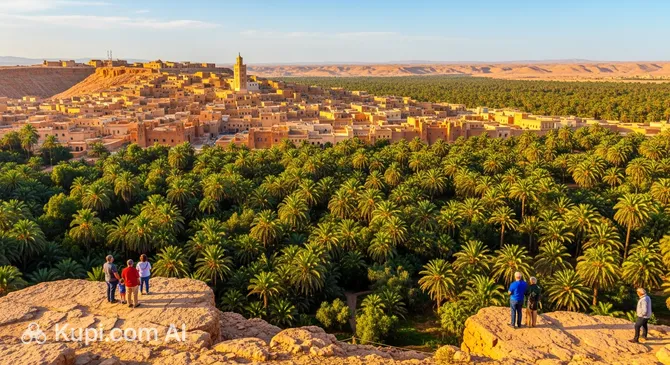
Laghouat. Source: Kupi.Binoculars

Geographically, the city sits on the northern edge of the Sahara Desert, nestled within the Amour Range of the Saharan Atlas. This location gives it a diverse topography and a climate that transitions from Mediterranean influences to desert dry heat. Those interested in the past will find the history of Laghouat deeply engaging, as the city has long been a crossroads for trade and a spiritual center, marked by the legacy of its ancient ksar and traditional architecture.

Travelers are often drawn to the city's extensive palm groves, which create a verdant contrast against the rocky surroundings and provide a cool retreat. The city is also renowned for its high-quality handicrafts, particularly its intricate woven carpets and tapestries which are celebrated throughout the region. A visit to the local mosques and the shrine of Sidi Abdelkader Djilani provides insight into the spiritual life of the area, while the surrounding steppe offers unique opportunities for exploration.

Whether you are passing through on a journey to the deep south or looking to experience the tranquility of an authentic oasis, Laghouat welcomes you with open arms. It is a perfect destination for those seeking to discover the hidden gems of the Algerian steppe.

Weather Overview

The climate in Laghouat is defined by its location on the fringe of the Sahara, offering a semi-arid environment with distinct seasonal contrasts. Summers are typically hot, with July being the warmest month, featuring average maximum temperatures of 38.5°C. Conversely, winters are cool and crisp; January is the coldest month, where the average minimum temperature drops to 2.0°C.

For those wishing to time their visit perfectly, the detailed page on the weather in Laghouat provides comprehensive monthly data. The transitional seasons of spring and autumn are generally pleasant; for instance, May enjoys a comfortable average temperature of 21.2°C. Rainfall is scarce throughout the year, with months like March and September seeing only about 4 wet days, and total precipitation often remaining negligible.

Expect scorching, dry summers and cool winters with minimal rainfall, making it a destination best enjoyed with appropriate clothing for the season.

Interesting Facts

Beyond the main attractions, Laghouat holds many fascinating secrets that reveal its deep connection to both the earth and the heavens. The following insights offer a glimpse into the unique character of this desert gateway.
  • The region is home to a rare geological wonder known as the Talemzane Crater (or Madna Crater). Located in the steppe south of the city, this massive depression was formed by a meteorite impact roughly two million years ago and is considered one of the most well-preserved craters in Algeria.

  • The city's distinctive topography is defined by two prominent rocky ridges, Argoub and Tizigarine. The urban area is uniquely nestled between these heights, which resemble the humps of a camel and offer breathtaking panoramic views over the lush palm groves and the surrounding desert.

  • Laghouat is widely recognized as a premier center for traditional carpet weaving. The local artisans are famous for their intricate geometric patterns and vibrant colors, and the city frequently hosts the National Carpet Festival, celebrating this ancestral craft of the Saharan Atlas.

  • The area holds immense spiritual significance as the cradle of the Tijaniyya Sufi order. The nearby town of Ain Madhi, located within the province, is the birthplace of the order's founder, making the region a vital pilgrimage destination for millions of followers from across the globe.

How to Get There

Reaching Laghouat is an adventure that takes you to the gateway of the Algerian Sahara. While the city is well-connected to the national road network, international travelers typically arrive via major air hubs in the region before continuing their journey by ground transport. For a comprehensive guide on all available routes and travel tips, you can read more about how to get to Laghouat.

The city of Laghouat does not have its own international airport listed for direct tourist arrivals, but you can fly into Noumerate Airport (IATA: GHA) in the city of Ghardaia, which is about 180 km from Laghouat. This is one of the closest viable options for air travel. From the airport, the journey by taxi or bus takes approximately 2.5 to 3 hours. Alternatively, you can arrive at Biskra Airport (IATA: BSK) in Biskra. Located roughly 286 km away, this regional hub serves as another entry point, though the transfer to Laghouat is longer, taking about 4 to 5 hours by road.

For clarity, here is a summary of the main airports:

Airport Name City Passenger Traffic Km from City
Biskra Airport Biskra Medium 286.4
Noumerate Airport Ghardaia Small 180.3

Main Attractions

Laghouat offers a captivating mix of history, spirituality, and natural beauty. As a gateway to the Sahara, its attractions reflect the rich heritage of the steppe and the enduring traditions of its people. Here are some of the most interesting places to visit in the city.

The Old Ksar is the beating heart of the city's historical identity. Walking through its narrow, winding alleyways, visitors are transported back in time. This ancient quarter features traditional mud-brick architecture designed to keep homes cool during the scorching summers. It is a perfect place to admire the local craftsmanship and experience the authentic atmosphere of a Saharan settlement.

A unique architectural landmark is the Municipal Museum, housed in the former Church of Saint Hilarion. Built during the colonial era around 1900, this structure stands out with its distinct style that blends European and local influences. Today, it serves as a cultural repository, displaying collections of traditional carpets, weaving tools, and artifacts that tell the story of the region's artistic heritage.

Overlooking the city is the Shrine of Sidi El Hajj Issa, dedicated to the patron saint of Laghouat. This spiritual site is not only a place of pilgrimage but also offers a window into the deep-rooted religious traditions of the area. Located near the old fortress, the site commands impressive views of the urban landscape and the surrounding desert, making it a significant spot for both history buffs and those seeking panoramic vistas.

No visit to Laghouat is complete without exploring its famous Palm Grove (Oasis). This lush expanse of greenery provides a stark and beautiful contrast to the arid steppe surroundings. It acts as the city's lungs, offering a cool, shaded retreat where visitors can see the ancient irrigation systems at work and enjoy the tranquility of nature amidst thousands of date palms.

Local Cuisine

The cuisine of Laghouat is a delightful reflection of its geography, blending the hearty, rustic flavors of the Algerian steppe with the sweet abundance of a desert oasis. As a city famous for its sheep herding, the local gastronomy is heavily centered around high-quality meat, particularly lamb and mutton, which are renowned throughout the country for their tenderness and flavor. Visitors will find that food here is not just sustenance but a profound expression of hospitality and tradition.

The undisputed king of the local table is Merdoud (also known as Berkoukes). This traditional dish is iconic to the region and is a must-try for any traveler. It consists of large, hand-rolled grains of semolina pasta cooked in a rich, spicy tomato-based sauce filled with vegetables and often enhanced with guedid (dried, salted meat). It is a hearty, warming meal typically served during celebrations, family gatherings, and cold winter nights, symbolizing abundance and community.

Another staple of the Laghouat kitchen is Chakhchoukha, particularly the variety known as Chakhchoukha Dfar. This dish features thin, handmade flatbreads that are torn into small pieces and soaked in a savory stew of lamb, chickpeas, and zucchini. For meat lovers, the local Mechoui—whole roasted lamb seasoned simply to highlight the natural quality of the meat—is an unforgettable experience, often prepared in traditional earth ovens for special occasions.

Given its status as an oasis, Laghouat produces some of the finest dates in the region. The Deglet Nour dates here are sweet and translucent, often served as a welcoming gesture or paired with fermented milk (Lben) for a light snack. You might also encounter traditional sweets like Makhrout, a semolina and date pastry deep-fried and dipped in honey, which perfectly complements the local beverages.

When it comes to drinks, Mint Tea is the heartbeat of social life. In Laghouat, tea preparation is a ritual; it is brewed strong, sweet, and poured from a height to create a frothy foam known as the "turban." It is drunk at all hours of the day. While alcohol is generally not part of the traditional dining scene and is found only in select hotels or private venues, visitors should seek out Legmi, the fresh sap of the date palm, which is a refreshing, sweet, non-alcoholic local specialty harvested directly from the trees.

The dining culture in Laghouat is less about fancy restaurants and more about authentic, home-style cooking. While there are small eateries and grill houses (rôtisseries) in the city center serving excellent grilled skewers (brochettes), the best meals are often found in family settings. If you have the chance to be invited into a local home, accept the offer; sitting around a low table (sofra) and sharing a communal dish is the truest way to experience the warmth of the "Capital of the Steppe."

Travel Tips

Visiting Laghouat offers a unique opportunity to experience the authentic hospitality of the Algerian steppe, but like any destination with deep-rooted traditions, it helps to come prepared. These practical tips will ensure your journey to this desert gateway is comfortable, respectful, and full of memorable encounters.

  1. Clothing and Gear: Pack according to the season; summers are intensely hot, requiring loose, breathable fabrics and a good sun hat, while winters can be surprisingly cold, so a warm jacket is essential. As Laghouat is a conservative city, modest clothing is expected—both men and women should cover their shoulders and knees, and women should carry a scarf for visiting religious sites. Comfortable walking shoes are a must for exploring the rocky terrain of the old Ksar.
  2. Transportation: The city does not have a metro or tram system. The best way to get around is by using the local taxis, which are affordable and readily available; you can flag them down on the street or find them at designated stands. For exploring the wider region or the surrounding oasis, renting a car is a good option, though having a local driver is often more relaxing given the road conditions.
  3. Finances: The local currency is the Algerian Dinar (DZD). Laghouat is largely a cash-based society, and international credit cards are rarely accepted outside of high-end hotels or major institutions. It is crucial to carry sufficient cash for daily expenses like food, transport, and souvenirs. ATMs are available in the city center, but it is wise to have a backup plan in case they do not accept your specific foreign card.
  4. Health and Safety: Laghouat is generally safe for tourists, but standard precautions should be taken with valuables. Pharmacies are easily identifiable by a green cross sign, and many are well-stocked for minor ailments. Due to the arid climate, dehydration is a real risk; always carry bottled water and apply high-SPF sunscreen regularly. Avoid drinking tap water unless you are sure it is filtered.
  5. Communication: The primary languages are Arabic and the local dialect (Darja), while French is widely understood and used in business. English is less common, so having a translation app or a phrasebook is highly recommended. Purchasing a local SIM card (Mobilis, Djezzy, or Ooredoo) is easy at official shops in the city center and provides reliable mobile data coverage for navigation and communication.
  6. Local Etiquette: Greetings are taken seriously here; a polite "Salam Alaykum" (Peace be upon you) goes a long way. When greeting someone of the opposite gender, wait to see if they extend their hand first; if not, a nod and a hand over the heart is the respectful gesture. Always remove your shoes when entering a home or a mosque, and accept tea if it is offered, as refusing can be seen as impolite.
  7. What to Avoid: Public displays of affection are culturally inappropriate and should be avoided. Additionally, do not take photographs of people, especially women or government buildings, without asking for explicit permission first. Alcohol is not widely consumed and is generally taboo in public spaces; restrict consumption to private areas or licensed hotels.
  8. Local Insight: Be aware of the "siesta" culture, especially during the scorching summer months. Many shops and businesses close in the early afternoon (around 1:00 PM to 4:00 PM) to escape the peak heat and reopen in the evening when the city comes alive again. Plan your outdoor activities for the morning or late afternoon to match the local rhythm.

By keeping these simple guidelines in mind, you will find it easy to connect with the locals and immerse yourself in the rich culture of Laghouat. Enjoy the stunning landscapes and the warm welcome that awaits you in the capital of the steppe!

Entertainment & Nightlife

Nightlife in Laghouat differs significantly from the bustling club scenes found in Western capitals or coastal cities. Here, the evening entertainment is deeply rooted in local tradition, revolving around social interaction, hospitality, and relaxation rather than loud music or dance floors. The atmosphere is calm and family-oriented, with the city coming alive after sunset as the desert heat dissipates, inviting locals and visitors alike to enjoy the cool night air.

The heart of the city's evening activity is undoubtedly the City Center and the historic areas near the old quarters. In these districts, "nightlife" means gathering with friends at a terrace café to sip strong, sweet mint tea and discuss the day's events. Alcohol is generally not served in public cafés due to the conservative nature of the region. Instead, the focus is on high-quality coffee, tea, and traditional pastries. Visitors will find that these establishments are welcoming, though they are predominantly frequented by men in the later hours. For a more mixed environment, family sections in larger cafés are the best choices.

For those seeking a comfortable place to dine or enjoy a quiet evening, the Hôtel Marhaba is a well-known establishment. Conveniently located in the city center, it offers a reliable restaurant setting where tourists can enjoy a meal in a relaxed atmosphere. Another reputable option is the Hôtel El-Boustan, which provides a comfortable setting for travelers. These hotels are among the few places where you might find a dining experience closer to international standards, making them ideal for visitors looking to unwind after a day of exploration.

A unique way to experience the local night culture is to take a stroll near the Palm Grove or along the illuminated main avenues. In the summer, families often stay out late, enjoying the refreshing breeze. The local markets may also remain active into the evening, offering a glimpse into the daily lives of the inhabitants. If you are lucky, you might stumble upon a traditional wedding procession or a local cultural festival, which are often celebrated with poetry, music, and communal feasting late into the night.

Practical advice for enjoying Laghouat at night includes dressing modestly and respecting local customs. The best time to go out is after 8:00 PM, when the temperature drops. The city is generally very safe for night walks, especially in well-lit main streets, but it is always advisable to stay in populated areas. Taxis are the most convenient way to get back to your accommodation if you are staying far from the center; they can be flagged down or arranged by your hotel reception.

While the nights are for relaxation, they offer a perfect counterbalance to the vibrant days. The contrast between the sun-drenched afternoons and the peaceful, starry nights makes a visit to this gateway of the Algerian Sahara a truly memorable experience.

Parks & Museums

While Laghouat is celebrated as a gateway to the Sahara, it is far from being a barren landscape; the city is an oasis in every sense, offering lush green spaces that contrast beautifully with the surrounding steppe, alongside cultural venues that preserve the region's rich heritage. Visitors will find that the city's parks and museums are deeply integrated with its history and daily life, offering a more organic experience than typical tourist attractions.

The crown jewel of the city's natural areas is undoubtedly the Laghouat Palm Grove. Spanning hundreds of hectares and containing tens of thousands of date palms, this is not just an agricultural zone but a vast, living park that serves as the city's lungs. Tourists can wander through the shaded pathways, observing the traditional irrigation systems (seguias) that have watered these lands for centuries. It is a tranquil escape where the sound of rustling palm fronds and flowing water provides a cool respite from the desert sun, perfect for a leisurely afternoon walk.

For a different perspective on the local landscape, the rocky ridge of El Argoub offers a natural vantage point that functions as a rugged, open-air park. Climbing to this elevated area rewards visitors with panoramic views over the geometric layout of the city, the verdant oasis, and the endless steppe beyond. It is a favorite spot for locals to watch the sunset, offering a raw connection to the geography that defines the region.

In terms of culture, the Municipal Museum of Laghouat is a must-visit landmark. Housed in the former Church of Saint Hilarion, the building itself is an architectural curiosity, blending colonial-era design with the local desert aesthetic. Inside, the museum functions as a guardian of the region's identity, displaying a collection that ranges from prehistoric artifacts found in the surrounding Atlas Mountains to examples of the city's famous weaving traditions. It provides a comprehensive overview of how life has evolved in this crossroads city over millennia.

Another key cultural venue is the Old Ksar, which, while an inhabited district, serves as an open-air museum of Saharan urbanism. Walking through its narrow, winding streets allows visitors to appreciate the ingenuity of traditional mud-brick architecture designed to combat the heat. Within this area, you may encounter small workshops or cultural associations dedicated to preserving the art of carpet weaving, effectively acting as living galleries where the city's most famous craft is displayed and practiced.

For an authentic experience, try to visit during a local exhibition at the Maison de la Culture (House of Culture). These venues often host temporary galleries showcasing local painters, calligraphers, and artisans. A pro tip for nature lovers is to venture slightly outside the city to the banks of the Oued M'zi; after rare rains, the river valley transforms into a popular picnic spot for families, offering a glimpse into the resilient nature of the semi-arid environment.

Getting Around

The public transport system in Laghouat is relatively simple and straightforward, reflecting the city's size and layout. Unlike the larger metropolises in the north, there is no metro, tramway, or train service operating within the urban area. Instead, the city relies primarily on a road-based network consisting of buses and taxis, which are sufficient for navigating between the historic center, the residential districts, and the surrounding oasis areas.

The most common form of mass transit is the bus network, which is a mix of public vehicles and privately operated minibuses. These minibuses are the backbone of daily commuting for locals; they run on fixed routes connecting major neighborhoods to the city center and the main bus station (Gare Routière). They are generally white or yellow vans and are known for being frequent, though they can get quite crowded during peak hours. Stops are marked, but in practice, drivers often stop on demand along the designated route.

For tourists, taxis are often the most convenient and comfortable option. You will easily recognize them by their yellow color. Taxis in the city operate on two models: "individual" taxis, which take you directly to your destination for a metered or negotiated fare, and "collective" taxis, which pick up multiple passengers going in the same direction. Collective taxis are extremely affordable and offer a great way to travel like a local, while individual taxis provide more privacy and air-conditioned comfort, which is valuable during the hot summer months.

The payment system across all modes of transport in Laghouat is exclusively cash-based. There are no electronic travel cards, mobile apps, or pre-paid passes for local transit. You pay the driver or the conductor directly upon boarding the bus or at the end of your taxi ride. Fares are very low by international standards; a bus ride typically costs a nominal amount of small change, while taxi fares are also quite reasonable. It is essential to carry small denominations of the local currency (Dinars), as drivers may not always have change for large banknotes.

Walking is a viable alternative for exploring the compact city center, particularly around the Old Ksar and the market areas. However, given the semi-arid climate and the heat, walking long distances is best avoided during the middle of the day. Car rentals are available but are generally not necessary for staying within the city limits unless you plan to explore the wider steppe region independently. If you do rent a car, be aware that parking can be tight in the older parts of the city.

Public transport typically operates from early morning (around 6:00 AM) until the evening (around 7:00 PM or 8:00 PM). Service reduces significantly after sunset and becomes very sparse on Fridays, which is the weekly day of rest. If you need to travel late at night or on a Friday, it is advisable to arrange a taxi in advance or rely on your hotel to call one for you.

Accommodation

Accommodation in Laghouat is primarily designed to serve practical needs, catering to business travelers, passing motorists, and those exploring the Algerian steppe. The options are generally modest, ranging from budget-friendly guesthouses to mid-range hotels. You will not find sprawling luxury resorts or international hotel chains here; instead, the hospitality sector is dominated by locally run establishments and state-owned hotels that offer essential amenities and a warm, traditional welcome.

The most convenient area to stay is the City Center. Choosing accommodation here places you within walking distance of the central market, the old Ksar, and the main taxi stands. This central location allows for easy exploration of the city's historic quarters without the need for constant transport. Some newer establishments are located on the outskirts of the city, offering slightly more modern facilities and parking space, but they typically require a taxi ride to reach the main cultural sights.

While the selection is relatively small, there are a few well-known establishments that have served visitors for decades. Hôtel Marhaba is a notable example, often recognized for its central location and architecture that reflects the local style. Another frequently mentioned option is Hôtel El-Boustan, which provides a standard level of comfort suitable for short stays. These hotels typically offer on-site dining and air conditioning, which is an absolute necessity during the hot summer months.

Booking Tip: While a few of the larger hotels may appear on major international booking platforms, the majority of accommodation in Laghouat relies on direct contact. It is often best to book by phone or have a local travel agency assist you with the reservation. If you are traveling during the National Carpet Festival or other regional events, securing your room in advance is highly recommended as the limited capacity can fill up quickly.

In terms of pricing, Laghouat is a very affordable destination. Most options fall into the budget to mid-range category. It is important to note that payment is almost exclusively expected in cash (Algerian Dinars) upon arrival, as credit card facilities are rare outside of the most major establishments. Travelers should manage their expectations and look forward to simple, clean, and functional rooms rather than high-end luxury.

Nearby Cities

For those looking to explore the surroundings, Laghouat serves as an excellent base for day trips to several interesting nearby locations:

Situated just over 100 kilometers to the north, Djelfa is a prominent neighboring city located in the heart of the Ouled Naïl mountains. It is famous for its rich pastoral traditions and the distinct culture of the Ouled Naïl people, particularly their unique jewelry and costumes. Further to the northwest lies Tiaret, often celebrated as the capital of the Barbary horse. This region offers a deep dive into Algeria's equestrian heritage and ancient history, making it a compelling stop for those interested in the traditions of the high plateaus.

City Population Distance (km)
Djelfa 265833 102
Tiaret 178915 224
Ain Defla 150000 284
M'Sila 150000 261
Medea 138355 273

These nearby destinations offer a glimpse into the diverse culture and landscapes of the region.

Shopping & Souvenirs

Shopping in Laghouat is less about modern retail therapy and more about discovering the rich artisanal heritage of the Algerian steppe. The city does not feature high-end fashion boutiques or international chain stores; instead, it offers an authentic experience where commerce is deeply tied to tradition. Visitors will find that shopping here is a personal interaction, often involving a friendly chat with the shopkeeper, and is the perfect way to find unique, handmade treasures that reflect the local culture.

The primary shopping destination is the City Center. The streets radiating from the main public squares are lined with small, independent shops selling everything from clothing and shoes to household goods. Walking through these bustling avenues allows you to soak in the daily rhythm of the city. Unlike the pedestrianized shopping streets of Europe, these areas are lively mixed-use zones where commerce and daily life blend seamlessly.

Travelers expecting large, western-style shopping malls will not find them here. Laghouat's retail landscape is dominated by traditional souks and small commercial arcades (known as galleries) rather than sprawling shopping centers. These smaller complexes often house specialized shops, such as jewelers or fabric merchants, and offer a cool respite from the outdoor heat.

The soul of the city's commerce lies in its markets. The central market area is a sensory delight, filled with the aroma of spices, the bright colors of seasonal fruits, and the chatter of locals. It is the best place to buy fresh produce, local honey, and traditional herbs. For a truly local experience, visit the weekly souk if your stay coincides with market day, where vendors from the surrounding province come to sell livestock, wool, and bulk goods.

When it comes to souvenirs, carpets are the undisputed pride of Laghouat. The region is famous for its weaving tradition, producing high-quality wool carpets and tapestries featuring geometric patterns and vibrant red and ochre tones. Another essential purchase is a box of dates; grown in the local oasis, they are sweet, affordable, and make for a delicious gift. For something wearable, look for a Kachabia, a traditional camel-hair or wool cloak that is incredibly warm and iconic to the Djelfa and Laghouat regions.

Store hours in Laghouat follow a distinct rhythm dictated by the climate. Shops typically open around 8:00 AM or 9:00 AM, but nearly everything closes for a long break in the afternoon, from roughly 1:00 PM to 4:00 PM, to avoid the peak heat. Business resumes in the late afternoon and continues until around 8:00 PM. On Fridays, the holy day, most shops remain closed, particularly in the morning.

Cash is king in Laghouat. Credit cards are almost never accepted in small shops, markets, or even larger local stores. It is essential to carry sufficient Algerian Dinars (DZD) in smaller denominations to pay for your purchases. As for tax-free shopping, tourists should not expect VAT refund schemes or duty-free facilities within the city; the prices are generally fixed and very reasonable by international standards.

Reached the end of the page?

That means the route is fully explored