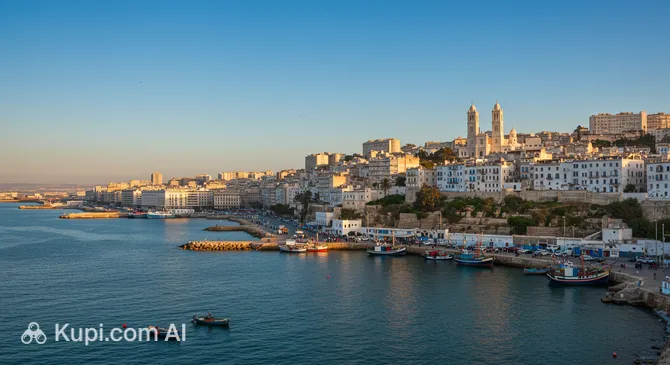
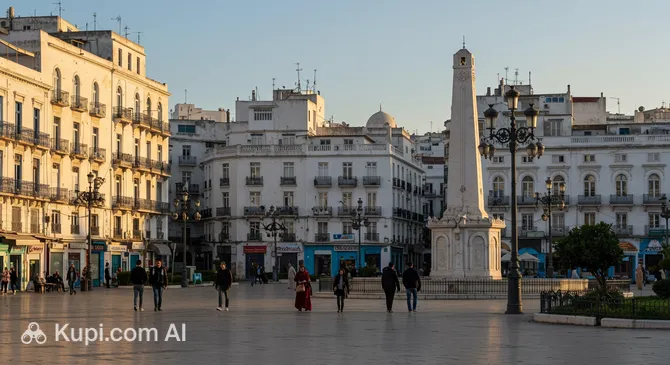
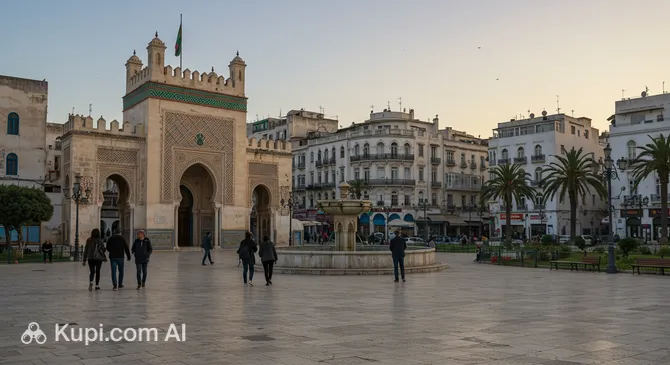
Algiers, often affectionately known as "Algiers the White" due to its glistening white buildings rising from the sea, is the vibrant capital and largest city of Algeria. Situated on the western side of a bay of the Mediterranean Sea, this bustling metropolis serves as the country's political, economic, and cultural heart. With a population exceeding 3 million, the city stretches from the busy port area up into the surrounding hills, offering a stunning visual contrast between the deep blue sea and the urban landscape.
Algiers. Illustration.
Source: Kupi.com AI
The city is a fascinating blend of modernity and tradition, where wide French colonial boulevards coexist with ancient Islamic architecture. The rich and complex history of Algiers is palpable in every corner, particularly in the Casbah. This UNESCO World Heritage site is a labyrinth of narrow, winding streets and Ottoman-era palaces that stands as a testament to the city's enduring heritage.
Travelers are drawn to the city's unique landmarks, such as the Notre Dame d'Afrique, a magnificent basilica perched on a cliff that offers breathtaking panoramic views of the bay. Another prominent feature of the skyline is the Martyrs' Memorial (Maqam Echahid), an iconic concrete monument that dominates the heights of the city. Whether you are exploring its historical depths or enjoying the fresh sea breeze along the promenade, Algiers invites you to discover its captivating Mediterranean charm.
Weather Overview
Algiers benefits from a pleasant Mediterranean climate, offering distinct seasons that cater to different types of travelers. To help you choose the best time for your visit, you can consult the detailed guide on the weather in Algiers. Generally, the city experiences plenty of sunshine throughout the year, with the nearby sea helping to moderate the temperatures.
The summer season, particularly July and August, is the warmest time of the year. Average temperatures peak around 27°C, with highs climbing just above 30°C. Rain is virtually non-existent during these months; for instance, August typically sees only about one wet day. This dry spell makes it the perfect season for enjoying the outdoors, though travelers should be prepared for the heat.
As the year progresses, temperatures cool down and rainfall becomes more frequent. January is typically the coolest month, with averages around 12.7°C, while November often sees the highest frequency of rain with approximately 13 wet days. Expect warm, dry summers with minimal rain and mild, wetter winters that rarely see freezing temperatures.
Average monthly temperature
Average monthly precipitation
Interesting Facts
Beyond the main attractions, Algiers holds many fascinating secrets that reveal the depth of its cultural and historical layers. The city is not just a political capital but a place where unique records are held and unexpected historical figures have left their mark.
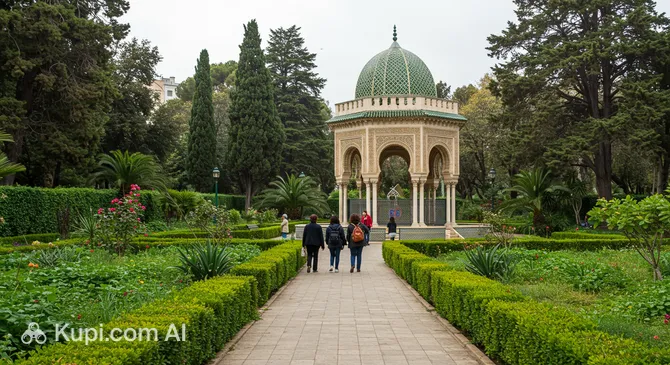
Hamma Botanical Garden. Illustration.
Source: Kupi.com AI
Traveler photos:
The lush Hamma Botanical Garden, established in 1832, served as a filming location for the famous 1932 movie "Tarzan the Ape Man." This spectacular garden is one of the oldest and most important acclimatization gardens in the world, featuring exotic plant species that create a true jungle atmosphere right in the city.
Algiers is home to the Great Mosque of Algiers, which boasts the tallest minaret in the world. Soaring to a height of 265 meters, this architectural masterpiece dominates the bay and is designed to withstand major earthquakes while accommodating up to 120,000 worshippers.
The celebrated Spanish writer Miguel de Cervantes, author of "Don Quixote," was held captive in Algiers for five years between 1575 and 1580. During his captivity, he hid in a cave near the Belouizdad district while attempting one of his many escapes; this site is now known as the Cervantes Grotto.
In a little-known historical episode, the philosopher Karl Marx spent over two months in Algiers in 1882, seeking a cure for his pleurisy in the warm climate. It was the only time he ever visited Africa, and notably, it was here that he shaved off his iconic beard for the last time before his death.
How to Get There
Reaching the Algerian capital is relatively straightforward, with the city serving as the country's primary transportation hub. Whether you are arriving from international destinations or other parts of the country, you have several options to consider. For a comprehensive overview of all travel methods, you can read more about how to get to Algiers and plan your journey accordingly.
The most convenient and common point of entry is Houari Boumediene Airport (IATA: ALG), located approximately 14.6 km from the city center. This international airport is the busiest in the country, handling a large volume of passenger traffic annually. Upon arrival, a taxi ride to downtown Algiers generally takes about 45 minutes, though this can vary with traffic conditions. Regular bus services also connect the airport to the city, offering a more economical alternative.
If you are exploring the wider region, you might find yourself arriving at Chlef International Airport (IATA: CFK) or Bejaia Airport (IATA: BJA). However, it is important to note that these airports are not located in Algiers itself. The Chlef International Airport is situated in the city of Chlef, about 166 km away, while Bejaia Airport is in Bejaia, roughly 180 km from the capital. Travel from these locations to Algiers by road is significant, taking several hours, so they are best used as alternatives only if your itinerary includes these specific regions.
For clarity, here is a summary of the main airports:
Algiers is well-connected to the rest of the country by a rail network. The main station, Gare d'Alger, is centrally located near the port and offers services to major cities such as Oran, Constantine, and Annaba. Additionally, travelers can reach the city by long-distance buses or by ferry, with regular maritime connections available from ports in France and Spain.
Main Attractions
The city of Algiers is a treasure trove of historical landmarks and cultural sites that reflect its diverse heritage. From Ottoman palaces to French colonial architecture and modern monuments, the capital offers a variety of experiences for every type of traveler. Exploring these sites provides a deeper understanding of the city's layered past and its vibrant present.
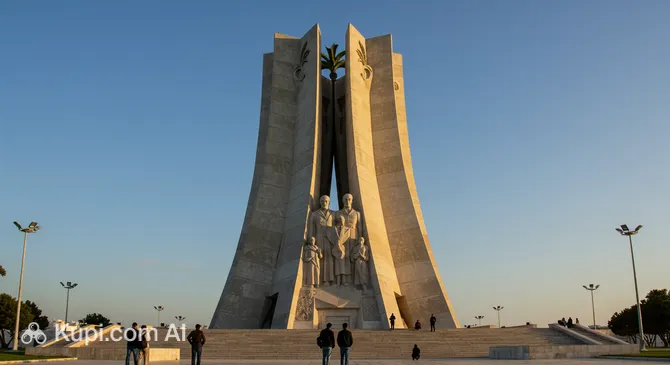
One of the most recognizable symbols of the city is the Martyrs' Memorial (Maqam Echahid). Opened in 1982 on the 20th anniversary of Algeria's independence, this imposing concrete monument towers over the city from its hilltop location. It consists of three stylized palm leaves that join together to shelter the "Eternal Flame" beneath. Visitors flock here not only to pay their respects but also to enjoy the spectacular panoramic views of the bay and the urban sprawl below.
Martyrs' Memorial. Illustration.
Source: Kupi.com AI
Traveler photos:
Perched high on a cliff overlooking the northern side of the bay stands the magnificent Notre Dame d'Afrique. This Roman Catholic basilica, inaugurated in 1872, is a stunning example of Neo-Byzantine architecture. Often referred to as "Madame l'Afrique" by locals, it is famous for the inscription on its apse: "Notre Dame d'Afrique, pray for us and for the Muslims." The site offers a peaceful atmosphere and one of the best vantage points for looking out over the Mediterranean.
For a glimpse into the city's Ottoman past, the Palace of the Raïs, also known as Bastion 23, is an essential stop. Located near the sea, this complex of three palaces and six fishermen's houses has been beautifully restored. It serves as a striking example of the domestic architecture of the regency period, featuring elegant courtyards, intricate tile work, and wooden ceilings. Today, it functions as a museum and a center for arts and culture.
Palace of the Raïs. Illustration.
Source: Kupi.com AI
Traveler photos:
At the foot of the historic Casbah, you will find the Ketchaoua Mosque. This UNESCO World Heritage site has a fascinating history, having served as a cathedral during the colonial era before reverting to a mosque after independence. Its architecture is a unique blend of Moorish and Byzantine styles, making it one of the most beautiful religious buildings in the capital. The mosque stands as a testament to the city's ability to harmonize different cultural influences.
History enthusiasts should not miss the Bardo National Museum of Prehistory and Ethnography. Housed in a superb 18th-century Moorish villa, the museum itself is an architectural gem with lush gardens and tiled courtyards. Inside, it holds one of the finest collections of prehistoric artifacts in Africa, including the skeleton of Tin Hinan, the legendary Queen of the Tuareg. It offers a comprehensive journey through the region's ancient history and diverse ethnographic traditions.
Local Cuisine
The cuisine of Algiers is a delightful reflection of its history, blending Berber roots with Ottoman, French, and Mediterranean influences. The city’s location on the coast ensures a steady supply of fresh seafood, which is often prepared with aromatic herbs and spices like cumin, coriander, and saffron. Meals are typically hearty and meant to be shared, centering around staples like semolina, lamb, chicken, and a colorful array of seasonal vegetables.
A true signature dish of the capital is Rechta, a meal you might not find as easily in other parts of the country. It consists of thin, artisanal noodles steamed and served with a white sauce made from chicken, cinnamon, and turnips. Of course, Couscous remains the national favorite, often enjoyed on Fridays. In Algiers, it is frequently prepared with a white sauce and vegetables, distinguishing it from the red-sauce variations found elsewhere. For starters, travelers should try Chorba Frik, a flavorful soup made with crushed green wheat and meat, often accompanied by Bourek, a crispy pastry filled with meat, cheese, or seafood.
Street food plays a significant role in the daily life of the locals. The undisputed king of Algiers' street snacks is Garantita (or Karantika), a warm, savory flan made from chickpea flour, usually sold in baguette sandwiches with a dusting of cumin and a dab of harissa. It is an affordable, filling, and beloved treat that can be found in almost every neighborhood.
When it comes to beverages, mint tea is the symbol of hospitality, poured from a height to create a frothy top. Coffee is also deeply ingrained in the culture, enjoyed strong and often in traditional cafes. For a uniquely Algerian refreshment, try Hamoud Boualem, a local lemon soda that rivals international brands in popularity and has been produced in the city for over a century. While alcohol is not sold everywhere, Algiers has a selection of fine local wines, a legacy of its vineyards, which can be enjoyed in licensed restaurants and hotels.
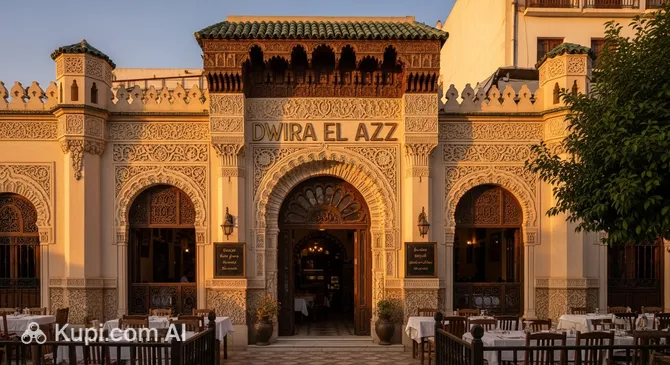
The dining scene in Algiers offers a mix of casual eateries and refined gastronomic experiences. You can find traditional restaurants tucked away in the historic Casbah or modern establishments in the upscale neighborhoods of Hydra and Sidi Yahia. For those looking to experience authentic local dining, places like Dwira El Azz offer a welcoming atmosphere where you can savor traditional Algerian recipes in a setting that reflects the city's rich cultural heritage.
Dwira El Azz. Illustration.
Source: Kupi.com AI
Traveler photos:
Travel Tips
Visiting Algiers is an exciting journey into a city where Mediterranean charm meets North African tradition, but a little preparation goes a long way in ensuring a smooth trip. These practical tips will help you navigate the "White City" with confidence, allowing you to focus on its stunning architecture and vibrant culture.
Dress Comfortably and Modestly: Algiers is a cosmopolitan city, but it is respectful to dress modestly, especially when visiting religious sites or traditional neighborhoods like the Casbah. For women, carrying a lightweight scarf is useful for entering mosques. Since the city is built on hills and involves many stairs, sturdy, comfortable walking shoes are an absolute must for exploring.
Mastering Local Transport: The city boasts a modern and efficient public transportation network, including a metro and tramway system that is clean, safe, and affordable. For destinations not reached by rail, yellow taxis are ubiquitous; however, ride-hailing apps like Yassir are extremely popular and convenient for tourists who want to avoid language barriers or negotiating fares.
Cash is King: While high-end hotels may accept international credit cards, the Algerian economy is largely cash-based. It is essential to carry enough cash (Euros or US Dollars) to exchange for Algerian Dinars (DZD) upon arrival. ATMs are available but can sometimes be unreliable with foreign cards, so do not rely on them as your sole source of funds.
Communication and Language: The official languages are Arabic and Tamazight, but French is widely spoken and serves as the primary language for business and tourism. English proficiency is growing among younger generations but is not yet universal. Learning a few basic phrases in French or local Arabic (Darja), or having a translation app handy, will be very helpful.
Stay Connected: To get around easily, purchase a local SIM card from providers like Mobilis, Djezzy, or Ooredoo. They are inexpensive and can be bought at the airport or official shops with your passport. Having mobile data is crucial for using maps and ride-hailing apps, as public Wi-Fi is not always available.
Photography Restrictions: Be extremely cautious with your camera. It is strictly forbidden to take photos of police officers, military personnel, government buildings, or sensitive infrastructure. Doing so can lead to serious misunderstandings or confiscation of your equipment. Always ask for permission before photographing locals.
The Weekend Schedule: Remember that the weekend in Algeria is Friday and Saturday. Friday is the holy day, meaning banks, administrative offices, and many shops will be closed, particularly during prayer times in the early afternoon. Plan your museum visits and shopping trips accordingly.
Navigating the Casbah: While the historic Casbah is a highlight, it is a maze of narrow, winding streets where GPS signals often fail. For your safety and to get the most out of the history, it is highly recommended to hire a certified local guide. They can navigate the labyrinth and introduce you to artisans you might otherwise miss.
By keeping these practicalities in mind, you will find Algiers to be a welcoming and rewarding destination. The locals are known for their hospitality and are often eager to help travelers who show an interest in their city and respect for their customs.
Entertainment & Nightlife
While Algiers is not famous for a raucous, 24-hour party scene comparable to some European capitals, the city offers a sophisticated and lively nightlife that centers around chic lounges, upscale restaurants, and vibrant seaside promenades. The nightlife culture here is often about socializing over late dinners, enjoying live music, and relaxing in stylish venues. The atmosphere is generally welcoming but leans towards the conservative side, so you will find that the most bustling spots are often located in specific, more affluent neighborhoods.
For those seeking a modern and trendy vibe, the districts of Hydra, Sidi Yahia, and Dely Ibrahim are the places to be. These areas are known for their concentration of high-end boutiques, cafes, and nightspots where the city's fashionable crowd gathers. The dress code in these neighborhoods is typically smart-casual to dressy; locals tend to dress up when going out in the evening, so it is advisable to leave the beachwear at the hotel and opt for a polished look.
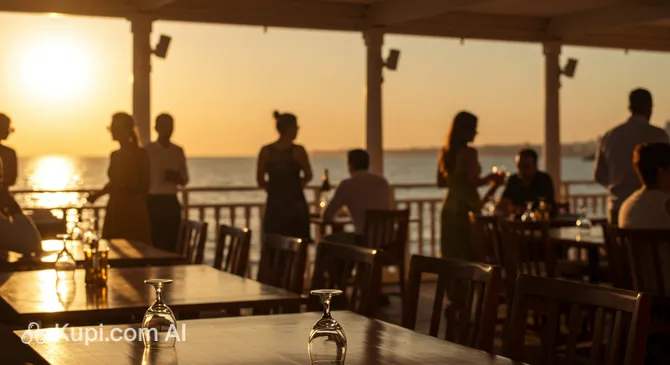
If you are looking for a place to enjoy music and a lively ambiance, Piano Piano in the Hydra district is a well-known venue. It combines a restaurant setting with a bar atmosphere, often featuring karaoke or live entertainment that draws a fun-loving crowd. Another popular spot for night owls is La Raviole Night Club, which offers a more traditional clubbing experience where you can dance and enjoy drinks late into the night. It is important to note that alcohol is not served everywhere in Algiers; it is primarily available in licensed hotels, specific restaurants, and clubs in these districts.
Piano Piano. Illustration.
Source: Kupi.com AI
Traveler photos:
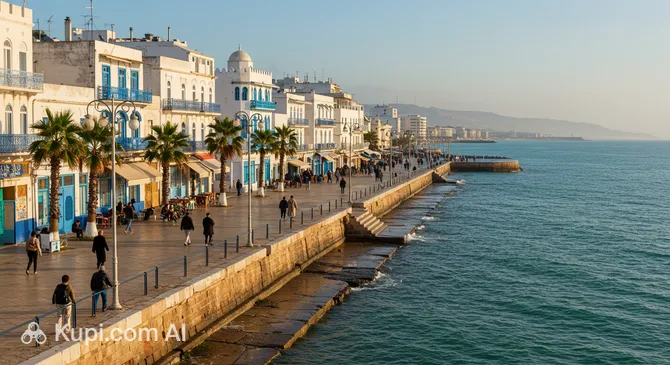
For a more relaxed and family-friendly evening, the Sablettes Seaside Promenade is an absolute must. This expansive waterfront area comes alive at sunset and remains bustling well into the night, especially during the summer. It is lined with cafes, food stalls, and recreational areas, making it a safe and delightful place for a night walk while enjoying the cool Mediterranean breeze and the illuminated skyline of the bay.
Sablettes Seaside Promenade. Illustration.
Source: Kupi.com AI
Traveler photos:
Regarding safety and logistics, the areas mentioned like Hydra and the Sablettes promenade are generally safe for night walks, but it is always wise to stay in well-lit, populated areas. Public transportation slows down significantly at night, so the best way to get around is by using a taxi or a ride-hailing app like Yassir. Avoid hailing random taxis off the street late at night if possible; booking through an app or your hotel is safer and ensures a fair price.
Before the sun sets, Algiers offers plenty of daytime entertainment to fill your schedule. Beyond the historical sites, you can visit the Ben Aknoun Shopping Center, which is not only a place for retail therapy but also features an amusement park that is popular with families. Whether you are exploring museums during the day or sipping a mocktail by the sea at night, the city provides a diverse range of activities to keep you entertained around the clock.
Parks & Museums
Algiers is a city where urban energy meets verdant tranquility, offering a surprising array of green spaces and cultural institutions that chronicle its rich heritage. Beyond the bustling streets and white-washed buildings, visitors can find respite in lush gardens or immerse themselves in the artistic and historical treasures housed within the city's museums.
The crown jewel of the city's green spaces is undoubtedly the Hamma Botanical Garden (Jardin d'Essai du Hamma). Spanning over 30 hectares, this sprawling oasis is designed with a unique dual layout: a French garden characterized by symmetrical lawns and orderly rows of palm trees, and an English garden that offers a wilder, more forest-like atmosphere with winding paths and dense vegetation. It is the perfect place for a leisurely afternoon stroll, allowing you to admire centuries-old ficus trees and a diverse collection of exotic plants while escaping the city noise.
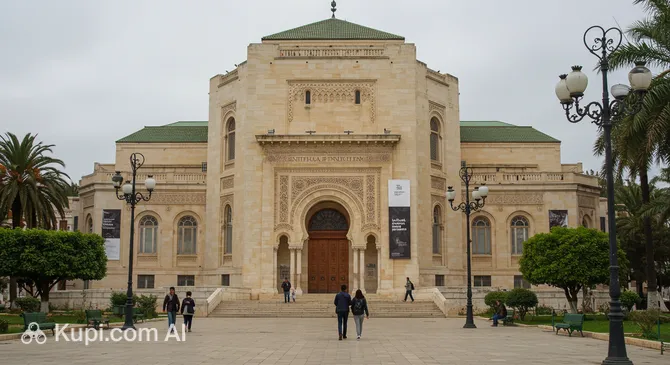
For those interested in art and culture, the Museum of Fine Arts of Algiers is an essential stop. Located in the Hamma district, overlooking the botanical garden, it is the largest art museum in the Maghreb and one of the finest in Africa. The museum boasts an impressive collection of over 8,000 works, including paintings, sculptures, and prints. Visitors can explore a vast array of European art, with a particular focus on the Orientalist movement, as well as a growing collection of modern Algerian art that offers insight into the nation's creative evolution.
Museum of Fine Arts of Algiers. Illustration.
Source: Kupi.com AI
Traveler photos:
Another significant public space that blends history with open-air leisure is Martyrs' Square (Place des Martyrs). Situated at the foot of the Casbah and opening towards the sea, this historic square has been a gathering place for centuries. Recent archaeological excavations during the construction of the metro station here revealed layers of history dating back to the Roman, Byzantine, and Ottoman eras, turning the area into an open-air museum of sorts. It is a lively spot where locals meet, surrounded by important landmarks like the Djamaa el Djedid (New Mosque).
Martyrs' Square. Illustration.
Source: Kupi.com AI
Traveler photos:
If you are willing to venture slightly further from the city center, the Baïnem Forest offers a true immersion in nature. As the largest green lung of the capital, this pine and eucalyptus forest provides hiking trails, picnic spots, and panoramic views of the coastline, making it popular among families and nature enthusiasts on weekends.
Insider Tip: When visiting the Museum of Fine Arts, take a moment to step out onto its terrace. The view from there is spectacular, framing the lush greenery of the Hamma Garden below against the backdrop of the azure Mediterranean Sea—a perfect photo opportunity that captures the essence of Algiers.
Getting Around
Navigating Algiers is a unique experience, largely due to its amphitheater-like geography with neighborhoods cascading down to the sea. To tackle the steep hills and urban sprawl, the city has developed a multimodal transportation system that is both functional and scenic. The most modern and convenient way to move around the city center is the Algiers Metro. Inaugurated in 2011, it is a point of pride as the first subway system in the region. The line is clean, safe, and efficient, connecting key locations such as the Grande Poste to the outskirts. It operates daily from 5:00 AM to 11:00 PM, making it a reliable choice for travelers.
Complementing the metro is the Algiers Tramway, which primarily serves the eastern suburbs. It stretches along the coast, offering beautiful views of the bay as it connects the city center to districts like Bab Ezzouar and Bordj El Kiffan. This service is particularly useful for reaching the exhibition center or the shopping malls in the east. Tickets for both the metro and tram are affordable, and purchasing a 10-trip booklet is a convenient option if you plan to use public transport frequently.
One of the most distinctive and enjoyable features of the local transport network is the system of cable cars and gondolas (téléphériques). Because the city is built on steep slopes, these aerial lifts are not just tourist attractions but essential daily transport for locals. They provide a quick and effortless way to travel from the lower city to the upper heights. Notable lines include the one connecting the Jardin d'Essai to the Martyrs' Memorial and another linking the Bologhine district to the Notre Dame d'Afrique basilica. Riding these offers some of the best panoramic views of the "White City" and the sea.
For direct travel, yellow taxis are ubiquitous throughout the streets. While they are equipped with meters, drivers often prefer to negotiate a fixed fare for longer trips or during heavy traffic, so it is wise to agree on a price before starting your journey. For a more hassle-free experience, ride-hailing apps like Yassir, Heetch, or TemTem are widely used and highly recommended for visitors. They offer the convenience of fixed pricing and help overcome any language barriers regarding directions.
Buses traverse the entire city, operated by the public company ETUSA (recognizable by their blue and orange livery) as well as private operators. While they are extremely cheap and cover areas the metro does not reach, they can be crowded and routes might be confusing for first-time visitors. Finally, while renting a car is possible, it is generally not recommended for exploring the city center due to heavy congestion and limited parking. Walking is often the best way to explore historic districts like the Casbah, provided you are prepared for the stairs.
Accommodation
Where to Stay:
Accommodation in Algiers caters to a wide spectrum of preferences and budgets, ranging from prestigious luxury hotels and business-oriented establishments to modest guesthouses and an increasing number of furnished apartments. As the economic and political capital, the city hosts several high-end international hotel chains that offer world-class amenities, alongside state-run historic hotels that possess a certain old-world charm. For budget-conscious travelers, options include smaller local hotels and hostels, though the latter are less common than in some other tourist destinations.
The choice of location largely depends on the purpose of your visit. For tourists who want to immerse themselves in the city's vibrant atmosphere, Algiers Centre (Downtown) is the most convenient area. Staying here places you within walking distance of the port, the historic Casbah, and magnificent French colonial architecture. You will be close to central landmarks like Emir Abdelkader Square, making it easy to explore the city on foot or by metro.
Emir Abdelkader Square. Illustration.
Source: Kupi.com AI
Traveler photos:
For a quieter, more exclusive experience, the upper districts such as Hydra, El Biar, and Ben Aknoun are highly recommended. These neighborhoods are known for their diplomatic residences, upscale boutiques, and lush greenery. They offer a selection of boutique hotels and luxury rentals that provide a peaceful retreat from the bustling city center, though you will likely need a taxi or private transport to reach the main tourist sites.
Booking Tips: It is advisable to book your accommodation well in advance, especially if you plan to visit during the peak summer months or when major business conferences are taking place. While major international hotels seamlessly accept credit cards, smaller local establishments may prefer cash payments in Algerian Dinars. Always confirm the payment method before your arrival.
In terms of pricing, Algiers can be surprisingly diverse. Luxury and business hotels generally charge prices comparable to European capitals, reflecting the high demand from corporate travelers. Mid-range options offer reasonable value, while furnished apartments often provide the most economical choice for families or longer stays. Most bookings can be made through major online platforms, but for smaller local hotels, contacting them directly can sometimes secure a better rate.
Nearby Cities
For those looking to explore the surroundings, Algiers serves as an excellent base for day trips to several interesting nearby locations:
Just a short distance south of the capital lies Blida, affectionately known as the "City of Roses." Nestled at the foot of the Tell Atlas mountains, this charming city is famous for its fragrant gardens and Ottoman-influenced architecture. It also serves as the gateway to the stunning Chréa National Park, a favorite spot for nature lovers offering hiking trails in the summer and skiing opportunities in the winter.
Further inland, travelers can discover Medea, a historic city surrounded by rolling vineyards and fruit orchards. Known for its ancient heritage and scenic location in the Atlas Mountains, Medea offers a peaceful contrast to the coastal bustle of Algiers. The journey itself provides picturesque views of the Algerian countryside, making it a rewarding excursion for those interested in the region's agricultural and cultural history.
These nearby destinations offer a glimpse into the diverse culture and landscapes of the region, allowing visitors to experience the natural beauty and local life just beyond the capital's borders.
Shopping & Souvenirs
Shopping in Algiers offers a vibrant mix of the old and the new, reflecting the city's diverse heritage. Visitors can wander through bustling traditional markets filled with the scent of spices or explore modern shopping centers offering international brands. The city is particularly known for its traditional handicrafts, leather goods, and high-quality dates, making it a rewarding destination for those looking to take a piece of Algeria home.
For a quintessential Algiers shopping experience, a walk down Didouche Mourad Street is a must. This tree-lined avenue in the city center is flanked by Haussmann-style buildings and hosts a variety of chic boutiques, bookstores, and cafes. Another historic commercial artery is the area surrounding the Bab Azoun Gate. Famous for its arcades and vibrant atmosphere, this district is the perfect place to find everything from fabrics and clothing to local accessories, often at more affordable prices than in the upscale neighborhoods.
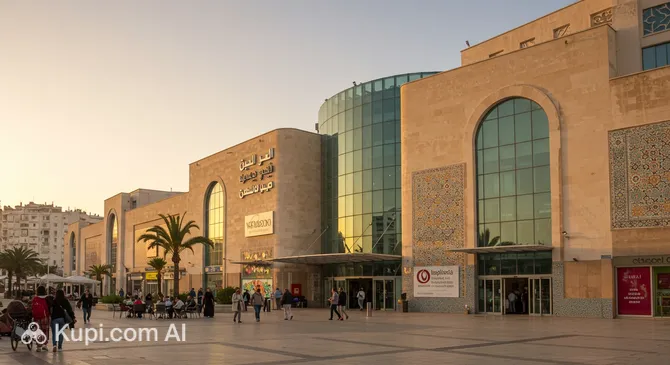
Travelers looking for a modern retail experience will find several large complexes in the city. The Ben Aknoun Shopping Center is a popular destination that combines shopping with leisure. Located in the business district, it features a wide range of fashion stores, electronics shops, and a food court, providing a comfortable environment for a day of browsing away from the heat.
Ben Aknoun Shopping Center. Illustration.
Source: Kupi.com AI
Traveler photos:
To truly immerse yourself in the local culture, visiting the traditional markets is essential. The historic Casbah is not just a sightseeing spot but a hub for artisans selling handmade crafts, copperware, and traditional jewelry. For a sensory delight, the local food markets, such as the Marché Clauzel, offer fresh produce and the world-famous Algerian dates, specifically the Deglet Nour variety, which are widely considered some of the best in the world.
When it comes to souvenirs, Algiers has plenty to offer. Berber jewelry, characterized by silver and coral designs, is a unique and cherished gift. Ceramics with intricate Andalusian patterns, leather goods, and traditional outfits are also top choices. Don't forget to pick up some local olive oil or sweets to share with friends and family.
Store opening hours generally run from Saturday to Thursday, typically from 9:00 AM to 7:00 PM or later. It is important to remember that Friday is the weekly holiday, and most shops and markets will be closed, particularly in the morning and during prayer times. While modern malls and large hotels accept credit cards, cash is definitely king in Algiers. Ensure you have enough Algerian Dinars (DZD) for purchases in smaller shops, markets, and taxis.
Regarding tax-free shopping, Algeria does not currently have a widely implemented VAT refund system for tourists comparable to those found in Europe. Visitors should expect the price on the tag to be the final price, and while bargaining is acceptable and expected in traditional markets and souks, it is generally not practiced in modern stores or malls.