Support

Bejaia Airport

About the Airport

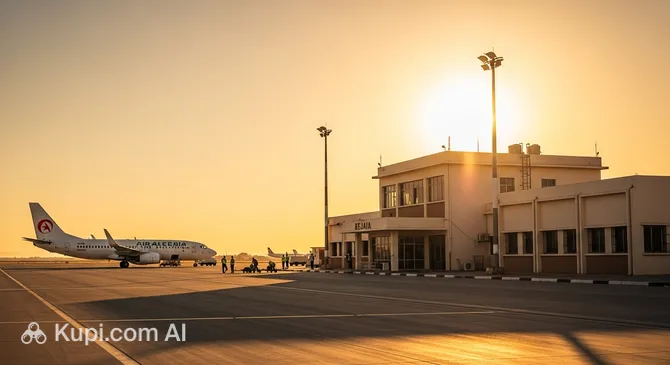
Bejaia Airport. Source: Kupi.com Binoculars

Bejaia Airport, officially known as Soummam – Abane Ramdane Airport, is the key air gateway to Kabylia, a picturesque region in northern Algeria. Located on the Mediterranean coast, it serves as a starting point for travellers wishing to explore the rich culture and natural beauty of the city of Bejaia and its surroundings. Open to international flights since 1993, this airport connects the region with major European cities and the country's capital, playing an important role in the development of tourism and the economy.

IATA Code BJA
ICAO Code DAAE
City Bejaia
Distance to centre About 5 km
Status International
Annual Passengers 272,343 (based on 2019 data)
Popular Airlines Air Algerie, Transavia, ASL Airlines
Schedule online schedule "Bejaia Airport"

Despite its relatively small size, Bejaia Airport is equipped with everything necessary for a comfortable journey. Within the terminal building, passengers can find ATMs, shops, and cafes where they can relax while waiting for their flight. For the convenience of arriving and departing passengers, taxi services are always available at the terminal exit, allowing you to reach the city centre in approximately 10 minutes. The airport handles regular and seasonal flights to cities such as Paris, Lyon, and Marseille, and also operates daily domestic flights, primarily to the country's capital, Algiers. The airport is equipped with modern security systems, including video surveillance and screening equipment, ensuring reliability and peace of mind during your journey.

Contact Information

  • Official Website: The airport is managed by EGSA Alger. Up-to-date information can be found on their official website: www.egsa-alger.dz.
  • Information Desk Phone: For information regarding flights and airport services, you can call: +213 34 81 92 02.
  • Airport Address: Route de l'Aéroport, 06000, Bejaia, Algeria.
  • Email: To contact the management company EGSA Alger, you can use the email address: contact@egsa-alger.dz.
  • Social Media: Official pages for the airport itself may not be available; however, news and updates are often published on the social media pages of the management company, EGSA Alger.
  • Lost Luggage Information: In case of lost or damaged luggage, you should first contact your airline's representative at the airport. Airline staff will provide you with all necessary assistance and instructions.
  • Passenger Support Service: For general inquiries, you can contact the airport information desk at the phone number listed above.

How to Get to the Airport

Soummam – Abane Ramdane Airport (BJA), serving the city of Bejaia, is located just 5 kilometres south of the city centre. Thanks to this proximity, reaching the terminal is quick and possible via several methods, making the start or end of your journey through Algeria very convenient.

Taxi and Transfers. This is the simplest and most predictable way to get to the airport. A taxi ride from the city centre will take just 10-20 minutes depending on traffic. The cost of the trip is low, but it is recommended to use official taxis and negotiate the price with the driver before the trip begins to avoid misunderstandings. For greater peace of mind, you can pre-book a private transfer through your hotel or an online service — in this case, you will be met with a name sign and driven to the airport for a fixed price.

Public Transport. A more budget-friendly but less comfortable option is city buses. There may not be a direct express route from the centre to the airport, but some city and suburban buses pass near the airport complex. This method is suitable for experienced travellers ready for a small adventure and who possess basic French or Arabic language skills to communicate with locals. It is best to check the route and stops locally.

Car Rental and Parking. If you have been travelling around the region in a rented car, you can easily return it directly at the airport. Many rental companies have counters in the arrivals terminal. This is a convenient option allowing you to drive to the airport in comfort with all your luggage. For those arriving in their own vehicle, parking is available on the airport grounds, where you can leave your car for both short and long terms.

Terminals and Map

Bejaia Airport, also known as Soummam – Abane Ramdane Airport (BJA), is a compact and functional aviation hub. It consists of one passenger terminal that handles both domestic flights within Algeria and international ones, primarily seasonal and charter destinations to Europe. Due to this structure, there is no need for transfers between terminals, making navigation intuitive even for first-time visitors.

The terminal layout is extremely simple. The building is functionally divided into two main zones: Departures and Arrivals. Upon entering the terminal, passengers find themselves in a general hall where check-in counters are located. After checking in and dropping off luggage, travellers proceed to the security screening area, followed by a small waiting hall with boarding gates. The arrivals zone is equally concise: after disembarking, passengers enter the baggage claim hall, then pass through customs control (for international flights) and exit into the general hall.

Completing all pre-flight formalities at Bejaia Airport usually takes little time thanks to its small size and moderate passenger flow. Nevertheless, it is recommended to arrive at the airport in advance: approximately 1.5-2 hours before a domestic flight and 2-3 hours before an international one. This time will be sufficient to check in, pass security control, and find your boarding gate without rushing.

To navigate the terminal, simply follow the signs, which are usually duplicated in French and Arabic. Given that all key zones — from check-in counters to boarding gates — are within one small building, getting lost here is practically impossible. The main advice for travellers: do not expect a large number of shops or restaurants at BJA. It is primarily a functional transport hub, where everything is arranged for the quick and convenient completion of necessary procedures.

Airport History

Bejaia Airport, also known as Soummam – Abane Ramdane Airport, is a key transport hub for the city of Bejaia and the entire Kabylia region in Algeria. Its history reflects the development of aviation in the country and the drive towards modernisation. Originally built as a military airfield during French rule, it gradually transformed into an important civil airport serving both domestic and international flights.

A significant event in the airport's history was its renaming. In 1999, it was named after Abane Ramdane — a prominent figure in the history of Algeria. This step highlighted the national identity and historical significance of the air gateway for the country. From this moment, a new stage of development began, focused on increasing passenger flow and improving service quality.

One of the most important stages of modernisation was the construction and opening of a new international terminal. This project, completed in the 2000s, significantly increased the airport's capacity — up to 700,000 passengers per year. The new terminal was equipped with modern facilities, which improved conditions for passengers and attracted new airlines, expanding the flight network, primarily towards European cities, especially in France.

Interesting fact: the airport is located in a picturesque spot, on a narrow strip of land between the Soummam River and the Mediterranean Sea. Such a geographical location makes take-offs and landings particularly spectacular, offering passengers magnificent views of the coast and mountains. Today, Bejaia Airport continues to play an important role, serving as a gateway to one of the most beautiful and economically significant regions of Algeria.

Services and Facilities

Bejaia Airport (BJA), despite its compact size, provides passengers with all necessary services for a comfortable wait for their flight. The terminal infrastructure is focused on meeting the basic needs of travellers before departure.

In the airport building, you will find several cafes and snack bars where you can have a bite to eat, drink coffee, or enjoy soft drinks. The selection usually includes sandwiches, pastries, and light snacks. Small shops are also open, where you can purchase souvenirs, newspapers, and essential items. For passengers preferring enhanced comfort, a VIP lounge may be available, offering a quieter atmosphere, beverages, and snacks for an additional fee or for airline cardholders.

For those who need to stay connected, free Wi-Fi is generally available at the airport. Power outlets for charging electronic devices can be found in the waiting halls. Financial services are represented by ATMs and a currency exchange office, where you can perform necessary monetary transactions before your trip.

The airport is equipped to serve passengers with special needs. Assistance is provided for people with reduced mobility, and there are ramps and specially equipped restrooms. For travellers with small children, a mother and child room is provided where you can take care of your baby in a quiet environment. A medical post is also active within the terminal territory for first aid.

There are no hotels directly on the Bejaia Airport grounds, however, the nearest hotels are located in the city itself, just a few minutes away by taxi. Specialised conference halls and business centres are not provided at the airport, but for business travellers, basic conditions for work, such as internet access and a quiet place, may be offered by the VIP lounge.

Where to Eat

Bejaia Airport (BJA), being a regional air hub, offers passengers basic but convenient options for a snack or a full meal before departure. The choice of establishments here is not as vast as in major international airports, but you will not go hungry.

The main cafes and snack counters are located in the general hall of the airport, accessible to all visitors before security control (landside). Here you can find small cafes serving fresh pastries, sandwiches, as well as hot and cold drinks. After passing security, in the departure zone (airside), the choice is generally more limited and may consist of a small kiosk with drinks and packaged snacks. Therefore, if you plan to have a full lunch, it is better to do so before checking in for your flight.

Travellers wishing to experience local cuisine should look out for traditional Algerian sweets or pastries, which are sometimes offered in local cafes. Also, do not miss the opportunity to drink a cup of aromatic mint tea. Regarding dietary preferences, most dishes in Algeria are Halal by default. Vegetarians will likely be offered cheese or vegetable sandwiches and various pastries. Finding vegan or gluten-free dishes might be difficult, so passengers with strict dietary restrictions are recommended to carry their own snacks.

Prices in Bejaia Airport establishments can be described as moderate, standard for such places. The opening hours of cafes and restaurants are usually tied to the flight schedule — they open with the first morning departures and close after the departure of the last evening plane. For a quick snack, a coffee with a croissant or a sandwich is perfect, while for a more substantial lunch, it is worth looking for a cafe in the main terminal offering simple hot dishes, for example, pizza or a plate with a side dish.

Travel Tips

To ensure your journey through Bejaia – Soummam – Abane Ramdane Airport (BJA) goes as smoothly as possible, take advantage of these practical tips. Planning ahead will help avoid stress and save time, especially if you are flying from this cosy airport on the coast of Algeria for the first time.

Arrival Time and Check-in. For international flights, it is recommended to arrive at the airport 2.5–3 hours before departure, and for domestic flights — 1.5–2 hours. This will give you enough time to go through all procedures without rushing. Although the airport in Bejaia is not as large as capital hubs, queues can form during peak seasons. If possible, complete online check-in to save time at the counters.

Security Control and Hand Luggage. Be prepared in advance at the screening stage: pack all liquids (up to 100 ml each) in a transparent bag, and remove laptops and other large electronics from your bag. It is forbidden to carry sharp objects, flammable substances, and liquids in containers exceeding 100 ml in hand luggage. It is useful to have a portable charger, a light snack, and an empty water bottle with you, which can be filled after passing control.

Seat Selection and Savings. When choosing a seat on the plane, consider your preferences: a window seat will offer beautiful views during take-off and landing, while an aisle seat allows you to stand up freely. This service is often paid. To save money, buy tickets in advance, follow airline promotions, and travel light to avoid paying for excess baggage. Food and drinks at the airport can be expensive, so bringing a light snack is a great idea.

Transfers and Customs. If you have a connecting flight, check in advance whether you need to collect your luggage and go through passport control again. For international transits, be sure to check the visa requirements of the country. At customs control upon arrival, be prepared to declare large sums of money or valuable items. Familiarise yourself with the rules for importing and exporting goods; this especially applies to alcohol, tobacco products, and souvenirs of cultural value.

In Case of Flight Delay. If your flight is delayed, first contact your airline representative for information. Depending on the length of the delay, you may be provided with vouchers for food or drinks. For long delays (especially at night), the airline is obliged to offer hotel accommodation. Having travel insurance can significantly simplify resolving issues related to flight cancellation or delay.

Reached the end of the page?

That means the route is fully explored