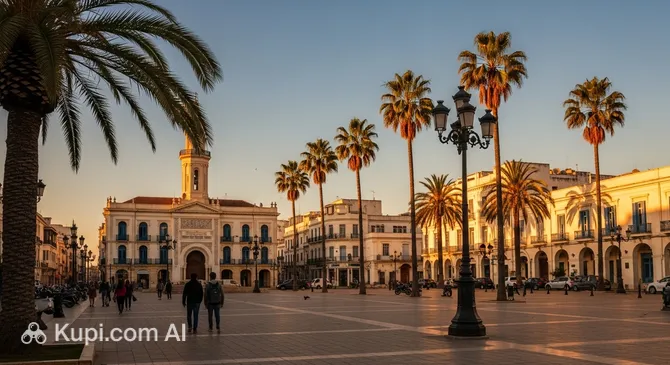
In the heart of the coastal city of Béjaïa lies the legendary Place Gueydon, now officially known as Place du 1er Novembre. This is more than just a transport hub or an open space; it is a true architectural symbol that captures the history connecting Algeria to its colonial past.
Place Gueydon. Illustration.
Source: Kupi.com AI
Traveler photos:
Located on the scenic slopes of Mount Gouraya, the square is surrounded by majestic French-style buildings that give the area a distinct Mediterranean charm. Breathtaking views of the azure bay and the port open up from here, making it a favorite spot for strolls among both tourists and locals.
For travelers, Place Gueydon serves as the perfect starting point for exploring the Kabylie region. Here, amidst historic facades and shaded terraces, you can feel the unique pulse of the city, where Berber traditions harmoniously intertwine with European architectural heritage.
Contacts
For those planning to visit this iconic location, the following contact information will be helpful. The square is located in the very heart of the city's activity, so finding it is quite easy.
Below are the exact coordinates and the address for navigation:
The main pleasure here is a leisurely stroll among the colonial-era buildings. Photography enthusiasts will find many interesting angles where the formal European architecture contrasts with the bright southern sky and the lush greenery of Mount Gouraya. Observation decks near the square offer magnificent panoramas of the port and the Mediterranean Sea.
Be sure to stop by one of the cozy sidewalk cafes to enjoy a coffee and watch the city's hustle and bustle. It is the best place to get acquainted with local cuisine: try the famous Kabyle couscous or fresh seafood dishes. In the nearby streets, there are markets where you can find unique regional products: fragrant olive oil, honey, and traditional handmade crafts.
If you have more time, a visit to the square can be combined with more active recreation. It is a convenient base for planning routes to Cape Carbon or the picturesque waterfalls in the city's surroundings. Don't be surprised if you encounter curious macaques during your walks in the nearby natural parks—they are just as much rightful inhabitants of these parts as the people.
Getting There
Getting to this landmark in the city center is straightforward. If you are arriving in Béjaïa by plane, the journey from the airport takes about 15–20 minutes by taxi or local bus (a distance of approximately 10–15 km).
From the capital, Algiers, comfortable buses run regularly, with a travel time of about 3–4 hours along the scenic coastal highway. There are also connections to cities such as Sétif and Tizi Ouzou.
If you are already in the city, look for the seaport—from there, you can reach the square on foot in just 10–15 minutes. Given the hilly terrain, be sure to wear comfortable shoes for walking through the historic quarters. For those traveling by car, parking areas are available near the square.
Nearest city: Bejaia
History & Facts
The history of this place is inextricably linked with the city's rich past, which dates back to antiquity. Once, Phoenicians traded on these shores, and later Emperor Octavian Augustus founded the Roman colony of Saldae here for the veterans of his legions. The sheltered bay and surrounding mountains made this site an ideal strategic outpost.
In the Middle Ages, the city flourished as the capital of the Hammadid dynasty. It was here in the 12th century that European merchants purchased wax, which led to the word bougie (candle) entering the French language. Few know that it was in this city that the famous mathematician Fibonacci became acquainted with the Arabic numerals that he later introduced to Europe.
The modern appearance of the square began to take shape during the colonial period when the French actively redesigned the port and central streets. Today, this space serves as a living reminder of the region's long history—from ancient Roman ruins to a center of Berber culture and the modern Algerian way of life.
Time Needed
For a brief look at the architecture and the panoramas from the square, 1–2 hours will be sufficient. This is enough time to take beautiful photos of the colonial buildings and admire the view of the Mediterranean Sea.
However, if you want to soak in the leisurely rhythm of the city, we recommend setting aside half a day. This way, you can explore the neighboring markets, have lunch at one of the local restaurants, and simply observe the local life over a cup of traditional tea.
Working Hours
As a public urban space, the square is open to the public 24/7. The best time to visit is during the morning hours, when the city is just waking up, or before sunset, when the buildings are painted in soft golden tones.
Please note that the surrounding cafes, shops, and government offices operate on their own schedules. If you plan to visit a specific establishment on the square, it is recommended to check its opening hours on its official website or in local directories.
Nearby
Exploring the central part of the city is convenient as many iconic sites are located just steps away from each other. A walk from the square allows you to immerse yourself in the atmosphere of different eras in a single day.
Be sure to check out the following sites located in the immediate vicinity: