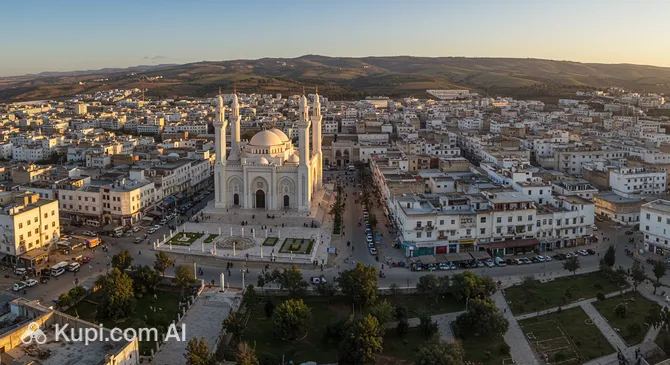
Sidi Bel Abbès is a unique administrative and agricultural center located in northwestern Algeria. The city lies on the picturesque Maqara plateau in the foothills of the Atlas Mountains, on the banks of the Wadi Mekkerra river. Founded in 1843 as a French military outpost, it eventually grew into a thriving commercial hub surrounded by endless vineyards and golden grain fields.
Sidi Bel Abbes. Illustration.
Source: Kupi.com AI
Today, home to about 213,000 people, the city maintains the atmosphere of a lively and active regional center. The city's layout, with its wide boulevards and spacious squares, still preserves features of 19th-century French urban planning. You can learn more about the history of the city's foundation by walking through its central districts, where shady alleys now bustle on the site of former fortress walls.
For tourists, Sidi Bel Abbès is primarily attractive for its authenticity. It is not a polished resort, but a real Algerian city with colorful markets, university energy, and hospitable locals. A visit here offers a unique opportunity to see the country's daily life surrounded by fertile plains and hilly landscapes, inviting travelers to step off the beaten path.
Weather Overview
Sidi Bel Abbès is characterized by a typical Mediterranean climate, which is noticeably influenced by its elevated location. Summers here are usually hot and dry: in July and August, the average maximum temperature reaches 35°C, and rain during this period is a rarity. This time is ideal for those who love real heat, but remember the need for sun protection.
Winter months in the city are mild and wetter. In January and February, daytime temperatures hover around 15–17°C, and at night they can drop to 5–7°C. Most precipitation falls between November and April, although even during this time, the number of sunny days remains significant. To better prepare for your trip, you can study detailed climate data for the city by month.
The transition seasons—spring and autumn—are considered the most comfortable for visiting the region. In April and October, pleasant temperatures around 22–25°C prevail, which is ideal for long walks along the boulevards and trips to the surrounding areas. Thanks to the open terrain of the plateau, a light breeze is often felt in the city, bringing freshness even on warm days.
Average monthly temperature
Average monthly precipitation
Interesting Facts
+470 meters above sea level, providing it with a more moderate climate compared to coastal regions.
Until the 1930s, the city retained its historical bastions, which were later demolished to widen the boulevards that have since become the city's trademark.
How to Get There
Reaching Sidi Bel Abbès is easiest via the major transport hubs of northern Algeria. Although the city has its own BFW airport, regular flight services are limited, so most travelers choose ground routes. The path to this agricultural center lies through picturesque plains and the foothills of the Atlas Mountains.
The neighboring city of Oran serves as the main air gateway for the region. A trip by car or taxi from Oran to Sidi Bel Abbès takes about 1–1.5 hours via the modern N2 highway. Bus services are also available from the capital, Algiers, though you should prepare for a long journey lasting 5 to 7 hours. More detailed information on flights and logistics can be found by exploring the section on how to get to the city.
Rail transport is also a popular way to travel. The city is included in the regional railway network, connecting it with Oran and other key northern locations. The train journey from Oran takes a little over an hour and a half, making it a convenient and budget-friendly option for tourists.
Station
Passenger traffic
Distance
Oran
5
54 km
Tlemcen Train Station
3
71 km
Oujda train station
5
132 km
2
188 km
Gare de Chlef
3
208 km
Main Attractions
The architectural appearance of Sidi Bel Abbès was largely shaped during the colonial era, making a walk through its center a fascinating journey back in time. One of the main points of attraction is 1st November Square (formerly Place Carnot)—the heart of urban life, where major boulevards intersect and daily activity hums. Here, you can fully experience the rhythm of the city and admire buildings in the classic French style.
The City Hall building is an important historical and architectural monument. This majestic structure previously served as a cathedral, and its repurposing reflects the complex transition of eras in the city's history. Equally interesting is Château Perrin, a fortified structure located on the road toward Sidi Lahcene. This castle serves as a vivid reminder of the region's historical strategic importance.
For those interested in the spiritual culture of the region, the Mausoleum of Sidi Bel Abbas is a must-visit. It was around this shrine of the Sufi righteous man that the first settlement—which gave the city its name—once emerged. Today, the mausoleum remains an important pilgrimage site and a quiet corner of peace in the middle of a bustling administrative center.
Local Cuisine
The gastronomic identity of Sidi Bel Abbès is inextricably linked to its status as the region's agricultural capital. Local cuisine is based on the freshest products grown in the surrounding orchards and fields. The main dish here, as in all of Algeria, is couscous, which in this region is served with plenty of vegetables and tender lamb or chicken.
Be sure to try traditional tajine—a fragrant stew slow-cooked in a clay pot—and the thick, nutritious harira soup, which is particularly popular. Since the city is surrounded by fertile plains, there is always an abundance of seasonal fruits, local honey, and various grains. Historically, the region was also known for its vineyards, which left its mark on the local agricultural traditions.
The best place to taste authentic food is at the lively city markets. In small establishments in the city center, you can try street food, such as hot stuffed flatbreads. It is customary to end a meal with traditional Algerian coffee or strong mint tea, often served with exquisite oriental sweets prepared according to ancient recipes.
Travel Tips
Preparing for your trip to Sidi Bel Abbès will help make your journey as comfortable and interesting as possible. Use these practical tips to feel confident in this unique Algerian city.
Clothing and Essentials: Choose light clothing made of natural fabrics for summer, but be sure to bring a hat and sunscreen. It can be cool in the foothills during winter, so a windbreaker or light sweater will be useful. When visiting mosques, observe a modest dress code: covered shoulders and knees.
Transport: Within the city, it is most convenient to get around by taxi—they are available and cheap. If you plan to travel to neighboring cities, choose intercity buses or trains. Car rental is possible, but be prepared for busy traffic in the center.
Finance: The official currency is the Algerian dinar. Cards are rarely accepted, only in large hotels, so always carry a sufficient supply of cash. It is best to change money at banks or official exchange points.
Health and Safety: Drink only bottled water. The city is generally safe, but in the evening try to stick to central, well-lit boulevards and avoid remote outskirts.
Communication: The main languages are Arabic and French. English is not widely spoken, so it is helpful to learn a few phrases in French or use a translator. For communication, it is better to buy a local SIM card at the airport or mobile shops.
Local Etiquette: Algerians are hospitable people. Greet people politely, and when visiting markets, be prepared for leisurely interaction. Respect religious traditions and prayer times.
What to Avoid: Do not photograph government buildings, military sites, or police officers without permission—this can cause legal problems. Also, avoid engaging in political discussions.
Extra Tip: Be sure to visit the local market in the morning. This is the best time to see the city in its most vibrant and lively form, and to buy the freshest products.
By following these simple rules, you will be able to fully immerse yourself in the atmosphere of Sidi Bel Abbès and get only the most positive impressions from your trip!
Entertainment & Nightlife
Leisure in Sidi Bel Abbès is quiet and measured, typical of the Algerian province. In the evenings, the central squares and boulevards become the main hubs, where locals gather in numerous cafes. It is customary to slowly sip strong coffee or mint tea while discussing the latest news, creating a cozy and friendly atmosphere.
The local university brings youthful energy to the city. Thanks to the students, there is always plenty of life on the streets, and some establishments offer a more modern and dynamic environment. However, fans of vibrant nightlife should note that there are almost no large nightclubs or noisy discos in the city. For more active entertainment and large-scale cultural events, locals often head to nearby Oran.
Daytime entertainment mainly involves visiting local markets, which are a vibrant spectacle full of sounds and aromas. You can also stroll through green areas or attend regional festivals if your trip coincides with harvest time. Safety in the central areas of the city is at a good level, allowing for pleasant evening walks along the well-lit boulevards.
Parks & Museums
Although Sidi Bel Abbès is a major administrative center, its cultural and natural spaces have their own unique features. The city's museum scene changed after 1962, when the famous collection of the Foreign Legion was moved to France; however, the historical buildings themselves serve as open-air museums. The main architectural landmark remains the City Hall and preserved mansions from the colonial era.
The city's parks and green zones are primarily its wide, tree-lined boulevards, which create the feeling of walking through a vast garden. Residents highly value these shady alleys, which provide relief from the summer heat. While there are no large-scale botanical gardens here, the moderate greenery of the central squares and adjacent small parks provides a comfortable environment for relaxation.
Nature lovers should pay attention to the city's surroundings. The fertile plains and Atlas foothills surrounding Sidi Bel Abbès offer excellent opportunities for rural walks. The landscape here changes from the strict geometric forms of agricultural land to wild hills, creating a picturesque backdrop for the entire region.
Getting Around
The public transport system in Sidi Bel Abbès is focused on quick travel between residential areas, markets, and the university campus. The core of the city fleet consists of buses that connect the center with the outskirts. Despite the absence of tram lines or a metro, the route network is dense enough to cover the needs of both locals and visitors.
The most popular and convenient way for tourists to get around is by taxi. They are numerous here, relatively inexpensive, and available at any time of day. Taking a taxi across town avoids waiting at stops and the overcrowding of public transport that occurs during rush hours, especially when students are heading to classes or on major market days.
The central part of Sidi Bel Abbès is quite compact, making it ideal for exploring on foot. Wide boulevards with convenient sidewalks allow you to comfortably explore the main attractions while enjoying the architecture. When planning trips for longer distances or to neighboring cities, you should use the central bus station, from which buses and collective taxis depart regularly.
Accommodation
Hotel infrastructure in Sidi Bel Abbès is primarily focused on practicality and functionality. While it is difficult to find luxury five-star complexes from international chains here, the city offers a decent selection of mid-range hotels and budget guesthouses. Most accommodation options are concentrated in the central part of the city and in areas adjacent to major transport routes.
For tourists, the most convenient option is staying in the center, near the wide boulevards and squares. This ensures walking distance to local markets and cafes, and allows you to better experience the city's atmosphere. Near the university, you can also find apartments often rented by expats or visitors planning to stay in the region for a longer period.
When planning your trip, it is recommended to book accommodation in advance, especially if your visit coincides with major regional events or active agricultural fairs. The cost of living here is significantly lower than in coastal metropolises, making Sidi Bel Abbès an attractive destination for budget travelers.
Nearby Cities
Thanks to its location in the Oran sector, Sidi Bel Abbès serves as an excellent starting point for exploring the northwestern part of Algeria. Within an hour's drive, you will find both small, colorful settlements and large cultural centers offering travelers a variety of experiences.
The most popular day-trip destination is the majestic Oran, located just 54 km away. This port city impresses with its Spanish and French architecture, the Santa Cruz fortress, and magnificent views of the Mediterranean Sea. For those who prefer a more intimate atmosphere, Aïn Témouchent, known for its vineyards and quiet pace of life, will be of interest.
Don't miss the chance to explore the nearby Daya Mountains and the hilly plateaus surrounding the region. Every trip outside the city will reveal new facets of the natural beauty and historical heritage of this hospitable land.
Shopping & Souvenirs
Shopping in Sidi Bel Abbès is primarily an immersion into the atmosphere of traditional eastern bazaars. The city does not abound with huge modern shopping centers, but its markets are considered some of the most colorful in the region. Here, you should look for goods for which the local land is famous: fresh spices, premium grain, and textile products.
The central markets, located near the main squares, offer a huge selection of agricultural products. This is the perfect place to buy local honey, olive oil, and seasonal fruits grown in nearby orchards. A stroll through the market stalls allows you not only to make great purchases but also to get acquainted with the real, non-tourist life of the city.
As souvenirs from Sidi Bel Abbès, visitors often bring back local handicrafts, traditional clothing, and authentic Algerian sweets. Shops usually operate with a lunch break (siesta) and close in the evening, and many outlets may be closed on Fridays. In most places, only cash—Algerian dinars—is accepted, so it is worth arranging currency exchange in advance.