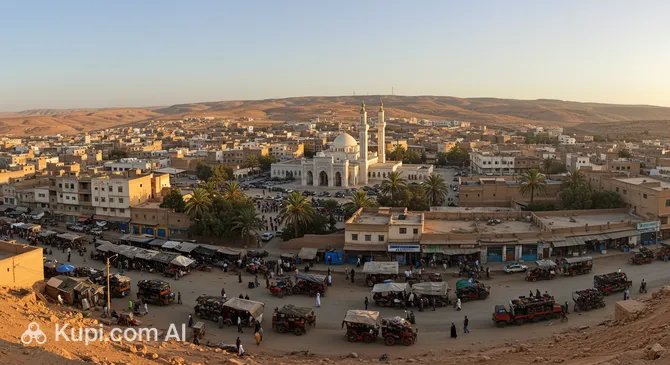
Navigating Bechar is relatively straightforward, as the city's public transport system is modest and designed primarily for functionality rather than extensive variety. Unlike larger metropolitan areas, there is no metro, tram, or trolleybus network here. Instead, the city relies heavily on a combination of public buses and private taxis to keep people moving. For most visitors, this simplicity is a relief, as it makes getting around easy to understand once you know the basics.
The backbone of the local transit system consists of buses operated by the public urban transport enterprise (ETUB) and a fleet of privately owned minibuses. The public buses are generally blue and white, serving fixed routes that connect the city center with residential neighborhoods and the university area. These are complemented by white or yellow minibuses, often referred to as "j9" or vans, which ply similar routes but with more frequency. While these are the most economical way to travel, they can get quite crowded during peak hours and may lack air conditioning, which is a consideration during the hot summer months.
For tourists, the most convenient and popular alternative is the yellow taxi. You will see these small yellow cars everywhere on the streets. They operate on two main principles: "course" (a private ride from point A to point B) or "place" (shared taxi). In the shared system, the driver picks up multiple passengers going in the same general direction, and you pay for your seat. This is an incredibly affordable and authentic way to get around, allowing you to mingle with locals. If you prefer privacy, you can ask for a "course," but be sure to agree on the price before you start, as meters are rarely used for short trips.
When it comes to payment, cash is the only accepted method for all forms of transport within the city. There are no travel cards, digital passes, or mobile payment apps currently in use for the bus or taxi systems. Fares are very low by international standards. A bus ticket typically costs a nominal amount of small change, paid directly to the driver or a conductor on board. For taxis, it is essential to carry small denominations of the local currency, as drivers may not always have change for large banknotes.
Operating hours vary by transport mode. Public buses and minibuses usually run from early morning, around 6:00 AM, until the early evening, roughly 7:00 PM or 8:00 PM. After sunset, bus services drop off significantly. Taxis, however, are available 24/7, though they may be harder to flag down late at night in residential areas. If you are dining out late, it is wise to arrange a pickup or have the restaurant call a taxi for you.
Walking is a viable option for exploring the compact city center, particularly in the evenings when the temperature drops and the streets become lively. However, due to the desert heat, walking long distances during the day is not recommended. For those planning to explore beyond the city limits, such as trips to the dunes or nearby oases, renting a car is a practical alternative. specialized agencies in the city center offer vehicle rentals, often with the option of a driver, which is highly recommended for navigating the desert terrain safely.