Support

Errachidia

About

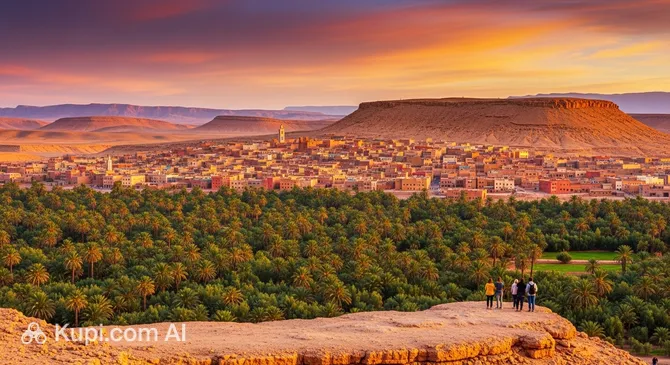
Errachidia is a captivating city that serves as a vital crossroads between the majestic High Atlas Mountains and the vast Sahara Desert. Located in the eastern part of Morocco, this city offers a unique atmosphere that blends the rugged beauty of arid landscapes with the warmth of traditional hospitality. As the administrative capital of the Draa-Tafilalet Region, it is an essential stop for travelers venturing into the deep south, providing a distinct contrast to the country's coastal resorts and imperial cities.

Errachidia. Source: Kupi.Binoculars

Geographically, the city is situated within the stunning Ziz Valley, known for its extensive palm groves and dramatic gorges. With a population of approximately 92,000 residents, Errachidia is a bustling hub that maintains a relatively calm and authentic character. The climate here is typically desert-like, characterized by hot summers and cool winters, making it a sun-drenched destination throughout much of the year.

While the city is modern in its layout, it possesses deep roots in the region. Originally known as Ksar Es-Souk, the town has transformed significantly over the decades. Visitors interested in the history of Errachidia will discover a place that evolved from a military and administrative base into a thriving provincial center, reflecting the broader cultural shifts of the area.

Travelers are often drawn to the natural wonders surrounding the city. The nearby Source Bleue de Meski is a popular attraction, offering a refreshing spring and swimming pool shaded by lush vegetation, perfect for escaping the desert heat. Additionally, the city is the ideal gateway for exploring the breathtaking Ziz Gorges and serves as a launching point for excursions to the famous sand dunes of Merzouga.

Whether you are passing through on a desert adventure or looking to explore the hidden gems of the Draa-Tafilalet region, Errachidia welcomes you with open arms. It is a destination that promises unforgettable landscapes and a genuine connection with the local way of life.

Weather Overview

The climate in this region is defined by its desert environment, resulting in significant temperature fluctuations between seasons. Summers are intensely hot, particularly in July, which is the warmest month with average temperatures around 30.2°C and highs climbing to 37.4°C. Conversely, winters can be quite cold, especially in January, when the average temperature drops to 8.7°C and nighttime lows can dip as low as 2.5°C.

Rainfall is extremely rare throughout the year, with most months experiencing negligible precipitation and only one to three wet days on average. Expect hot, sunny days during the summer months and crisp, cold nights during the winter. For more specific data to help you pack the right clothing, you can check the detailed report on the weather in Errachidia.

Interesting Facts

  • Renaming History: Until 1975, the city was known as Ksar Es-Souk, which translates to "The Market Fort." It was renamed Errachidia to honor Prince Moulay Rachid, marking its transition from a colonial military garrison into a modern administrative center.

  • Desert Land Art: The arid plains surrounding the city are home to the "Stadt des Orion" and the "Celestial Ladder." These monumental mud-brick structures were created by German artist Hannsjörg Voth and stand as solitary, architectural tributes to the stars within the vast desert landscape.

  • A Turquoise Contrast: The Hassan Addakhil Dam creates a large artificial lake nearby, where vivid turquoise waters contrast sharply with the surrounding red, rocky mountains. This reservoir is not only a visual spectacle but a crucial water source for the region's agriculture.

  • The Endless Oasis: Errachidia serves as the gateway to the Ziz Valley, often cited as one of the largest palm groves in the world. This "green river" winds for nearly 100 kilometers into the Sahara, containing millions of date palms that sustain the local economy and ecosystem.

How to Get There

Reaching this desert gateway is part of the adventure, offering a transition from the bustling north or the coast into the serene landscapes of the Draa-Tafilalet region. While the journey can be long depending on your starting point, the route is scenic and well-serviced. For a detailed breakdown of all transport modes, routes, and tips, you can read more about how to get to Errachidia.

The most direct way to arrive is by flying into the local Moulay Ali Cherif Airport (ERH). Located just 4.2 km from the city center, this small airport connects the region with major Moroccan hubs like Casablanca. Once you land, the transfer to the city is very quick; a taxi ride typically takes about 5-10 minutes, allowing you to start your exploration almost immediately.

For international travelers, a common alternative is landing at Fes-Saiss Airport (FEZ) in the city of Fez. Although it is situated approximately 228 km away, it handles a much larger volume of flights from Europe and beyond. From Fez, you can take a bus or a grand taxi to Errachidia, a journey that generally takes around 6 hours by road, passing through the beautiful Middle Atlas Mountains.

Another regional option is Ouarzazate Airport (OZZ) in Ouarzazate, located roughly 259 km from Errachidia. This route is popular with travelers planning to visit the "Hollywood of Africa" before heading east. The drive from Ouarzazate takes approximately 4 to 5 hours via the Road of a Thousand Kasbahs.

For clarity, here is a summary of the main airports:

Airport Name City Passenger Traffic Km from City
Fes-Saiss AirportFezLarge228.0
Ouarzazate AirportOuarzazateMedium259.4
Moulay Ali Cherif AirportErrachidiaSmall4.2
Zagora AirportZagoraSmall228.4

Main Attractions

While Errachidia is often viewed as a gateway to the desert, the city and its surroundings offer several remarkable sites that showcase the region's unique blend of history, geology, and culture. Visitors can explore lush oases, impressive engineering feats, and historical fortifications that tell the story of this crossroads in Morocco.

One of the most beloved spots for both locals and travelers is the Source Bleue de Meski (Blue Spring of Meski). Located just a short drive south of the city, this natural spring flows from a cave into a large swimming pool originally constructed by the French Foreign Legion. The water is renowned for its clarity and refreshing temperature, offering a perfect escape from the desert heat. Towering above the pool are the crumbling ruins of the old Ksar Meski, providing a dramatic historical backdrop to the lush palm grove setting.

For spectacular panoramic views, a visit to the Hassan Addakhil Dam is essential. Situated a few kilometers north of the city, this massive reservoir creates a striking visual contrast where vibrant turquoise waters meet the fiery red hues of the surrounding desert mountains. It is a popular location for picnics and photography, particularly at sunset when the changing light illuminates the rocky landscape and the calm surface of the lake.

History enthusiasts should not miss the Tunnel du Légionnaire (Legionnaire’s Tunnel), located approximately 30 kilometers north in the Ziz Gorges. Carved through solid rock in the 1920s to facilitate the passage of troops and trade, this tunnel is a testament to the engineering challenges of the era. The drive to reach it takes you through the dramatic canyon of the Ziz River, offering some of the most rugged and scenic driving routes in the region.

The city also serves as the prime vantage point for admiring the Ziz Valley. While the valley stretches for miles, the viewpoints (belvédères) just outside Errachidia offer breathtaking perspectives of the "green river" of date palms winding through the arid plateau. This endless ribbon of greenery is the lifeblood of the Tafilalet region and is best admired from above, where the sheer scale of the oasis can be fully appreciated.

Local Cuisine

The culinary scene in Errachidia is a delightful reflection of its location in the heart of the Draa-Tafilalet region, where Amazigh (Berber) traditions blend seamlessly with the flavors of the desert. The food here is hearty, aromatic, and deeply rooted in the agricultural abundance of the nearby Ziz Valley. While you will find standard Moroccan staples, the local gastronomy offers unique specialties that utilize the region's most famous produce: dates.

The undisputed star of the local table is Madfouna, often referred to by travelers as "Berber Pizza." This savory delicacy consists of a round, flat bread stuffed with a rich mixture of minced meat (usually beef or lamb), onions, hard-boiled eggs, almonds, and a blend of aromatic spices and herbs. Baked in traditional wood-fired ovens, it has a crisp exterior and a flavorful, tender interior. Sharing a Madfouna is a communal experience and a "must-try" for anyone visiting the province.

Beyond stuffed breads, the region is famous for its exceptional Tagines. In Errachidia, these slow-cooked stews often feature a sweet and savory combination, pairing tender lamb or goat meat with the high-quality dates harvested from the local palm groves. The sweetness of the fruit perfectly balances the savory spices like cumin, ginger, and saffron. Friday lunch is traditionally reserved for Couscous, steamed to perfection and topped with seven vegetables, serving as a centerpiece for family gatherings.

No culinary discussion of this area would be complete without mentioning dates, particularly the majestic Mejhoul variety. Known as the "king of dates," they are large, succulent, and sweet. You will find them served as a welcoming gesture with milk, used in desserts, or simply eaten as a natural snack throughout the day. The local markets are the best places to buy them fresh, offering a taste of the Ziz Valley's most prized export.

To wash down these rich meals, locals rely on Mint Tea, the quintessential drink of hospitality. In the desert heat, this sweet, hot tea is believed to cool the body and is served with great ceremony. Freshly squeezed orange juice is also widely available and incredibly refreshing. Alcohol is not part of the traditional diet and is generally hard to find outside of select tourist hotels, so the focus remains on tea, juices, and water to stay hydrated in the arid climate.

Travel Tips

Visiting Errachidia offers a genuine glimpse into the authentic lifestyle of the Draa-Tafilalet region, far removed from the heavy tourist crowds of the coast. To ensure your journey through this desert gateway is as smooth and enjoyable as possible, here are some practical tips to help you navigate the local customs and environment.

  1. Dress for the Desert Extremes: The climate here is strictly continental, meaning you need to pack for two extremes. In summer, loose, breathable fabrics like cotton or linen are essential to handle the intense heat, while winter nights require heavy jackets and thermal layers. Since Errachidia is a conservative provincial city, always dress modestly; cover your shoulders and knees to show respect for local norms, especially when walking away from your hotel.

  2. Getting Around Locally: For travel within the city limits, the most convenient option is the Petit Taxi. In Errachidia, these are typically blue and are very affordable; just ensure the meter is running or agree on a price before you start. If you plan to explore the surrounding Ziz Valley or the dunes, renting a car is highly recommended as it gives you the freedom to stop at the many panoramic viewpoints along the route.

  3. Cash is King: While some larger hotels and supermarkets may accept credit cards, the majority of shops, cafes, and market stalls operate exclusively with cash. The local currency is the Moroccan Dirham (MAD). ATMs are available in the city center, but it is wise to carry enough cash for daily expenses, especially if you are heading out to more remote villages or oases.

  4. Stay Hydrated and Protected: The sun in this part of Morocco is exceptionally strong. Always carry a bottle of water, wear a wide-brimmed hat, and apply high-SPF sunscreen, even in winter. Pharmacies are marked with a green cross and are well-stocked, but for any serious medical issues, the city has a regional hospital.

  5. Language and Connection: The main languages spoken are Darija (Moroccan Arabic) and Tamazight (Berber), with French being widely used for business and administration. English is not as commonly spoken here as in Marrakech or Fez, so having a translation app or learning a few basic phrases like Salam Alaykum (Peace be upon you) and Shukran (Thank you) will go a long way in connecting with locals. Pre-paid SIM cards from providers like Maroc Telecom or Orange are cheap and offer good coverage.

  6. Social Etiquette: Errachidia is known for its hospitality. If you are invited to share a meal or tea, it is polite to accept. Remember to use your right hand for eating if utensils are not provided, as the left hand is considered unclean. When greeting people of the opposite sex, wait to see if they extend their hand; a nod and a hand over the heart is often the preferred respectful greeting.

  7. What to Avoid: Avoid taking photographs of government buildings, military installations, or police checkpoints, as this is strictly prohibited and can lead to legal trouble. Additionally, refrain from public displays of affection (PDA), such as kissing or hugging in the street, as this is frowned upon in this traditional society.

  8. Market Timing: Life here often pauses during the hottest part of the day, typically between 1:00 PM and 3:00 PM, especially in summer. Plan your shopping and sightseeing for the cooler mornings or late afternoons when the streets come alive and the souks are bustling with activity.

By keeping these simple guidelines in mind, you will find it easy to settle into the relaxed rhythm of Errachidia. The locals are generally very welcoming to respectful visitors, making this city a warm and memorable stop on your desert adventure.

Entertainment & Nightlife

Nightlife in Errachidia is significantly different from the bustling scenes found in Marrakech or Casablanca. As a somewhat conservative administrative center in the Draa-Tafilalet region, the city does not feature a vibrant clubbing culture with loud discos or dance floors. Instead, the evening entertainment is centered around socializing, promenading, and enjoying the cooler air after sunset. The atmosphere is relaxed and community-focused, with locals gathering in public spaces to chat, watch sports, and enjoy time with family and friends.

The heart of the city's evening activity beats along the main thoroughfares, particularly Avenue Moulay Ali Cherif. As the sun goes down, this wide avenue fills with people taking a leisurely stroll (known locally as the passerelle). The sidewalks are lined with numerous cafes and snack bars where the primary activity is sipping mint tea or "nous-nous" (half coffee, half milk) while watching the world go by. For visitors, joining this nightly ritual is the best way to soak up the authentic local vibe and engage in people-watching.

For those seeking a drink or a more western-style bar experience, options are generally limited to the larger tourist hotels, as independent bars are rare in the city center. Hotel Kenzi Rissani is one of the most well-known venues where travelers can enjoy a beer or a glass of wine in a comfortable, quiet setting. Another option is the bar at Hotel Le Riad, which offers a pleasant atmosphere for a relaxing evening beverage. These venues typically have a casual dress code, though smart-casual is appreciated, and they usually stay open until around midnight.

When it comes to safety and logistics, Errachidia is a welcoming and secure city for night walks, especially in the well-lit center and along the main avenues. However, it is always wise to stay in populated areas and avoid unlit outskirts late at night. Getting around is easy and affordable; the small blue Petit Taxis operate throughout the evening. They can be hailed from the street, and fares within the city are very low, usually calculated by the meter or a fixed modest rate.

During the day, entertainment options are equally low-key and cultural. While the city lacks large amusement parks or major theaters, visitors can explore the local souks (markets) which are vibrant in the mornings and late afternoons. For a glimpse into local history, the modest Musée de la Résistance (Resistance Museum) offers insights into the region's struggle for independence. Additionally, the city's public parks and gardens provide a peaceful refuge for a daytime stroll before the evening social scene begins.

Parks & Museums

Errachidia offers a distinct blend of natural beauty and historical depth, where "green spaces" often take the form of lush oases and river valleys rather than manicured city parks. While the city itself is an administrative hub, its surroundings serve as an open-air gallery of geological wonders and traditional architecture. For travelers, the appeal lies in exploring these vast natural areas and the modest but meaningful cultural sites that preserve the memory of the region.

Key Parks and Natural Areas

The most famous natural retreat in the area is the Source Bleue de Meski (Blue Spring of Meski). Located about 15 kilometers south of the city, this is more than just a park; it is a lush oasis centered around a natural spring that feeds a large swimming pool. Surrounded by dense palm trees and ancient walls, it provides a cool, shaded sanctuary that is incredibly popular with locals and tourists alike. It is the perfect spot to witness the traditional irrigation systems that have sustained life here for centuries.

For a grander scale of nature, the Hassan Addakhil Dam serves as a spectacular recreational area. While not a park in the traditional sense, the shores of this massive reservoir offer a stunning contrast between the deep turquoise water and the red desert mountains. It is a favorite location for locals to enjoy picnics, take walks along the perimeter, and watch the sunset reflect off the calm water, offering a peaceful escape from the city noise.

Within the city limits, public spaces like the Gardens of Place 3 Mars provide a central gathering point. These urban green spaces come alive in the evenings when families promenade to enjoy the cooler air. While simple in design, they offer a glimpse into the daily social life of Errachidia's residents, serving as the community's living room under the open sky.

Museums and Cultural Venues

The primary cultural institution in the city is the Regional Museum of Resistance and Liberation (Espace de la Mémoire Historique de la Résistance et de la Libération). This museum is dedicated to the region's history during the colonial period and the struggle for independence. Through a collection of photographs, documents, weapons, and local artifacts, it tells the story of the fierce resistance mounted by the tribes of the Tafilalet region. It provides essential context for understanding the independent spirit of the local people.

While Errachidia lacks a multitude of formal art galleries, the nearby town of Tinejdad (accessible as a day trip) is home to the renowned Musée des Oasis (Oasis Museum). Housed within a restored Ksar, this museum is widely considered one of the best in the south for explaining the traditional way of life. It exhibits agricultural tools, clothing, and architectural models that reflect the culture of the Amazigh people and the complex management of oasis ecosystems.

Historical and Architectural Sites

Overlooking the Blue Spring is the Old Ksar of Meski. Although now in ruins, this fortified village is a striking example of traditional mud-brick architecture. Visitors can wander among the crumbling walls and towers, imagining the lives of the community that once thrived within these fortifications. The site offers a tangible connection to the era when these Ksars were vital for protection and trade.

Another significant landmark is the Legionnaire’s Tunnel (Tunnel du Légionnaire), located in the Ziz Gorges. Built by the French Foreign Legion in the 1920s to create a passage through the formidable mountains, it stands as a monument to colonial engineering. Passing through this tunnel offers not only a history lesson but also access to some of the most dramatic canyon views in the region.

Authentic Experiences

For a truly local experience, visit the Hassan Addakhil Dam just before sunset. This is when the light softens, turning the surrounding red rocks into a vibrant crimson, and you will often find local fishermen or families enjoying the tranquility. Additionally, exploring the Ziz Palm Grove on foot allows you to see the intricate canal systems (khettaras) up close, a marvel of ancient engineering that keeps the desert blooming.
Getting Around

The public transport system in Errachidia is straightforward and modest, reflecting the city's size and its role as a provincial administrative center. Unlike the sprawling metropolises of the north, there is no metro, tramway, or complex train network within the city limits. Instead, the local transportation infrastructure relies heavily on a fleet of taxis and a limited bus service, making it relatively easy for visitors to understand and navigate without the need for complicated maps or travel passes.

The most popular and convenient way to get around the city is by using the Petit Taxis. In Errachidia, these vehicles are distinctively painted blue. They are ubiquitous in the city center and can be easily hailed from the street. These taxis are strictly for travel within the urban boundaries. By law, they are supposed to use a taximeter (compteur), but it is not uncommon for drivers to offer a flat rate for short trips. It is always advisable to ask the driver to turn on the meter or agree on a price before getting in. Fares are very affordable, typically ranging from 7 to 15 Dirhams for a ride across town.

For journeys that go beyond the city limits—such as visiting the nearby Blue Spring of Meski, the university campus on the outskirts, or the airport—you will need to use a Grand Taxi. These are larger sedans, often older Mercedes or newer vans, that operate on fixed routes connecting the city to surrounding villages and towns. Grand Taxis are a shared mode of transport, meaning they only depart when all passenger seats are full. You can pay for a single seat, which is very cheap, or pay for all the seats if you wish to hire the entire vehicle for a private trip.

There is a local bus network that serves the city and its immediate suburbs, but it is generally less popular with tourists due to irregular schedules and slower travel times compared to taxis. These buses are primarily used by students and locals commuting to work. If you choose to take the bus, the destination is usually displayed in Arabic on the front. While it is the most economical option available, the convenience and low cost of Petit Taxis make them the superior choice for most travelers.

Regarding payment, the system operates almost exclusively on cash. There are no travel cards, digital apps, or tap-to-pay systems for public transport in Errachidia. You must pay the driver directly in Moroccan Dirhams (MAD). It is highly recommended to carry small coins and notes (5, 10, and 20 Dirham denominations), as drivers often struggle to make change for large bills. For buses, you purchase the ticket directly from the driver or a conductor upon boarding.

Given the city's relatively flat terrain and compact center, walking is a viable and pleasant alternative, especially during the cooler morning or evening hours. Many of the key administrative buildings, hotels, and cafes are located along the main avenues, which are equipped with wide sidewalks. However, during the heat of the day in summer, walking can be exhausting, and hailing a taxi is the safer option to avoid sun exposure.

For those planning to explore the wider region, such as the Ziz Gorges or the dunes of Merzouga, car rental is a popular alternative. Several agencies operate within the city and at the airport. Having your own vehicle provides the freedom to stop at panoramic viewpoints that public transport skips. Alternatively, bicycles are sometimes used by locals, but there are no formal bike-sharing schemes for tourists, so rentals would need to be arranged through a hotel or a specialized shop if available.

Accommodation

Accommodation in Errachidia caters largely to travelers on the move, serving as a comfortable stopover between the High Atlas Mountains and the Sahara dunes. The lodging landscape here is practical and welcoming, ranging from modern mid-range hotels to modest, budget-friendly guesthouses. While the city does not boast the opulent luxury resorts found in Morocco's major tourist hubs, it provides reliable and clean options that ensure a restful night before continuing a desert adventure.

Most visitors choose to stay in one of two main areas depending on their mode of travel. The city center, particularly around the main thoroughfares like Avenue Moulay Ali Cherif, is ideal for those who want easy access to banks, restaurants, and the lively evening promenade. This area is perfect if you are traveling by bus or taxi, as everything is within walking distance. Conversely, the outskirts of the city—often along the roads leading to Ouarzazate or Erfoud—host larger establishments. These hotels are frequently preferred by travelers with their own vehicles, as they typically provide secure parking and are more likely to feature swimming pools, which are a highly desirable amenity given the region's arid climate.

The cost of staying in Errachidia is generally very affordable compared to the country's coastal or imperial cities. Mid-range hotels typically offer air-conditioned rooms, Wi-Fi, and on-site dining for a reasonable rate. Budget travelers can find simple, clean rooms in smaller hotels or hostels that offer excellent value. Regardless of your choice, air conditioning is a standard and necessary feature in almost all respectable lodgings due to the desert heat.

As a helpful booking tip, it is advisable to reserve your accommodation in advance, especially if you are traveling during the peak desert tourism seasons of spring and autumn. While walk-ins are often possible, booking ahead ensures you secure a room with the best amenities, such as a view or pool access. Regarding payment, while larger hotels readily accept credit cards and can be booked via major online platforms, smaller guesthouses may prefer direct contact and often operate on a cash-only basis.

Nearby Cities

For those looking to explore the surroundings, Errachidia serves as an excellent base for day trips to several interesting nearby locations:

City Population Distance (km)
Midelt 55,304 89
Tinjdad 43,999 72
Tineghir 42,044 113
Arfoud 29,279 57
Rich 25,992 38

Travelers eager to experience the diverse landscapes of the Draa-Tafilalet region will find several of these towns particularly rewarding for a short visit. Arfoud, located just to the south, is widely known as the "Date Capital" of Morocco and is famous for its unique fossil workshops. It serves as a crucial staging point for those heading towards the desert dunes and offers a bustling souk that comes alive during the annual Date Festival.

Another fascinating destination is Tineghir, a stunning oasis city nestled between the High Atlas and the Little Atlas mountains. It is renowned for its lush, sprawling palm groves and serves as the gateway to the majestic Todra Gorges. Visitors here can explore ancient kasbahs and enjoy panoramic views where green gardens contrast sharply with the arid red cliffs.

For those interested in heritage and architecture, Tinjdad offers an authentic glimpse into traditional life. The town is home to Ksar El Khorbat, a beautifully restored fortified village that houses the Oasis Museum. This site allows visitors to walk through covered alleyways and learn about the history, architecture, and tribal culture of the southern oases.

These nearby destinations offer a glimpse into the diverse culture and landscapes of the region.

Shopping & Souvenirs

Shopping in Errachidia offers a refreshingly authentic experience, far removed from the high-pressure sales tactics often found in Morocco's major tourist hubs. As an administrative and functional city rather than a dedicated tourist resort, the retail scene here caters primarily to the needs of the local population. For travelers, this means fair prices and a genuine glimpse into the daily life of the Draa-Tafilalet region. It is the perfect place to stock up on supplies before heading into the desert or to purchase regional specialties directly from the source.

The city's commercial life is concentrated along its broad main avenues, particularly Avenue Moulay Ali Cherif. This central thoroughfare and the streets branching off it are lined with small boutiques, pharmacies, bakeries, and general stores. Here, you can find everything from modern clothing and electronics to traditional garments. A stroll down this avenue in the late afternoon is a pleasant way to window shop and observe the relaxed pace of local commerce.

Travelers accustomed to sprawling shopping complexes should adjust their expectations, as Errachidia does not feature large western-style shopping malls. However, for those seeking modern conveniences, fixed prices, and familiar brands, there is a Marjane supermarket located on the outskirts of the city. This hypermarket is a reliable spot for purchasing toiletries, bottled water, snacks, and even alcohol, which is not sold in regular neighborhood shops.

The true heart of shopping in Errachidia lies in its traditional markets. The Marché Central (Central Market) is a covered area in the city center where locals buy fresh produce, meat, and olives. It is an excellent place to see the agricultural bounty of the nearby oases. For a more immersive experience, the Souk Hebdomadaire (Weekly Market), typically held on Sundays on the edge of town, is a vibrant event. Farmers and traders from the surrounding Ziz Valley gather here to sell livestock, vegetables, spices, and household goods in a bustling, colorful atmosphere.

When looking for souvenirs, the region's most famous product is undoubtedly dates. Errachidia is the capital of Morocco's leading date-producing province, and you can buy high-quality Mejhoul dates here for a fraction of the price you would pay in Europe or the US. Other worthwhile purchases include fossils and minerals, as the area is rich in geological treasures, and locally woven Berber rugs or textiles that reflect the geometric patterns typical of the Amazigh culture.

Store hours in Errachidia generally follow a split schedule to accommodate the desert heat. Shops typically open around 9:00 AM, close for a long lunch and rest break from approximately 1:00 PM to 3:30 PM, and then reopen until 8:00 PM or 9:00 PM. Keep in mind that many businesses close on Friday afternoons for the main weekly prayer. Regarding payment, cash is essential. While the Marjane supermarket and some hotels accept credit cards, the vast majority of souk stalls, small shops, and cafes deal exclusively in Moroccan Dirhams.

Tax-free shopping (détaxe) is generally not a feature of the retail landscape in Errachidia. The system for VAT refunds is mostly limited to high-end luxury stores in large cities like Casablanca or Marrakech. In this provincial capital, the prices are already quite low, and the focus is on traditional bargaining in the souks rather than formal tax refund paperwork.

Reached the end of the page?

That means the route is fully explored