Support

Ouarzazate

About

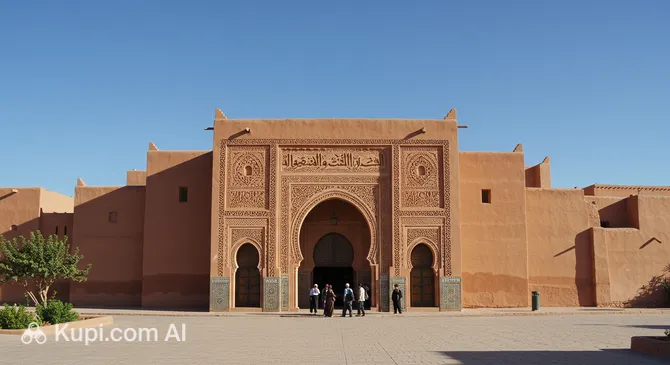
Ouarzazate, often referred to as the "Door of the Desert," is a captivating destination located in south-central Morocco. Known for its stunning red-earth architecture and dramatic landscapes, this city serves as a primary gateway to the Sahara Desert. Its unique atmosphere combines the rugged beauty of the High Atlas Mountains with the serene vastness of the pre-Saharan plateaus, making it a favorite stop for adventurers and culture seekers alike.

Geographically, Ouarzazate is situated at an elevation of 1,160 meters in the Drâa-Tafilalet region. The city is home to approximately 71,000 inhabitants and enjoys a desert climate with hot summers and cool winters. While it is a modern administrative center today, the history of Ouarzazate reveals its long-standing importance as a strategic crossing point for African traders seeking to reach northern cities.

Ouarzazate. Source: Kupi.Binoculars

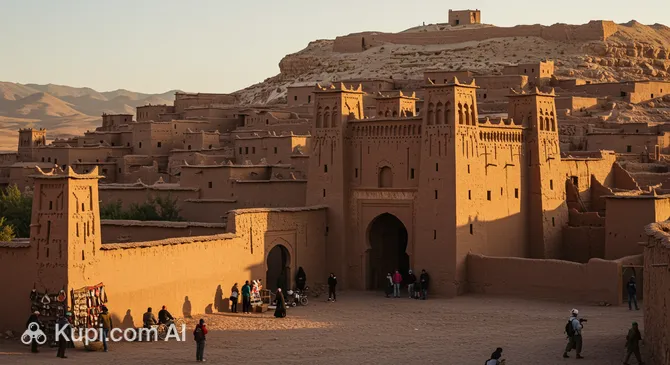
The city is globally renowned as a hub for the film industry, earning it the nickname "Ouallywood." Visitors can tour the famous Atlas Studios, one of the largest film studios in the world, where sets from iconic movies like Gladiator and Game of Thrones are preserved. Another must-see attraction is the impressive Taourirt Kasbah, a fortified village that showcases intricate clay architecture and offers a glimpse into the lifestyle of the region's nobility in centuries past.

Whether you are planning an expedition into the dunes or simply wish to admire the breathtaking scenery of the Dadès and Drâa valleys, Ouarzazate is an essential destination. Its blend of cinematic magic, historical depth, and warm hospitality invites every traveler to explore the wonders of the desert's edge.

Weather Overview

Ouarzazate experiences a desert climate characterized by distinct seasonal shifts and generally arid conditions. The weather is typically sunny year-round, with significant temperature differences between day and night, especially during the cooler months.

Summers are hot, with July being the warmest month, featuring average highs of 36.6°C and lows around 20.5°C. Winters offer a sharp contrast; in January, average temperatures drop to 8.8°C, with nighttime lows occasionally reaching 1.7°C. Precipitation is scarce throughout the year, with most months seeing little to no rainfall, though you might encounter typical dry patterns with only 1 to 3 wet days during the winter and transition seasons.

Travelers should be prepared for hot days and much cooler evenings. To help you pack the right clothing for your specific travel dates, we recommend checking the detailed weather in Ouarzazate before your trip.

Interesting Facts

Beyond the main attractions and cinematic fame, Ouarzazate holds fascinating secrets and specific features that define its unique character. Here are some intriguing facts about this desert city that might surprise you.

Taourirt Kasbah. Source: Kupi.Binoculars
  • The name "Ouarzazate" is derived from an Amazigh phrase meaning "without noise" or "without confusion." This poetic title reflects the city's historical role as a peaceful stopping point for traders traveling between the bustling markets of Marrakech and the vast Sahara.

  • While often associated with ancient history, the city is home to a futuristic marvel: the Noor Ouarzazate Solar Complex. It is one of the largest concentrated solar power plants in the world, utilizing hundreds of thousands of curved mirrors to harness the intense desert sun.

  • The majestic Taourirt Kasbah, a symbol of the city, was once the residence of the powerful Glaoui family. This architectural masterpiece is so significant to Moroccan heritage that it has been depicted on the country's currency, specifically the 50-dirham banknote.

  • For film enthusiasts, the Cinema Museum offers a unique experience situated directly across from the famous Kasbah. Housed in a former studio facility, it allows visitors to walk through realistic sets used in biblical and historical epics, blurring the line between ancient reality and movie magic.

How to Get There

Reaching Ouarzazate is relatively straightforward, offering a mix of direct flights and scenic overland routes through the landscapes of Morocco. Whether you prefer a quick transfer or a drive across the Atlas Mountains, you can explore all ways to reach the city to plan an itinerary that suits your schedule.

The most convenient option is Ouarzazate Airport (IATA: OZZ), situated just 3 kilometers from the city center. Although it is a smaller regional hub with annual traffic of around 182,000 passengers, it offers the advantage of immediate access to the city, with taxi transfers taking only a few minutes.

For more international connections, many travelers fly into Menara Airport (IATA: RAK) in Marrakech. Located approximately 129 kilometers away, it is a major entry point. However, the journey to Ouarzazate involves navigating the winding roads of the High Atlas, which typically takes 3.5 to 4 hours. Another alternative is Agadir Al Massira Airport (IATA: AGA), located about 247 kilometers away on the coast.

Below is a summary of the airports serving the region, including their distances from Ouarzazate:

Airport Name City Traffic Scale Distance (km)
Ouarzazate Airport Ouarzazate Small 2.7
Menara Airport Marrakech Large 128.6
Agadir Al Massira Airport Agadir Medium 246.8
Zagora Airport Zagora Small 127.7
Moulay Ali Cherif Airport Errachidia Small 266.1

Main Attractions

Ouarzazate offers a fascinating mix of history, culture, and cinematic magic. The city's attractions allow visitors to step back in time into the lives of powerful chieftains or walk through the sets of their favorite movies. Exploring these sites provides a deeper understanding of why this region is so beloved by filmmakers and travelers alike.

Dominating the city’s skyline is the magnificent Taourirt Kasbah. This sprawling fortress of earth and straw was once a residence of the Glaoui family and remains one of the most well-preserved Kasbahs in Morocco. Visitors can wander through its maze of stairwells to discover intricately decorated prayer rooms, reception halls, and towers that offer panoramic views of the surrounding valleys. It is a masterpiece of Berber architecture that stands as a testament to the region's historical significance.

Cinema Museum. Source: Kupi.Binoculars

Just across from the Kasbah lies the intriguing Cinema Museum. Housed in a former studio, this museum is a treasure trove for film enthusiasts, displaying a vast collection of props, cameras, and costumes left behind by international productions. Walking through its halls, you can explore realistic sets ranging from ancient Egyptian temples to biblical dungeons, offering a unique behind-the-scenes look at the movie magic that has earned Ouarzazate its global reputation.

For a taste of local life, head to Place Al-Mouahidine. This spacious central square is the beating heart of the city, where locals gather to socialize and children play in the evenings. Surrounded by cafes and shops, it is the perfect spot to enjoy a mint tea, watch the sunset, and experience the relaxed atmosphere of Ouarzazate away from the major tourist crowds.

Place Al-Mouahidine. Source: Kupi.Binoculars

Local Cuisine

The local cuisine in Ouarzazate is a flavorful reflection of its Berber heritage and its location on the edge of the desert. The food here is hearty and aromatic, characterized by the use of locally sourced ingredients such as dates, olives, and saffron from the nearby Taliouine region. Dining in the city offers a chance to experience the famous Moroccan hospitality, where meals are often communal and centered around sharing.

One of the most iconic dishes to try is the Tagine, a slow-cooked stew named after the conical clay pot in which it is prepared. In this region, tagines often feature a delightful mix of savory and sweet flavors, combining tender lamb or chicken with dried fruits like prunes, apricots, or the high-quality dates for which the Drâa Valley is famous. Another staple is Couscous, typically served on Fridays, featuring a mound of steamed semolina topped with a rich vegetable stew and meat.

For a refreshing break from the desert heat, the beverage of choice is undoubtedly Moroccan mint tea. Often jokingly referred to as "Berber whiskey," this sweet, hot tea is a sign of welcome and is consumed throughout the day. While Ouarzazate is a conservative city, alcohol is available in licensed hotels and specific tourist-friendly restaurants, though it is rarely found in local cafes or smaller eateries. Freshly squeezed orange juice is also widely available and incredibly popular.

Le Soleil Plein. Source: Kupi.Binoculars

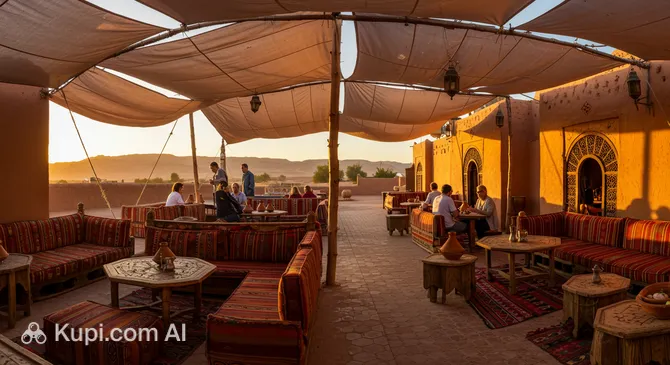
The dining scene in Ouarzazate ranges from casual street food stalls near the central squares to sit-down establishments offering international and local menus. For a reliable dining experience, many travelers visit Le Soleil Plein. This restaurant is well-regarded for its welcoming atmosphere and offers a great opportunity to sample authentic Moroccan dishes in a comfortable setting. Whether you are grabbing a quick skewer of grilled meat from a street vendor or enjoying a multi-course meal, the flavors of Ouarzazate are sure to be a highlight of your trip.

Travel Tips

To ensure your journey to the "Door of the Desert" is as smooth as it is memorable, a little preparation goes a long way. These practical tips will help you navigate the unique climate and culture of Ouarzazate with confidence.

  1. Clothing and Gear: The desert climate varies drastically between day and night. Pack breathable, loose-fitting clothing for the heat of the day, but bring a warm jacket or fleece for the chilly evenings, especially in winter. Since Morocco is a conservative country, it is respectful to dress modestly; cover your shoulders and knees when walking in the city center. Sturdy walking shoes are essential for exploring the uneven terrain of the Kasbahs.

  2. Transportation: The city center is compact and often walkable, but for longer distances, "Petit Taxis" are the best option. In Ouarzazate, these are beige-colored. They are inexpensive, but ensure the driver uses the meter or agree on a price before getting in. For day trips to nearby oases or film studios, hiring a "Grand Taxi" or renting a car is recommended to explore at your own pace.

  3. Finances: The local currency is the Moroccan Dirham (MAD). While some hotels and larger restaurants accept credit cards, cash is king in Ouarzazate, especially in smaller shops, souks, and taxis. ATMs are widely available in the city center. Tipping is customary; leaving about 10% at restaurants or rounding up the fare for taxi drivers is appreciated.

  4. Health and Safety: Ouarzazate is generally a very safe and peaceful city for tourists. Pharmacies are marked with a green cross, and you can easily find basic medications. The sun at this altitude can be intense, so high-SPF sunscreen, sunglasses, and a hat are non-negotiable. It is strictly advised to drink bottled water rather than tap water to avoid stomach issues.

  5. Communication: The main languages spoken are Arabic and Amazigh (Berber). French is the second language and is widely understood in tourism and business. English is becoming more common, particularly among younger people and in the film industry, but learning a few basic phrases in French or Darija (Moroccan Arabic), such as "Salam" (Hello) and "Shukran" (Thank you), will go a long way. Pre-paid SIM cards from providers like Maroc Telecom or Orange are cheap and easy to buy in town.

  6. Local Etiquette: Moroccans are incredibly hospitable. When greeting someone, a handshake is common, often followed by touching your hand to your heart as a sign of respect. If you are invited to eat with a family, remember to use your right hand for eating. Always ask for permission before taking photos of locals, especially in the rural areas surrounding the city.

  7. What to Avoid: Avoid public displays of affection, such as kissing or prolonged hugging, as this is considered inappropriate in public spaces. Also, refrain from taking photographs of government buildings, military personnel, or police checkpoints, as this is strictly prohibited.

  8. Shopping Tip: Ouarzazate is famous for its intricate Berber carpets and pottery. When shopping in the souks, bargaining is expected and is part of the social interaction. Start by offering about half of the initial asking price and work your way up to a fair compromise with a smile. It is meant to be a friendly negotiation, not a conflict.

By keeping these simple guidelines in mind, you will be well-equipped to enjoy the stunning landscapes and warm hospitality of Ouarzazate. Embrace the slower pace of desert life and enjoy your adventure in this cinematic city!

Entertainment & Nightlife

Unlike the bustling nightlife of Marrakech or the coastal vibrancy of Agadir, Ouarzazate offers a much more tranquil and relaxed evening atmosphere. The "Door of the Desert" is not known for high-energy nightclubs or thumping discos; instead, the nightlife here is centered around socializing, dining, and enjoying the cool desert air after sunset. For most travelers, a perfect night involves a leisurely meal, a stroll through the town center, or stargazing from a hotel terrace.

The heart of the city's evening activity is undoubtedly Place Al-Mouahidine. As the sun goes down, this central square comes alive with locals and tourists alike. It serves as an open-air gathering spot where families walk, children play, and friends meet for conversation. While you won't find alcohol here, the perimeter is lined with cafes serving mint tea, coffee, and pastries. It is the best place to immerse yourself in the authentic, laid-back culture of the city and observe local life unfolding.

For those seeking a dining experience with a pleasant ambiance, Le Soleil Plein is a popular choice. Located conveniently for visitors, it offers a welcoming environment where you can enjoy traditional Moroccan dishes or international cuisine on a terrace. It is an ideal spot to unwind after a day of exploration. If you are looking for alcoholic beverages, your options are generally limited to the bars within larger, high-end hotels and resorts, as most local cafes and smaller restaurants do not serve alcohol due to local customs.

Regarding daytime entertainment that can extend into the early evening, the city is famous for its cinematic heritage. The Cinema Museum is a key cultural stop, allowing visitors to explore the history of film production in the region. While it is primarily a daytime activity, it sets the stage for the city's artistic vibe. Additionally, visiting the famous film studios on the outskirts of town is a must for any movie buff.

When venturing out at night, Ouarzazate is considered very safe for tourists. The city center is compact and well-lit, making it suitable for walking. However, if you are staying further afield or visiting a hotel bar on the outskirts, it is best to take a "Petit Taxi." These beige taxis are plentiful and inexpensive; a ride within the city typically costs very little, but it is always wise to check that the meter is running or agree on a price before departing. The dress code is casual, but modest attire is appreciated even in the evenings.

Parks & Museums

While Ouarzazate is surrounded by the arid beauty of the pre-Saharan desert, it offers unique green spaces and cultural institutions that provide a refreshing contrast to the red-earth landscape. The city's parks are often oases of calm, while its museums serve as custodians of its rich cinematic and architectural history, making them essential stops for any visitor.

Parks and Natural Areas

In a city defined by its desert environment, the Fint Oasis stands out as a lush, green paradise located just 10 kilometers south of the city center. This natural area is a stunning collection of palm groves nestled between dramatic black rock formations. It offers a peaceful retreat where visitors can walk along the river, observe traditional village life, and enjoy the cooling shade of date palms. It is a perfect spot for nature lovers seeking tranquility away from the urban bustle.

For a different kind of natural beauty, the shores of the Mansour Eddahbi Lake provide a scenic escape. Created by a dam on the Drâa River, this vast body of water attracts various bird species, making it a great location for birdwatching and photography. The contrast between the blue water and the surrounding arid hills creates a breathtaking panorama, especially at sunset.

Within the city itself, Place Al-Mouahidine functions as the main public gathering space. While it is a paved square rather than a botanical garden, it serves the community much like a central park. In the evenings, it transforms into a vibrant, pedestrian-friendly zone where children play and families stroll, offering a genuine slice of local life under the open sky.

Museums and Galleries

Ouarzazate is globally famous for its film industry, and the Cinema Museum is the premier venue to explore this heritage. Located directly opposite the Taourirt Kasbah, this museum is housed in a former studio production facility. Inside, visitors can wander through preserved sets, examine vintage camera equipment, and see costumes from famous movies filmed in the region. It provides a fascinating, immersive look at the "Hollywood of Africa."

Although technically functioning studios, the Atlas Studios operate much like an open-air museum. As one of the largest film studios in the world, it allows tourists to walk through colossal sets ranging from Egyptian temples to Tibetan monasteries. Guided tours offer insights into the mechanics of movie-making and the history of the many blockbusters produced on these grounds.

Historical and Architectural Sites

The city's most iconic historical landmark is the Taourirt Kasbah. This 17th-century fortress is a masterpiece of clay architecture, featuring crenulated towers and geometric motifs. Visitors can explore its labyrinthine interior, which includes restored reception halls and private apartments that reveal the opulent lifestyle of the Glaoui pashas who once ruled the region.

A short drive from the city leads to the Kasbah of Tifoultoute. Perched on a hilltop overlooking the Ouarzazate River valley, this fortress offers commanding views and a quieter atmosphere compared to Taourirt. It is an excellent example of the strategic defensive architecture that characterizes southern Morocco.

Insider Tips

For a truly authentic experience, consider a day trip to the Skoura Palm Grove, located about 40 kilometers east. Unlike a manicured park, this is a working agricultural oasis where ancient kasbahs crumble amidst thousands of palm trees. Exploring its dirt paths by bicycle or on foot offers a glimpse into a way of life that has remained largely unchanged for centuries.
Getting Around

The public transport system in Ouarzazate is relatively simple and compact, reflecting the city's size and relaxed pace. Unlike larger metropolitan areas, there is no metro, tram, or extensive urban rail network. For tourists, the city is easy to navigate, with the most popular methods of getting around being taxis, walking, or renting a vehicle to explore the surrounding region.

The most common and convenient form of public transport within the city limits is the Petit Taxi. In Ouarzazate, these cars are distinctively painted beige or tan. They are ubiquitous, inexpensive, and can be hailed from almost anywhere on the street. Petit Taxis are strictly for travel within the city boundaries. They operate on a metered system, though drivers may sometimes offer a flat rate for short trips. It is customary to share the ride; if a taxi already has passengers but has empty seats, the driver may stop to pick you up if you are heading in the same direction.

For travel outside the city center to nearby attractions like the Fint Oasis, Ait Ben Haddou, or Skoura, you will need a Grand Taxi. These are typically larger sedans, often older Mercedes models or vans, located at specific taxi ranks. Grand Taxis operate on fixed routes and do not leave until all seats are sold, meaning you pay for a single seat in a shared vehicle. If you prefer a private journey without waiting for the car to fill up, you can pay for all the seats (the entire vehicle) to depart immediately.

There is a local bus network that connects the city center with outlying residential neighborhoods. However, these buses are primarily designed for the daily commute of local residents rather than for sightseeing. They can be infrequent and the routes may not align with tourist points of interest. Consequently, most visitors find that the low cost and high availability of taxis make them a far superior option to the bus system.

Payment for transport in Ouarzazate is almost exclusively in cash. There are no travel cards, digital passes, or mobile payment apps for taxis or local buses. You will need Moroccan Dirhams (MAD). Prices are very affordable; a typical Petit Taxi ride across town might cost between 10 to 20 dirhams. Grand Taxi fares are fixed based on the destination. It is crucial to carry small change and coins, as drivers often do not have change for large banknotes.

For those who prefer alternatives, walking is a viable and pleasant option, especially in the cooler months. The city center is flat and relatively small, making it easy to stroll between the main square, the markets, and the Taourirt Kasbah. Car rentals are also extremely popular here. Since Ouarzazate is the gateway to the deep south, many tourists rent a car to have the freedom to drive the "Road of a Thousand Kasbahs" at their own pace.

A few practical tips will ensure a smooth experience: always ensure the Petit Taxi driver turns on the meter ("le compteur") when you get in. If they claim it is broken, agree on a price before the car starts moving to avoid disputes later. Be aware that taxi fares typically increase by 50% at night (usually after 8:00 PM or 9:00 PM). Finally, while the city is safe, standard travel sense applies—keep your belongings close in shared vehicles.

Accommodation

Accommodation in Ouarzazate caters to a wide spectrum of travelers, ranging from budget-conscious backpackers to those seeking the luxury of a desert retreat. The city is famous for its unique "Kasbah-style" hotels, which are designed to resemble traditional fortified villages with earthen walls and geometric towers. In addition to these atmospheric guesthouses, you can find modern 4-star and 5-star hotels often used by film crews and actors during productions, as well as simple campsites for those embarking on desert expeditions.

When choosing where to stay, location plays a key role in the experience. The City Center, particularly around the Avenue Mohammed V and near Place Al-Mouahidine, is the most convenient area for easy access to restaurants, shops, and transport links. Staying here puts you within walking distance of the main amenities. Alternatively, many travelers prefer the Outskirts and Oases, such as the area towards the Fint Oasis or the road to the dam. These locations offer tranquility, stunning views of the Atlas Mountains or palm groves, and a more authentic connection to the desert landscape, though you will likely need a taxi or rental car to reach the town center.

Booking Tips and Prices

Generally, accommodation in Ouarzazate is very affordable compared to Marrakech or Agadir. Budget travelers can find comfortable rooms in hostels or small hotels for a modest price, while mid-range riads offer excellent value with breakfast often included. Luxury resorts with pools—essential during the hot summer months—are available at higher rates but remain reasonable by international standards.

While walk-in bookings are possible in the low season, it is highly recommended to book in advance if you plan to visit during the peak months of spring (March to May) and autumn (September to November). Additionally, since Ouarzazate is a major filming hub, large hotels can sometimes be fully booked by production crews without notice. Using online booking platforms is the most reliable way to secure your preferred stay.

Nearby Cities

For those looking to explore the surroundings, Ouarzazate serves as an excellent base for day trips to several interesting nearby locations:

City Population Distance (km)
Demnate 29,504 89
Souk El Tnine Jorf El Mellah 28,681 93
Setti Fatma 24,129 78
Skoura 24,055 39
Tighedouine 22,971 78

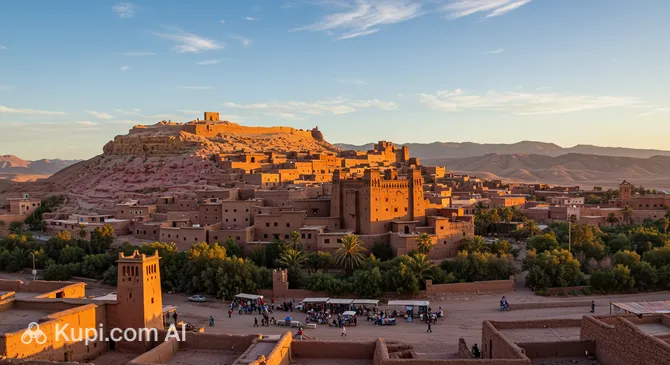
Among these destinations, Skoura is particularly well-suited for a relaxing day trip. Located just a short drive east of Ouarzazate on the "Road of a Thousand Kasbahs," it is famous for its extensive palm grove, which is still inhabited and cultivated today. Visitors can explore the 17th-century Kasbah Amridil, a marvel of mud-brick architecture that appears on the 50-dirham banknote, and wander through the lush gardens that provide a stark, beautiful contrast to the surrounding desert.

Another fascinating option is Demnate, situated at the foot of the High Atlas Mountains. As one of the oldest cities in Morocco, it offers a glimpse into authentic Berber culture away from the major tourist trails. A highlight of the area is the nearby Imi n'Ifri natural bridge, a massive rock arch carved by water over millennia. It is a spectacular geological formation where visitors can hike down to see stalactites and local birdlife, making it a rewarding excursion for nature enthusiasts.

These nearby destinations offer a glimpse into the diverse culture and landscapes of the region, ranging from verdant oases to dramatic mountain formations.

Shopping & Souvenirs

Shopping:

Shopping in Ouarzazate offers a refreshing change of pace compared to the bustling and often chaotic souks of Marrakech or Fez. Here, the experience is far more relaxed, allowing visitors to browse through local handicrafts without the intense pressure often found in larger tourist hubs. The city serves as a trading center for the entire Drâa-Tafilalet region, making it an excellent place to find authentic Berber crafts, particularly items sourced from the nearby High Atlas Mountains and the desert valleys.

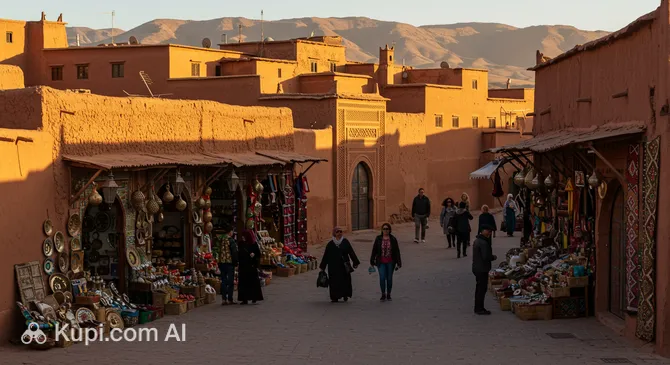
The most concentrated area for tourist-oriented shopping is located directly opposite the famous Taourirt Kasbah. The streets surrounding this historic monument are lined with bazaars and artisanal shops displaying colorful carpets, pottery, and jewelry. Another key area is Avenue Mohammed V, the city's main thoroughfare, where you can find a mix of modern boutiques, pharmacies, and souvenir stores. For a more local atmosphere, the pedestrian streets radiating from Place Al-Mouahidine offer smaller shops selling clothing, spices, and everyday goods.

Travelers looking for large, Western-style shopping malls will not find them in Ouarzazate. The retail landscape is dominated by small, independent shopkeepers rather than international chains. However, for practical needs, groceries, and fixed-price items, there are modern supermarkets such as Carrefour Market and Aswak Assalam. These are convenient for stocking up on water, snacks, and toiletries before heading out on a desert excursion.

For a taste of daily life, a visit to the Central Market (Marché Central) is highly recommended. Located near the city center, this covered market is where locals do their daily shopping. It is a sensory delight filled with mounds of aromatic spices, jars of preserved lemons, and fresh produce. It is also the best place to buy high-quality dates, for which the region is famous, often sold at a fraction of the price found in Europe.

When it comes to souvenirs, Ouarzazate is renowned for several local specialties. The region is famous for its Berber carpets, particularly the Ouzguita rugs characterized by their vibrant colors and geometric patterns. Rose products are another must-buy; the nearby Valley of Roses produces excellent rose water, soaps, and oils. Additionally, the city is a hub for silver jewelry and intricate pottery. Don't forget to pick up some local saffron or a box of sweet dates from the Drâa Valley to take home.

Store hours in Ouarzazate generally follow a split schedule. Most shops open around 9:00 AM or 10:00 AM, close for a lunch break during the hottest part of the day (roughly from 1:00 PM to 3:00 PM), and then reopen until late in the evening, often until 9:00 PM or 10:00 PM. Cash is king in Ouarzazate. While some larger bazaars and hotels accept credit cards, small shopkeepers and market vendors deal exclusively in Moroccan Dirhams. Bargaining is an essential part of the shopping culture in the souks; maintain a friendly attitude and feel free to negotiate the price.

Regarding tax-free shopping, Morocco does have a VAT refund system for tourists, but it typically applies only to large purchases made in registered stores that display the "Tax-Free Shopping" sign. In the small artisan shops and markets of Ouarzazate, this service is rarely available, so it is best to assume the price you agree upon is the final cost.

Reached the end of the page?

That means the route is fully explored