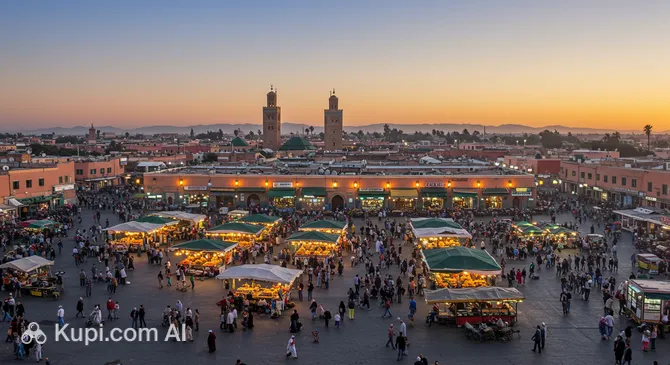
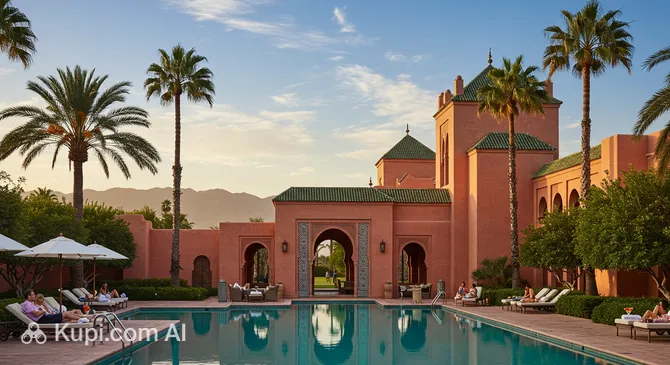
Marrakech, often referred to as the "Red City" due to its distinctive sandstone buildings, is one of the most captivating destinations in Morocco. This former imperial city pulses with energy, seamlessly blending ancient traditions with modern vitality. As the capital of the Marrakech-Safi region, it serves as a major cultural and economic hub, attracting travelers from around the globe who are eager to experience its sensory-rich atmosphere and vibrant street life.
Marrakech. Illustration.
Source: Kupi.com AI
Located just north of the snow-capped foothills of the High Atlas Mountains, the city enjoys a strategic geographical position that has influenced its development for centuries. With a population of approximately 928,000 inhabitants, it is a bustling metropolis that remains deeply connected to its heritage. The local climate is semi-arid, typically offering warm, sunny days that are perfect for exploring the city's many outdoor wonders.
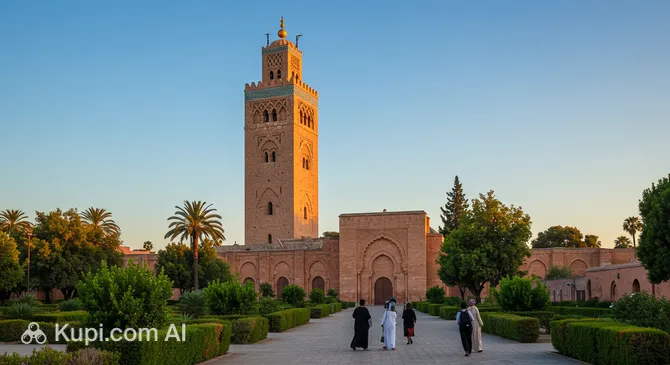
To truly understand the depth of this destination, one should explore the history of Marrakech. Founded in the 11th century, the city is home to stunning architecture and UNESCO World Heritage sites. Visitors are inevitably drawn to the famous Jemaa el-Fnaa square, a mesmerizing hub of storytellers, musicians, and food stalls that comes alive at night. The towering minaret of the Koutoubia Mosque dominates the skyline, serving as a city icon, while the serene Majorelle Garden offers a colorful botanical escape from the urban buzz.
Whether you are navigating the labyrinthine alleyways of the historic medina, bargaining for spices in the souks, or relaxing in the courtyard of a traditional riad, Marrakech promises an unforgettable adventure. It is a place where every corner holds a new discovery, inviting you to immerse yourself in its unique magic and warm hospitality.
Weather Overview
Marrakech enjoys a semi-arid climate characterized by abundant sunshine throughout the year, making it a popular destination for travelers seeking warmth. Expect scorching summers with clear skies and mild winters with cool evenings. To ensure you pack appropriately for your specific travel dates, it is a good idea to check the detailed weather in Marrakech before you depart.
The summer months of July and August are the hottest, with average temperatures climbing to around 28.5°C and daily highs frequently reaching 36.5°C. During this period, rainfall is virtually non-existent, offering uninterrupted sunny days for exploring. As the season transitions into autumn, temperatures gradually cool, with September still seeing highs of 32.0°C before dropping to more moderate levels in November.
Winters are generally pleasant for outdoor activities, though the nights can be crisp. January is typically the coolest month, with an average temperature of 12.0°C and lows dipping to approximately 4.9°C. While the city is quite dry overall, the spring month of March sees a slight increase in atmospheric activity, recording up to 9 wet days, although the total precipitation volume remains very low.
Average monthly temperature
Average monthly precipitation
Interesting Facts
Beyond the main attractions and bustling souks, Marrakech holds many fascinating secrets that surprise even seasoned travelers. From ancient engineering marvels to spiritual traditions, these details reveal the hidden depth of the "Red City."
Koutoubia Mosque. Illustration.
Source: Kupi.com AI
Traveler photos:
It is widely known that no building in the modern city or the Medina is supposed to be taller than the minaret of the Koutoubia Mosque. This urban planning tradition helps preserve the city's harmonious skyline and ensures that the call to prayer can be heard clearly across the rooftops without obstruction.
Marrakech is historically known as the city of the "Seven Saints" (Sabatu Rijal). These seven Sufi mystics are buried throughout the city, and for centuries, pilgrims have performed a specific circular tour to visit their tombs, believing these patron saints watch over and protect the inhabitants.
The lush greenery in places like the Menara Gardens was made possible by an ingenious 11th-century irrigation system called "khettaras." These underground canals transported water from the aquifers at the foot of the Atlas Mountains to the city, preventing evaporation in the scorching heat.
White storks are considered revered guests in the city and can often be seen nesting atop high walls and historic gates like Bab Agnaou. Local folklore traditionally viewed them as holy birds or transformed humans, granting them a protected status that allows them to thrive in the urban environment.
The famous Jemaa el-Fnaa square was the very first site to be proclaimed a Masterpiece of the Oral and Intangible Heritage of Humanity by UNESCO. This designation honors the cultural space created by the storytellers, musicians, and performers rather than just the physical location itself.
How to Get There
Reaching the vibrant "Red City" is relatively straightforward, with several options available depending on your starting point and travel preferences. Most international visitors arrive by air, landing directly in the city or connecting through major hubs nearby. For a comprehensive guide on all available transport methods, you can read more about how to get to Marrakech on our detailed page.
The most convenient entry point is the Menara Airport (IATA: RAK), located just 4.7 km from the city center. As an international airport with a high volume of passenger traffic, it welcomes flights from major cities across Europe and the Middle East. Due to its close proximity to the city, the journey to the Medina or the modern district of Gueliz is quick; a taxi ride typically takes around 25 to 30 minutes depending on traffic.
Alternatively, many travelers fly into Mohammed V (IATA: CMN) in Casablanca, which serves as the country's primary international gateway. Although it is located approximately 197 km from Marrakech, it offers a wider range of long-haul connections. From Casablanca, you can easily reach Marrakech by train or a private transfer, with the drive taking approximately 2.5 to 3 hours via the highway.
For clarity, here is a summary of the main airports serving the region:
In addition to air travel, Marrakech is well-connected to the rest of Morocco by a reliable rail network. The city's main railway station is a stunning architectural landmark located in the Gueliz district. Regular trains operated by ONCF connect Marrakech to Casablanca, Rabat, and Tangier, offering a comfortable and scenic way to arrive if you are already in the country.
Main Attractions
Marrakech is a city where history is etched into every wall and garden. Beyond the bustling squares and towering minarets mentioned earlier, the city hides a treasure trove of architectural marvels and cultural institutions that invite deep exploration. From grand 19th-century residences to ancient educational centers, the main attractions here offer a glimpse into the opulent past and artistic present of Morocco.
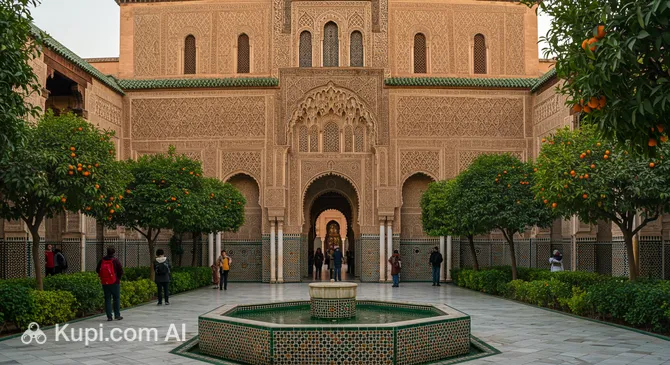
One of the most stunning examples of Moroccan architecture is the Bahia Palace. Built in the late 19th century, this sprawling complex was designed to capture the essence of Islamic and Moroccan style. Its name translates to "brilliance," and it certainly lives up to the title with its intricate zellij tilework, painted cedar ceilings, and lush courtyards filled with orange trees. wandering through its labyrinth of rooms offers a fascinating look at the life of the grand viziers who once resided here.
Bahia Palace. Illustration.
Source: Kupi.com AI
Traveler photos:
For a dive into the city's scholarly heritage, the Ben Youssef Madrasa is an absolute must-visit. Once the largest Islamic college in North Africa, it has been beautifully restored to showcase its original splendor. Visitors are often captivated by the central courtyard, which features a serene reflecting pool surrounded by incredibly detailed stucco and wood carvings. It is a peaceful retreat that speaks volumes about the importance of learning and religion in the city's history.
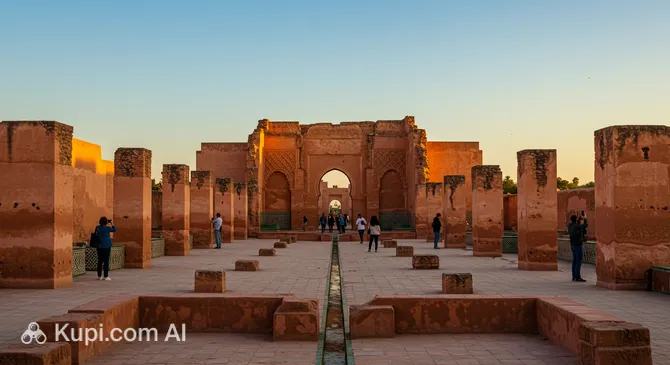
In contrast to the preserved beauty of other sites, the El Badi Palace offers a majestic sense of lost grandeur. Commissioned by the Saadian Sultan Ahmad al-Mansur in the 16th century, it was once paved with gold and Italian marble. Today, it stands as a colossal ruin, where visitors can walk among sunken gardens and vast pisé walls. The site is also famous for the storks that nest atop its crumbling ramparts, adding a touch of nature to the historical atmosphere.
El Badi Palace. Illustration.
Source: Kupi.com AI
Traveler photos:
Moving from the ancient to the modern, the Yves Saint Laurent Museum celebrates the legendary fashion designer's deep connection to Marrakech. Located near the famous Majorelle Garden, this museum is an architectural gem in itself, featuring a terracotta brick facade that mimics the weave of fabric. Inside, fashion enthusiasts can admire a rotating collection of haute couture garments, sketches, and photographs, making it a key destination for lovers of design and culture.
Local Cuisine
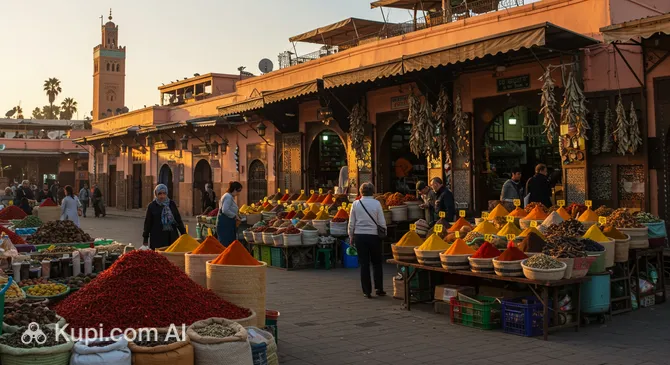
The culinary landscape of Marrakech is a vibrant tapestry of flavors, aromas, and colors that reflects the city's rich cultural heritage. Moroccan cuisine is world-renowned for its sophisticated use of spices, and nowhere is this more evident than in the Red City. Strolling through the markets, the scent of cumin, saffron, ginger, and cinnamon fills the air, promising a gastronomic adventure that blends Berber, Arab, and Andalusian influences.
Place des Épices. Illustration.
Source: Kupi.com AI
Traveler photos:
When it comes to signature dishes, the undisputed king of Marrakech is the Tangia. Unlike the more widespread tagine, the Tangia is unique to this city and is often called the "bachelor's dish." It consists of cuts of lamb or beef, preserved lemons, garlic, and spices, slow-cooked in a clay urn. Traditionally, the urn is nestled in the hot ashes of a neighborhood hammam (bathhouse) for hours, resulting in incredibly tender meat with a rich, concentrated flavor that you simply must try.
Of course, no visit is complete without tasting a classic Tagine, the conical clay pot dish named after the vessel it is cooked in. Popular variations include chicken with olives and preserved lemons, or lamb with prunes and almonds. Friday is traditionally the day for Couscous, a fluffy semolina dish served with seven vegetables and meat, which brings families together and is widely available in restaurants throughout the city.
For a truly immersive experience, head to the famous Jemaa el-Fnaa square as the sun sets. The area transforms into a massive open-air dining hall filled with smoke and chatter. Here, adventurous eaters can sample local delicacies like spicy snails (babbouche) or sheep's head, while others might prefer the freshly grilled meats and sausages. During the day, the square is lined with stalls selling the freshest orange juice you will ever taste.
Dining in Marrakech also offers a fantastic rooftop culture. Many riads and restaurants feature terraces where you can enjoy your meal with a view of the medina or the Atlas Mountains. Places like La Pergola offer a delightful setting to relax and enjoy fusion or traditional bites. As for drinks, the national beverage is Mint Tea, often jokingly referred to as "Berber Whiskey." It is served sweet and poured from a height to create a frothy top. While alcohol is not served in traditional cafés, it is available in licensed hotels, bars, and restaurants.
If you want to explore the ingredients that go into these dishes, a visit to the Place des Épices (Spice Square) is essential. It is a sensory delight where you can buy high-quality saffron, ras el hanout blends, and medicinal herbs, offering a deeper understanding of the flavors that define the local palate.
Travel Tips
Traveling to Marrakech is an exhilarating experience for the senses, but a little preparation goes a long way in ensuring a smooth and respectful journey. Here are some practical insights to help you navigate the vibrant streets and cultural nuances of this enchanting destination.
Clothing and Essentials: Light, loose-fitting fabrics are essential for the heat, but bring a jacket for cooler winter evenings. As Morocco is a conservative country, it is respectful to dress modestly by covering your shoulders and knees, particularly within the Medina. Comfortable, closed-toe shoes are crucial for walking on the uneven, dusty cobblestones of the old city.
Getting Around: Inside the walled Medina, walking is your best and often only option due to the narrow alleyways. For longer distances, use the beige "Petit Taxis"; always insist the driver uses the meter (compteur) or negotiate a fixed price before entering. Ride-hailing apps like Careem are also reliable and save you the hassle of bargaining.
Money Matters: The local currency is the Moroccan Dirham (MAD). While credit cards are accepted in upscale hotels and restaurants, cash is king in the souks and local eateries. ATMs are widely available, but try to keep small change handy for tips and small purchases. Tipping is customary; leaving about 10% at restaurants is standard practice.
Health and Safety: To avoid stomach upsets, stick to bottled water and avoid ice cubes in street stalls. Pharmacies are marked with a green cross and are usually well-stocked with French medications. While the city is generally safe, be vigilant against pickpocketing in crowded areas like Jemaa el-Fnaa and avoid unlit streets at night.
Communication: The primary languages are Arabic and Berber, with French widely used in business and tourism. English is spoken in most tourist hubs, but learning a few basic phrases like Salam Alaykum (Hello) and Shukran (Thank you) will go a long way. Prepaid SIM cards are cheap and easy to buy at the airport or local kiosks for reliable data.
Local Etiquette: Moroccans are incredibly hospitable and value politeness. When greeting someone, a handshake followed by touching your hand to your heart is a sign of respect. Public displays of affection should be minimized. Always ask for permission before taking photos of people, especially in the markets.
What to Avoid: Be wary of "friendly" strangers who approach you claiming that a road is "closed" or offering to show you a shortcut. This is a common tourist trap designed to lead you to a specific shop or demand a guide fee. politely decline and keep moving in your intended direction.
The Art of Haggling: Bargaining is a cultural norm in the souks and should be treated as a friendly game rather than a conflict. Start by offering significantly less than the asking price (often half or a third) and work your way to a mutually happy middle ground with a smile.
With these tips in hand, you are ready to embrace the chaotic charm and warm hospitality of the Red City without worry. Open your heart to the unexpected, and Marrakech will reward you with vibrant memories that last a lifetime.
Entertainment & Nightlife
Entertainment:
While Marrakech is deeply rooted in history, it also boasts a vibrant modern pulse that comes alive when the sun goes down or when you step outside the ancient city walls. The city offers a diverse array of entertainment options, ranging from chic rooftop lounges and sophisticated shopping districts to adrenaline-pumping amusement parks, ensuring that every traveler finds their rhythm in the Red City.
One of the quintessential Marrakech experiences is enjoying the city from above. The rooftop culture here is legendary, offering a perfect blend of relaxation and social buzz. Venues like the Rooftop Garden provide a stylish setting to sip a mocktail or a drink while watching the sunset over the Medina. For those seeking a more upscale atmosphere, the MK Rooftop is a fantastic choice, known for its elegant design and panoramic views that make for an unforgettable evening under the stars.
For a taste of modern lifestyle and luxury, travelers should head to M Avenue. This newly developed district connects the historic Menara Gardens with the Palais des Congrès and is lined with high-end boutiques, restaurants, and cultural spaces. It is a sharp contrast to the traditional souks, offering a contemporary promenade perfect for a leisurely stroll. Nearby, the Carré Eden shopping center in the Gueliz district provides a comprehensive retail experience with international brands and a fresh food market.
Families and thrill-seekers will find plenty of excitement at Gravity Park. This amusement center is dedicated to active fun, featuring diverse activities that allow visitors to burn off energy and enjoy a different side of the city's recreational offerings. It is an excellent break from sightseeing, especially for those traveling with children or teenagers looking for action.
If you prefer a more tranquil form of leisure, the Cyber Park Arsat Moulay Abdeslam offers a unique fusion of nature and technology. This historic 18th-century garden has been revitalized to include modern telecommunications kiosks and Wi-Fi zones amidst lush vegetation and fountains. It serves as a peaceful oasis where you can disconnect from the urban noise while staying connected to the world, embodying the city's harmonious blend of the past and the future.
Parks & Museums
Beyond its bustling souks and vibrant squares, Marrakech offers a surprising abundance of serene green spaces and rich cultural institutions. The city serves as a living canvas where art, history, and nature intersect, inviting visitors to step away from the urban energy and immerse themselves in tranquil gardens and world-class museums.
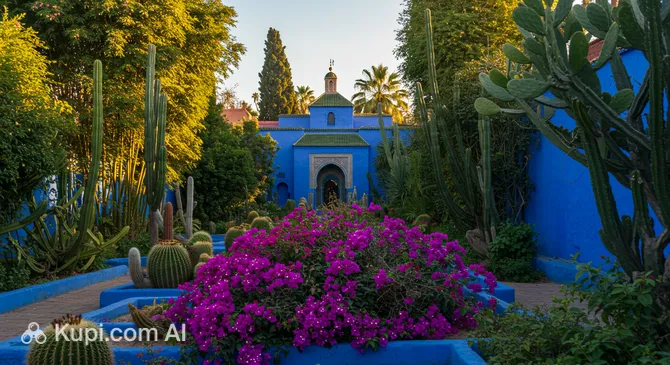
One of the most famous botanical sites in the country is the Majorelle Garden. Created by French painter Jacques Majorelle and later restored by fashion designer Yves Saint Laurent, this enchanting retreat is defined by its striking cobalt blue structures and exotic plant collections. Visitors can wander through shady lanes lined with bamboo, cacti, and weeping willows, making it a photographer's dream and a perfect escape from the midday heat.
Majorelle Garden. Illustration.
Source: Kupi.com AI
Traveler photos:
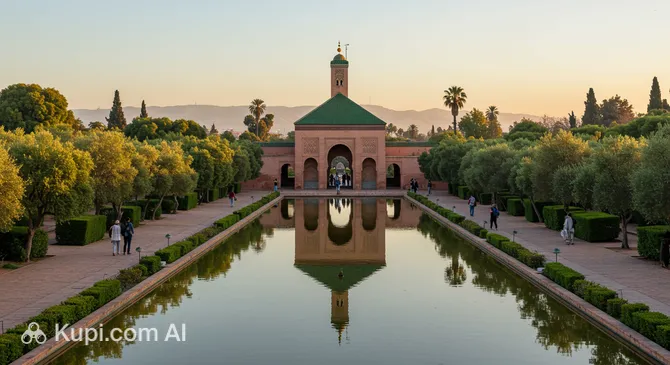
For a more expansive natural setting, the Menara Gardens offer a vast landscape of olive groves set against the dramatic backdrop of the Atlas Mountains. Established in the 12th century, the park centers around a large reflecting basin and a historic pavilion. It is a popular spot for locals seeking a peaceful afternoon walk and provides one of the most iconic panoramic views in the city.
Menara Gardens. Illustration.
Source: Kupi.com AI
Traveler photos:
Hidden within the heart of the Medina is Le Jardin Secret, a beautifully restored palace complex that showcases the splendor of Islamic art and architecture. Comprising an exotic garden and a traditional Islamic garden, it relies on an ancient hydraulic system to nourish its lush vegetation. Climbing the tower here rewards you with sweeping views over the old city's rooftops.
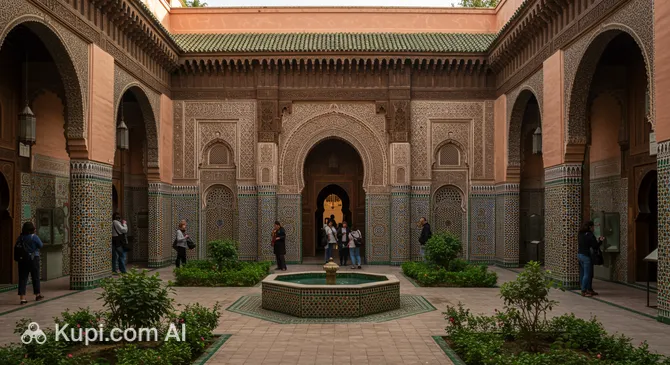
Marrakech's cultural depth is further explored in its museums. The Marrakech Museum, housed in the 19th-century Dar Menebhi Palace, is as much about the building as the exhibits. The central courtyard, with its massive chandelier and intricate tilework, is breathtaking. The museum displays a diverse collection of Moroccan art, including Berber jewelry, pottery, and contemporary paintings, offering a comprehensive look at the region's artistic heritage.
Marrakech Museum. Illustration.
Source: Kupi.com AI
Traveler photos:
Another cultural gem is the Dar Si Said Museum, officially known as the Museum of Moroccan Weaving and Carpets. Located in a lavish palace, it houses an impressive array of carpets, weaving instruments, and woodwork. It provides fascinating insight into the craftsmanship that defines Moroccan interior design, making it essential for anyone interested in traditional arts.
For history enthusiasts, the entire Medina of Marrakesh serves as an open-air museum, but specific landmarks like the imposing Bab Doukkala gate offer focused glimpses into the past. This massive Almoravid structure marks one of the main entrances to the old city and stands as a testament to the city's medieval fortifications.
For a unique insider experience, consider visiting the Dar El Bacha Museum of Confluences. Not only does it feature stunning architecture and historical exhibits, but it is also home to a renowned coffee room where you can taste blends from around the world in an opulent setting. Additionally, the Monde des Arts de la Parure Museum offers an intimate look at ornamental adornments and jewelry from various cultures, perfect for those who appreciate fine detail.
Getting Around
Navigating Marrakech is an adventure in itself, with a transport system that relies heavily on road-based options rather than a metro or rail network. The city's public transportation is primarily managed by the bus network, operated by ALSA, which connects the modern districts with the historic center and outlying neighborhoods. These buses are generally modern, comfortable, and air-conditioned, making them a viable option for getting around the main avenues outside the walled Medina.
For most travelers, the "Petit Taxi" is the most popular and convenient mode of transport. These small, beige-colored hatchbacks are ubiquitous and can navigate the city's traffic with ease. They are strictly for travel within the city limits and can carry up to three passengers. Distinct from these are the "Grand Taxis," which are larger, often shared sedans or vans used for longer distances or trips to surrounding towns and attractions outside the city center.
The payment system for public transport is straightforward and predominantly cash-based. For the public bus, you simply pay the driver upon boarding; tickets are very affordable, typically costing around 4 MAD per journey. It is essential to carry small coins, as drivers may not always have change for large bills. While there are rechargeable cards available for long-term residents, tourists will find paying per ride to be the most practical approach.
When using Petit Taxis, the golden rule is to insist that the driver turns on the meter (compteur) at the start of the trip. Rides are generally inexpensive, but if a driver refuses to use the meter, you should either negotiate a fair price before getting in or simply hail another cab. Prices increase by 50% after 8:00 PM. Ride-hailing apps are also gaining popularity and offer a fixed-price alternative, saving you the hassle of haggling.
A unique and charming feature of the city's transport landscape is the horse-drawn carriage, known locally as a Calèche. These green carriages are lined up near the main squares and major hotels, offering a slower, scenic way to tour the ramparts or travel between the old city and the new town. While they are more expensive than taxis, they provide a romantic and leisurely perspective of the streets. Be sure to agree on the fare clearly before starting your ride.
For those arriving by air, the dedicated Airport Express Bus (Line 19) is a reliable service connecting the airport to key locations in the city, including the central train station and the main square. It runs frequently throughout the day. Within the winding, narrow alleyways of the Medina, however, no motorized transport can truly help you; here, walking is the only way to explore, though you will often share the path with bicycles, motorbikes, and handcarts.
Accommodation
Where to Stay:
Finding the perfect place to stay in Marrakech is an integral part of the travel experience, as the city offers accommodation styles that are as unique as its culture. The options range from traditional guesthouses hidden within the ancient walls to expansive luxury resorts located in the palm groves. Whether you are a backpacker looking for a budget-friendly hostel or a traveler seeking world-class opulence, the Red City caters to every preference and budget.
For those who want to be in the heart of the action, staying in the Medina is the most popular choice. Here, you will find Riads—traditional Moroccan houses centered around an interior courtyard or garden. These intimate guesthouses offer a serene escape from the bustling streets outside and provide a truly authentic atmosphere. Conversely, if you prefer modern amenities, large swimming pools, and easy car access, the neighborhoods of Gueliz and Hivernage, or the palm-filled Palmeraie district, are ideal locations hosting international hotel chains and grand resorts.
Marrakech is home to some of the most prestigious hospitality brands in the world, offering sanctuaries of peace and luxury. The Four Seasons Resort Marrakech is a prime example, located close to the Menara Gardens. It provides a resort-style experience with extensive grounds and pools while remaining just a short drive from the historic center.
Four Seasons Resort Marrakech. Illustration.
Source: Kupi.com AI
Traveler photos:
Another exceptional option for those seeking tranquility and exquisite architecture is the Oberoi Marrakech. Situated a bit further from the city center, it offers breathtaking views of the Atlas Mountains and is designed to reflect the grandeur of traditional Moroccan palaces, making it perfect for a relaxing retreat.
Booking Tips and Prices: The price range in Marrakech is incredibly broad. You can find a bed in a decent hostel for as little as $15–$20 per night, while mid-range Riads typically cost between $80 and $150. Luxury experiences can easily exceed $500 per night. Since many Riads have a limited number of rooms (often fewer than 10), it is highly recommended to book well in advance, especially if you are visiting during the peak seasons of spring and autumn. Most accommodations can be easily booked via major online platforms or directly through their websites.
Nearby Cities
For those looking to explore the surroundings, Marrakech serves as an excellent base for day trips to several interesting nearby locations. One of the most popular escapes is Ourika, located in the lush valley of the High Atlas Mountains. It is renowned for its refreshing rivers, traditional Berber villages, and the scenic waterfalls of Setti Fatma, offering a cool retreat from the city heat. Another fascinating destination is Tameslouht, a town steeped in spiritual and artistic heritage. Known for its historic Zaouia and skilled artisans, it is a hub for pottery and ceramics where visitors can observe traditional craftsmanship firsthand. Travelers might also enjoy Ait Ourir, a bustling gateway to the mountains that offers authentic markets and stunning views of the surrounding landscapes.
City
Population
Distance
Saada
67 086
15 km
Oulad Hassoune
23 475
17 km
Tameslouht
28 978
17 km
Ait Faska
26 210
28 km
Tahnaout
12 102
30 km
These nearby destinations offer a glimpse into the diverse culture and landscapes of the region, making them perfect for a short excursion.
Shopping & Souvenirs
Shopping
Shopping in Marrakech is far more than a simple transaction; it is a vibrant cultural immersion that engages all the senses. The city is renowned worldwide for its artisanal craftsmanship, offering everything from intricate metalwork and hand-woven textiles to aromatic spices and high-quality leather goods. Whether you are navigating the ancient, labyrinthine alleyways of the Medina or strolling through the chic boulevards of the new city, you will find an overwhelming array of treasures to take home.
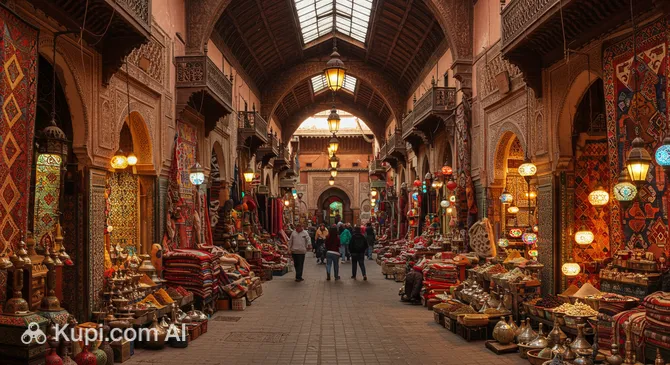
The beating heart of the city's shopping scene is undoubtedly the historic Medina. Here, the experience is defined by the souks, a sprawling network of covered markets where craftsmen have plied their trades for centuries. The main artery of this district is Souk Semmarine, a bustling thoroughfare covered by an iron trellis. As you walk through, you will pass stalls overflowing with colorful caftans, sparkling jewelry, and antiques. It is the perfect starting point for any shopping expedition, branching off into smaller, specialized souks dedicated to specific crafts like dyeing, leatherworking, and carpentry.
Souk Semmarine. Illustration.
Source: Kupi.com AI
Traveler photos:
For those interested in traditional metal crafts, the Place des Ferblantiers (Tinsmiths' Square) is a must-visit. Located near the Mellah (Jewish Quarter), this square is lined with workshops where artisans hammer tin and brass into beautiful lanterns and mirrors. If you prefer a more relaxed shopping environment without the pressure of bargaining, the Artisan Ensemble is an excellent alternative. This government-sponsored complex gathers master craftsmen who sell their goods at fixed, fair prices, allowing you to watch them work and purchase authentic items with confidence.
While the old city offers tradition, the modern districts provide contemporary luxury and international brands. In the Gueliz neighborhood, you will find Carré Eden, a large shopping mall built on the site of an old market. It houses fashion chains, a supermarket, and a food court. For a more upscale, open-air lifestyle experience, M Avenue offers a curated selection of designer boutiques, beauty concept stores, and gallery spaces, connecting the historic Menara Gardens with the modern city center.
When it comes to souvenirs, Marrakech is famous for its leather products, particularly "babouches" (traditional slippers) and durable bags. Argan oil, native to Morocco, is another popular purchase, along with fragrant spices like "Ras el Hanout," a complex blend of dozens of spices. Hand-knotted Berber rugs are also a significant investment piece; their designs vary by tribe and region, telling unique stories through their patterns. Lanterns made of pierced brass or colored glass are also iconic items that bring a touch of Moroccan magic to any home.
Understanding the local customs is key to a successful shopping trip. In the souks, bargaining is essential and expected; start by offering about a third of the asking price and negotiate with a smile. Most shops in the Medina open around 9:00 or 10:00 AM and stay open late, though many close for Friday prayers between 12:00 PM and 3:00 PM. While credit cards are widely accepted in modern malls and larger emporiums, cash is still the primary method of payment in the traditional markets.
Finally, tourists residing outside of Morocco are eligible for a VAT refund on purchases exceeding 2,000 MAD made at a single store. Look for shops displaying the "Tax-Free Shopping" sign. You will need to present your passport to fill out the necessary forms, which must then be validated by customs at the airport before you leave the country.