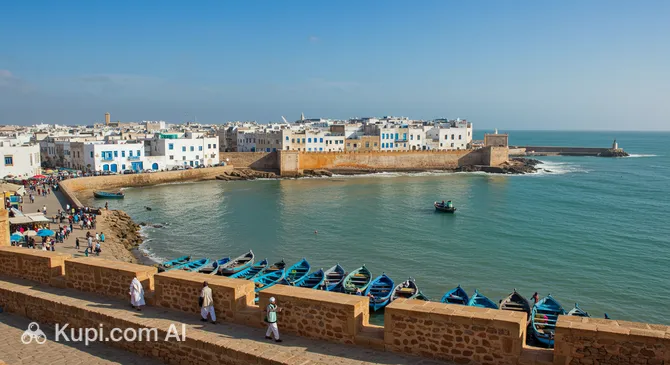
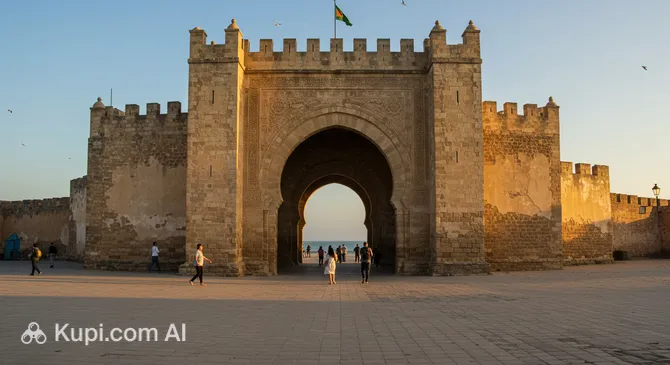
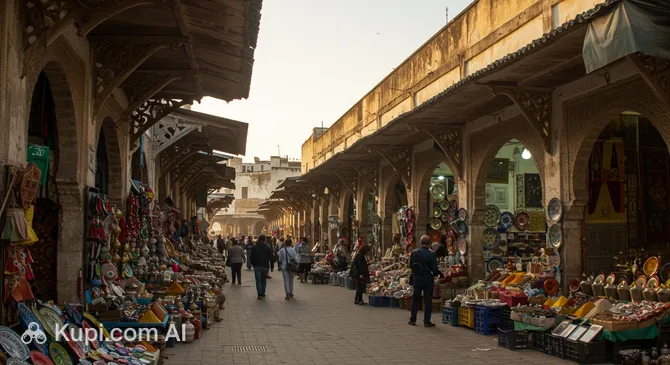
Essaouira is a captivating coastal city that offers a refreshing contrast to the bustling energy of major metropolitan areas in Morocco. Known as the "Windy City of Africa," it is celebrated for its relaxed atmosphere, whitewashed buildings with vibrant blue shutters, and a thriving artistic spirit that permeates every corner of its ancient streets.
Perched on the Atlantic Ocean in the Marrakech-Safi region, the city enjoys a mild climate year-round, although the strong Alizée trade winds make it a world-class destination for windsurfers and kitesurfers. With a population of approximately 78,000 residents, it retains a cozy and welcoming feel. The history of Essaouira is deeply etched into its fortified walls and architecture, reflecting a unique blend of Berber, Arab, and European influences, particularly from its era as the Portuguese fortress of Mogador.
Essaouira. Illustration.
Source: Kupi.com AI
Visitors are inevitably drawn to the UNESCO-listed Medina, a pedestrian-friendly labyrinth filled with artisan workshops, aromatic spice markets, and art galleries. The Skala de la Ville offers stunning ocean views from historic ramparts that are iconic to the city's skyline. The bustling fishing port is another must-see highlight, where you can watch the famous blue wooden boats return with their catch and enjoy fresh seafood grilled right on the spot.
Whether you are seeking thrilling water sports, cultural experiences like the renowned Gnaoua World Music Festival, or simply a peaceful seaside retreat, Essaouira promises an unforgettable escape. It is the perfect destination to unwind, explore, and soak in the authentic coastal charm.
Weather Overview
Essaouira benefits from a mild and pleasant climate throughout the year, making it a comfortable destination regardless of the season. The coastal location ensures that extreme heat is rare, and the city generally enjoys moderate temperatures with very low rainfall, offering plenty of opportunities for outdoor activities and sightseeing.
For travelers planning their trip and looking for detailed insights into the weather in Essaouira, the summer months of July and August are the warmest, with average temperatures around 23°C and highs reaching up to 26.4°C. The winter season remains gentle, with January typically seeing averages of 15.1°C and nighttime lows rarely dropping below 11.8°C. Expect warm, dry summers with virtually no precipitation, while the cooler months bring only occasional wet days.
Average monthly temperature
Average monthly precipitation
Interesting Facts
Beyond the surf and the medina walls, Essaouira holds many fascinating secrets that weave together pop culture, ancient history, and architectural marvels.
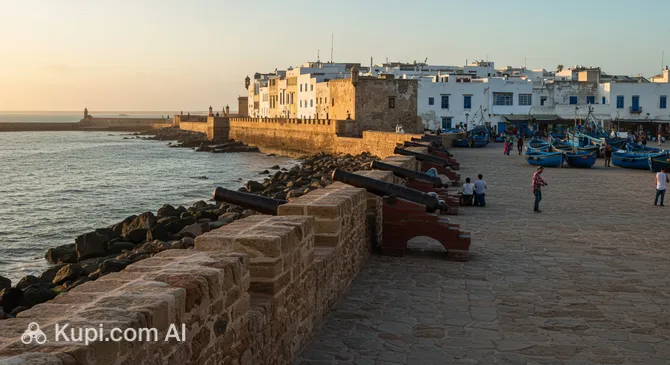
The city's dramatic fortifications are a star on the silver screen, most notably serving as the real-life location for the city of Astapor in the series Game of Thrones. Decades earlier, the legendary Orson Welles filmed his masterpiece Othello here, and today, visitors can walk the same ramparts at the Sqala of the Port of Essaouira where these iconic scenes were captured.
Unlike the chaotic, maze-like streets found in many other Moroccan medinas, Essaouira’s old town was designed by a French military architect, Théodore Cornut. He utilized a grid-based plan inspired by the port city of Saint-Malo, which explains why the streets are unusually wide, straight, and easy to navigate.
The small islands visible just off the coast are known as the Purpuraires, named after the precious purple dye produced there in antiquity. This dye, extracted from local murex shells, was so rare and expensive that it was reserved exclusively for the robes of Roman emperors.
A persistent urban legend claims that rock legend Jimi Hendrix wrote his hit "Castles Made of Sand" while staying near Essaouira Beach. Although records show the song was released before his visit in 1969, the story remains a beloved part of local folklore, and his brief stay continues to inspire the city's bohemian vibe.
Sqala of the Port of Essaouira. Illustration.
Source: Kupi.com AI
Traveler photos:
How to Get There
Reaching this coastal gem is straightforward, offering a scenic introduction to the region's landscapes. For a comprehensive breakdown of routes and transport options, you can read more about how to get to Essaouira on our detailed page. While the city is well-connected by road, most international visitors arrive via one of the nearby airports and complete their journey by taxi or bus.
The most direct entry point is Essaouira Airport (IATA: ESU), also known as Mogador Airport. It is a small international facility located just 14.4 km from the city center, making the transfer a quick 20-minute taxi ride. However, as flight options can be limited, many travelers opt to fly into Menara Airport (IATA: RAK) in the city of Marrakech. This major hub is situated approximately 164 km from Essaouira. From Marrakech, the transfer typically takes about 2.5 to 3 hours by road. Another viable alternative is Agadir Al Massira Airport (IATA: AGA) in Agadir, which is about 135 km south of the city and requires a similar travel time by taxi or shuttle.
For clarity, here is a summary of the main airports serving the region:
The city of Essaouira does not have a railway station, as the national train network currently extends only as far south as Marrakech. Travelers preferring rail transport typically take a train to Marrakech and then transfer to a connecting bus (such as Supratours, which is linked to the railway operator) or a grand taxi to complete the journey to the coast. This combination is a popular and comfortable way to see the changing terrain of Morocco.
Main Attractions
The charm of Essaouira lies in its walkable scale, allowing visitors to easily explore its most significant landmarks on foot. The city's attractions blend military history, cultural heritage, and natural beauty, creating a diverse itinerary for any traveler.
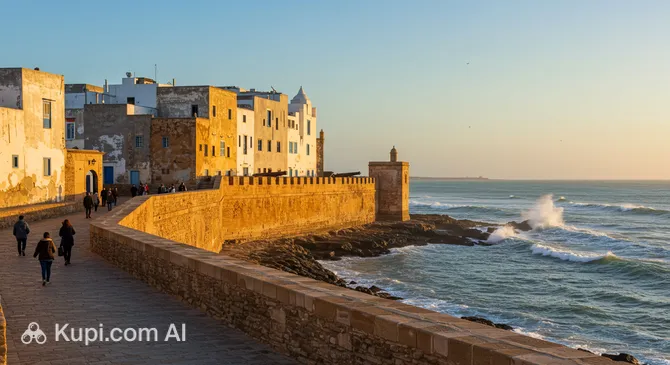
One of the most defining features of the city is the Essaouira City Walls. These majestic 18th-century ramparts, built to protect the port from invaders, now serve as a scenic promenade. Walking along the fortifications, particularly the Skala de la Kasbah, offers sweeping views of the Atlantic Ocean crashing against the rocks and the medina’s iconic white-and-blue architecture. It is an atmospheric location that perfectly captures the historic essence of the former Mogador.
Essaouira City Walls. Illustration.
Source: Kupi.com AI
Traveler photos:
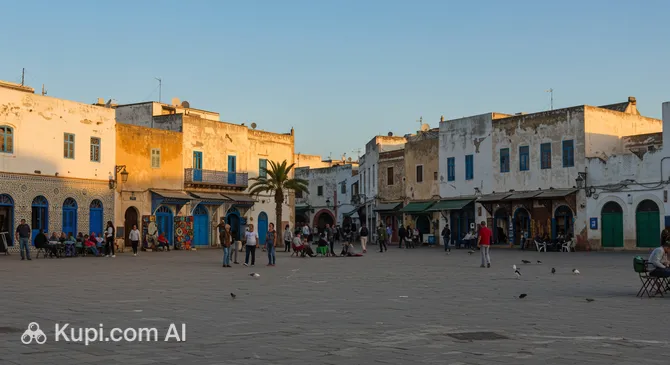
At the center of public life is Place Moulay Hassan. This spacious, tree-lined square acts as a vibrant bridge between the narrow streets of the old medina and the working port. It is the perfect spot to sit at a café terrace, sip traditional mint tea, and watch the world go by. The square is often filled with street musicians and performers, making it a lively hub of activity and a great place to soak in the local culture.
Place Moulay Hassan. Illustration.
Source: Kupi.com AI
Traveler photos:
For a deeper dive into the city's unique social history, Bayt Dakira is an essential stop. Known as the "House of Memory," this museum and cultural center is dedicated to the historic coexistence of Jewish and Muslim communities in Essaouira. Housed in a beautifully restored building, it preserves a rich collection of artifacts and narratives that highlight the city's legacy as a place of tolerance and shared heritage.
Finally, no visit is complete without spending time at Essaouira Beach. This vast crescent of golden sand is world-renowned among kitesurfers and windsurfers due to the reliable trade winds. Even if you are not into water sports, the beach offers plenty of space for long walks, camel rides, or simply admiring the view of the Mogador Island nature reserve just offshore.
Local Cuisine
Local Cuisine:
As a historic port city, Essaouira offers a culinary experience deeply rooted in the Atlantic Ocean. The city is famous for its fresh seafood, which is best enjoyed at the open-air grill stands near the harbor. Here, visitors can select their own catch of the day—ranging from sardines and shrimp to sea urchins—and have it grilled to perfection over charcoal, served simply with lemon and bread.
The region is also the heartland of the Argan tree, and this liquid gold plays a significant role in the local kitchen. You must try amlou, a rich dip made from argan oil, almonds, and honey, which is a breakfast staple. Traditional Moroccan dishes like tagine are also abundant, with the fish tagine being a local signature, often cooked with a zesty chermoula marinade that perfectly complements the fresh seafood.
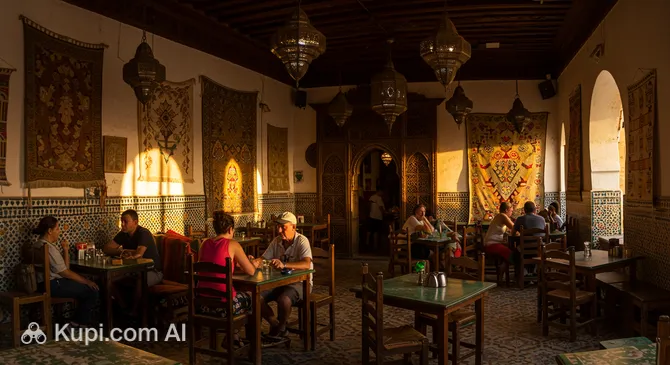
Khmissa Restaurant. Illustration.
Source: Kupi.com AI
Traveler photos:
For a memorable dining experience, the city offers a mix of traditional and modern venues. Khmissa Restaurant is a charming spot to enjoy authentic Moroccan recipes in a beautifully decorated setting. If you are in the mood for a contemporary twist on local flavors, Fishburger Essaouira serves creative seafood burgers that are a hit with locals and tourists alike.
Those seeking international variety can visit Gusto Italia, known for its excellent Italian cuisine and friendly atmosphere. Whether dining in a refined restaurant or snacking at a street stall in the medina, the food in Essaouira is consistently fresh, flavorful, and affordable.
Travel Tips
Welcome to the relaxed and breezy streets of Essaouira! To help you make the most of your visit to this charming Atlantic port, we have compiled a list of practical tips designed to ensure your trip is as smooth and enjoyable as possible.
Clothing and Gear: Due to the constant Alizée trade winds, the weather here can feel cooler than in other parts of Morocco, even in summer. Bring a light windbreaker, a scarf, and warm layers for the evenings. While the vibe is bohemian, it is respectful to dress modestly in the medina (covering shoulders and knees). Comfortable, closed-toe walking shoes are essential for navigating the cobblestone streets.
Transportation: The heart of Essaouira, the medina, is completely pedestrianized and best explored on foot. For trips outside the old walls, use the small blue Petite Taxis; they are plentiful, affordable, and usually run on a meter (if not, agree on a price before getting in). Car rentals are generally unnecessary unless you plan to explore the surrounding countryside.
Finances: The local currency is the Moroccan Dirham (MAD). While upscale hotels and restaurants accept credit cards, cash is king in the souks and smaller eateries. ATMs are widely available around Place Moulay Hassan and the new town. Tipping is customary; leaving about 10% in restaurants and rounding up taxi fares is appreciated.
Health and Safety: Essaouira is considered one of the safest cities in Morocco for tourists. However, standard precautions like watching your belongings in crowded areas apply. Pharmacies are marked with a green cross, and many are open late. It is strictly advised to drink bottled water rather than tap water to avoid stomach issues.
Communication: The official languages are Arabic and Amazigh (Berber), with French being the primary language for business and tourism. English is increasingly spoken in shops and hotels, but learning a few phrases like Salam Alaykum (Hello) and Shukran (Thank you) will go a long way. SIM cards are cheap and easy to buy from kiosks for reliable mobile data.
Local Etiquette: Moroccans are incredibly hospitable. When greeting, a handshake is common, often followed by touching your heart. Public displays of affection should be kept to a minimum. In the markets, bargaining is not just a transaction but a social interaction; remain polite, smile, and treat it as a friendly game.
What to Avoid: Do not take photographs of locals, especially in the countryside or of traditional water sellers, without asking for permission first; some may expect a small tip. Avoid wearing swimwear or overly revealing clothing away from the beach, as it is considered disrespectful in the town center.
Wind Awareness: The beach is beautiful but often too windy for sunbathing comfortably without a windbreak. If you aren't kitesurfing, the best time to visit the beach for a calm walk is usually in the morning before the winds pick up in the afternoon.
By keeping these practical pointers in mind, you will be well-prepared to embrace the unique rhythm of Essaouira. Enjoy the fresh seafood, the artistic flair, and the unforgettable sunsets over the Atlantic!
Entertainment & Nightlife
Unlike the high-energy, pulsating nightlife found in larger cities like Marrakech or Casablanca, the evening scene in Essaouira is characterized by a laid-back, bohemian charm. The nightlife here revolves less around mega-clubs and more around atmospheric rooftop terraces, intimate live music venues, and cozy lounges where you can enjoy a drink while watching the sun dip below the Atlantic horizon. The vibe is friendly and artistic, often soundtracked by the rhythmic beats of local Gnaoua music or smooth jazz.
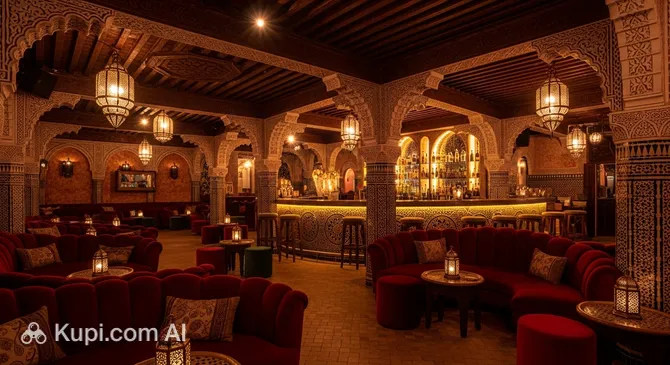
The main hubs for evening entertainment are divided between the historic Medina and the modern beachfront area. Within the walled city, particularly around the ramparts and main squares, you will find stylish venues tucked inside restored riads. For a more spirited night out, Le Love is a popular destination. Known for its vibrant ambiance, it attracts a mix of locals and travelers looking to dance and socialize in a modern setting.
Le Love. Illustration.
Source: Kupi.com AI
Traveler photos:
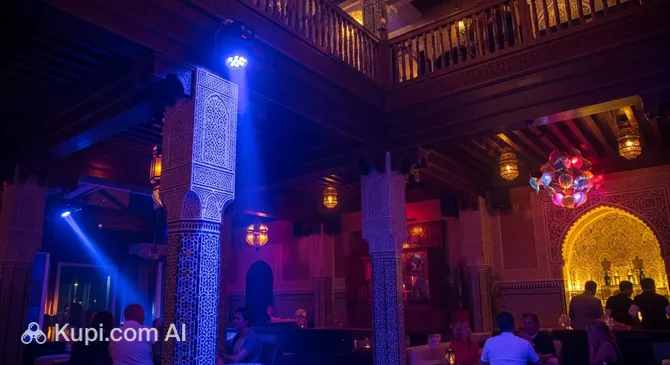
If you prefer a venue that combines history with evening leisure, Palazzo Desdemona offers a sophisticated experience. Located in a historic building, it captures the artistic essence of the city and is a great spot to enjoy a refined atmosphere. For those staying near the coast or looking for a change of scenery, the Riad Zahra Hotel features a well-regarded bar and grill. It is an excellent choice for a relaxed evening of tapas and drinks, often accompanied by live music performances.
Palazzo Desdemona. Illustration.
Source: Kupi.com AI
Traveler photos:
Practicalities for a night out in Essaouira are straightforward. Most bars and licensed restaurants are open until midnight or 1:00 AM, with a few clubs staying open later. The dress code is almost universally casual; you will feel comfortable in jeans and a sweater, which you will need as the coastal evenings can get chilly. Prices are moderate compared to Europe, with a beer or glass of wine typically costing between 50 and 80 MAD. Alcohol is available in licensed hotels, restaurants, and bars, but not in traditional cafes.
Safety is generally not a major concern, as the city remains peaceful at night. However, the narrow alleyways of the Medina can become quite dark and deserted after the shops close. It is advisable to stick to the main thoroughfares or walk with a companion. If you are staying outside the walls, the small blue taxis are the best way to get home. You can easily catch one at the main gates, such as Bab Sbaa or Bab Marrakech.
While the nights are for relaxing, daytime entertainment in Essaouira offers its own delights. Beyond the beach and water sports, visitors can explore a wealth of art galleries scattered throughout the town, showcasing the works of local painters and sculptors. For a touch of history, you might visit the Grain Market Square, which buzzes with activity and offers a glimpse into the daily life and commerce of this enchanting port city.
Parks & Museums
While Essaouira is not defined by manicured city parks in the traditional sense, its "green" spaces are wild, open, and elemental. The city is surrounded by a UNESCO Biosphere Reserve and fronted by the vast Atlantic, making the entire area a celebration of nature and heritage. Instead of enclosed gardens, visitors find their respite in the rolling dunes, the expansive coastline, and the historic cultural venues that preserve the soul of the city.
The most significant natural asset is undoubtedly Essaouira Beach. Stretching for miles, this golden expanse serves as the city's primary recreational space. It is not just for sunbathing; it is a dynamic environment where the desert meets the ocean. To the south, the beach transitions into the wild dunes of Diabat, a protected natural area that offers a stark, beautiful contrast to the medina. Just offshore lies the Mogador archipelago, a sanctuary for Eleonora’s falcons, which adds a layer of ecological importance to the scenic views.
Culturally, the city is an open-air gallery, but it also houses specific institutions that safeguard its history. The Sidi Mohamed Ben Abdallah Museum, located in a 19th-century pasha's residence, is the premier place to understand the region's ethnography. It displays a fascinating collection of traditional musical instruments, Berber jewelry, and intricate carpets that tell the story of the local tribes.
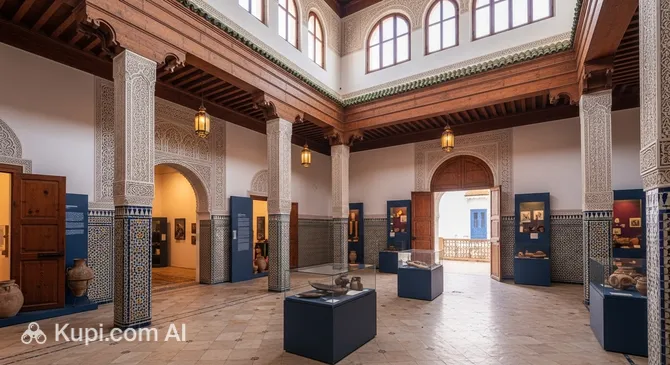
Another pivotal cultural landmark is Bayt Dakira. Far more than a typical museum, this "House of Memory" is situated in the heart of the mellah (Jewish quarter). It beautifully preserves the shared history of Muslims and Jews in the city, housing a small synagogue and a research center. The exhibits here focus on the diplomatic, social, and artistic interactions that have shaped Essaouira's unique identity as a city of coexistence.
Bayt Dakira. Illustration.
Source: Kupi.com AI
Traveler photos:
For those interested in architectural landmarks, the Bab Sbaa Gate is a stunning example of Moroccan fortification design. As one of the main entry points into the medina, its distinctive archway and inscription offer a grand welcome and a perfect photo opportunity. Unlike the military-focused sea bastions, this gate highlights the civic grandeur of the town's urban planning.
Bab Sbaa Gate. Illustration.
Source: Kupi.com AI
Traveler photos:
To capture the full layout of the city, a visit to the Panoramic Viewpoint of Essaouira is essential. Located near the bastions, this spot allows you to see the geometric precision of the medina's streets against the chaotic beauty of the crashing waves. It gives context to the "floating city" nickname often attributed to Essaouira.
For a truly authentic local experience hidden in plain sight, consider visiting the Berber Baths. These traditional hammams offer a glimpse into the daily life of the residents. Unlike the luxury spas found in high-end hotels, these community baths provide a genuine, no-frills cultural immersion centered on relaxation and social connection.
Getting Around
Navigating Essaouira is remarkably simple and stress-free compared to larger metropolitan hubs. The city does not have a metro, tram, or train system; instead, its compact size allows most visitors to explore the main attractions on foot. The historic Medina is entirely pedestrianized, meaning that walking is not just an option but the only way to navigate the labyrinth of narrow streets and souks inside the ramparts.
For travel beyond the old city walls, the most convenient and popular mode of transport is the Petite Taxi. These small cars are painted a distinctive blue color and are ubiquitous throughout the new town. They are perfect for short trips between the Medina, the beach, and the residential neighborhoods. Taxis here are shared, meaning the driver may pick up other passengers going in the same direction, but the fares remain incredibly affordable.
Regarding payment, cash is the absolute rule for local transport. There are no digital travel passes, smart cards, or complex ticketing apps for navigating the city. You should always carry small denominations of the local currency (coins are best), as drivers often struggle to make change for large bills. A typical ride within the city limits usually costs between 7 and 10 MAD during the day, with a slightly higher surcharge applied at night.
While there is a public bus network operated by companies like ALSA, it is primarily designed to connect the city center with outlying suburbs and nearby rural villages rather than for sightseeing within the town. Tickets for these buses are purchased directly from the driver upon boarding. For tourists, buses are most useful if you plan to visit destinations further afield, such as the village of Diabat or the beaches at Sidi Kaouki, though many prefer the faster "Grand Taxis" (larger shared sedans) for these intercity routes.
Practical advice for using taxis involves checking the meter. Petite Taxis are equipped with meters, and you should ask the driver to turn it on ("le compteur") when you get in. If the driver claims it is broken or refuses, it is best to agree on a price before the car starts moving to avoid disputes later. Operating hours are 24/7, though availability may decrease late at night, and flagging one down on the street is the standard method as app-based ride-hailing services are not widely established here.
For a slower, more scenic alternative, you can opt for a horse-drawn carriage, known locally as a calèche. These are often found near the main gates of the Medina, such as Bab Sbaa. While primarily a tourist experience, they offer a charming way to see the coastline or travel to the outskirts. Additionally, bike rentals are available and popular for riding along the promenade, although the city's famous strong winds can sometimes make cycling a bit of a workout.
Accommodation
Finding the perfect place to stay in Essaouira is part of the adventure, as the city offers a diverse range of accommodation that reflects its dual identity as a historic medina and a laid-back beach resort. Options span from budget-friendly surf hostels and guesthouses to authentic Moroccan riads and upscale luxury hotels. Whether you are a backpacker chasing the waves or a traveler seeking a romantic getaway, the city has a bed to suit every style and budget.
The most popular area for tourists is undoubtedly the Medina. Staying here means immersing yourself in the heart of the action, surrounded by ancient walls, aromatic souks, and historic architecture. Accommodation in this zone primarily consists of riads—traditional multi-story homes centered around an open-air courtyard. These have been converted into boutique hotels that offer a quiet, intimate oasis away from the bustling streets. Note that cars cannot enter the medina, so if you stay here, you will likely need a porter with a cart to help transport your luggage from the nearest gate.
Alternatively, travelers who prefer modern amenities, sea views, and direct car access often choose the Beachfront area (Boulevard Mohamed V). This district is lined with larger, contemporary hotels and resorts. It is the ideal location for families and water sports enthusiasts who want immediate access to the sand and surf schools. The vibe here is more spacious and airy compared to the cozy, labyrinthine feel of the old town.
When it comes to booking, it is highly recommended to secure your accommodation in advance, especially if you plan to visit during the summer months or around the famous Gnaoua World Music Festival in June, when the city is packed to capacity. While walk-ins are sometimes possible in the low season, the best riads tend to fill up quickly.
Prices in Essaouira are generally reasonable. Budget travelers can find dormitory beds in surf camps or simple hostels for very affordable rates. Mid-range options, including many charming riads, offer excellent value with breakfast often included. At the higher end, you can find luxurious establishments offering spa services, rooftop pools, and fine dining. Reservations can easily be made through major online booking platforms, though contacting smaller riads directly can sometimes yield a more personalized experience.
Nearby Cities
For those looking to explore the surroundings, Essaouira serves as an excellent base for day trips to several interesting nearby locations. Just a short journey away lies Safi, a historic port city renowned as the pottery capital of Morocco. Visitors here can explore the impressive Portuguese fortress, the Qasr al-Bahr, and wander through the vibrant potters' hill where artisans craft the city's signature ceramics. Another notable destination is Chichaoua, which is famous for its traditional weaving; the region is celebrated for producing distinctive red carpets that are a staple of Moroccan craftsmanship.
City
Population
Distance
Ounagha
12 461
20 km
Had Dra
8 989
22 km
Kourimat
9 897
42 km
Tamanar
10 584
57 km
Sidi Yahia
11 955
61 km
These nearby destinations offer a glimpse into the diverse culture and landscapes of the region, providing a rewarding contrast to the coastal charm of Essaouira.
Shopping & Souvenirs
Shopping in Essaouira is a refreshingly relaxed experience compared to the frenetic energy of other Moroccan cities. Here, the pressure to buy is minimal, and shopkeepers are generally laid-back, allowing visitors to browse at their own pace. The city is renowned for its rich artisan heritage, particularly in woodworking and organic products, making it an ideal place to find high-quality, authentic handicrafts rather than mass-produced trinkets.
The main shopping activity is concentrated within the historic Medina, which functions as one large, open-air pedestrian mall. The two principal arteries, Avenue de l'Istiqlal and Avenue Mohamed Zerktouni, bisect the old town and are lined with a diverse array of boutiques, workshops, and stalls. These streets are easy to navigate and offer everything from traditional clothing to modern art, all housed within centuries-old architecture.
Unlike modern metropolises, Essaouira does not feature large Western-style shopping malls. The charm of retail therapy here lies in the small, independent stores and the traditional souk atmosphere. Visitors looking for a "mall" experience will instead find a labyrinth of specialized quarters where craftsmen work directly in their shops, offering a connection to the product that is impossible to find in a commercial center.
Markets are the beating heart of the local economy. The vibrant Fish Market near the port is a sensory spectacle, but for a broader range of goods, the Grain Market Square (Place du Marché aux Grains) is a must-visit. Once the center of the corn trade, this charming square is now surrounded by cafes and shops selling spices, ceramics, and woven goods. It retains a rustic architectural beauty that makes shopping there feel like a step back in time.
Grain Market Square. Illustration.
Source: Kupi.com AI
Traveler photos:
When it comes to souvenirs, Essaouira is famous for Thuya wood. This fragrant, reddish wood is native to the region, and local artisans are masters at carving it into intricate boxes, chess sets, and furniture, often inlaid with lemon wood or mother-of-pearl. Another essential buy is Argan oil, as the trees grow in the surrounding countryside. Whether for culinary use or cosmetics, buying it here ensures freshness and authenticity. Other popular items include colorful raffia shoes, silver jewelry reflecting the city's Jewish heritage, and vibrant spices like Ras el Hanout.
Most shops in the Medina open around 9:00 or 10:00 AM and stay open until late in the evening, often closing around 9:00 PM. Friday is the holy day, so expect some businesses to close for a few hours around midday for prayers. Cash is king in the souks, and while some upscale boutiques and galleries accept credit cards, you will need Moroccan Dirhams for most transactions. Bargaining is expected but is generally more polite and less aggressive than in Marrakech; a smile and a friendly conversation will go a long way in securing a fair price.
For tourists making significant purchases, a tax-free shopping system (VAT refund) exists in Morocco for eligible goods bought at registered stores. Look for the "Tax Free" sign in shop windows, usually found in larger art galleries or high-end carpet shops. Ensure you ask for the proper paperwork at the time of purchase to process your refund at the airport upon departure.