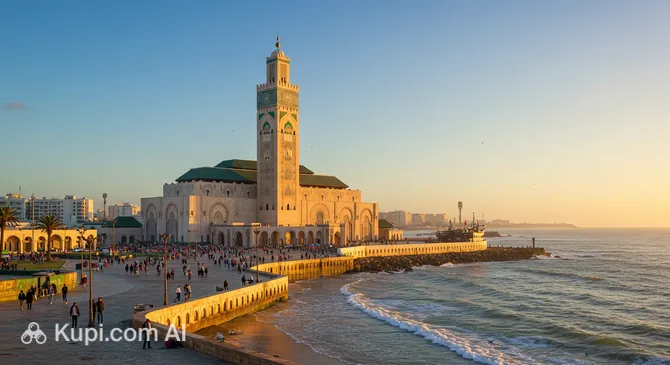
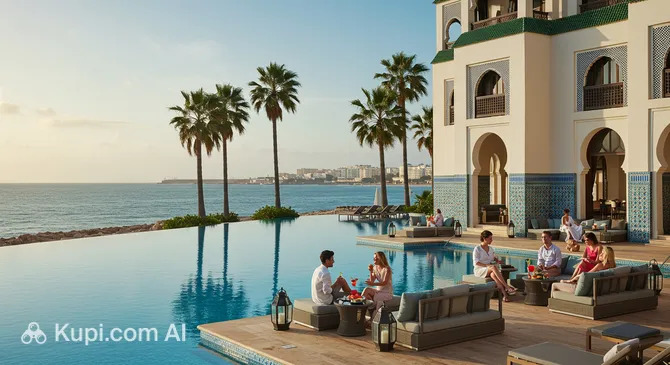
Casablanca is the vibrant economic capital and the largest city in Morocco, offering a fascinating blend of modern urban life and traditional culture. Situated on the Atlantic coast, this bustling metropolis serves as the country's primary port and industrial center. With a population exceeding 4 million residents, it is a dynamic hub where business meets leisure, creating a unique atmosphere that distinguishes it from the nation's historic imperial cities.
While the city is often associated with the classic Hollywood film, the actual history of Casablanca reveals a story of rapid transformation from a small settlement to a global crossroads. The city streets serve as an open-air museum of architecture, showcasing a striking combination of modern design and distinctive Mauresque and Art Deco styles that reflect its diverse heritage and colonial past.
Casablanca. Illustration.
Source: Kupi.com AI
Travelers are drawn to the city's spectacular landmarks, most notably the magnificent Hassan II Mosque. This architectural masterpiece features one of the world's tallest minarets and sits dramatically on a promontory overlooking the ocean, allowing waves to break directly beneath the prayer hall. Visitors can also enjoy a refreshing stroll along The Corniche, a lively waterfront promenade lined with cafes, clubs, and beaches, or explore the Habous Quarter for a charming experience of traditional souks and peaceful courtyards.
Whether you are passing through on a layover or beginning a grand tour of the region, Casablanca offers a cosmopolitan energy that is truly captivating. It is a destination that invites you to look beyond the surface and discover the modern, forward-looking spirit of North Africa.
Weather Overview
Casablanca enjoys a moderate climate strongly influenced by the Atlantic Ocean, preventing the extreme heat often found in the interior of the country. For travelers planning their wardrobe, checking the weather in Casablanca is helpful, though the city generally remains comfortable year-round.
The summer months, particularly July and August, are warm and dry. August is typically the warmest month, with average temperatures around 24.2°C and daily highs reaching up to 28.1°C. Rainfall is virtually non-existent during this season, with data showing zero wet days in July and August, ensuring plenty of sunshine for exploring the coast.
Winters are mild rather than cold, with January seeing average temperatures of 14.0°C and lows rarely dropping below 10.4°C. This season brings a change in precipitation patterns; from December through March, you can encounter about 6 to 8 wet days per month, though the rain is usually manageable.
Overall, you can expect warm, dry summers perfect for outdoor activities and mild winters with occasional rain.
Average monthly temperature
Average monthly precipitation
Interesting Facts
Beyond the bustling boulevards and white-washed facades, Casablanca holds many fascinating secrets that surprise even seasoned travelers. This city is not just a commercial hub but a place where cinematic legend meets modern innovation in unexpected ways.
Rick's Café. Illustration.
Source: Kupi.com AI
Traveler photos:
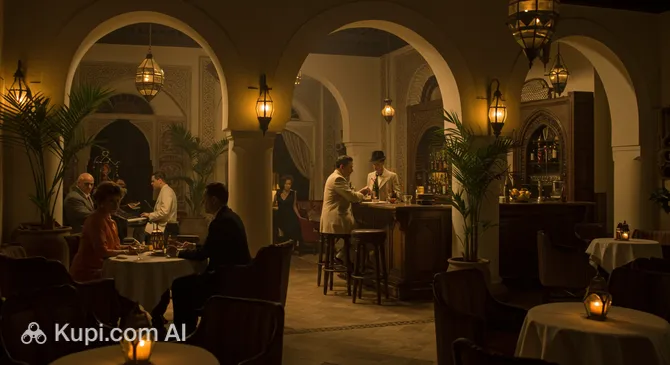
Despite being the namesake of one of the most famous movies in history, the 1942 film Casablanca was not actually filmed in the city; it was shot entirely in Hollywood studios. However, the legend lives on at Rick's Café, a real-life restaurant designed to flawlessly recreate the movie's set, complete with a 1930s Pleyel piano and authentic decor.
The magnificent Hassan II Mosque features a laser beam at the top of its minaret that points directly toward Mecca. This beam reaches a distance of 30 kilometers and is visible from aircraft, serving as a spiritual beacon in the night sky.
Casablanca is an open-air museum of "Mauresque" architecture, a unique style that blends French Art Deco with traditional Moroccan design. The city center is filled with buildings from the 1930s featuring wrought-iron balconies and geometric friezes, making it one of the world's best-preserved Art Deco districts.
Inside the massive Morocco Mall, visitors can find a giant cylindrical aquarium known as the "Aquadream." It holds over a million liters of water and allows guests to take a ride through the center of the tank in a glass elevator for a 360-degree view of the marine life.
How to Get There
As the economic heart of the country, the city is well-connected to the rest of the world and the region. Whether you are arriving from overseas or traveling from another Moroccan city, you have several convenient options. You can find more about how to get to Casablanca and detailed transport advice on our dedicated page.
The most direct way to arrive is via Mohammed V (CMN), the busiest international airport in Morocco. Located approximately 23 km from the city center, it serves as the main hub for the national carrier and handles flights from major cities across the globe. A trip from the airport to downtown Casablanca by taxi or shuttle typically takes around 55 minutes, depending on traffic.
Travelers can also consider landing at Sale Airport (RBA) in the nearby capital city of Rabat. Although it is smaller, it offers a viable alternative and is situated about 94 km from Casablanca. The journey by road from Rabat's airport to Casablanca takes approximately 2 hours and 40 minutes. For those exploring the southern regions first, Menara Airport (RAK) in Marrakech is another major entry point, though it is located roughly 222 km away.
For clarity, here is a summary of the main airports:
In addition to air travel, Casablanca serves as a major node in the national railway network. High-speed trains and regular services frequently connect the city to Tangier, Rabat, Marrakech, and other key destinations, making rail travel a comfortable and popular choice for visitors moving within the country.
Main Attractions
Casablanca is a city of contrasts, where architectural heritage meets contemporary urban life. While it is the business hub of the country, it boasts a variety of landmarks that showcase its rich history and cultural depth. From majestic religious sites to serene green spaces, the city offers plenty of memorable experiences for visitors.
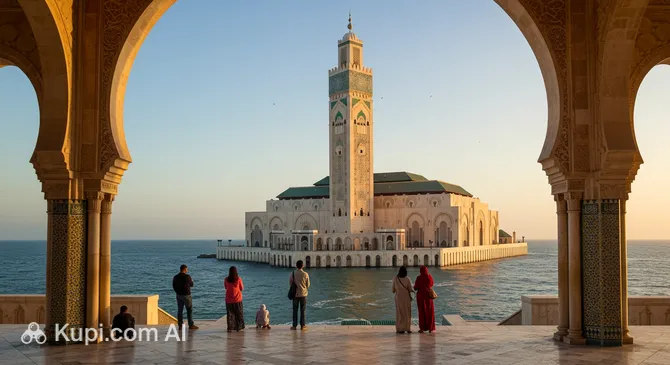
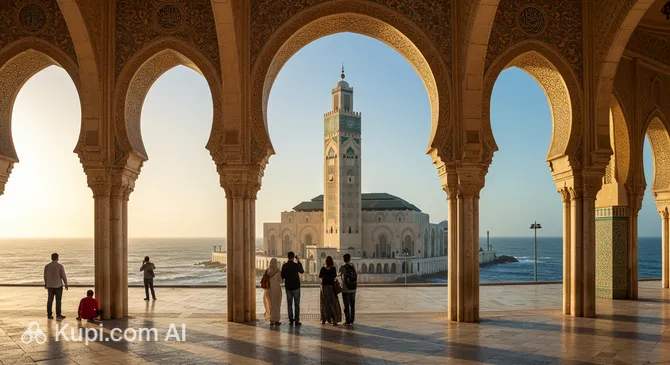
Undoubtedly the most iconic landmark is the Hassan II Mosque. Standing proudly on the edge of the Atlantic Ocean, it is one of the few mosques in Morocco open to non-Muslim visitors through guided tours. Travelers are captivated by its immense scale and the incredible craftsmanship visible in every detail, from the hand-carved cedar wood to the intricate zellige tilework. It is not just a place of worship but a testament to Moroccan artistry.
Hassan II Mosque. Illustration.
Source: Kupi.com AI
Traveler photos:
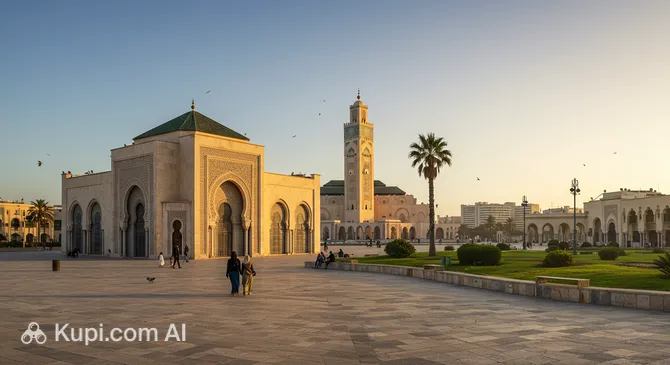
For a taste of the city's colonial past, a visit to Mohammed V Square is essential. Located in the heart of the city, this bustling plaza is surrounded by impressive administrative buildings designed in the Mauresque style, blending French Art Deco with traditional Moroccan elements. It is a popular gathering spot for locals and tourists alike, known for its central fountain and the flocks of pigeons that have become a charming fixture of the square.
Mohammed V Square. Illustration.
Source: Kupi.com AI
Traveler photos:
Those seeking a break from the urban energy can find tranquility at the Arab League Park. This extensive green space, recently renovated, serves as the city's "green lung." Lined with tall palm trees and featuring ornamental pools, it offers a perfect setting for a leisurely walk or a quiet picnic. The park connects the modern city center with the older neighborhoods, making it a convenient stop during a day of sightseeing.
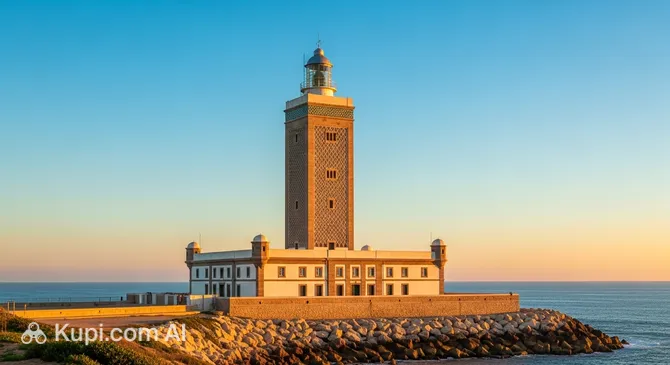
Another fascinating site is the El Hank Lighthouse, situated on the rocky coastline west of the port. Built in the early 20th century, this towering structure guides ships approaching the harbor and offers adventurous visitors a chance to climb to the top. The panoramic views of the ocean and the Casablanca skyline from the summit are truly spectacular, especially during sunset.
El Hank Lighthouse. Illustration.
Source: Kupi.com AI
Traveler photos:
Art enthusiasts should not miss the Villa of Arts, a beautiful Art Deco villa that has been transformed into a contemporary art museum. It hosts rotating exhibitions of Moroccan and international artists, promoting cultural dialogue and creativity. The peaceful garden and the elegant architecture of the building itself make it a delightful cultural retreat.
Local Cuisine
Casablanca offers a culinary experience that is distinct from the rest of Morocco, serving as a melting pot where traditional Moorish flavors blend seamlessly with French, Spanish, and Italian influences. As a major coastal city, it is a paradise for seafood lovers. Fresh catches arrive daily at the port, making dishes like grilled sardines, fried calamari, and shrimp pil pil—sizzling in garlic and chili oil—staples of the local diet. The city's restaurants range from humble stalls in the medina to chic, high-end establishments along the oceanfront.
No visit is complete without trying the country's signature dishes. Tagine, a slow-cooked stew named after the conical clay pot it is cooked in, is ubiquitous; popular variations include lamb with prunes or chicken with preserved lemons and olives. Friday is traditionally the day for Couscous, a labor-intensive dish of steamed semolina piled high with seven vegetables and meat. For something unique to the region's palate, try Pastilla, a savory-sweet pie made of flaky pastry, traditionally stuffed with pigeon or chicken, almonds, and dusted with cinnamon and powdered sugar.
The beverage culture in Casablanca is equally vibrant. The day often begins with strong coffee or a glass of freshly squeezed orange juice, which is abundant and inexpensive. The most famous drink, however, is Moroccan mint tea, often jokingly referred to as "Berber Whiskey." It is served hot, sweet, and frothy, acting as a symbol of hospitality. Unlike many other parts of the country, Casablanca has a lively social scene where alcohol is readily available in licensed venues. Visitors can enjoy local wines from the Meknes region or a cold Casablanca beer, the city's namesake lager.
The James Rooftop. Illustration.
Source: Kupi.com AI
Traveler photos:
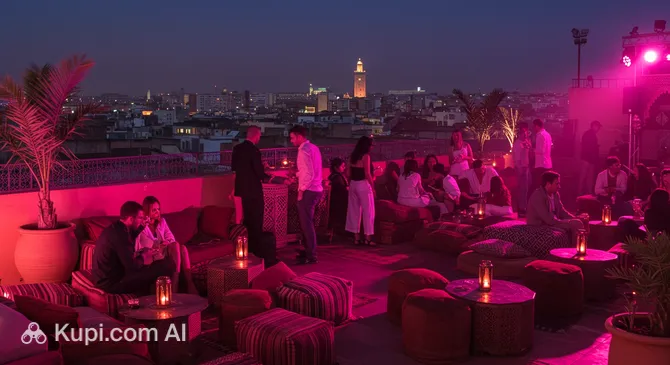
Dining out is a major part of social life here. For a sophisticated evening with panoramic views, The James Rooftop is a popular destination to enjoy a cocktail and the city lights. Meanwhile, those seeking a classic brasserie atmosphere that recalls the city's cosmopolitan history might visit L'Entrecôte Café de Paris, known for its steak-frites and bustling ambiance. Whether you are grabbing a quick bite at a street corner or dining in style, the flavors of Casablanca are sure to leave a lasting impression.
Travel Tips
Visiting Casablanca is an exciting dive into modern Morocco, but navigating its busy streets requires a bit of local know-how. To help you make the most of your stay in the "White City," here are some essential practical tips to ensure a smooth and enjoyable trip.
Clothing and Gear: Casablanca is cosmopolitan, but modesty is still valued. While western-style clothing is common, it is best to keep shoulders and knees covered when walking in the city center or traditional neighborhoods. Bring a light jacket for breezy Atlantic evenings and comfortable walking shoes for uneven sidewalks. Don't forget to pack a Type C or E power adapter (standard European two-pin), as these are used throughout the country.
Transportation: The city's modern tramway is clean, affordable, and the most stress-free way to travel between major districts. For direct trips, look for the small red Petit Taxis. Always insist that the driver turns on the meter (compteur); if they refuse, it is usually better to find another cab. Ride-hailing apps are also available and can save you the hassle of negotiating fares.
Finances: The local currency is the Moroccan Dirham (MAD). While credit cards are widely accepted in malls, hotels, and upscale restaurants, "cash is king" in the Medina, small cafes, and for taxis. ATMs are easy to find. Tipping is customary; leaving 5-10% in restaurants and rounding up taxi fares is appreciated.
Health and Safety: Pharmacies are abundant, marked by a flashing green cross, and pharmacists can often provide advice for minor ailments. The city is generally safe, but exercise common sense and watch your belongings in crowded areas like the Old Medina. It is advisable to stick to bottled water for drinking to avoid any stomach issues during your stay.
Communication: While Arabic is the official language, French is the primary language for business and tourism; knowing a few basic French phrases will be extremely helpful. English is becoming more common but is not spoken everywhere. We highly recommend buying a local SIM card (e.g., Maroc Telecom or Orange) upon arrival for reliable internet access and navigation.
Local Etiquette: Moroccans are warm and hospitable. A handshake is the standard greeting, often followed by touching your hand to your heart as a sign of respect. If you are sharing a communal meal, always eat with your right hand. Public displays of affection should be kept modest to respect local cultural norms.
What to Avoid: Do not try to enter mosques other than the Hassan II Mosque, as entry is strictly reserved for Muslims in most religious sites across the country. Also, avoid taking photographs of people without asking for their permission first, as many locals find this intrusive.
Friday Insights: Friday is the holy day, so be prepared for some shops and businesses to close for a few hours around midday for prayers. This is also the traditional day for eating Couscous; many restaurants serve this special dish only on Fridays, offering a delicious cultural experience you shouldn't miss.
By keeping these practicalities in mind, you will be well-equipped to navigate the dynamic energy of Casablanca with confidence. Embrace the local rhythm, treat the city with curiosity and respect, and you are sure to uncover the unique charm that lies beneath its busy surface.
Entertainment & Nightlife
As the sun sets over the Atlantic, Casablanca sheds its business persona and reveals a vibrant, cosmopolitan nightlife scene that rivals many European capitals. The city offers a dynamic mix of entertainment, ranging from sophisticated lounge bars to energetic dance clubs. The epicenter of this nocturnal energy is undoubtedly the Corniche in the Ain Diab district. Stretching along the oceanfront, this promenade is lined with trendy beach clubs, cabarets, and discos where the party often continues until dawn. For a more relaxed but equally chic vibe, the neighborhoods of Gauthier and Racine in the city center are home to stylish tapas spots and pubs frequented by young professionals and expats.
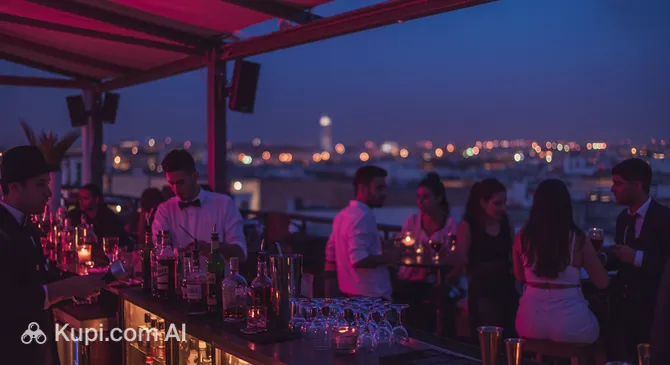
Travelers looking for a lively atmosphere that combines good food with music should visit Oncle Blend. Known for its rustic-industrial decor and friendly crowd, it is a favorite spot for socializing and enjoying a pub-style ambiance. If you prefer a gastropub experience with a refined selection of drinks, Brassaria Restaurant offers a modern setting perfect for starting your evening. The dress code in these popular venues leans towards "smart casual" or "chic," especially along the Corniche, where bouncers can be selective about attire.
Oncle Blend. Illustration.
Source: Kupi.com AI
Traveler photos:
Nightlife in Casablanca generally starts late. While you can grab dinner around 8:00 or 9:00 PM, the clubs and bars typically do not fill up until after midnight. Be prepared for prices that match the city's cosmopolitan status, particularly in the upscale waterfront venues. To get around safely at night, use the red Petit Taxis; remember that a 50% surcharge applies to the meter fare after dark. While the main tourist zones are well-patrolled and safe, it is advisable to avoid walking alone in dimly lit areas downtown and to always take a taxi back to your accommodation.
Beyond the nightlife, the city offers engaging entertainment options for the daytime as well. Families and thrill-seekers can head to Fantasy Park Morocco, which features a variety of rides and attractions suitable for all ages. For indoor fun, Dream World provides a range of games and activities, making it an excellent stop for those traveling with children or looking to escape the midday sun.
Parks & Museums
While Casablanca is known as a bustling metropolis, it also offers refreshing green spaces and a wealth of cultural institutions that allow visitors to pause and appreciate the city's diverse heritage. From the crashing waves of the Atlantic to quiet museum halls, there are plenty of spots to escape the urban energy and dive deeper into the local lifestyle.
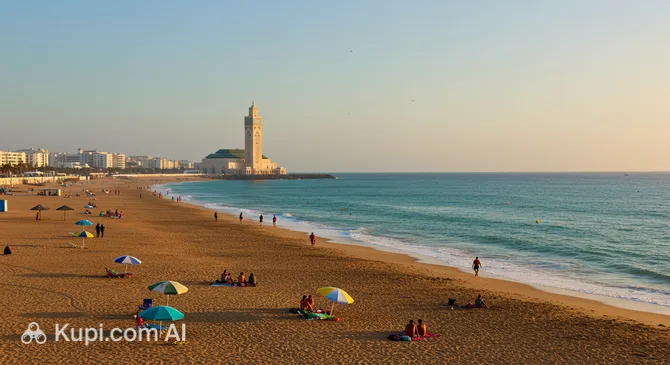
For a breath of fresh ocean air, Ain Diab Beach is the city's premier natural escape. Located at the end of the Corniche, this expansive stretch of sand is perfect for a long walk, a game of beach soccer, or simply watching the sunset over the Atlantic. It is a popular spot for locals and surfers alike, offering a lively atmosphere that captures the coastal spirit of the city.
Ain Diab Beach. Illustration.
Source: Kupi.com AI
Traveler photos:
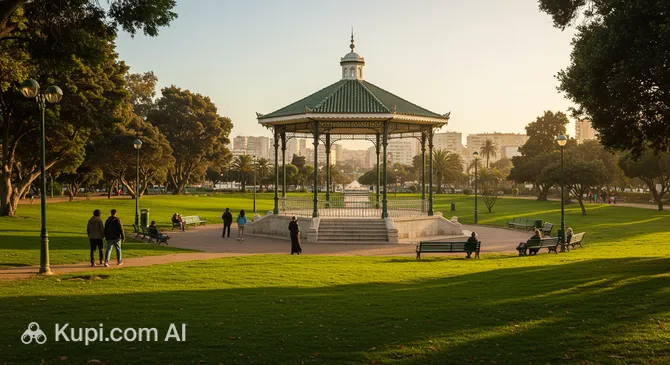
Another delightful green space is Murdoch Park (Parc Isesco). Situated in the Mers Sultan district, this park offers a more intimate and local experience compared to the larger central gardens. It is beautifully landscaped with diverse plant species and provides a peaceful environment where families gather and joggers enjoy the shaded paths, making it a lovely spot for a quiet afternoon break.
Murdoch Park. Illustration.
Source: Kupi.com AI
Traveler photos:
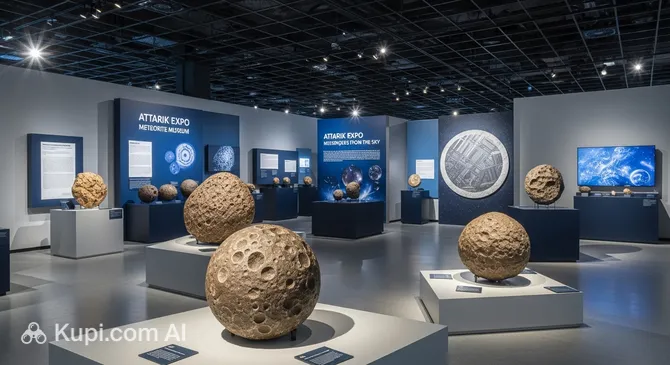
The city's museums provide a fascinating look into both history and science. A truly unique institution is the Attarik Expo – Messengers from the Sky Meteorite Museum. Morocco is a hotspot for meteorite finds, and this museum showcases an impressive collection of space rocks, explaining their origins and scientific significance in an engaging way that appeals to both adults and children.
Attarik Expo – Messengers from the Sky Meteorite Museum. Illustration.
Source: Kupi.com AI
Traveler photos:
To fully appreciate the craftsmanship of the city's most famous landmark, a visit to the Hassan II Mosque Museum is highly recommended. Located near the mosque itself, this facility displays samples of the traditional materials used in the construction, such as carved cedar wood, zellige tiles, and painted stucco. It offers an up-close look at the intricate details that are often too high up to see clearly inside the prayer hall.
Hassan II Mosque Museum. Illustration.
Source: Kupi.com AI
Traveler photos:
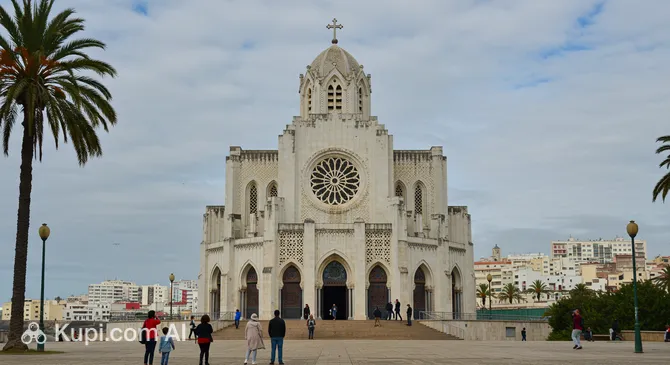
Casablanca's architectural landscape is dotted with significant historical sites beyond the Art Deco district. The Church of Notre Dame de Lourdes is a striking example of modernist architecture built in the 1950s. Its massive concrete structure is illuminated by incredible stained-glass windows that cover almost the entire walls, creating a kaleidoscope of light inside that leaves visitors in awe.
Church of Notre Dame de Lourdes. Illustration.
Source: Kupi.com AI
Traveler photos:
Nearby, you can admire the majestic gates of the Royal Palace of Casablanca. While the interior is reserved for the King and official functions, the grand exterior with its ornate bronze doors and uniformed guards is a popular stop for photos. Another architectural curiosity is the Zevaco Dome, often called the "Kora Ardia." This concrete globe in United Nations Square has recently been rehabilitated and stands as a testament to the city's experimental urban design.
For a truly authentic Moroccan experience, consider visiting Hammam Ziani. Unlike hotel spas, this is a traditional public bathhouse where you can enjoy a vigorous scrub and steam session. It is a fantastic way to relax after a day of sightseeing and immerse yourself in a ritual that has been part of daily life here for centuries.
Getting Around
Navigating Casablanca is an experience in itself, offering a mix of modern efficiency and chaotic charm. For most visitors, the Tramway is the most convenient and user-friendly mode of public transport. It is a modern, clean, and safe system that connects many of the city's key districts, including the historic center, the beachside Corniche, and the main railway stations. While the city does not have an underground metro system, the tram network effectively serves as the backbone of urban transit, running frequently from early morning until late at night.
For those looking to reach areas not covered by the tram, the bus network, operated by Alsa (often branded as Casabus), provides extensive coverage throughout the metropolis. Buses are generally modern and affordable, but they can be difficult for tourists to navigate due to complex routes and crowding during peak hours. A popular alternative for longer distances or suburban trips is the Grand Taxi. These are typically large white sedans that operate on fixed routes and are shared with other passengers. They are cost-effective but depart only when full.
The most iconic way to get around for short trips is the Petit Taxi. distinctive by their bright red color. Unlike the Grand Taxis, these are private hires for up to three passengers and operate strictly within the city limits. They are abundant and can be hailed almost anywhere. Legally, they must use a meter (compteur), and it is highly advisable to ensure the driver turns it on when you enter. If a driver refuses, simply wait for the next one. Ride-hailing apps like Careem and Heetch are also active in the city, offering a fixed-price alternative if you prefer to avoid negotiating or handling cash.
Regarding payment, the systems differ by transport mode. For the Tramway, you must purchase tickets at the automatic vending machines located at every station; these machines accept coins and bills. You can buy a rechargeable card if you plan to use the tram frequently, or a single-use ticket for occasional trips. Buses generally accept cash paid directly to the driver, though prepaid cards are being introduced. For taxis, cash is the only accepted method, and carrying small change is essential as drivers often do not have change for large bills.
Operating hours for the tram are approximately from 5:30 AM to 10:30 PM, with extended service on weekends and during Ramadan. When using the tram, always remember to validate your ticket at the turnstiles upon entry to avoid fines. While walking is a pleasant way to explore specific neighborhoods like the Old Medina or the Art Deco district, the sheer size of Casablanca makes relying on wheels necessary for cross-town journeys. Bike rentals are not yet a major part of the public transit ecosystem, so taxis and trams remain the best bets for tourists.
Accommodation
Where to Stay:
Accommodation in Casablanca caters to a diverse range of travelers, reflecting its status as a major economic hub and tourist destination. The city offers everything from budget-friendly hostels and guesthouses to functional business hotels and opulent luxury resorts. Whether you are looking for a quick stopover near the port or a relaxing seaside retreat, you will find options that suit your needs and budget.
For those who want to be in the heart of the action, the City Center (Centre Ville) and the neighborhoods of Gauthier and Racine are excellent choices. These areas place you within walking distance of major landmarks, Art Deco architecture, and a variety of restaurants. Alternatively, if you prefer ocean views and a resort-style atmosphere, the Ain Diab district along the Corniche is the place to be. This area is home to many high-end establishments and offers easy access to the beach and nightlife.
Travelers seeking a truly luxurious experience by the ocean often consider the Four Seasons Hotel Casablanca. Located right on the oceanfront near the Corniche, it provides a sanctuary of comfort with resort-style amenities, making it a standout option for those willing to splurge on their stay.
Four Seasons Hotel Casablanca. Illustration.
Source: Kupi.com AI
Traveler photos:
Prices in Casablanca can vary significantly depending on the location and the season. While budget travelers can find affordable rooms in the city center, ocean-view properties command a premium. It is generally advisable to book your accommodation in advance, especially during the summer months or when major business conferences are taking place. Most hotels can be easily booked through major online platforms, which often offer the best rates and flexibility.
Nearby Cities
For those looking to explore the surroundings, Casablanca serves as an excellent base for day trips to several interesting nearby locations:
Among these options, Mohammedia is a favorite for those seeking a coastal retreat. Known as the "City of Flowers," it features beautiful boulevards lined with palm trees and offers pristine beaches like Plage des Sablettes. It provides a relaxed atmosphere perfect for a seaside lunch or a round of golf, just a short drive from the metropolis.
For nature enthusiasts, Bouskoura offers a refreshing escape into the greenery. It is famous for the vast Bouskoura Forest, often referred to as the city's "green lung." This eucalyptus forest is an ideal spot for hiking, cycling, and picnics, allowing visitors to enjoy fresh air and tranquility away from the urban bustle.
Further inland, Settat presents a different side of the region. As the capital of the Chaouia district, it is an agricultural hub with a rich history, featuring an 18th-century Ismaili Kasbah. It is also home to a university and a well-maintained golf course, offering a blend of heritage and modern leisure.
These nearby destinations offer a glimpse into the diverse culture and landscapes of the region.
Shopping & Souvenirs
Shopping in Casablanca offers a vibrant mix of experiences that reflect the city's dual identity as a modern economic power and a guardian of Moroccan tradition. As the commercial capital of the country, it boasts everything from high-end international luxury brands to bustling traditional souks. Whether you are looking for the latest fashion trends or authentic local handicrafts, the city provides diverse options to suit every taste and budget.
For those seeking a contemporary retail experience, the Maârif district is the place to be. This neighborhood, particularly the streets surrounding the Twin Center, is filled with European fashion chains, chic boutiques, and sportswear shops. Another popular destination for walkers is the pedestrian-friendly Prince Moulay Abdellah Street, located just a short distance from United Nations Square. It is a lively thoroughfare lined with shops, cafes, and cinemas, perfect for an afternoon of window shopping.
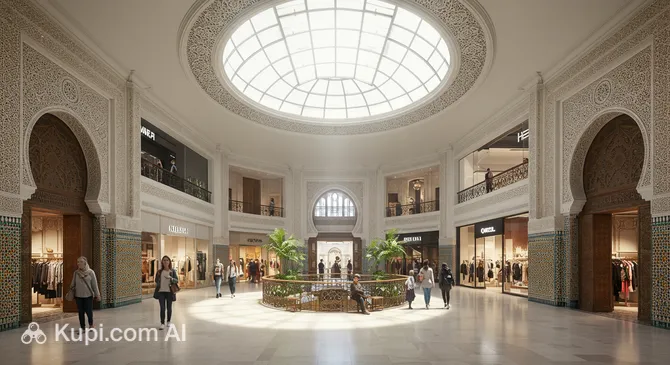
The city is also home to some of the most impressive shopping centers in Africa. The crown jewel is undoubtedly the Morocco Mall, located at the end of the Corniche. It is one of the largest malls on the continent, featuring hundreds of international brands, a massive food court, and entertainment facilities. It is a destination in itself, offering a blend of luxury shopping and leisure activities by the ocean.
Morocco Mall. Illustration.
Source: Kupi.com AI
Traveler photos:
Another excellent option for a relaxed shopping day is Californie Mall. Situated in a residential area, it offers a more laid-back atmosphere with a good selection of clothing stores, supermarkets, and dining spots, making it a convenient stop for families and visitors staying nearby.
For a taste of traditional Morocco, head to the Habous Quarter, also known as the New Medina. Built by the French in the 1930s, this picturesque district features arched walkways and clean, organized souks. It is the best place to buy authentic handicrafts without the overwhelming chaos often found in older medinas. Here, you can find high-quality leather goods, intricate carpets, traditional clothing, and copperware. Food enthusiasts should not miss the Marché Central (Central Market) on Boulevard Muhammad V, a sensory delight filled with fresh seafood, flowers, and spices.
When it comes to souvenirs, visitors are spoiled for choice. Argan oil, native to Morocco, is a popular purchase for beauty and culinary use. Leather items, such as the traditional slippers known as babouches, bags, and belts, are widely available and often of excellent quality. Other recommended buys include colorful ceramics, spices like saffron and cumin, and intricate wood carvings.
Most modern shops and malls operate from 10:00 AM to 9:00 PM or 10:00 PM and accept major credit cards. In contrast, traditional souks and smaller independent shops may close for a few hours in the afternoon, especially on Fridays for prayer. In the markets, cash is the preferred method of payment. While prices in malls are fixed, haggling is an essential part of the experience in the souks; start by offering about half the quoted price and negotiate with a smile.
Tourists residing outside of Morocco may be eligible for a VAT refund (tax-free shopping) on purchases made in a single store totaling over 2,000 MAD. Look for the "Tax Free" sign in shop windows and ask for the refund form at the checkout, which you will need to validate at customs upon departure.