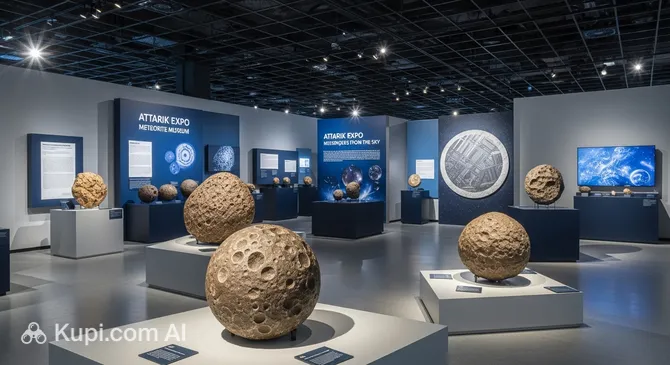
Immerse yourself in the secrets of the Universe without leaving Earth in the unique exhibition space Attarik Expo. This museum, located in the dynamic city of Casablanca, is dedicated to the fascinating world of meteorites and planetology. It serves as a bridge between science and the general public, offering visitors the chance to learn more about the "messengers of the sky" that have fallen to our planet's surface over millennia.
The exposition is not just a collection of stones, but a well-thought-out educational route. Attarik Expo – Messengers from the Sky Meteorite Museum. Illustration.
Source: Kupi.com AI
Traveler photos:
Here science meets the art of presentation: rare meteorite specimens found in the deserts of North Africa sit side-by-side with informative panels telling the story of the origin of the Solar System. It is a place where complex astronomical phenomena are explained in accessible and engaging language.
For tourists, this is a great opportunity to see another side of Morocco—not just as a country with a rich history and culture, but also as an important center of geological discovery. The museum is perfect for both curious adults and children dreaming of space, creating the atmosphere of a real scientific adventure.
Contacts
To make your visit as comfortable as possible, we recommend saving the museum's address in advance. The location is in an accessible part of the city, which makes route planning easier.
How to contact
Contact
Address
Bd des Almohades, Casablanca 20250, Morocco
What to Do
The main activity here is, of course, contemplating the unique meteorites. You can examine stones of extraterrestrial origin up close, appreciate their texture, color, and weight, and learn how chondrites differ from achondrites. The collection includes impressive finds made within Morocco, giving the exhibition a special local flavor.
Beyond inspecting the display cases, visitors can dive into the history of our Solar System's formation. Information stands and graphic materials help understand processes that occurred billions of years ago. This is a great chance to refresh your astronomy knowledge and learn amazing facts about the falls of celestial bodies.
For young explorers and school students, educational elements are often provided to make science lively and understandable. You will be able to not just see the exhibits, but also grasp the scale of the cosmic events that brought these "celestial wanderers" before your eyes.
Getting There
Getting to the museum, located on Boulevard des Almohades, is quite simple, as it is situated in a lively area of the city, not far from the port and the waterfront. The most convenient and common mode of transport for tourists is the famous red petit taxi. They circulate throughout the city, and a trip from the center or the Maarif district will take very little time.
If you prefer public transport, you can use the tram. The nearest stations are within walking distance from the old Medina and the port, from where you can walk to the museum while enjoying the sea breeze. Also, many tourists combine a visit to the exhibition with a walk through the Marina Shopping center, which serves as an excellent landmark.
Nearest city: Casablanca
History & Facts
The history of this exhibition space is closely tied to the region's unique geological status. Morocco is often called a "paradise for meteorite hunters," as valuable specimens of celestial stones are regularly found here in the desert areas. The museum has become an important milestone in the efforts of local scientists and enthusiasts to preserve this natural heritage within the country, preventing its uncontrolled export abroad.
The exhibition is an initiative of the Attarik Foundation, which is dedicated to popularizing science, planetology, and geology among the general public. The organizers aimed to create not just a repository of stones, but an educational platform that would inspire youth to study space.
It is interesting to note that many exhibits presented here have immense scientific value and have been studied by leading global specialists. The exhibition demonstrates the meteorite's journey from the moment it enters the atmosphere to its discovery on the sands of the Sahara, turning dry scientific facts into a captivating story about the connection between Earth and space.
Time Needed
For a full introduction to the Attarik Expo exhibition, most visitors need approximately 1–1.5 hours. This time is quite sufficient to leisurely view all the display cases, study the information stands, and appreciate the unique meteorite specimens.
If you are visiting the museum with children or are a passionate astronomy enthusiast wishing to study every exhibit in detail and watch the accompanying media materials, the visit may last up to two hours. The space is organized compactly, allowing you to get the maximum impression without getting too tired.
Working Hours
Since the museum's exact schedule may change depending on the season or special events, we strongly recommend checking the current opening hours before your visit. Please visit the official website or the organization's social media pages for the freshest information.
Nearby
Exploring the area around the museum can be a great continuation of your day. Casablanca offers plenty of entertainment for family vacations and active leisure enthusiasts. After immersing yourself in the secrets of space, you can switch to more dynamic entertainment by visiting one of the numerous amusement parks located nearby.