Support

Tangier Ibn Battouta Airport

About the Airport

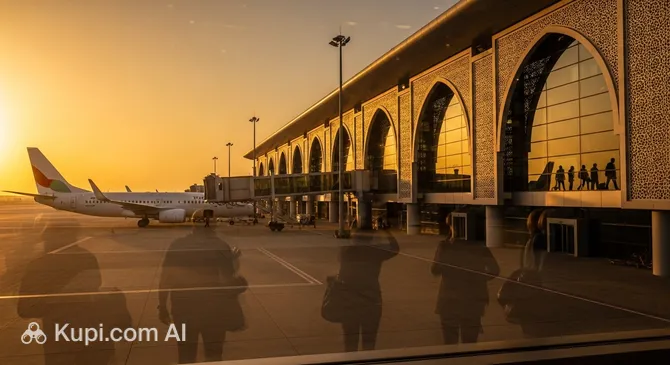
Tangier Ibn Battouta Airport. Source: Kupi.com Binoculars

Tangier Ibn Battouta Airport is not merely a transport hub, but a symbolic gateway at the crossroads of Europe and Africa, where the waters of the Mediterranean Sea and the Atlantic Ocean meet. Named after the legendary medieval traveller born in this region, this airport immerses guests in an atmosphere of Moroccan hospitality and the dynamics of a modern city from the very first minutes. It serves as the ideal starting point for those dreaming of seeing the famous Strait of Gibraltar and exploring colourful Tangier, located just a few minutes' drive away.

IATA Code TNG
ICAO Code GMTT
City Tangier
Distance to centre ~11 km
Status International
Passengers per year over 1.9 million (2023 data)

Features and Advantages of the Airport

Ibn Battouta Airport is distinguished by its compactness, allowing passengers to complete all formalities, from check-in to boarding, quite quickly and without unnecessary stress. Following recent reconstruction and terminal expansion, the building has become more modern, bright, and convenient for the growing flow of tourists.

One of the key features is its convenient location: a trip to the city centre or picturesque beaches takes very little time, and you can get there by special "Grand Taxis" or a rental car. Inside the terminal, travellers are welcomed by cosy cafes, Duty Free shops offering local souvenirs and perfumes, as well as currency exchange points, making arrival in Morocco as comfortable as possible.

Contact Information

  • Official Website: Current information about the airport, flight schedules, and provided services can be found on the portal of the National Airports Office of Morocco (ONDA): www.onda.ma.
  • Information Desk Phone: For enquiries and flight information, please contact: +212 5393-93649.
  • Airport Address: Aéroport Tanger Ibn Battouta, Tanger, Maroc. The airport is located approximately 15 kilometres southwest of the centre of Tangier.
  • Email: For official requests, it is recommended to use the contact form on the ONDA website, as a public email for general questions is not advertised.
  • Social Media: To stay updated with the latest news and changes, you can follow the official accounts of ONDA (Office National Des Aéroports) on social networks.
  • Lost Luggage Information: In case of loss or damage to luggage, you should first contact your airline's representative office; their counters are located in the airport arrivals area.
  • Passenger Support Service: Assistance to passengers is provided at the information desk within the terminal. You may also use the information desk phone number to obtain necessary information.

How to Get to the Airport

There are several ways to get to Tangier Ibn Battouta International Airport (TNG), located approximately 15 kilometres southwest of the centre of Tangier. The choice depends on your budget, time, and comfort preferences. The trip from the city centre usually takes 20-30 minutes, though more time may be required during peak hours.

The most popular and convenient way to reach the airport is by taxi. In Morocco, so-called Grand Taxis are used for trips outside the city and to airports. typically, these are beige-coloured vehicles operating on a fixed fare basis. The cost of a trip from central Tangier to the airport is approximately 100–150 Moroccan Dirhams (MAD). At night, the fare may be slightly higher. To avoid misunderstandings, we recommend agreeing on the price with the driver before starting the journey.

For maximum comfort, especially if you are travelling with family or a large amount of luggage, you can book a private transfer in advance. Many companies offer this service online. The driver will meet you at your hotel or specified address and take you directly to the departure terminal. This option is slightly more expensive than a taxi but guarantees a fixed price and a high level of service.

A more budget-friendly option is public transport. A special express bus runs between the airport and the city's main railway station (Tanger-Ville). This is the cheapest way to get to the airport, but it may not be as convenient if you have a lot of belongings. Buses run according to a schedule, which is worth checking in advance, especially if you have an early or late flight.

If you plan to actively travel around the region, renting a car would be an excellent solution. Most major international and local rental companies have counters both in the city and directly at the airport. The road to the airport is well signposted. For those arriving in their own or rented vehicle, parking is available on the airport territory, offering both short-term and long-term stays.

Terminals and Map

Tangier Ibn Battouta Airport (TNG) is a modern and compact aviation hub that has been significantly expanded and modernised for passenger convenience. Navigating here is quite simple, which makes travelling through Tangier more comfortable.

Structure and Terminals

The airport consists of one main passenger terminal, which serves both domestic and international flights. Thanks to this, there is no need for complex transfers or shuttle buses—all zones are located within a single building. The terminal has two main levels:

  • Ground Floor: The Arrivals Zone is located here. After disembarking, passengers proceed to the passport control hall, then to the baggage claim and customs inspection area. The public arrivals hall houses car rental counters, tourism company offices, and currency exchange points.
  • First Floor: This level is entirely dedicated to the Departures Zone. Here you will find flight check-in counters, security screening points, and passport control. After completing all formalities, passengers enter the secure area with duty-free shops, cafes, and boarding gates.

Navigation and Procedure Times

The airport layout is logical and intuitive. Navigation causes no difficulties thanks to clear signs in Arabic, French, and English. Since all services are concentrated in one building, getting lost is practically impossible.

The time required to complete pre-flight procedures depends on the season and flight load. On average, check-in and screening take from 45 to 90 minutes. It is recommended to arrive at the airport at least 2 hours before a domestic flight and 3 hours before an international one, especially during the peak tourist season (summer), to complete all formalities without rushing.

Airport History

The history of Tangier Ibn Battouta Airport (TNG) is closely linked to the development and modernisation of the entire northern region of Morocco. Originally known as Tangier-Boukhalef Airport, it was founded in 1958. The air harbour received its current name in honour of the famous medieval traveller and explorer Ibn Battuta, who was born in Tangier in the 14th century. This step highlighted the city's rich cultural and historical heritage.

A key moment in the airport's history was the large-scale reconstruction and expansion as part of a national project to modernise airport infrastructure. In 2008, a new modern terminal was opened, significantly increasing the airport's capacity—from 400,000 to over 1.5 million passengers per year. The project also included lengthening the runway and updating navigation equipment, which allowed for the reception of larger aircraft and compliance with international safety standards.

Thanks to modernisation, Ibn Battouta Airport has transformed into an important transport hub, attracting numerous international and budget airlines. This has contributed to the rapid growth of tourism in the region, making Tangier and its surroundings more accessible to travellers from all over the world. Today, the airport continues to play a key role in economic and cultural exchange, serving as an aerial gateway to North Africa, just a few kilometres from Europe.

Services and Amenities

Tangier Ibn Battouta Airport (TNG) offers passengers all the necessary services for a comfortable wait for their flight. Although the airport is not very large, it has everything you need to relax, have a snack, or attend to work matters before departure.

Dining and Shopping. The terminal houses several cafes and eateries where you can have coffee, eat a sandwich, or try local pastries. For those wishing to make purchases, a Duty Free shop is available. Here you will find a standard assortment of perfumes, cosmetics, tobacco products, and souvenirs. There are also small shops selling Moroccan goods and press.

Lounges and VIP Service. In addition to general waiting areas, the Pearl Lounge VIP hall operates at Tangier Airport. It is accessible to business class passengers of certain airlines, as well as Priority Pass holders or for a separate fee. In the lounge, guests are offered beverages, snacks, comfortable armchairs, fresh press, and a quieter atmosphere.

Connectivity and Work. Free Wi-Fi is available throughout the terminal, allowing you to stay connected or work while waiting for your flight. Special stations with sockets and USB ports are provided for charging gadgets, located in the waiting areas.

Financial Services. The airport has bank branches, ATMs, and currency exchange points. It is recommended to exchange a small amount for local Dirhams upon arrival if you do not have cash for taxi payment or minor expenses.

Additional Services:

  • Medical Assistance: A first aid station operates around the clock at the airport.
  • For Passengers with Children: Mother and child rooms equipped with changing tables are available.
  • For Passengers with Reduced Mobility: The airport is fully equipped for the needs of passengers with reduced mobility. Wheelchairs and special assistance during boarding and disembarking are provided (this service must be booked in advance through the airline).
  • Hotels and Business Centres: There are no hotels or conference halls directly within the airport building. However, numerous hotels for any budget are located a few minutes' drive from the terminal. Basic business services, such as internet access and quiet areas for work, can be found in the VIP lounge.

Dining

At Tangier Ibn Battouta Airport (TNG), the choice of dining establishments is not as vast as in giant international hubs, but there is everything necessary to have a comfortable snack before departure or after arrival. The main cafes and restaurants are concentrated both in the public zone (landside), accessible to all visitors, and in the departure zone (airside) after passing passport control.

For those looking for a quick bite, local coffee shops are ideal. Here you can order traditional Moroccan mint tea, aromatic coffee, fresh pastries, sandwiches, and light snacks. This is a great opportunity to enjoy your final moments in Morocco. If you have more time, you can settle into one of the restaurants offering more substantial meals, including both international and local cuisine. Be sure to try dishes with local flair if they are on the menu, such as tagine or Moroccan salads.

Regarding special dietary preferences, almost all food here is Halal by default. Vegetarians will easily find options for themselves, such as vegetable sandwiches, salads, or meat-free pastries. However, vegan and gluten-free dishes might be more challenging to find—the selection will likely be limited, so passengers with such needs are advised to carry a small supply of food.

Prices in airport establishments are generally somewhat higher than in the city. The opening hours of most cafes and restaurants are tied to the flight schedule, so they are open from early morning until late evening, serving passengers of major flights. You will find the main establishments in the main terminal hall, and after passing security in the departure zone, several more points with beverages and snacks await you.

Travel Tips

To ensure your journey from Tangier goes smoothly and without unnecessary worry, follow these simple tips. Ibn Battouta Airport is modern and convenient, but proper preparation will help make your experience even more pleasant.

Arrival Time and Check-in. For international flights, it is recommended to arrive at the airport 2.5–3 hours before departure, and for domestic flights within Morocco1.5–2 hours. This time is sufficient to calmly complete check-in, drop off luggage, and clear security, especially during the high tourist season. If possible, complete online check-in — this will save you precious time.

Passing Control. At the security checkpoint, be prepared to remove laptops and other large electronics from your hand luggage. All liquids (perfumes, creams, gels) must be in containers of no more than 100 ml and packed in a single transparent resealable bag. At customs control, questions may arise regarding new expensive items or large sums of cash — it is better to declare them in advance.

Seat Selection and Hand Luggage. Want beautiful views during takeoff? Choose a window seat. Need more legroom and quick access to the exit? Your choice is an aisle seat. Always pack your most valuable items in your hand luggage: documents, money, medication, gadgets, and chargers. Check your airline's rules regarding the weight and dimensions of hand luggage to avoid extra charges.

Tips for Transfer Passengers. If you have a connecting flight, clarify in advance whether you need to collect your luggage and re-register it for the next flight. Sometimes a repeat security screening is required during transfer; allow extra time for this.

Economy and Comfort. Airport prices are often inflated. Bring an empty water bottle and fill it at a drinking fountain after the security zone. A light snack can also be brought along. To save on taxi fares, use official services with fixed rates or book a transfer online in advance.

If the Flight is Delayed. In case of a flight delay, do not panic. First, find your airline's counter or representative for information. Depending on the length of the wait, the airline is obliged to provide you with beverages, meals, and for long delays — hotel accommodation. Having travel insurance that covers such risks will be your reliable assistant.

Reached the end of the page?

That means the route is fully explored