Support

Misurata Airport

About the Airport

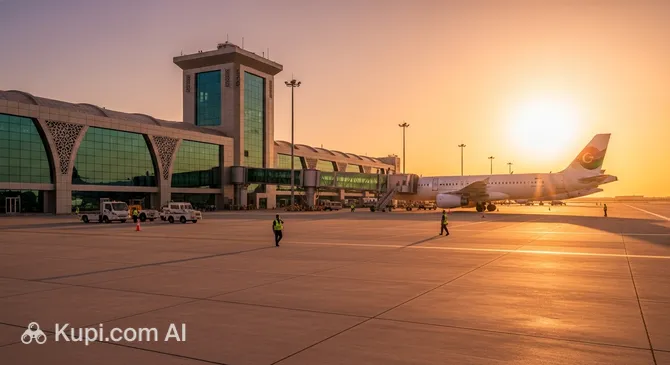
Misurata Airport. Source: Kupi.com Binoculars

Misurata Airport is not merely a transport hub, but a key aerial gateway opening the path to the business and commercial heart of Libya. Located in immediate proximity to the Mediterranean coast, this aviation hub serves as a starting point for those wishing to immerse themselves in the atmosphere of one of North Africa's most dynamic cities. Thanks to its convenient location and constantly developing infrastructure, the airport ensures a comfortable start to the journey for travellers, whether it is a business visit or a tourist exploration of the region.

IATA Code MRA
ICAO Code HLMS
City Misrata
Distance to Centre Approx. 15 km
Status International
Annual Passengers No official data publicly available
Schedule Recommended to check airline websites

Airport Features and Advantages

One of the main distinguishing features of Misurata Airport is its compactness and clear navigation. Unlike huge international hubs where it is easy to get lost, everything here is within walking distance. This allows passengers to significantly save time on pre-flight formalities, check-in, and baggage claim, making the departure and arrival process less stressful.

The airport occupies a strategically important position, located just a few minutes' drive from a major sea port and a free economic zone. This makes it an ideal choice for business travellers for whom logistical accessibility to the city's key business facilities is important. Furthermore, the proximity to the centre of Misrata means that the transfer to your hotel will take very little time.

In recent years, the air harbour has undergone a stage of modernisation aimed at increasing passenger comfort. The updated terminal offers modern amenities necessary for a pleasant wait for a flight, including air-conditioned halls and improved security screening zones. The airport also serves as an important alternative to the capital's aviation hubs, offering flights to a number of international destinations connecting Libya with neighbouring countries.

Contact Information

Contacting representatives of Misurata Airport can be challenging, as not all communication channels operate stably. Below is the most up-to-date contact information collected.

  • Official Website: At the moment, the airport does not have a stably functioning official website. For up-to-date information on flights, it is recommended to contact the airlines directly.
  • Inquiry Service Phone: +218 51 262 7031. Please note that the availability and relevance of the number may change.
  • Airport Address: Misurata International Airport (MRA), Qasr Ahmed Road, Misrata, Libya.
  • Email: A public email address for general enquiries is not provided. Please contact airline representatives for specific questions.
  • Social Media: Official and actively maintained social media pages for the airport have not been found.
  • Lost Luggage Information: For all questions related to lost or damaged luggage, you should contact the Lost and Found service of your airline.
  • Passenger Support Contacts: Passenger support regarding booking, ticket changes, and flight check-in is provided by the airlines.

How to Get to the Airport

Getting to Misurata Airport (MRA) from the city centre of Misrata is quite simple, as it is located not far from the main urban districts. The main modes of transport are taxis and private or rented cars. The travel time usually takes from 15 to 25 minutes depending on traffic conditions.

The most convenient and popular method for tourists is a taxi or private transfer. A car can be found in the city or ordered in advance through your hotel. The estimated cost of a trip from the city centre is about 20–40 Libyan dinars, but it is strongly recommended to agree on the final price with the driver before starting the journey to avoid misunderstandings. This option ensures comfort, especially if you have a lot of luggage, and is the fastest way to reach the terminal.

As for public transport, it is not as developed in Libya as it is in European countries. There are generally no direct bus routes to the airport with a strict schedule. Locals may use shared taxis or minibuses, however, for a tourist without knowledge of the language and local customs, this method can prove difficult and unpredictable. Therefore, it is not recommended for travelling to the airport.

Car rental is an excellent choice for those who value independence and plan to travel around the surrounding areas. You can rent a car at one of the city offices; the cost will vary depending on the car class, rental period, and the conditions of the specific company. If you are travelling in your own or a rented car, parking is provided at the airport. There are zones for both short-term and long-term parking, which is convenient if you are leaving the car for the duration of your absence.

Terminals and Map

Misurata Airport (MRA) is distinguished by a structure that is simple and convenient for passengers. It consists of one passenger terminal, which serves both domestic and international flights. Such compactness significantly simplifies navigation and eliminates the need for long walks between different buildings.

The terminal layout is intuitive. Upon entering the building, you immediately find yourself in the general hall where airline check-in counters are located. After checking in luggage and receiving a boarding pass, passengers proceed to pre-flight security screening and passport control, leading to the departure zone. Since there is only one terminal, the issue of transferring between buildings is irrelevant — all boarding gates are located in a single waiting area.

Departure and arrival zones are clearly demarcated. The Departure Zone, accessible after passing all formalities, is a waiting hall with seats from where passengers proceed to their gates. The Arrival Zone is located in another part of the building: after disembarking the aircraft, travellers proceed to passport control, and then to the baggage claim hall. After collecting suitcases and passing customs control (if necessary), passengers exit into the general meeting hall.

Despite the relatively small size of the airport, it is worth allocating sufficient time for check-in and security screening. It is recommended to arrive at the airport at least 2-3 hours before an international flight and 1.5-2 hours before a domestic one. For navigation, follow the signs, which are usually duplicated in English. In case any questions arise, airport staff are always ready to assist.

Airport History

The history of Misrata Airport (MRA) is a tale of transformation and resilience, closely intertwined with the fate of the city of the same name and all of Libya. Its roots go back to the 1930s when it was founded as a military airbase. Over time, as Misrata turned into an important economic and industrial centre, an acute need for reliable civil aviation connections arose, and the facility's role changed radically.

A turning point in the airport's history was 2011. During a difficult period, it transformed into a vital transport artery connecting the city with the outside world. Humanitarian flights and evacuations were carried out through it, which highlighted its strategic importance. Moreover, for a time, Misurata Airport effectively became the country's main international aviation hub, taking on the main flow of passengers and cargo.

Subsequent years were dedicated to active restoration and modernisation. The airport's infrastructure was significantly improved: a new modern passenger terminal was built, and runways were reconstructed to accommodate larger aircraft. These efforts allowed Misurata Airport to strengthen its international status and launch flights to various destinations, becoming one of the country's key aerial gateways and a symbol of its revival.

Services and Amenities

Misurata Airport (MRA) offers passengers a basic set of services necessary for a comfortable wait for a flight. Although the airport is not large in size, there is everything here to pass the time before departure and solve basic organisational issues related to travelling in Libya.

In the terminal, you will find several cafes and snack bars where you can drink coffee, have a snack with sandwiches, or try local pastries. There is also a small shop selling souvenirs, travel goods, and duty-free products. For passengers preferring enhanced comfort, VIP services may be available; information about these is best checked with your airline representative.

Wi-Fi is usually available on the airport premises, allowing you to stay in touch with loved ones or handle work matters. Power outlets for charging electronic devices are provided in the waiting halls. For financial operations, ATMs are installed in the terminal building, and a currency exchange point operates where you can exchange money for local dinars.

To ensure passenger safety, a medical point operates at the airport, ready to provide first aid. Travellers with children can use the mother and child room. Passengers with reduced mobility are provided with the necessary assistance when moving through the terminal, boarding, and disembarking from the aircraft — for this, it is recommended to notify your airline in advance about the need for accompaniment.

There are no hotels directly on the premises of Misurata Airport. However, travellers can easily find accommodation options in the city of Misrata itself, which is located a few kilometres from the air harbour. Specialised business centres or conference rooms are absent in the airport, so for business meetings, it is better to use the services of city hotels.

Where to Eat

When planning a snack or lunch at Misrata Airport (MRA), it is important to remember that this is a regional airport, and the choice of establishments here is more modest compared to major international hubs. Nevertheless, travellers can find basic options to refresh themselves before a flight.

In the main terminal building, there are typically several small cafes and kiosks. These establishments are located in the general zone (landside), accessible before passing security control. The assortment usually includes sandwiches, pastries, crisps, and sweets, as well as hot drinks such as tea and coffee, and cold ones — juices and bottled water. This is an excellent option for a quick snack if you are short on time.

You are unlikely to find a restaurant with a full menu and waiter service at the airport. It is better to get acquainted with local cuisine in the city itself. Regarding special dietary needs, it is worth noting that most products offered will be halal by default, considering the cultural specifics of Libya. However, specialised vegetarian, vegan, or gluten-free dishes will be extremely difficult to find. Passengers with strict dietary restrictions are recommended to bring food with them.

Prices in local cafes are usually moderate, and opening hours are most often tied to the flight schedule. Establishments are open during the day and during the departure and arrival of aircraft, but one should not count on 24-hour operation. For a full lunch or dinner, it would be more reliable to eat at one of Misrata's restaurants before arriving at the airport.

Traveler Tips

Travelling through Misrata Airport can be more comfortable if you familiarise yourself with a few useful tips in advance. As with most airports, it is recommended to arrive well ahead of time: approximately 2-3 hours before international flights and 1.5-2 hours before domestic ones. This will give you enough time to calmly pass all formalities.

When passing through check-in and security control, have all necessary documents ready: passport, visa (if required for travel to Libya or another country), and flight ticket. Misurata Airport is not a huge international hub, so procedures may go faster than in giant airports, but it is better to be prepared for standard checks.

To save time, use online check-in if your airline provides such a service. This will also give you the opportunity to choose a seat on the plane in advance. For lovers of beautiful views from the window, a window seat is suitable, and for those who value freedom of movement — an aisle seat. Seats at emergency exits often offer more legroom but may have restrictions or require an extra payment.

Regarding hand luggage, adhere to generally accepted rules. Liquids can be carried in containers with a volume of no more than 100 ml, packed in a single transparent bag. Sharp objects, weapons, and flammable substances are prohibited. Be sure to clarify the exact baggage and hand luggage allowances with your airline, as they may differ.

If you have a connecting flight, find out in advance if you will need to collect your luggage and check in for the next flight again. When passing customs control, be prepared to declare valuable items or large sums of cash in accordance with local regulations. This is a standard procedure that helps avoid misunderstandings.

To save money, avoid unplanned purchases at the airport and exchanging currency at an unfavourable rate. It is better to bring some local money with you or take care of the exchange in advance, before arriving at the airport.

In the event of a flight delay or cancellation, the first thing to do is contact your airline representative. They will provide up-to-date information on the flight status and explain further actions, including the possibility of providing meals or hotel accommodation depending on the duration of the delay and the carrier's rules. Remain calm and keep all documents at hand.

Reached the end of the page?

That means the route is fully explored