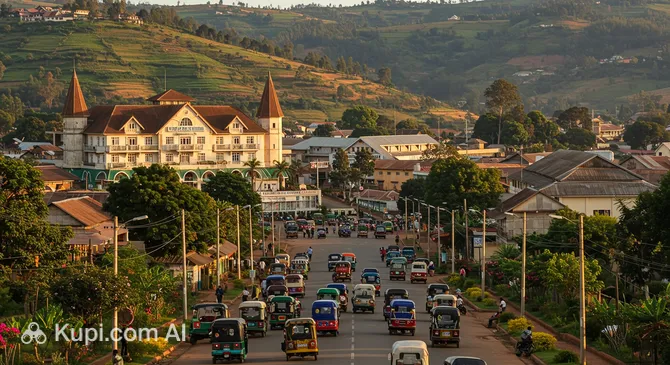
The public transport system in Antsirabe is fundamentally different from what residents of European metropolises are used to. You won't find a subway, trams, or large municipal buses with electronic boards here. The city lives in its own unique rhythm, and moving around it is not just a way to get from point A to point B, but a real cultural experience that immerses you in the atmosphere of local life.
The undisputed king of the roads and symbol of the city is the "pousse-pousse"—a traditional two-wheeled carriage pulled by a running person. This is the most common, accessible, and colorful type of transport, operating 24/7. Thousands of these rickshaws are registered in the city. For faster trips, there are cyclo-pousse (where the passenger carriage is attached to a bicycle) as well as motorized tricycles called "tuk-tuks" or "bajajs". They cost a bit more but move significantly faster than the foot-drawn carriers.
The role of conventional buses is filled by "taxi-be"—minibuses running on specific routes connecting the center with suburbs and residential areas. They don't have a fixed schedule: departure occurs as the cabin fills up. This is the cheapest way to get around, popular with locals, but for a tourist, it may seem difficult due to the lack of clear route maps and overcrowding during peak hours. Stops are often informal, at the request of passengers.
The payment system in Antsirabe is extremely simple and conservative: cash only. No travel cards, mobile apps, or validators exist here. Payment is made directly to the driver or rickshaw at the end of the trip. It is extremely important to have small bills with you, as drivers do not always have change for large banknotes.
The main rule of using transport, especially rickshaws and taxis, is to agree on the price in advance. There are no fixed tariffs (meters), and the cost depends on the distance, time of day, and your bargaining skills. For tourists, the initial price may be inflated, so polite haggling is the norm. A typical trip through the center on a "pousse-pousse" costs a symbolic amount, but in the rain or at night, the price increases.
Standard taxis (regular cars) are also available in the city, but they aren't as numerous as rickshaws. They are usually booked for trips with luggage, transfers to the station, or evening outings to restaurants. There are no ride-hailing apps (like Uber) here; a car can be found at special stands in the center or by asking the hotel reception to call one.
For exploring the surroundings independently, renting a bicycle or motorbike is a great alternative. Many hotels and guest houses offer this service. This is an ideal option for trips to the volcanic lakes of Tritriva and Andraikiba, allowing you not to depend on drivers and enjoy the scenery at your own pace. Car sharing is non-existent in the city; you can only rent a car with a driver through travel agencies.