Support

Kwajalein Airport

About the Airport

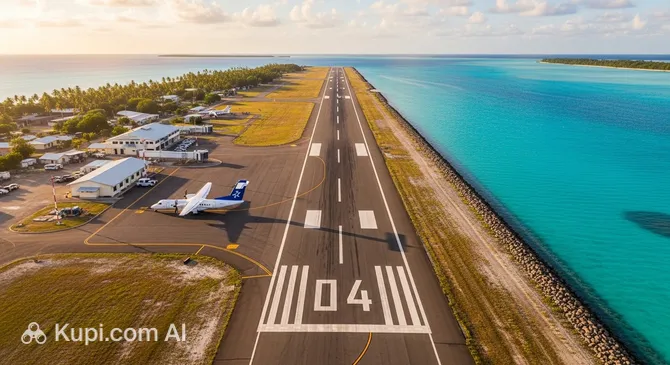
Kwajalein Airport. Source: Kupi.com Binoculars

Kwajalein Airport is not just a transport hub, but a unique point on the map where strict military discipline coexists with the relaxed atmosphere of a tropical paradise. Located within a restricted U.S. Army base, this airfield serves as a key link in the famous "Island Hopper" route, connecting tiny Pacific atolls with the wider world. For the residents of Ebeye city and the garrison staff, this is the main aerial gateway, while for transit tourists, it offers a rare opportunity to view the stunning turquoise lagoons of the Marshall Islands from above.

IATA Code KWA
ICAO Code PKWA
City Ebeye (connected by ferry service)
Distance to Center ~4 km (water route to Ebeye Island)
Status Military with restricted civilian access
Annual Passengers Statistics not disclosed (military facility)
Schedule Check the airline's website

Features and Advantages of the Airport:

Kwajalein Airport differs significantly from typical civilian aviation hubs. Its uniqueness lies in its status and location, creating a distinct experience for every traveler.

  • Part of a Legendary Route: The airport is one of the stops on United Airlines' unique "Island Hopper" flight. This is the only opportunity for civilians to reach this remote atoll on a commercial aircraft.
  • Incredible Landing Views: Since the runway occupies a significant portion of the narrow island, passengers are treated to breathtaking panoramas of coral reefs and the endless ocean literally under the aircraft's wing during descent.
  • Highest Level of Security: Due to its status as an active U.S. military base, controls here are conducted very thoroughly, ensuring maximum safety for flights and stays within the territory.
  • Ease of Navigation: The terminal is extremely compact and functional. It is impossible to get lost here, and all necessary procedures, despite their strictness, are conducted in an organized manner.

Contact Information

It is important to understand that Kwajalein Airport (Bucholz Army Airfield, KWA) is primarily an active U.S. military base within the Marshall Islands, serving base personnel and atoll residents, including the city of Ebeye. Access here is strictly controlled, and standard public contacts for commercial airports are not available. All communication is usually conducted through official military channels or airlines authorized to operate flights.

Below is general contact information considering the specific nature of the facility:

  • Official Website: There is no separate commercial website for passengers. Information for authorized visitors is posted on the U.S. Army Garrison-Kwajalein Atoll portal.
  • Help Desk Phone: There is no direct public phone number for inquiries. To make contact, you must use channels provided by your inviting party or contact the airline.
  • Address: Bucholz Army Airfield, Kwajalein Island, Kwajalein Atoll, Republic of the Marshall Islands.
  • Email: A public email address for general inquiries is not available.
  • Social Media: Official updates can be tracked on the Garrison's Facebook page: U.S. Army Garrison-Kwajalein Atoll.
  • Lost Luggage Information: For all issues related to lost or damaged luggage, please contact the airline that operated your flight directly (e.g., the United Airlines representative office).
  • Passenger Support Contacts: Support services are provided directly by the air carriers authorized to operate flights to Kwajalein.

How to Get to the Airport

Getting to Kwajalein Airport (KWA) from the city of Ebeye is a task with specific nuances, as the airport is located on the separate island of Kwajalein, which is an active U.S. military base, while the main residential hub is Ebeye Island. The primary mode of transport between these two islands is water transport.

Water Transport (Ferry)

The main and practically the only way for most travelers to get from Ebeye Island to Kwajalein Island, where the airport is located, is by ferry. Ferries run between the islands on a schedule, providing a daily link for locals working on the base and authorized visitors. The ferry ride takes approximately 20-30 minutes. The ticket cost is low, but it is important to check the current schedule and prices on-site, as they may change.

Transport on Ebeye Island

Ebeye Island itself is very small, and most of it can be covered on foot. To get to the ferry dock, you can either walk or use a local taxi service. Taxis here are usually small minibuses or pickup trucks that circulate around the island. The trip is generally quick and inexpensive. There are no public buses in the conventional sense on Ebeye.

Transport on Kwajalein Island

After arriving by ferry on Kwajalein Island, the airport terminal is within walking distance of the dock. Most people cover this distance on foot, which takes about 10-15 minutes. Movement on Kwajalein Island is strictly regulated, and the free use of taxis or car rentals for non-residents of the base is not provided.

Car Rental and Parking

Car rental for tourists is not a common service on Ebeye, and certainly not on Kwajalein. Due to the specific nature of Kwajalein as a closed military territory, parking at the airport is designated exclusively for base personnel and residents. This option is not available to tourists.

General Route and Recommendations

Thus, the standard route to Kwajalein Airport looks like this:

  1. A walk or short taxi ride to the ferry dock on Ebeye Island.
  2. A ferry ride to Kwajalein Island.
  3. A walk from the dock to the airport building.
The total travel time will be about one hour, excluding the ferry waiting time. It is critically important to remember that access to Kwajalein Island and, consequently, the airport is strictly limited. Before traveling to the Marshall Islands, ensure you have all necessary permissions to visit the base, obtained in advance through your sponsor or employer.

Terminals and Map

Kwajalein Airport (KWA), also known as Bucholz Army Airfield, is a small and functional aviation hub serving mainly U.S. military base personnel and a limited number of commercial flights. Its structure is extremely simple, making navigation intuitive even for those arriving here for the first time.

The airport has just one small terminal that serves both departing and arriving passengers. The terminal building is very compact, and it is virtually impossible to get lost inside. All key zones—check-in counters, security screening, the waiting lounge, and baggage claim—are located in the same room or within walking distance of each other. There are no complex walkways, multi-level maps, or needs for shuttles to move around.

Departure and Arrival Zones are clearly defined but located close together. Upon entering the terminal, you will immediately see the check-in counters. After checking in and dropping off luggage, passengers proceed to security screening, after which they enter a small waiting area before boarding. The arrival zone is a simple room with a baggage claim belt. Thanks to the compactness, the path from the aircraft stairs to the terminal exit takes minimal time.

Check-in and screening procedures generally proceed quite quickly due to low passenger traffic. However, since the airport is located on an active military base, security matters are taken very seriously here. It is recommended to arrive at the airport approximately 1.5–2 hours before departure to complete all formalities without rushing. Overall, navigating the terminal will not cause difficulties: simply follow the few signs and instructions from the staff.

Airport History

The history of Kwajalein Airport, known to the military as Bucholz Army Airfield, is closely intertwined with the events of World War II. The first runway at this location was built by Japanese armed forces in the early 1940s as part of strengthening their positions in the Pacific. In February 1944, the island became the scene of the fierce Battle of Kwajalein, resulting in it coming under U.S. control. American engineering troops not only quickly restored the damaged airfield but also significantly expanded it, turning it into an important airbase for further offensives.

After the war ended, the airport's role changed dramatically. It became an integral part of the American missile range, known today as the Ronald Reagan Ballistic Missile Defense Test Site. Throughout the Cold War and up to the present day, the airfield has provided and continues to provide logistical support for military and scientific programs related to ballistic missile and missile defense system testing. This is its primary and most well-known function.

Despite its strict military status, Kwajalein Airport plays a key role in the civilian life of the Marshall Islands. It is one of the most vital stops on United Airlines' legendary "Island Hopper" route, which links Hawaii to Guam via several remote Micronesian islands. For thousands of residents of the neighboring island of Ebeye, many of whom work on the base, this airport is the main gateway to the outside world and a vital transport artery.

One of the most remarkable facts is the unique combination of functions. Kwajalein Airport is one of the few places in the world where regular commercial flights of a major international airline land on an active and strictly guarded U.S. military base. The airfield infrastructure is constantly modernized to accommodate modern aircraft, allowing it to remain simultaneously a strategic military facility and an indispensable civilian hub for the entire region.

Services and Facilities

When planning a trip through Kwajalein Airport (KWA), it is important to understand its specific nature. It is primarily a U.S. Army airfield (Bucholz Army Airfield) with limited access for civilians. Therefore, the range of services for passengers here differs significantly from what major international airports offer, and many customary amenities may be missing.

Dining and Shopping: There are no traditional restaurants, food courts, or duty-free shops at Kwajalein Airport. Passengers may have access to a small snack bar or vending machines with snacks and drinks. The selection is extremely limited, so it is recommended to bring everything you need with you.

Lounges and VIP Service: Standard business lounges or VIP lounges for commercial passengers are absent. The waiting area consists of a basic room with seating. Access to any specialized recreation areas is generally reserved for military personnel.

Infrastructure and Connectivity: Opportunities to connect to Wi-Fi may be limited or unavailable to the general public. The availability of power outlets for charging electronic devices is also not guaranteed, so it is worth bringing a portable power bank. Banking services, including ATMs and currency exchange points, are not provided in the terminal. The official currency in the Marshall Islands is the US Dollar.

Special Services: Basic facilities for passengers with disabilities should be provided in accordance with American standards; however, specialized services or escort staff may not be available. There are no dedicated play areas for children. Medical assistance is limited to basic first aid.

Accommodation and Business: There are no hotels or business centers within the airport grounds. The only accommodation option on the atoll is the Kwajalein Lodge, but it is intended mainly for official visitors and base personnel, and requires prior permission for booking. Facilities for holding business meetings or conferences for transit passengers are absent.

Dining Options

When planning a trip through Kwajalein Airport (KWA), it is important to consider its specifics. Being primarily a military facility rather than a major commercial aviation hub, dining options here are extremely limited and not comparable to what standard international airports offer.

In the passenger terminal of Kwajalein Airport, there are no restaurants, cafes, or juice bars. The infrastructure for passengers is very basic. Travelers should not count on a full meal or even hot coffee. The only available options are typically vending machines offering a small selection of snacks (chips, chocolate bars) and soft drinks. Specialized dietary options (such as Halal, vegetarian, gluten-free, etc.) are not available here.

The main dining establishments are located on the Kwajalein military base itself; however, access to them for transit passengers is usually restricted. Therefore, the best strategy is to eat beforehand, prior to arriving at the airport, or to bring a sufficient amount of food and water with you for the waiting time. This is the most reliable way to avoid inconveniences related to the lack of service in the terminal building.

Travel Tips

Traveling through Kwajalein Airport, which serves the city of Ebeye and is an important transport hub in the Marshall Islands, requires some preparation. Given its special status, it is worth familiarizing yourself with key tips to ensure your trip goes smoothly and without unnecessary hassle.

Arrival Time and Check-in. It is recommended to arrive at the airport at least 2-3 hours before your flight's departure. This will give you enough time to go through check-in and security procedures, which may be stricter than at ordinary civilian airports. Ensure in advance that you have all necessary documents: passport, visa, and any other permits that may be required to visit Kwajalein Atoll.

Security Control and Hand Luggage. Standard international rules for carrying liquids in hand luggage (containers up to 100 ml, packed in a transparent bag) apply here as well. Sharp objects, weapons, and flammable substances are prohibited. Always check your airline's current requirements before traveling. To save time, check in online if the airline offers this option.

Choosing a Seat on the Plane. If you want to enjoy breathtaking views of coral atolls and the endless Pacific Ocean, choose a window seat. For greater comfort and the ability to stand up freely during the flight, an aisle seat would be more suitable.

Transit Passengers and Customs Control. If you have a connecting flight, check with the airline whether you need to collect your luggage and check in again. Customs control in the Marshall Islands pays special attention to protecting the unique island ecosystem. Be prepared to declare all imported goods, especially food, plants, and animal products. Violation of the rules may lead to fines.

Economy and Flight Delays. Prices for food and drinks at airports can be high, or availability limited. To be prepared, bring an empty water bottle that can be filled after passing security, and some light snacks. In case of a flight delay, remain calm. Contact your airline representative for information on the flight status and possible options (provision of meals, accommodation). Have a book, a charged power bank, or downloaded movies with you, as leisure opportunities in the waiting area may be limited.

Reached the end of the page?

That means the route is fully explored