Support

Old Hidalgo Pumphouse Museum and World Birding Center

About

Nestled within picturesque landscapes where history and nature converge, you will find the Old Hidalgo Pump House Museum and World Birding Center. Located near the city of Reynosa, this unique site is a harmonious blend of industrial heritage and an ecological sanctuary in Mexico.
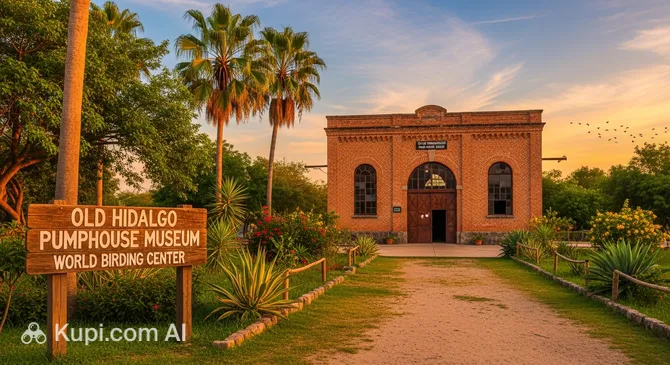
Old Hidalgo Pumphouse Museum and World Birding Center
Old Hidalgo Pumphouse Museum and World Birding Center. Иллюстрация. Источник: Kupi.com AI

In the early 20th century, this pump house was the "heart" of the region, transforming arid lands into a fertile valley by drawing water from the Rio Grande. Today, the complex is listed on the U.S. National Register of Historic Places and is one of the few locations where original period equipment is preserved, including a massive triple expansion steam engine.

Beyond its historical significance, the station's grounds have become a vital part of the World Birding Center. Ideal conditions have been created here for observing migratory birds and rare butterfly species. This destination attracts both technology enthusiasts eager to see the power of steam machinery and eco-tourists seeking peace among well-kept gardens and nature trails.

Contacts

For those planning a visit to this unique historical complex, the following contact information will be useful. You can reach the administration by phone or through the official City of Hidalgo portal. Below are the primary contact details and the exact address of the site.

How to contactContact
Address902 S Second St, Hidalgo, TX 78557, США
Phone+1 956-843-8686
Websitecityofhidalgo.net

What to Do

The highlight of any visit to the museum is seeing the colossal triple expansion steam engine. You can explore its design and scale in detail, while information panels and guide stories help you understand how this behemoth sustained life throughout the valley. Exhibits featuring archival photos and personal stories from workers literally transport you back a century.

Nature lovers will find plenty to do: the grounds offer over 4 miles of paved trails for walking and cycling, with bikes available for rent. Be sure to visit the butterfly gardens and bring binoculars for birdwatching—the area is renowned for its biodiversity. Photographers will appreciate the aesthetic of rusted metal set against the vibrant greenery of tropical plants.

For a deeper dive, you can book a trolley tour or join one of the regularly scheduled guided tours. For those who prefer independent relaxation, there are cozy observation areas and trails where the morning hours are particularly pleasant for enjoying the quiet and birdsong away from the city noise.

Getting There

Finding the complex is quite simple: it is located at 902 S Second St in Hidalgo, in the immediate vicinity of the Reynosa Bridge. If you are planning a trip by car from nearby major hubs like McAllen, the journey takes about 15–20 minutes via highway US-281 or I-2. Free parking is provided for visitors on-site.

For those who prefer public transport, Valley Metro buses serve Hidalgo, from where you can walk to the museum. You can also use taxi services directly from the center of Reynosa or other border areas, ensuring a comfortable and quick transfer.

Ближайший город: Reynosa

History & Facts

The history of this site began in 1909–1910, when the pump house was built for the commercial irrigation of arid lands. It was thanks to this powerful irrigation system that the region transformed into the flourishing "Magic Valley," becoming a major agricultural hub. The massive steam engines operated here until 1983, when they were replaced by modern electric pumps.

An interesting turn in the station's fate occurred in 1933, when a catastrophic flood altered the course of the Rio Grande, moving it half a mile away. To prevent the station from being left without water, engineers had to get creative and dig a long intake channel. This episode became a legendary example of the human effort to preserve vital infrastructure.

After decades of service, the site risked falling into ruin, but thanks to the efforts of the local community, the building was saved and restored. In 2003, the museum opened its doors, and today it not only preserves the memory of technical progress but is also part of the World Birding Center network. This symbolizes the region's important transition from the active exploitation of natural resources to their careful conservation.

Time Needed

To fully explore the museum's exhibits and see its main technical attraction—the steam engine—usually takes about 1 hour. However, given the extensive natural area surrounding it, most visitors should set aside 2 to 3 hours for their visit.

If your plans include more than just history, such as birdwatching or a long walk along the trails, allow for half a day. Extra time may be needed for photography enthusiasts or those who choose to rent bicycles to explore all 4 miles of the complex's scenic paths.

Working Hours

The museum is typically open to visitors from Monday to Friday, 8:00 AM to 5:00 PM. On Saturdays and Sundays, the main exhibit may be closed; however, access to nature trails and outdoor features is sometimes possible on an individual basis.

As schedules can vary by season or for special events, we recommend checking the official City of Hidalgo website before your trip. It is also best to book guided museum tours in advance to ensure a guide is available.

DayWorking hours
понедельник08:00–17:00
вторник08:00–17:00
среда08:00–17:00
четверг08:00–17:00
пятница08:00–17:00
субботаЗакрыто
воскресеньеЗакрыто

Nearby

Exploring the surroundings of the old pump house will allow you to dive even deeper into the history and culture of the border region. Nearby are many interesting sites, from historic districts to unusual art monuments, that will add memorable experiences to your trip.

NameDistance
Whataburger0.7 km
World's Largest Killer Bee1 km
Holiday Inn Reynosa Zona Dorada1.4 km
Centro Shopping District2 km
Capellini Ristorante2.3 km
El Gallo de Oro3.9 km
Muelle 57 Restaurant4.4 km

Reached the end of the page?

That means the route is fully explored