Support

Kharkhorin

About

Kharkhorin is a legendary place where the grandeur of the past intertwines with the silence of the endless steppes. Located in the picturesque valley of the Orkhon River, this city was once the center of the world—the ancient capital of the Mongol Empire, Karakorum. Today, it is a cozy administrative center that attracts travelers with its unique energy and the opportunity to touch the origins of nomadic civilization.

Geographically, the city is located about 370 kilometers southwest of Ulaanbaatar, rising 1,600 meters above sea level. Here, in the heart of Mongolia, about 15,000 people live. The climate in this area is harsh but beautiful in its own way: sunny days are replaced by cool nights, and the surrounding landscapes—from green valleys to hilly horizons—create the perfect backdrop for getting to know the authentic life of the country.
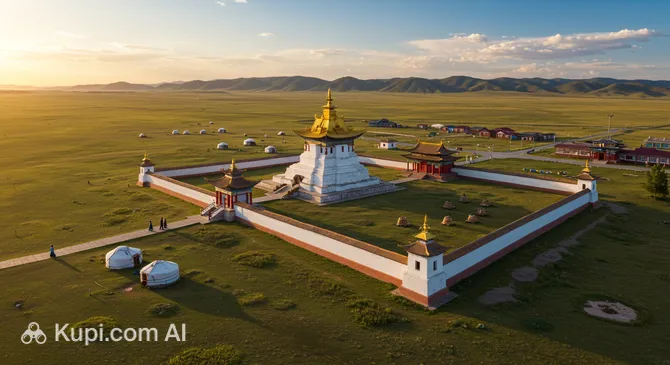
Kharkhorin. Illustration.
Source: Kupi.com AI

The main value of this place is its incredible heritage. It was here in the 13th century that Genghis Khan laid the foundations of the city, which became a crossroads of cultures and trade routes. By studying the centuries-old history of Kharkhorin, you will learn how a medieval metropolis grew from a nomad camp. Although only ruins remain of the ancient palaces, the spirit of that time lives on in the famous stone turtles and the majestic walls of the Erdene Zuu Monastery, built from the stones of the destroyed capital.

A trip to Kharkhorin will give you unforgettable impressions. It is a chance to see the harmonious neighborhood of Buddhist shrines and simple yurts, hear the sound of the wind in the Orkhon Valley, and feel true freedom. The city awaits those who seek not just relaxation, but a deep immersion into the culture and mysteries of the Great Steppe.
Weather Overview

The climate in Kharkhorin is subarctic/continental, which is due to its location deep within the continent and its elevation above sea level. Seasonal contrasts are pronounced here: winters are long and harsh, and summers are short but pleasant. Expect a warm summer with occasional rain and cold, dry winters.

The coldest month is January, when the average temperature drops to -16.9°C, and night frosts can reach -23.8°C. There is practically no precipitation in the winter period: from November to March, the number of rainy or snowy days is minimal. Spring arrives gradually, and by May, the air warms up to an average of 10.3°C, although nights remain cool.

The peak of the tourist season falls in the summer. July is the warmest month with an average temperature of 18.0°C and maximums up to 23.8°C. However, summer is also the wettest time of year: there can be up to 15 rainy days in July. Autumn sets in quickly: by September, the average temperature is 10.5°C, and by November, it goes deep into the negatives. When planning your trip, be sure to check the current weather in Kharkhorin to bring suitable clothing.

Average monthly temperature

Average monthly precipitation

Interesting Facts

In addition to its main attractions, Kharkhorin holds many fascinating secrets that make it one of the most mysterious places in Asia. The history of this city is full of amazing details connecting the era of the great khans with the present day.

  • Cosmopolitan metropolis of the Middle Ages. Founded by Genghis Khan in 1220, the city quickly grew into a thriving center on the Silk Road. In the 13th century, it was a true metropolis where merchants, craftsmen, and ambassadors from different parts of the world lived side by side, and luxurious palaces stood next to temples of various faiths.

  • Stone guardians of eternity. One of the hallmarks of the area is the giant stone turtles. These ancient sculptures, symbolizing longevity and protection, once marked the borders of the imperial capital. Today, they continue to "guard" the surroundings, remaining silent witnesses to former greatness.

  • A shrine on the ruins of an empire. The famous Erdene Zuu Monastery, founded in the 16th century, was built directly on the foundations and from the materials of the destroyed Karakorum. Its impressive wall, decorated with 108 snow-white stupas, actually consists of stones that were once part of the palaces of the Golden Lineage of the Genghisids.

  • Archaeological treasure trove. The outskirts of the city, specifically the Khushuu Tsaidam area, hide unique monuments of the Turkic era. Ancient stelae with runic inscriptions from the 8th–9th centuries have been preserved here, making the region a true Mecca for archaeology enthusiasts wishing to look into the pre-Mongol period of steppe history.

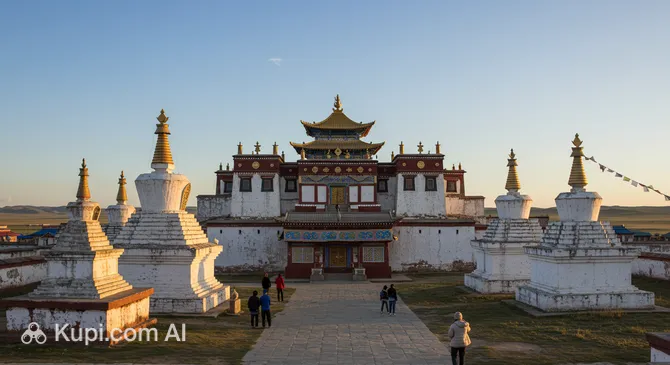
Erdene Zuu Monastery. Illustration.
Source: Kupi.com AI

Traveler photos:

How to Get There

Kharkhorin, located in the picturesque Orkhon River Valley, does not have its own airport or train station, so for most travelers, the journey here lies through the country's capital. We recommend studying all the options in advance and reading more about how to get to Kharkhorin to choose the most convenient route that fits your budget and time.

The main gateway to the region is Chinggis Khaan International Airport (IATA: UBN), located in the Khushig Valley, near Ulaanbaatar. Since there is no airport in Kharkhorin itself, tourists must first fly to the capital, which is located about 360 kilometers to the east. The airport accepts flights from many major cities in Asia and Europe, serving as the main transport hub of Mongolia.

A high-quality asphalt road leads from Ulaanbaatar to the former imperial capital, which is a great rarity for the Mongolian hinterland. The most popular and affordable way to cover this distance is to use the daily scheduled buses departing from the Dragon Bus Terminal in Ulaanbaatar; the journey time is about 6–7 hours. For greater comfort and freedom of movement, you can hire a private car with a driver or use a taxi service, which will reduce the trip to 4–5 hours and allow you to enjoy the steppe landscapes with the possibility of making stops.

Main Attractions

Kharkhorin, once known as Karakorum, is not just a city, but a living page of history, the former capital of the great Mongol Empire. Today, travelers come here to touch the past and see unique monuments preserved in the Orkhon River Valley, which is listed as a UNESCO World Heritage site.

The main jewel of the city, without a doubt, is the Erdene Zuu Monastery. This is the first and largest Buddhist monastery in Mongolia, founded in the 16th century. Its powerful walls, decorated with 108 stupas, surround a territory with several temples where you can see magnificent examples of Buddhist art. Notably, the monastery was built from the stones of the destroyed capital of Karakorum, making it a direct heir to the ancient city.

Erdene Zuu Monastery. Illustration.
Source: Kupi.com AI

Traveler photos:

To gain a deeper understanding of the history of these places, be sure to visit the Karakorum Museum. This modern museum complex offers a fascinating exhibition dedicated to the history of the Mongol Empire and the excavations of the ancient capital. Numerous artifacts found by archaeologists are collected here: from coins and ceramics to fragments of buildings and household items. A visit to the museum perfectly complements a walk through the monastery, allowing you to imagine what the legendary Karakorum looked like and how it lived during its heyday.

Local Cuisine

A gastronomic journey to Kharkhorin is an immersion into the culinary traditions of nomads that have remained unchanged for centuries. The local cuisine is simple, filling, and perfectly adapted to the harsh conditions of the steppe. You shouldn't look for exquisite fine-dining delicacies here; instead, honest and natural food prepared with soul and sincere hospitality awaits you.

Kharkhorin is the ideal place to get acquainted with authentic Mongolian cuisine, the basis of which is meat. The main dish that every guest must try is considered to be buuz—the country's signature dish. These are juicy steamed dumplings filled with minced mutton or beef with onions and spices. Their recipe is passed down from generation to generation, and the hot broth inside warms you up perfectly. For lovers of heartier and crunchier dishes, it's worth paying attention to khuushuur—fried meat pastries that are often found as street food.

For those interested in the nomadic way of life, an interesting discovery will be borts—dried meat that locals traditionally take with them on long journeys. This product, dried in the wind, can be stored for a very long time and serves as a base for nutritious soups. Trying it means touching the history of life on the move in the Great Steppe.

Among the drinks, a special place is occupied by airag—a refreshing drink made from fermented mare's milk. It is especially popular in summer, has a specific sour taste, and perfectly quenches thirst. Airag symbolizes Mongolian hospitality: if you are offered a bowl of this drink in a family yurt or at the market, it is a sign of special respect.

The food culture in the city is closely intertwined with tradition. In Kharkhorin, gastronomic evenings are often organized where you can try dishes prepared according to ancient recipes. It is especially atmospheric to taste local delicacies in a real ger, enjoying the view of the steppe and the sunset over the Orkhon River. It is in such a setting that simple food reveals new flavors and gives unforgettable impressions.

Travel Tips

Traveling to the ancient capital of the nomads requires special preparation, as a harsh climate exists alongside unique traditions that differ from familiar European norms. To ensure your trip to Kharkhorin is as comfortable as possible and leaves only warm memories, we have compiled a list of the most important practical recommendations for you.

  1. Clothing and Essentials. The weather in the steppe is unpredictable: even in the height of summer, it can be hot during the day, while the temperature drops sharply at night. Be sure to bring layered clothing: a t-shirt, a fleece jacket, and a windproof jacket. Shoes should be comfortable and closed (sneakers or trekking boots), as you will have to walk on dirt and grass. Remember the dress code: for visiting Buddhist temples, shoulders and knees must be covered.

  2. Transport. The city is small, and it is best to move around the center on foot—this will allow you to feel the atmosphere of the place. There is no public transport (buses) within the city. For trips to remote attractions, you can use the services of private taxi drivers who usually stand in the center near the market, but the price must be negotiated in advance. A great option for an authentic experience is renting a bicycle or a horse.

  3. Finances. Bank cards are accepted at the museum, large tourist camps, and some supermarkets, but for everything else (market, small cafes, souvenirs from street vendors), you will need cash tugriks. There are ATMs in the city, but they do not always work or may run out of cash, so it is better to withdraw money in advance in large cities.

  4. Health and Safety. Kharkhorin is a safe place, but you should beware of stray dogs that often gather in packs; do not try to pet or feed them. There are pharmacies, but they do not work around the clock, and the assortment is basic, so bring your own first-aid kit. The sun here is very active due to the altitude—SPF cream and sunglasses are mandatory even in cloudy weather.

  5. Communication. English is mostly understood by guides and employees of large tourist camps. It is easier to explain yourself to local residents with gestures or using an online translator (we recommend downloading the Mongolian offline language pack in advance). SIM cards from local operators (Unitel, Mobicom) provide decent mobile internet within the city limits.

  6. Local Etiquette. If you are invited into a ger, remember the main rule: never step on the threshold, as this is considered disrespectful to the hosts. Inside the dwelling, it is customary to move clockwise. Accepting treats (especially a bowl of tea or airag) and passing items should be done with the right hand or both hands, supporting the left elbow with the right hand.

  7. What to Avoid. It is strictly forbidden to throw trash into the fire (whether it's a campfire or a stove in a ger)—fire is sacred to Mongolians. Also, avoid loud talking and laughter inside the monastery temples, and try not to turn your back to the altar and Buddha statues, backing away from them while facing forward.

  8. Additional Tip. Street lighting in Kharkhorin is poorly developed, and in steppe camps, there is complete darkness at night. Be sure to bring a powerful flashlight for evening walks and a power bank, as the number of outlets in gers is often limited.

Kharkhorin is a place where domestic comfort sometimes gives way to the grandeur of history and pristine nature. By following these simple tips and showing respect for local customs, you will be able to avoid minor troubles and fully immerse yourself in contemplating the endless landscapes of Mongolia.

Entertainment & Nightlife

The nightlife in Kharkhorin is strikingly different from what residents of large metropolises are used to. Here you won't find noisy districts with neon signs, pulsing nightclubs, or streets filled with bars. Evening leisure in the ancient capital is primarily an immersion in the silence of the Great Steppe, contemplating the incredibly starry sky, and cozy gatherings by the fire, which give a sense of peace and unity with nature.

The center of evening activity is not city establishments, but tourist ger camps, located both within the city and in the picturesque Orkhon River Valley. This is where life bustles after sunset. The restaurants at the camps often host cultural programs: you can hear throat singing, the playing of the morin khuur (a national bowed instrument), and try traditional dishes. The atmosphere here is as relaxed and friendly as possible, there is no dress code, but warm clothing is a must—nights in the steppe are cold even in summer.

If we talk about classic entertainment, it is concentrated here mainly during the daytime and is cultural and educational in nature. The main point of attraction is the legendary Erdene Zuu Monastery. Although it closes to visitors in the evening, a walk along its majestic walls at sunset is a special kind of aesthetic pleasure available to every tourist.

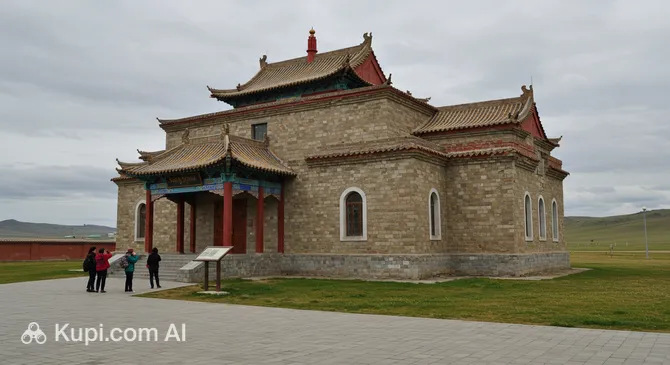
Kharakhorum Museum. Illustration.
Source: Kupi.com AI

Traveler photos:

For those who want to understand the history of the place more deeply before their evening rest, the Karakorum Museum is a must-visit. This is a modern complex where you can see artifacts from the 13th century. It is worth considering that museums and souvenir shops close quite early, usually around 5:00 PM – 6:00 PM, so it is better to plan your cultural program for the first half of the day.

As for safety and practical tips, Kharkhorin is a quiet city, but the streets here are poorly lit. If you decide to take a night walk outside your camp, be sure to bring a powerful flashlight. Beware of stray dogs, which may form packs. There is no public transport or standard taxi services at night. If you need to get from a restaurant to your hotel, it's best to arrange a transfer with your accommodation staff in advance or ask them to call a local driver.

Parks & Museums

The cultural landscape of Kharkhorin and its surroundings is, in essence, one giant open-air museum, where the grandeur of nature harmoniously intertwines with historical heritage. In this city, you will not find the usual European parks with manicured lawns and fountains; however, the green zones here are replaced by picturesque valleys and hills from which breathtaking panoramas open up, and the museum collections store unique evidence of the former power of the Mongol Empire.

The role of the main natural park here is played by the Orkhon River Valley, included in the UNESCO World Heritage list. This is an ideal place for leisurely walks, picnics on the shore, and contemplating sunsets. Green meadows where herds of yaks and horses graze create a peaceful atmosphere that allows you to take a break from the hustle and bustle. Another important "green" point of attraction is the hill with the Monument of Mongol States. The climb to it is a pleasant physical activity rewarded with the best panoramic view of the entire city, the bends of the river, and the monastery walls. Paths and observation platforms are set up here, making this place popular for an evening stroll.

To dive into the history of the region, the first thing to visit is the Karakorum Museum. This is a modern world-class complex built with the support of Japanese specialists. In its halls, hundreds of archaeological finds discovered during excavations of the ancient capital are presented: from exquisite ceramics and coins to fragments of palace frescoes. The main highlight of the exhibition is a detailed model of the 13th-century city, which allows you to clearly visualize the scale and layout of the legendary Karakorum from the time of Genghis Khan and his successors.

Kharakhorum Museum. Illustration.
Source: Kupi.com AI

Traveler photos:

No less significant as a cultural site is the Erdene Zuu Monastery. Although it is an active religious center, several of its temples function as museums. Inside, unique statues of Buddhist deities, ancient masks for Tsam ceremonies, and magnificent thangkas (religious paintings) have been preserved. A walk through the territory of the monastery, surrounded by a massive wall with stupas, leaves a strong impression and allows you to touch the spiritual art of 16th–19th century Mongolia.

For fans of unusual attractions and hiking, we recommend finding the famous Stone Turtle—one of four that once guarded the borders of the ancient city. It is located near the monastery, right in the steppe. And if you go a little further into the mountains, you can find another curious stone artifact—the "Kharkhorin Rock" of phallic shape. The path to these objects passes through picturesque meadows and allows you to combine an interest in history with light trekking in the fresh air.

Getting Around

The public transport system in Kharkhorin has its own unique features due to the size and status of the city. Since it is a small settlement, there is no complex transport network familiar to residents of large metropolises. You will not find a metro, trams, trolleybuses, or regular city bus routes with schedules and stops here. The city is compact, and the rhythm of life here is much calmer.

The main way for tourists to get around remains walking. The city center, where the main historical sites including the monastery and museum are concentrated, can be easily explored on foot. The distances are small, and the lack of heavy traffic makes walks comfortable and safe. This allows you to slowly enjoy the atmosphere of the ancient capital and views of the surrounding hills.

If you need to get to remote ger camps, observation decks, or monuments in the vicinity, the best solution would be a taxi. There are no ride-hailing apps or services in Kharkhorin. Taxi services are provided by local private drivers. You can find a car in the city center, near the market or bus station, or ask your hotel receptionist to call a driver. Be sure to agree on the price of the trip in advance before getting into the car, as meters are not used here.

The payment system is as simple as possible: cash only. No transport cards, passes, or the possibility of paying with a smartphone is provided in local transport. We recommend always having small bills of the national currency with you, as drivers often do not have change for large banknotes. The cost of trips around the city is usually fixed and very affordable, while the price for long-distance trips depends on the distance and your bargaining skills.

For those who love freedom of movement, a popular alternative is bicycle or motorcycle rental. Many guest houses and tourist camps offer this service to their guests. This is a great way to independently explore the Orkhon River Valley at your own pace. There is no car sharing in the city, so two-wheeled transport remains the only option for independent trips without a driver.

Speaking of the features of local "transport," one cannot fail to mention the most colorful and historically correct way of moving—horseback riding. A horse here is not just an attraction, but a part of everyday life. Tourists can rent horses with a guide for short rides or long treks across the steppe. This allows you to reach hard-to-access places where a car cannot go and feel like a true nomad.

Accommodation

Where to stay:

Kharkhorin offers tourists a unique accommodation experience that is hard to find in other cities around the world. There are virtually no usual chain hotels or multi-story hotel complexes here. Instead, the basis of local hospitality is traditional ger camps and small family-run guest houses. This gives travelers a rare opportunity to live in an authentic felt nomadic dwelling without sacrificing basic comfort.

The choice of area for living depends on your preferences and way of travel. Most budget guest houses are concentrated in the town center. This is a convenient option for those traveling without a car, as the main attractions, such as the Erdene Zuu Monastery and the market, can be reached on foot. The second popular cluster of housing is located a bit further away, along the picturesque banks of the Orkhon River. Here you will find more spacious tourist bases offering silence, panoramic views of the steppe, and a sense of complete unity with nature.

For those who want to dive deeper into history, a great reference point when choosing accommodation is the Karakorum Museum. In its vicinity, you can find several decent accommodation options that combine proximity to historical sites with a good level of service. Conditions in ger camps vary: from "standard" with facilities in a separate block on the territory to "deluxe," where the gers are equipped with their own bathroom and even heated floors.

Booking tip: The tourist season in Kharkhorin is short and coincides with the warm season (from May to September). The peak demand is in July, when the Naadam festival takes place. At this time, the best gers are booked several months in advance. If you are planning a trip in winter, please note that most summer camps close, and the choice narrows down to a few heated hotels within the city.

The price range here is quite affordable. Budget travelers can find a place to sleep in hostels or simple guest houses for a small amount. Staying in a good tourist camp with three meals a day will cost more and belongs to the middle segment. Accommodation can be booked through popular international online platforms, but many small family guest houses prefer direct communication through messaging apps or social networks.

Nearby Cities

For those who want to explore the surrounding area, Kharkhorin serves as an excellent starting point for day trips to several interesting nearby locations:

One of the key destinations is Erdenet, located closest to the former capital. It is the country's second most important city, known for its colossal mining and processing plant and its famous carpet factory. A visit here will allow you to see the modern industrial face of Mongolia, which creates an interesting contrast with the historical atmosphere of Kharkhorin.

Of course, the main center of attraction remains Ulaanbaatar. Although the trip to the capital takes some time, this journey is necessary to get acquainted with the main museums, cultural centers, and dynamic city life. Tourists often combine a visit to Kharkhorin and Ulaanbaatar as part of a single large itinerary through the central part of the country.

CityPopulationDistance
Arvaikheer20 000103 km
Tsetserleg18 519107 km
Bulgan12 323188 km
Bayankhongor26 252197 km
Erdenet106 810226 km

These nearby destinations provide an idea of the region's diverse culture and landscapes.

Shopping & Souvenirs

Shopping in Kharkhorin has its own unique features and differs significantly from the usual shopping trips in large metropolises. Since Mongolia carefully preserves its traditions, and Kharkhorin is a small historical town, you will not find huge shopping centers or world-brand boutiques here. Trade here is concentrated around cultural heritage: tourists come here for authentic souvenirs, art pieces, and handmade items that recall the great past of the ancient capital.

The main shopping area for travelers is located in the immediate vicinity of the city's main attraction—the Erdene Zuu Monastery complex. Numerous market stalls and tents are usually located along the monastery walls and on the approaches to it. This is the busiest place where you can take a leisurely walk, looking at the goods, and chat with local sellers, many of whom are craftsmen themselves.

There are no large shopping centers in the usual sense in Kharkhorin. The city's infrastructure is represented by small grocery stores and general stores where local residents buy basic necessities. If you need to buy food for the road or basic items, look for "Supermarket" or "Market" signs in the central part of the settlement, although the selection there will be quite modest.

The most interesting places for shopping are open markets and souvenir shops. In addition to the stalls at the monastery, it is worth paying attention to the shop at a place like the Karakorum Museum. Higher quality replicas of archaeological finds, books on Mongolian history, and postcards are often sold there. In the street markets, you can find real antiques (or items stylized as antiques), including old coins, Buddhist attributes, and metal jewelry.

As souvenirs from Kharkhorin, it's worth bringing back felt items—slippers, small toy yurts, or rugs. Leather goods, national clothing (deel), and hats are very popular. Pay special attention to the paintings of local artists depicting steppe landscapes or historical scenes, as well as musical instruments such as a miniature morin khuur. You can also buy warm items made of camel wool and cashmere here, although the selection may be smaller than in Ulaanbaatar.

Shops and souvenir stalls usually operate from 9:00–10:00 AM to 6:00–7:00 PM. During the summer tourist season, merchants may stay longer. Regarding payment, cash (Mongolian tugriks) is absolutely necessary here. Card terminals may be available in the museum or large tourist camps, but only cash is accepted at the market and in small shops. Tax-free systems do not operate in Kharkhorin.

Reached the end of the page?

That means the route is fully explored