Support

Nacala

About the Airport

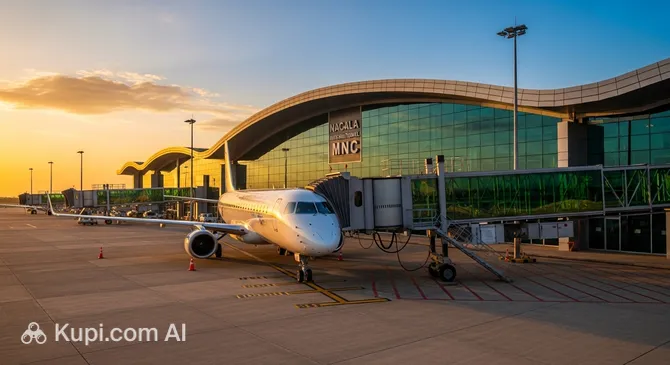
Nacala. Illustration.
Source: Kupi.com AI

Nacala Airport serves as a modern aerial gateway to the northern region of Mozambique and a key transport hub for the port city of the same name. Built on the site of a former military airfield, today it stands as one of the most advanced airports in the country. Its strategic location and modern infrastructure play a vital role in the economic development not only of Nampula Province but of the entire region, ensuring connectivity with key African centres.

PropertyValue
IATA CodeMNC
ICAO CodeFQNC
CityNacala
CountryMozambique
TimezoneAfrica/Maputo
ScheduleOnline Timetable

The main feature of Nacala Airport is its modern terminal and a runway capable of accommodating large long-haul aircraft, including the Boeing 747. The airport was conceived as a vital logistics hub for the so-called "Nacala Corridor," which links the port with the country's interior and neighbouring landlocked states. For travellers, this means convenient connections and access to one of Mozambique's fastest-developing regions, renowned for its pristine beaches and business opportunities.

Contact Information

Finding precise and direct contact details for small regional airports, such as Nacala Airport, can sometimes be challenging. Below is general information and recommendations for contacting the relevant services.

  • Official Website: The airport is managed by Aeroportos de Moçambique (ADM). We recommend checking their general corporate portal for information, as a dedicated website for Nacala Airport may not exist.
  • Information Desk Phone: A direct public telephone number for enquiries is often unavailable. For urgent questions regarding your flight, it is best to contact your airline directly.
  • Address: Aeroporto de Nacala, Nacala, Nampula Province, Mozambique.
  • Email: A public email for general enquiries is typically not provided. For official correspondence, it is advisable to use the contact form on the ADM management company's website, if available.
  • Social Media: Official social media accounts for Nacala Airport are likely inactive. News regarding the country's airports may be published on the pages of Aeroportos de Moçambique.
  • Lost Luggage Information: In the event of lost or damaged luggage, the first step is to approach your airline's service counter at the airport. The air carrier bears the responsibility for tracing luggage.
  • Passenger Support Contacts: The vast majority of issues (ticket changes, flight information, special services) are resolved through your airline's customer support service.

How to Get to the Airport

Nacala Airport (MNC) is located in close proximity to the city, making it easy to reach. The journey from the centre of Nacala to the terminal usually takes no more than 15–20 minutes, depending on traffic conditions. Travellers can choose the option that best suits their comfort and budget: from the cheapest local transport to a comfortable taxi or rental car.

Taxi and Private Transfer — the most convenient and reasonably priced way to get to the airport. The estimated cost of a trip from the city centre is around 5–10 USD. It is highly recommended to agree on the price with the driver in advance, as not all vehicles are equipped with taximeters. For greater peace of mind, you can book a transfer through your hotel or a local travel agency. This guarantees a fixed price and timely arrival of the car, which is especially important for early flights.

For travellers who prefer maximum freedom of movement and plan to explore the picturesque coast of Mozambique, car rental is an excellent choice. Although this is the most expensive option, it offers complete independence. Some rental companies offer vehicle delivery or return services directly at the airport. To ensure vehicle availability and secure favourable terms, it is better to book transport in advance, particularly during the peak tourist season.

Budget travellers may consider using local public transport — minibuses known as "chapas". This is the cheapest method of travel, the cost of which rarely exceeds the equivalent of one dollar. However, it is worth noting that "chapas" do not have a strict schedule, and the cabin can be crowded, which is not always convenient if you have large luggage. A direct route to the airport may be unavailable, so it is best to check details with locals.

If you are driving to the airport in a private or rented car, parking is available on the premises. It is suitable for both short stops to drop off passengers and long-term storage of the vehicle during your journey. Whichever method you choose, always set off with a little extra time in case of possible delays on the road.

Terminals and Map

Nacala Airport (MNC) is a modern and compact aviation hub where passenger service is organised as simply and clearly as possible. There is one passenger terminal in operation here, which was completely reconstructed and opened in 2014. This terminal serves both domestic and international flights, so all infrastructure is concentrated within a single building.

The layout of the terminal is intuitive. Thanks to its small size and well-thought-out design, getting lost here is practically impossible. Departure and arrival zones are clearly separated. Immediately upon entering the terminal, check-in counters are located, followed by the security screening area. After passing control, passengers enter the departure lounge with boarding gates. The arrival zone is located in another part of the building and includes passport control (for international flights), baggage reclaim belts, and customs control.

Since all services are under one roof, transfers between terminals are not required, which significantly saves travellers' time and energy. Navigation through the airport is simplified by clear signage in Portuguese and English. Completing all pre-flight formalities typically does not take much time. It is recommended to arrive at the airport 1.5–2 hours before a domestic flight and 2–3 hours before an international one, to pass through check-in and screening without haste.

Airport History

The history of Nacala Airport (MNC) is unique and reflects the development stages of the entire northern region of Mozambique. Initially, this was not a civilian facility, but a strategically important Nacala Air Base, built by Portuguese authorities during the colonial period. Thanks to its long runway, it played a key role in the logistics and operations of the Portuguese Air Force. After the country gained independence, the base came under the control of the Mozambican armed forces and was used for a long time primarily for military purposes with rare civilian flights.

A turning point in the airport's history was the beginning of the 21st century, when the government of Mozambique decided on its radical reconstruction. The old military infrastructure was completely dismantled, and a modern international airport complex was built in its place. This large-scale project was part of the development strategy for the Nacala Economic Corridor, aimed at servicing major industrial projects, including coal ventures, in the region. The airport's new life began in December 2014, when it was grandly opened following full modernisation.

Today, Nacala International Airport is one of the most modern in the country. Its runway is capable of accommodating large long-haul aircraft, and the passenger terminal is designed to handle up to 500,000 people per year. An interesting fact: Nacala Airport is often cited as a symbol of the region's economic ambitions. Its transformation from a closed military facility into an advanced civilian hub vividly demonstrates northern Mozambique's transition to a new era of development and openness to international business and tourism.

Services and Amenities

Nacala Airport (MNC) is a modern yet compact terminal offering passengers a necessary set of basic services for a comfortable wait for their flight. It is important to understand that this is not a major international hub, so the range of services corresponds to its size. In the clean and comfortable waiting hall, you can relax before departure, have a snack in a small cafe, or buy beverages and daily necessities at a local kiosk.

For the convenience of travellers, free Wi-Fi is available within the terminal, allowing you to stay connected. Stands and sockets for charging electronic devices are also provided. ATMs are installed in the airport, solving the issue of cash upon arrival. A currency exchange point may also be available; however, to get the most favourable rate, it is better to check its availability and opening hours in advance.

The airport is designed taking into account the needs of passengers with reduced mobility and offers an accessible environment. Nevertheless, to receive specialised assistance, it is recommended to contact your airline well in advance. Families with children will also find basic amenities here for a peaceful wait before boarding.

It is worth noting that there are no hotels, large business centres, or conference halls within the airport building. All necessary accommodation options, as well as a wider selection of restaurants and shops, can be found in the nearby city of Nacala, which is easily accessible by taxi.

Dining Options

When planning a flight through Nacala Airport (MNC), it is important to consider that this is a modern but relatively small regional airport. Consequently, the choice of catering establishments here is quite limited and not comparable to major international hubs.

The main place where you can have a snack is a small cafe located in the main hall of the terminal, typically in the public area (landside) before passing security control. Here, passengers can purchase basic beverages such as coffee, tea, and bottled water, as well as light snacks — sandwiches, pastries, or crisps. Sometimes simple local dishes may be found in the assortment, but this is not guaranteed.

If you are looking for a full lunch or dinner, the best solution is to eat at one of the restaurants in the city of Nacala before arriving at the airport. Passengers with special dietary requirements (vegans, vegetarians, or those with gluten intolerance) are strongly advised to bring food with them, as finding suitable dishes at the airport will be extremely difficult.

The cafe's opening hours are usually tied to the flight schedule: it is open during the day to serve departing and arriving passengers but may be closed during night hours or periods of quiet between flights. Prices here, as in most airports around the world, are higher than in city establishments.

Travel Tips

Travelling through Nacala Airport, one of the key aerial hubs in the north of Mozambique, will be simpler and more pleasant if you prepare in advance. These tips will help you orient yourself at the airport and avoid unnecessary hassle.

Arrival Time. Although Nacala Airport is not as large as capital hubs, it is recommended to arrive in good time. For international flights, allow 2.5–3 hours before departure, and for domestic flights — 1.5–2 hours. This will give you sufficient time in case of queues at check-in or security control.

Check-in and Control. Many airlines offer online check-in, which allows you to save time. If you are checking in at the airport, keep your passport and ticket ready. Screening procedures are standard, but it is better to prepare electronic devices and containers with liquids in advance to speed up the process.

Seat Selection. If you have the opportunity to choose a seat, consider your preferences. Window seats will offer you breathtaking views of the Indian Ocean coast during takeoff and landing. Aisle seats are convenient if you plan to get up frequently during the flight.

Hand Luggage. Be sure to pack all valuables, documents, necessary electronics, and medication in your hand luggage. Remember the rule for carrying liquids: containers with a volume of up to 100 ml packed in a single transparent bag are permitted. Sharp objects, weapons, and flammable substances are strictly prohibited in hand luggage.

Connecting Passengers. If you have a connecting flight, clarify at check-in whether you need to collect your luggage in Nacala or if it will be transferred automatically. Follow the signs for “Connecting flights” or “Transit”. Bear in mind that a visa may be required to exit into the city during a long layover.

Customs Control. Upon arrival in Nacala from another country, you will have to pass passport and customs control. Prepare your passport and a completed migration card (if required) in advance. Be ready to answer questions about the purpose of your visit and declare goods if their value exceeds established limits.

Saving Time and Money. To save time, check in online and travel light with only hand luggage. To reduce expenses, bring an empty reusable water bottle (it can be filled after security screening) and light snacks, as the selection at the airport may be limited and expensive.

In Case of Flight Delay. The first step is to contact a representative of your airline for information on the flight status and possible options (rebooking, provision of food or a hotel in case of a long delay). Remain calm and check if your travel insurance covers such cases.
Attractions

Reached the end of the page?

That means the route is fully explored