Support

Santa Carolina

About the Airport

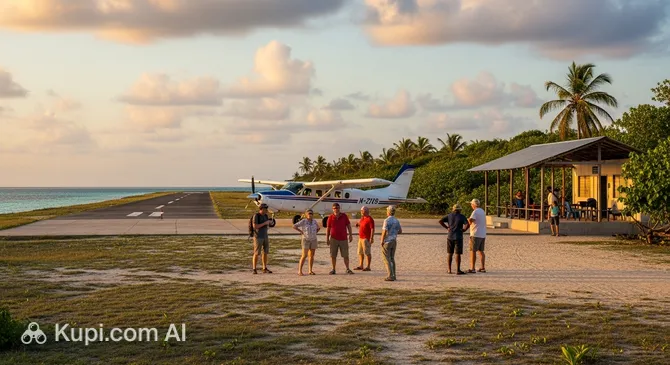
Santa Carolina. Illustration.
Source: Kupi.com AI

Santa Carolina Airport (NTC) is not just a point on a map, but a true aerial gateway to the lost world of the Bazaruto Archipelago. Instead of the usual terminals and queues, you will be greeted by a narrow strip of land washed by the turquoise waters of the Indian Ocean, where the plane's landing resembles a scene from an adventure movie. This miniature air harbour serves the legendary "Paradise Island," offering travellers the opportunity to find themselves on a pristine white beach just minutes after touching down.

PropertyValue
IATA CodeNTC
CitySanta Carolina
CountryMozambique
TimezoneAfrica/Maputo
ScheduleOnline Timetable

Airport Features and Highlights:

Incredible Scenery. The approach to Santa Carolina is considered one of the most beautiful in Mozambique. The view from the window offers a panoramic spectacle of coral reefs and the azure lagoons of the Bazaruto Archipelago, making the flight an excursion in itself.

Exclusivity and Privacy. The airport primarily handles light aircraft and private helicopters. There is none of the hustle and bustle of major hubs here, creating an atmosphere of seclusion and elite leisure from the very first minute of your stay.

Instant Access to Leisure. Thanks to the island's compact size, the transfer from the runway to the beach takes mere minutes. Travellers can enjoy the ocean almost immediately after disembarking from the plane.

Contact Information

  • Official Airport Website: There is no dedicated website, as the airport is a small airstrip for charters. General information can be found on the resources of the state company, Aeroportos de Moçambique.
  • Information Service Phone: There is no direct telephone line at the airport itself. For reliable information, it is recommended to contact the general call centre of Aeroportos de Moçambique: +258 21 465 375.
  • Airport Address: Ilha de Santa Carolina, Bazaruto Archipelago, Inhambane Province, Mozambique.
  • Email: The airport does not have a personal email address. For official enquiries, you can use the general address of the country's aviation authorities: info@aeroportos.co.mz.
  • Airport Social Media: No official accounts are maintained.
  • Lost and Found Information: Due to the lack of a proper terminal, there is no dedicated Lost & Found department. All baggage issues must be resolved on the spot with the pilot or the representative of the receiving party.
  • Passenger Support Contacts: Operational assistance and support are provided directly by the tour operator who organised the flight or by the hotel administration in the archipelago.

How to Get to the Airport

Since Santa Carolina Airport is located on a tiny island of the same name (also known as Paradise Island) in the Bazaruto Archipelago, standard methods of transport such as taxis, buses, or the metro do not apply here. A journey to this point in Mozambique is typically a combined route involving a flight to a major mainland hub followed by a transfer.

Below are the main logistical options for travellers planning to visit this unique corner of the world.

Main Transit Hubs

There are no direct scheduled flights from major global capitals to the island. Tourists first fly into one of the international or regional airports on the mainland. The nearest and most convenient hub is Vilankulo Airport. It is from here that most transfers to Santa Carolina are organised. The distance is only about 44 km by air or water.

You can also consider Beira Airport (206 km) or Inhambane Airport (250 km) as starting points for your route through Mozambique, but the transfer from there will take significantly longer and require additional logistics to reach Vilankulo.

Transfer: Air Taxi and Charters

The only way to land directly on the Santa Carolina airstrip is to book a private charter flight or use a helicopter transfer.

  • How it works: Flights are usually organised by luxury hotels located in the archipelago or by specialised aviation operators in Vilankulo.
  • Travel time: The flight from Vilankulo takes approximately 15–20 minutes. It is an incredibly scenic aerial tour over the turquoise ocean waters.
  • Cost: Prices vary depending on the type of aircraft, but it is a premium service. The estimated cost can range from 150 to 300 USD per person one way (often included in the accommodation package of high-end lodges).

Water Transfer (Alternative)

Although this method does not involve using the runway, it is the most popular way to reach the island and its infrastructure.

  • Motorboats and Speedboats: These operate from the coast of Vilankulo.
  • Travel time: From 45 to 60 minutes depending on weather conditions.
  • Features: This is a more budget-friendly option compared to flying, often offered by local tour companies as part of an excursion.

Public Transport

There is a complete absence of public transport on Santa Carolina Island itself. There are no buses, trains, or shared taxis. The island is so small (approximately 3 km in length) that all movement is done on foot.

Car Rental and Parking

It is impossible to rent a car at Santa Carolina Airport, as there is no road network for cars or rental agencies on the island.

If you are travelling around Mozambique in a rental car, you will have to leave it in a guarded car park on the mainland (in the town of Vilankulo) before departing for the island. The cost of parking on the mainland depends on the chosen facility but usually amounts to a small fee (about 5–10 USD per day).

Travel Time from the Centre

The concept of a "city centre" is nominal on Santa Carolina. The airport (airstrip) is located in immediate proximity to the beaches and the ruins of the historic hotel. The walking time from the aircraft steps to the water's edge is less than 5 minutes.

Recommendations for Tourists

When planning your route, be sure to contact representatives of your hotel or the receiving party in advance. It is practically impossible to fly to Santa Carolina Airport independently without a prior charter arrangement, as there is no regular schedule.

Terminals and Map

The structure of Santa Carolina Airport (NTC) differs radically from what tourists are used to seeing at standard international aviation hubs. Here, you will not find confusing maps, multi-storey buildings, or electronic flight boards. It is a classic island-type airstrip, where the concept of a "terminal" is merely symbolic.

Number of Terminals and Their Purpose

In fact, the airport has one nominal terminal, which is essentially an open-air area or a small canopy (depending on the current state of temporary infrastructure). Since the island was uninhabited for a long time, there are no permanent structures for passenger service here. The entire complex performs a dual function: receiving arriving charters and sending tourists back to the mainland or neighbouring islands.

Airport Map and Navigation

Navigation at Santa Carolina Airport is intuitive and requires no maps. The layout is extremely simple:

  • Runway (RWY): A dirt strip crossing the island.
  • Parking Area: A small pad where light aircraft and helicopters park.
  • Waiting Area: Located in immediate proximity to where the aircraft stops.

It is impossible to get lost here: on one side of the strip opens a view of the ocean, and on the other — the ruins of the old hotel and dense vegetation.

Departure and Arrival Zones

Due to the absence of a terminal building, departure and arrival zones are not separated by walls or cordons. Processes take place in a "live queue" format with direct contact with the crew.

  • Arrival: After landing and the propellers stop, passengers step directly onto the airfield. Luggage is unloaded by the pilot or assistants and handed to tourists right by the aircraft ("wing-side service").
  • Departure: Passengers gather at a pre-agreed spot next to the strip. Boarding takes place after a brief briefing by the pilot.

Procedure Times

One of the main features and advantages of Santa Carolina Airport is the complete absence of bureaucracy and queues.

  • Check-in: Takes literally 1–2 minutes. The pilot verifies your names against the passenger list (manifest) right by the plane.
  • Security Check: Classic security checks with frames and scanners are absent. Security screening is visual in nature and is carried out by the aircraft commander before boarding.
  • Passport Control: Since all flights here are domestic (usually from Vilankulo), passport control is not conducted. Documents may only be checked upon initial departure from the mainland.

Transfers Between Terminals

As there is only one terminal (and a nominal one at that), transfers do not exist. The entire journey from the plane to the path leading to the beach takes no more than 3–5 minutes at a leisurely pace.

Navigation Features and Recommendations

Despite the simplicity, tourists should consider several important points for a comfortable stay at this "air harbour":

  • Lack of Amenities: Be prepared for the fact that there are no toilets, Duty Free shops, ATMs, or cafes in the airport zone. Everything necessary (water, hats) must be brought with you or obtained immediately upon arrival from the receiving party.
  • Surface: The runway and paths are dirt or sand. It is recommended to choose comfortable footwear without heels, as you will be in nature immediately after stepping off the plane.
  • Sun Protection: The waiting area may not have a proper canopy. Be sure to use sunscreen and sunglasses while waiting for your flight, as the sun in the archipelago is very intense.
  • Greeters: Usually, guides or lodge representatives await guests directly at the edge of the strip. There is no need to look for an information desk — they will find you themselves.

Airport History

Airport History

The history of Santa Carolina Airport (NTC) is not a dry chronicle of terminal construction, but a gripping tale of the rise, oblivion, and rebirth of one of East Africa's most legendary resorts. The fate of this airstrip is inextricably linked with the history of the island itself, which in the mid-20th century was called the "Pearl of the Indian Ocean."

Birth of a Legend: The 1950s

The airport (or rather, the dirt airstrip) appeared on the island in the 1950s. Its creation was initiated by the Portuguese entrepreneur Joaquim Alves. He turned an uninhabited patch of land into a luxury resort by building the famous Hotel Santa Carolina. Since reaching the island by water was long and not always comfortable, the construction of an airfield became a vital necessity for receiving wealthy guests.

The Golden Era: 1960–1974

During this period, the airport experienced its heyday. It was an era of glamour and exclusivity:

  • Popularity: The strip daily received light aircraft from mainland Mozambique, Southern Rhodesia (now Zimbabwe), and South Africa.
  • Celebrity Guests: World celebrities, businessmen, and newlyweds wishing to spend their honeymoon in "paradise" flew here. The airport was the gateway to a world of parties and luxury leisure.
  • Infrastructure: Despite its status as a "field airfield," the strip was maintained in perfect condition to ensure the safe landing of private aircraft.

Period of Silence and Decline

After 1975, due to changes in the political situation in the country and the beginning of a difficult historical period for Mozambique, the flow of tourists dried up abruptly. The hotel was closed and abandoned, and the airport ceased to function on a regular basis. For many decades, the airstrip became a "ghost": it was overgrown with grass, and the only "passengers" here were seabirds. The island's infrastructure fell into decay, turning into picturesque ruins.

Modern Stage and Revival

In the early 2000s, interest in the Bazaruto Archipelago flared up with renewed vigour. Although the large-scale reconstruction of the hotel has been postponed several times, the functionality of the airport has been restored for the needs of elite tourism.

  • Strip Clearance: The runway was cleared and strengthened to accommodate modern light aircraft (Cessna, Piper) and helicopters.
  • Current Status: Today, the airport serves as a key point for day trips. Tourists fly here to see the ruins of the old hotel, have a picnic on the beach, and enjoy snorkelling.

Interesting Facts from the Airport's History

  • Runway to Ruins: This is one of the few airports in the world where planes park literally a few metres from an abandoned historical building that was once the best hotel on the coast.
  • Inspiration for Bob Dylan: Legend has it that Bob Dylan's famous song "Mozambique" (1976), singing of sunny holidays and beaches, was inspired by the atmosphere of this very place, which at that time could be reached through this small airport.
  • Unforgiving Short Strip: Due to the modest size of the island (only 3 km long and 0.5 km wide), pilots have practically no margin for error. The strip occupies a significant part of the island's width, and during take-off, it feels as if the plane is accelerating straight into the ocean.
  • Filming Location: In the 1950s and 60s, the airport and island often appeared in camera lenses and on the pages of glossy magazines as a symbol of the ideal life.

Today, Santa Carolina Airport remains a living monument to history, connecting the past of "Paradise Island" with its present.

Services and Facilities

Services and Facilities at Santa Carolina Airport

For travellers heading to Santa Carolina Airport (NTC), it is important to adjust expectations in advance. Since this aviation hub is essentially a dirt strip on an uninhabited (in terms of permanent residence) island, the usual service infrastructure of international airports is completely absent here. Services and amenities follow an "eco-minimalism" format, and passenger comfort depends entirely on the tour operator or the crew of the private aircraft.

Dining and Shopping

There are no operating fixed cafes, restaurants, vending machines, or Duty Free shops on the territory of the airport or the island itself.

  • Food and Drink: Catering is usually the responsibility of the receiving party. Most excursion tours and charters include a picnic or barbecue with fresh seafood right on the beach. If you are flying independently, be sure to bring a supply of drinking water and snacks.
  • Shopping: There are no souvenir stalls here. The only thing you can "take away" from the island are unique seashells (subject to customs regulations) and photos against the backdrop of the ruins.

Connectivity and Finance

Santa Carolina Island is an ideal place for a digital detox, often an involuntary one.

  • Wi-Fi and Internet: Public Wi-Fi is absent. Mobile coverage may work intermittently; the signal from the mainland (Vilankulo) sometimes reaches the island, but one should not count on stable 4G.
  • Charging Stations: There are no power outlets available for public use. It is recommended to fully charge gadgets before departure and bring a power bank.
  • Banks and ATMs: Banking services are unavailable on the island. Currency exchange should be done in advance on the mainland. If you plan to buy souvenirs from local fishermen who sometimes dock at the island, carry cash (Mozambican Meticals or US Dollars in small denominations).

Lounges and VIP Service

The VIP lounge concept here is implemented by nature itself. Instead of enclosed rooms with air conditioning, passengers are offered waiting areas in the fresh air under the shade of trees or the remaining canopies of the old hotel.

  • Business Lounges: None.
  • Comfort: The level of comfort depends on your tour operator (many bring folding chairs, tents, and refreshing drinks for guests).

Medical Services and Safety

There is no medical centre or pharmacy on the island.

  • First Aid: Basic first aid kits are always available on board the aircraft or boat.
  • Personal Medication: If you take specific medication, be sure to bring it with you in sufficient quantities. In case of an emergency, evacuation to the mainland will take from 15 to 60 minutes.

Passengers with Children

Travelling to Santa Carolina with children requires careful preparation by parents.

  • Infrastructure: There are no mother-and-child rooms or changing tables here. All hygiene procedures will have to be carried out in field conditions.
  • Entertainment: The main entertainment for children is nature, sand, and the ocean. No playgrounds are provided.
  • Advice: Be sure to ensure you have hats, high-factor sunscreen, and special footwear for walking on corals.

Services for Passengers with Reduced Mobility

The airport and island are not adapted for the independent movement of passengers with reduced mobility.

  • Accessibility: Boarding and disembarking from light aircraft is done via small steps or footholds. Movement around the island is difficult due to sand and uneven terrain.
  • Assistance: If a passenger with reduced mobility is travelling, the air carrier must be notified in advance. The crew and guides will provide physical assistance with boarding and movement, but there are no special lifts or ramps here.

Accommodation (Hotels)

It is important to understand: there are no operating hotels directly at the airport or on Santa Carolina Island.

  • Hotel Santa Carolina: The famous historic hotel is in ruins and is closed for accommodation. It is a tourist site for viewing, but not a place for overnight stays.
  • Where to Stay: The nearest accommodation options are on the neighbouring Bazaruto Island (e.g., Anantara Bazaruto Island Resort) or on the mainland in the town of Vilankulo, from where flights originate.

Business Services

Conference rooms and business centres are absent. The airport is intended exclusively for tourism purposes and short visits.

Where to Eat

When it comes to dining at Santa Carolina Airport (NTC), travellers should immediately forget the usual standards of international terminals. You will not find chain coffee shops, food courts with fast food, or bars overlooking the runway here. Since the airport is essentially a dirt strip on an uninhabited island with ruins, the concept of gastronomy here is entirely governed by the laws of wild nature and exclusive service.

Restaurants and Cafes: Expectations vs Reality

There are no operating fixed catering establishments within the airport territory (and the island as a whole). There is not a single building where you can buy a sandwich or a cup of coffee. The "terminal" is the open sky, so "airside" and "landside" zones do not exist in a gastronomic sense.

However, this does not mean that guests remain hungry. Dining here turns into a true ritual organised by your host party.

Dining Format: "Picnic on a Desert Island"

The only available and most popular way to have lunch on Santa Carolina is an organised picnic or beach barbecue. This is usually included in the cost of the excursion or charter flight organised by luxury hotels in the archipelago (for example, from Bazaruto Island or Vilankulo).

  • Signature Offerings: The main delicacy here is the freshest seafood cooked over coals right on the ocean shore. Most often, tourists are offered grilled langoustines, local crabs, and fish caught in the surrounding waters that morning.
  • Local Cuisine: Side dishes often include rice with coconut milk or "xima" (traditional maize porridge), as well as tropical fruit salads (mango, papaya, pineapple).
  • Drinks: Organisers bring portable coolers with soft drinks. While South African wines and local beers (popular brands include 2M or Laurentina) are often available for international tourists, the focus is on refreshment in the heat.

Dietary Requirements (Vegetarian, Halal, Gluten-free)

Since there is no fixed menu, all dietary questions are resolved individually and in advance.

  • Pre-ordering: It is critically important to inform the tour operator or hotel manager of your dietary preferences at least 24 hours before flying to the island.
  • Availability: Organising a vegetarian, vegan, or Halal meal is not difficult if notification is given beforehand. Lodge chefs will prepare special lunch boxes for you. Without prior notification, choices may be limited to vegetables and fruits.

Recommendations for Quick Snacks and Water

If you are flying to the island on a private flight without guide accompaniment (which happens extremely rarely) or your programme does not include lunch, you must take care of provisions yourself.

  • Water: This is the most important point. There are no sources of drinking water on the island. Be sure to bring a supply of bottled water allowing for at least 1.5–2 litres per person, as the climate is hot and humid.
  • Snacks: It is recommended to buy nuts, dried fruits, energy bars, or biscuits at a supermarket in Vilankulo before departure. Chocolate is not advisable — it will melt in minutes.

Price Range

It is impossible to speak of an average bill at the airport. The cost of food is usually "embedded" in the price of the excursion or hotel stay. Organising a private picnic on Santa Carolina Island is a premium service, which can be valued from 50 to 150 USD per person (including transfer, products, and service), whereas a self-purchased snack on the mainland will cost 5–10 USD.

Opening Hours

Any improvised "restaurants" under tents operate exclusively during daylight hours — usually from 10:00 to 16:00, while tourists are on the island. After sunset, the island empties, and all infrastructure is packed away.

Summary for the Tourist: Do not look for a restaurant at Santa Carolina Airport. Treat the trip here as a gastronomic adventure where your dining hall will be a white sandy beach, and the head chef — nature and the attentive staff of your hotel.
Travel Tips

Travelling through Santa Carolina Airport differs radically from the experience of flying through major international hubs. There is no hustle, no queues, and none of the strict regulations typical of large terminals. However, the specifics of light aviation flights and the remoteness of the island dictate their own rules, knowledge of which will make your adventure comfortable and safe.

Arrival Time Recommendations

Unlike standard airports where you need to be present 2–3 hours before departure, different time frames apply here. Since flights are charter or private:

  • Departing from the island: It is sufficient to arrive at the aircraft parking spot 15–20 minutes before the appointed time. This is enough for the pilot to load luggage and conduct a briefing.
  • Important: Do not be late. Light aviation has a strict schedule, often dependent on daylight hours and weather "windows." The plane cannot wait long if the pilot has a subsequent flight scheduled.

Check-in and Security Features

The check-in procedure here is simplified to the maximum and is informal in nature.

  • Documents: Keep your passport handy, although most often it is enough for the pilot to know your surname to check it against the passenger list.
  • Security Check: There are no scanners or metal detector frames on the island. Safety is ensured by visual inspection. The pilot has the right to ask you to open a bag if they have questions about the contents.
  • Personal Weight: Be prepared for the fact that you may be asked to state your exact weight or even be weighed (if portable scales are available). This is critically important for calculating the balance of a light aircraft. Do not take offence or understate figures — it is a matter of your safety.

Tips for Choosing a Seat on the Plane

In light aircraft (like Cessna or Piper) that fly to Santa Carolina, the concept of "seat selection" is conditional.

  • Weight Distribution: The pilot allocates seats based on the aircraft's centre of gravity. You will be told where to sit to ensure the aircraft is balanced.
  • Best Views: In such planes, practically every seat is a "window seat." The view is stunning from both sides. If the pilot permits, ask for the co-pilot's seat (to the right of the commander) — it offers the best panoramic view of the archipelago.

Hand Luggage and Baggage: Do's and Don'ts

This is the most important point for planning a trip to the island.

  • Type of Bags: It is strictly recommended to use soft bags (sports bags, duffel bags). Hard suitcases on wheels often physically do not fit into the luggage compartments of small planes. If you have a hard suitcase, it may not be accepted on board on the mainland.
  • Weight: Limits are strict, usually 15–20 kg per person, including hand luggage. Excess weight is difficult to pay for; often excess luggage is simply left in storage at the departure airport (e.g., in Vilankulo).
  • Prohibited Items: Rules for carrying liquids here are softer than on international flights, but flammable substances, weapons, and sharp objects are prohibited.

Recommendations for Transit Passengers

Since there are no direct flights home from the island, you face a transfer on the mainland (most often at Vilankulo Airport).

  • Time Buffer: Allow at least 3–4 hours for the connection with an international flight. Weather over the ocean is changeable, and departure from the island may be delayed due to wind or fog.
  • Luggage Logistics: Luggage is not checked through "to the final destination." Upon arrival on the mainland, you will need to collect your bags from the pilot and independently check in for the next flight at the airline counter.

Customs Control Features

There is no customs on the island itself, but it is important to remember that you are in the territory of the Bazaruto National Park.

  • Souvenirs: It is strictly prohibited to export corals, large shells, starfish, and turtle shells. At the departure airport on the mainland, your luggage will be thoroughly checked, and attempting to export protected natural objects carries a large fine.

Tips for Saving Time and Money

  • Combined Route: Air travel is an expensive pleasure. To save money and get maximum impressions, you can book a speedboat transfer one way and fly back by plane (or vice versa).
  • Group Charter: The cost of chartering a plane is often fixed per aircraft, not per person. If you find fellow travellers at the hotel, the price of the flight per passenger will decrease significantly.
  • Water and Food: Since there are no shops at the airport, and prices for organised picnics are high, bring water and a light snack from the mainland — this will save your budget.

What to Do in Case of Flight Delay

Delays in light aviation happen often, mainly due to weather.

  • Communication: Keep the contacts of the receiving party or hotel with you. The pilot might not arrive on time if there is a storm on the route.
  • Waiting Place: There is no terminal. If the flight is delayed, it is better to return to the shade of the hotel ruins or under the trees closer to the beach. Waiting in the open sun by the strip is dangerous for your health.
  • Plan B: If the weather becomes unflyable for a long time, the only alternative will be a water transfer. Check with guides about the possibility of leaving by boat in case the flight is cancelled.

Reached the end of the page?

That means the route is fully explored