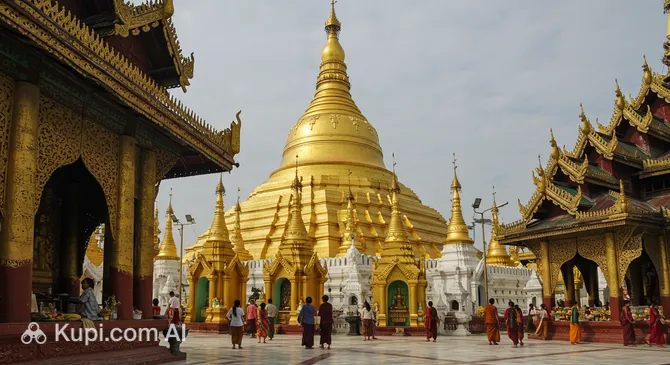
Imagine a place where spiritual energy is felt physically. The Mahamuni Pagoda is not just an architectural monument, but the heart of religious life in the city of Mandalay. It is considered one of the most revered shrines that Myanmar is proud of, attracting thousands of pilgrims with its ancient history and mystical aura.
The main treasure of the complex is a four-meter-high Buddha statue. Over many centuries, the layer of gold leaf applied by believers has become so thick that the figure's contours have taken on soft, rounded shapes. The center of the pagoda is crowned by a magnificent seven-tiered roof decorated with carvings and gilding, making the sanctuary one of the most recognizable sites in the region.
Mahamuni Pagoda. Illustration.
Source: Kupi.com AI
Traveler photos:
Numerous prayer pavilions and a museum telling the history of Buddhism are spread around the central hall. The Mahamuni Pagoda is a place where ancient traditions come to life in every gesture of the worshippers, creating an atmosphere of deep reverence and serenity.
Contacts
To clarify information about visiting the complex, you can use the following contact details:
The main event worth seeing at the pagoda is the ritual of washing the Buddha's face. Every day at dawn, monks perform a solemn ceremony of cleansing the face of the statue and brushing the Buddha's teeth with a special brush. Witnessing this mystery provides a unique sense of involvement in a living, centuries-old tradition.
Male pilgrims can approach the shrine directly to make an offering and apply a sheet of gold leaf to it. For women, access to the central zone is restricted; however, they can observe the process from the prayer halls, soaking in the overall atmosphere of reverence.
Be sure to stop by the Mahamuni Museum, located on the complex grounds. It houses interesting exhibits illustrating the life of the Buddha and the journey the famous statue has taken through the centuries. It is also worth simply wandering through the inner courtyards, admiring the detailed decoration of the columns and resting in the shade of the elegant galleries.
Getting There
This sacred attraction is located in the southern part of Mandalay. The most comfortable and fastest way to get here is by taxi. This mode of transport is very popular in the city, but tourists should remember that the cost of a trip can sometimes depend on the number of passengers in the car.
For those who prefer more authentic or budget-friendly ways to get around, rickshaws or motorbike rentals are excellent options. If you are staying in the central districts of the city, the journey to the pagoda won't take much time — usually, the trip lasts about 20–30 minutes.
Despite the lack of a metro system, the well-developed network of private drivers makes it easy to plan your visit. The main thing is to confirm the address (Near the Pagoda) with the driver in advance, although the Mahamuni Pagoda is so famous that every local knows its location.
Nearest city: Mandalay
History & Facts
The history of this place is shrouded in ancient legends. According to legend, the Buddha statue itself was cast more than 2,000 years ago in the ancient kingdom of Dhanyawadi. It is believed that Gautama Buddha himself was present during its creation, breathing life into the image and making it his spiritual likeness.
For a long time, the statue remained the greatest shrine of the Arakan kingdom until the troops of King Bodawpaya captured the region in 1784. The relic was solemnly transported first to Amarapura and then to a specially built temple in Mandalay. This move forever changed the religious landscape of the country's central region.
Interestingly, the statue's appearance has changed significantly over centuries of worship. Devoteers apply thin leaves of gold leaf to it, causing the layer of precious metal to reach 15–20 centimeters in some places. Today, only the Buddha's face remains smooth, preserving its original features, while the body is covered in "golden armor" with a bumpy texture.
Time Needed
To explore the entire temple complex without rushing, you will need about 2–3 hours. This time is quite sufficient not only to see the main shrine but also to walk through the internal pavilions, visit the museum, and observe the pilgrims.
If you plan to catch the unique morning ritual or study the Mahamuni Museum exhibits in detail, it is worth arriving early and setting aside a bit more time. The atmosphere of peace and spirituality encourages slow contemplation, so half a day in this place will fly by unnoticed.
Working Hours
The pagoda welcomes worshippers and tourists daily, from early morning until evening. Official opening hours: from 4:00 AM to 6:00 PM every day of the week, including weekends and holidays.
The early opening is due to the most important morning ritual, so the most dedicated pilgrims arrive here before dawn. Keep in mind that during major Buddhist celebrations, the pagoda can be particularly crowded.
4:00 – 18:00
Nearby
The area around the Mahamuni Pagoda offers travelers many interesting locations. A walk through the surroundings after visiting the temple will allow you to dive deeper into the daily life and culture of the city, discovering new facets of the local atmosphere.
Here you can find both quiet park areas and unique farms that rarely make it into standard guidebooks but deserve the attention of a curious tourist.