Support

Simara

About the Airport

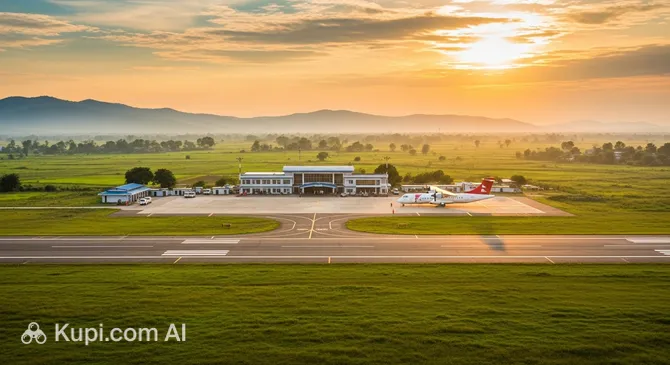
Simara. Illustration.
Source: Kupi.com AI

Simara Airport (SIF) is more than just a local transport hub; it is a true aerial gateway to the picturesque plains of the Terai region. Located just a short flight from the capital, it instantly transports travellers from the cool Kathmandu Valley to the warm and colourful south of the country, providing access to the industrial heart of Nepal and the border with India. It is the ideal starting point for those who value time and wish to bypass the tiring winding mountain roads, beginning their acquaintance with the southern culture and nature in maximum comfort.

PropertyValue
IATA CodeSIF
ICAO CodeVNSI
CitySimara
CountryNepal
TimezoneAsia/Kathmandu
ScheduleOnline Timetable

The airport possesses several features that make it an important point on the map for any traveller in Nepal:

Record travel speed. The flight from Kathmandu to Simara is considered one of the shortest commercial routes in the country. The flight time is only 15–20 minutes. In this time, you will barely have a moment to enjoy the view of the Himalayan foothills before the plane touches down on the runway in the plains.

Strategic gateway to the south. The airport serves not only the city of Simara but also neighbouring Birgunj — a major trade and industrial centre. This makes it a key hub for business travellers, as well as for tourists heading overland to India via the Raxaul border crossing, which can be reached by taxi in less than an hour.

Access to wildlife. For eco-tourism enthusiasts, Simara is a convenient starting point for visiting Parsa National Park. The reserve, home to wild elephants, tigers, and leopards, is located in the immediate vicinity, allowing you to start a safari almost immediately after arrival.

Contact Information

Below is the contact information for Simara Airport (SIF), which may be useful when planning your journey.

  • Official Website: The airport is managed by the Civil Aviation Authority of Nepal (CAAN). Current information can be found on their official portal: caanepal.gov.np/airports/simara-airport
  • Help Desk Phone: +977-53-520268
  • Airport Address: Simara Airport, Jitpur Simara Sub-Metropolitan City, Bara, Nepal
  • Email: simara_apt@caanepal.gov.np
  • Social Media: Simara Airport does not have its own official social media pages. It is recommended to follow news on the resources of the Civil Aviation Authority of Nepal.
  • Lost Luggage Information: For issues related to lost or damaged luggage, you should primarily contact the airline you travelled with directly.
  • Passenger Support Contacts: For general information and support, you may use the airport help desk phone number.

How to Get to the Airport

Getting to Simara Airport (SIF), a key transport hub for travel across the southern part of Nepal, is quite simple thanks to its convenient location. The airport is located very close to the city of Simara, making the journey quick and inexpensive. Depending on your budget and preferences, you can choose one of several methods.

Taxi or private transfer is the most convenient and popular option. Taxis can easily be found in the centre of Simara or ordered from neighbouring cities, such as Birgunj. The trip from the city centre takes just 5–10 minutes. The cost of the trip is generally low, but it is recommended to agree on the price with the driver in advance to avoid misunderstandings. A pre-booked transfer can be a good solution for those who value comfort and are travelling with a lot of luggage.

Public transport is the most budget-friendly way. Although there is no metro or train in Simara, local buses and three-wheeled taxis (tempos) run along the main highway where the airport is situated. This option is suitable for experienced travellers ready for a small adventure. The ride will cost mere pennies but may require a short wait at the stop and possibly a brief walk to the terminal.

Car rental in a "self-drive" format is not very common in this region. A much more popular service is renting a car with a driver. This is an excellent choice if you are travelling in a large group, with family, or planning a trip from more distant places, such as Kathmandu. This option ensures maximum flexibility and comfort, allowing you to plan your route without being tied to public transport schedules.

If you are arriving at the airport in your own or a rented vehicle, you can use the parking facilities. Simara Airport has a small open parking area, which is quite sufficient for short-term parking — for example, to drop off or pick up passengers. The parking fee is usually minimal or may be non-existent.

Terminals and Map

Simara Airport (SIF) is a small domestic airport serving flights within Nepal. All its infrastructure is concentrated in one compact terminal, making navigation extremely simple and intuitive for any traveller. There is no division into multiple buildings here, so all processes — from check-in to boarding — take place in one location.

The terminal building is a single space where all main zones are located. Right at the entrance, you will find several check-in counters. After passing check-in and security, passengers proceed to the general departure waiting area. The arrival and departure zones are functionally separated but are located in the same building a short distance from each other. Thanks to the airport's modest size, you won't have to worry about long walks or complex layouts — getting lost here is practically impossible.

Flight check-in and security procedures at Simara Airport usually proceed very quickly. Due to the low passenger traffic, the entire process from entering the terminal to reaching the boarding gate rarely takes more than 20-30 minutes. Nevertheless, the standard recommendation is to arrive at the airport approximately one hour before departure to complete all formalities and check in luggage without rushing.

Since there is only one terminal at the airport, the issue of transfers between them is irrelevant. Everything you need — from airline counters to the waiting hall and baggage claim area — is under one roof. The main advice for navigation: simply follow the few signs or ask any airport staff member, who will readily assist you.

Airport History

Simara Airport (SIF) is not just an air gateway, but an important part of the development history of the central region of Nepal. Its history began on 4 July 1958, when it was officially founded. At that time, it became one of the first airports in the country built to connect the isolated and hard-to-reach Terai region with Kathmandu, when roads were not yet sufficiently developed.

Initially, the airport was a simple runway, likely with a grass surface. Its main task was ensuring transport accessibility and supporting the growing industrial corridor of the neighbouring city of Birgunj. Over the years, as passenger traffic grew and aviation developed in the country, the airport underwent several stages of modernisation. A key moment was the asphalt paving of the runway, which allowed it to accommodate more modern aircraft and ensure flights in any weather.

One of the airport's significant achievements is its role in the region's economic growth. It became a catalyst for trade and industry, significantly reducing travel time for business people and cargo to the capital. Although Simara Airport cannot boast passenger traffic records compared to international giants, its contribution to regional development is invaluable. It remains one of the oldest and most strategically important domestic airports in Nepal.

An interesting fact: despite its long history, the airport has retained its compact size and the atmosphere of a small regional hub. The flight from Simara to Kathmandu is one of the shortest domestic flights in Nepal, taking only about 15-20 minutes, making it incredibly popular among locals and travellers seeking to reach the capital or, conversely, the Indian border quickly and comfortably.

Services and Amenities

Simara Airport (SIF) is a small regional air terminal in Nepal serving domestic flights. The infrastructure here is quite modest and offers passengers only the most essential amenities. Before travelling, it is important to understand that many services common in large international airports may be absent here.

Dining and shops. The selection within the terminal building is very limited. Usually, there is a small kiosk where you can purchase bottled water, soft drinks, tea, coffee, and light snacks like biscuits or crisps. There are no duty-free shops or souvenir stalls here. It is recommended to have a meal before arriving at the airport.

Waiting lounges and other amenities. Passengers have access to a general waiting hall with a basic number of seats. Separate VIP lounges or business lounges are not provided. Free Wi-Fi is not available in the terminal, and the number of power outlets for charging gadgets is severely limited, so it is best to bring a portable power bank.

Financial and medical services. There are no bank branches, ATMs, or currency exchange points on the airport premises. All financial matters should be settled in advance. A medical centre is also absent, but airport staff can provide basic first aid or call an ambulance in an emergency.

Services for passengers with special needs. Dedicated mother and child rooms are not equipped. Passengers with reduced mobility must notify their airline in advance of the need for assistance, such as the provision of a wheelchair, so that staff can prepare for their arrival.

Accommodation and business services. There are no hotels, conference rooms, or business centres within the airport itself. The nearest hotels and guesthouses are located in the city of Simara and surrounding settlements, which can be reached by taxi.

Where to Eat

When planning a trip through Simara Airport (SIF), it is important to remember that this is a small regional airport primarily serving domestic flights. Consequently, the choice of dining establishments here is quite modest and focused on the basic needs of passengers awaiting their flight. You won't find large food courts or fine dining restaurants here, but you will be able to grab a quick and inexpensive snack.

In the main and only terminal of the airport, there are usually a few small café-kiosks or snack bars operating. They are located in the general area before security control (landside), so they are accessible to both departing passengers and those seeing them off. The assortment generally includes packaged snacks, such as crisps and biscuits, as well as freshly prepared local snacks — for example, samosas (fried pastries with vegetable filling) or chow chow noodles.

For drinks, you can always order traditional Nepali tea with milk and spices (chiya), instant coffee, bottled water, and soft drinks. If you are looking for a full meal, it is better to do so beforehand in the city of Simara, as the choice at the airport is limited to quick bites. Options for strict diets (vegan, gluten-free, or Halal) are practically impossible to find here, although some vegetable snacks may be suitable for vegetarians.

Prices in local cafés are quite affordable, although slightly higher than outside the airport. Opening hours usually coincide with the flight schedule — they open in the morning and close after the departure of the last plane. This is quite sufficient to have a cup of tea and refresh yourself before a short domestic flight.

Travel Tips

To ensure your journey through Simara Airport (IATA: SIF) goes smoothly, make use of these helpful tips. This small but important transport hub is the gateway to the central region of Nepal, and knowing a few nuances will make your trip more comfortable.

Arrival time and check-in. For domestic flights, it is recommended to arrive at the airport 1.5–2 hours before departure. Check-in and security processes here generally move faster than in major hubs, but the extra time will save you from unnecessary rushing. Keep your passport and ticket ready.

Choosing a seat. When flying in Nepal, always try to get a window seat. Flights from Simara often offer passengers stunning views of the Himalayan foothills. In clear weather, the scenery can be simply unforgettable, so do not miss this opportunity.

Carry-on luggage. Security standards here are the same as in most airports worldwide: liquids in containers no larger than 100 ml, no sharp objects. Pay special attention to electronic devices: all portable power banks and lithium batteries must be packed only in carry-on luggage. Be aware that local airlines may have strict weight limits for carry-on bags.

Transfers and customs. Simara Airport serves only domestic flights. If you are transiting through Kathmandu for an international flight, you will need to collect your luggage, transfer independently to the international terminal, and check in again. Allow at least 3-4 hours for this. There is no customs control in Simara, as all international procedures are completed at the first airport of arrival in the country.

Saving time and money. Book tickets in advance, especially during the peak tourist season. To avoid excess baggage fees, try to travel light. Some airlines offer online check-in, which can save you time upon arrival at the airport.

Flight delays. The weather in Nepal is unpredictable, and flight delays or even cancellations are not uncommon, especially due to fog or strong winds. Please treat this with understanding. Have a book and a charged power bank with you, and stay in touch with your airline representative for the latest information. Flexibility in plans is the key to a calm journey through this amazing country.

Reached the end of the page?

That means the route is fully explored