Support

Netherlands Institute for Sound and Vision

About

In the heart of the media hub of Hilversum lies a unique space — the Netherlands Institute for Sound and Vision. It is more than just a museum; it is one of the largest audiovisual archives in Europe, where the history of radio, television, and cinema is carefully preserved. Here, the past meets the future, allowing every visitor to peek behind the scenes of the media industry that the Netherlands has developed over decades.
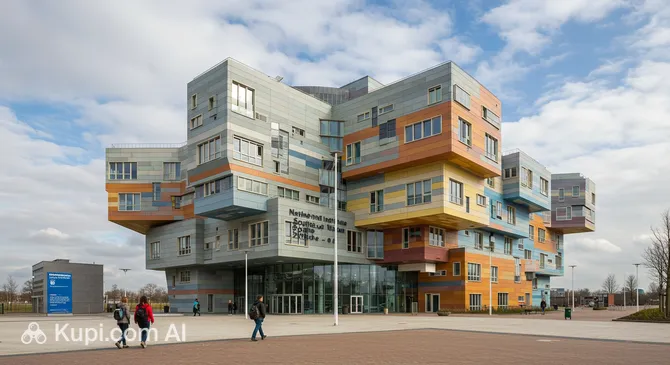
Netherlands Institute for Sound and Vision
Netherlands Institute for Sound and Vision. Иллюстрация. Источник: Kupi.com AI

The building itself is a masterpiece of modern architecture. Designed in the shape of a giant cube, it is clad in thousands of colored glass panels that shimmer in the sun, creating an incredible play of light. Inside this high-tech "treasure chest" lie interactive halls, exhibition spaces, and vast storage rooms containing millions of hours of recordings.

The institute serves as an important cultural center where modern multimedia installations tell the story of how mass media shapes our perception of the world. This place will be equally interesting to industry professionals and curious tourists eager to see how the magic of the screen is created.

Contacts

For more information about special events or to book group tours, you can use the official communication channels. Below are the institute's current contact details.

How to contactContact
AddressMedia Parkboulevard 1, 1217 WE Hilversum, Netherlands
Phone+31 35 677 5555
Websitebeeldengeluid.nl

What to Do

Inside the institute, a true immersion into the world of multimedia awaits you. The museum's standout feature is its interactivity. Visitors can do more than just look at exhibits; they can actively participate in the process: for example, try their hand as a news anchor in front of a real camera or create their own animated film using modern digital tools.

For those interested in history, there are rich collections of archival materials. You can see how televisions and radios have changed over time and watch rare footage from chronicles of years past. The museum frequently hosts temporary exhibitions dedicated to popular shows, cult films, or the evolution of social media.

After an intensive exploration of the exhibits, you can stop by the local cafe to discuss your impressions or visit the souvenir shop. It sells unique books on design and media, as well as original gifts that will serve as a wonderful reminder of your trip to this hub of digital culture.

Getting There

Getting to this media hub is quite simple, as it is located in the heart of the Dutch television industry. If you are traveling from Amsterdam, take the regular trains that will bring you to the Hilversum Media Park railway station in about 30 minutes. From the station, the building is just a leisurely 10–15 minute walk away, following the signs through the Media Park grounds.

For those who prefer to travel by car, the site is located at Media Parkboulevard 1. Paid parking is available next to the institute. If you are already in the city center, you can take a local bus or call a taxi, which will take no more than 5–10 minutes.

Ближайший город: Hilversum

History & Facts

The idea of creating a single national archive to preserve the country's rich audiovisual heritage emerged in the late 1990s. The official opening of the modern building in Hilversum took place in 2006, and since then, the institute has become a key destination for anyone interested in the history of communication.

The renowned firm Neutelings Riedijk Architects was responsible for the unique architectural design. Construction took place over two years, from 2004 to 2006. The architects aimed to create more than just a functional building; they wanted a symbol of the era, turning it into a perfect glass cube that stands out strikingly against the surrounding landscape.

Interestingly, each of the glass panels on the facade contains images of key moments from the history of Dutch television. In this way, the building itself transforms into a giant open-air archive that you can study even before stepping through the museum's doors.

Time Needed

When planning your visit, expect to spend at least 2–3 hours here. This is sufficient time to view the main exhibition and explore the interactive displays. The museum is vast, and every corner offers something new, so there is no need to rush.

If you are a true media enthusiast or wish to participate in one of the many workshops and film screenings, you should set aside half a day. The interactive zones often captivate visitors, especially children, who can spend hours trying out different television professions.

Working Hours

The institute welcomes guests on a consistent schedule throughout the week, with the exception of Mondays. Please note that the opening hours remain the same on both weekdays and weekends, making it easy to plan your trip.

Opening Hours:
• Monday: Closed
• Tuesday – Sunday: 10:00 – 17:00

DayWorking hours
ПонедельникЗакрыто
Вторник10:00 – 17:00
Среда10:00 – 17:00
Четверг10:00 – 17:00
Пятница10:00 – 17:00
Суббота10:00 – 17:00
Воскресенье10:00 – 17:00

Nearby

Hilversum is famous for its architecture and green spaces, so after visiting the museum, it is worth spending some time exploring the surroundings. A stroll through the city will allow you to better feel the atmosphere of the "media capital" and see historical monuments tucked away in the shadow of modern studios.

Near the institute, you will find both memorial sites and interesting engineering structures from past centuries. Here is a list of the most notable places within a radius of a few kilometers:

NameDistance
Fikri Sandwich1.1 km
Pinetum Blijdenstein Botanical Garden1.1 km
The Skiff1.2 km
Café Karroesel1.2 km
Hilvertshof1.2 km
Museum Hilversum1.3 km
Old Tbilisi1.4 km

Reached the end of the page?

That means the route is fully explored