Support

Koningshavenbrug De Hef

About

De Hef (Koningshaven Bridge) is not just a feat of engineering, but a true symbol of the industrial past that Rotterdam is proud of. Located in the heart of the port area, this historic vertical-lift railway bridge is a striking example of early 20th-century avant-garde architecture in the Netherlands.
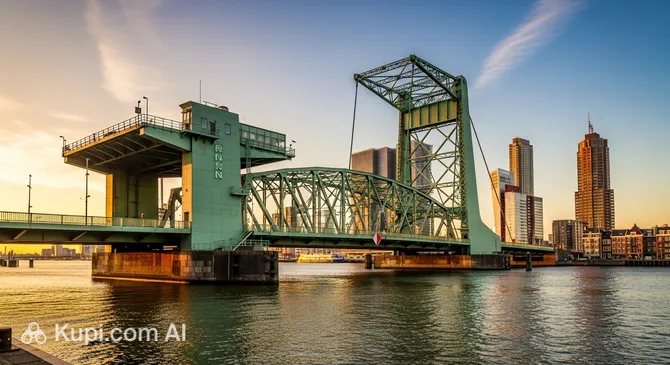
De Hef (Koningshaven Bridge)
De Hef (Koningshaven Bridge). Иллюстрация. Источник: Kupi.com AI

Built in 1927 based on a design by architect Pieter Joosten, the bridge was the first structure in Western Europe with a vertical-lift mechanism of such scale. Its 79-meter truss construction and central span, capable of rising to a height of 45 meters to let ships through, still inspire admiration for their power and strict geometric lines.

Today, De Hef holds the status of a national monument (Rijksmonument). Although trains stopped running across it in 1993, the bridge remains a vital part of the urban landscape. It stands frozen in its open position, reminding residents and visitors of the region's rich maritime history and serving as a favorite spot for professional photo shoots against the backdrop of the Nieuwe Maas river.

Contacts

For those planning to visit this industrial icon, the basic contact details are listed below. The bridge is a publicly accessible open-air site, so there is no dedicated information service, but general inquiries can be directed to city services.

How to contactContact
AddressDe Hef, 3071 NB Rotterdam, Нидерланды
Phone+31 10 485 7900

What to Do

Visiting De Hef is, first and foremost, an opportunity to touch the history of industrial design. It is worth coming here for the breathtaking views of the harbor and the neighboring modern crossings. It is an ideal spot for photographers: at sunrise or sunset, the bridge's metal trusses are painted in soft tones, creating a stunning contrast with the calm water and the modern skyscrapers on the horizon.

Take a stroll along the Maasboulevard or visit the quiet Noordereiland island to see the structural details up close, including the massive towers and the control cabin. If you enjoy active recreation, rent a bike: routes along the port allow you to appreciate the scale of the structure from different angles and feel the true rhythm of Rotterdam life. A visit to the bridge can also be perfectly combined with a boat tour of the harbor, during which you will see the structure from its most impressive vantage point—right from the water.

Getting There

Reaching the Koningshaven Bridge is quite simple, as it is located in the central part of the city. The most convenient way is to use public transport: take tram No. 7 or No. 8, or the metro (lines D and E) to the Leuvehaven or Wilhelminapier stations, from where the site is a 5–10 minute walk.

From the main station, Rotterdam Centraal, you can take tram No. 23 to the Koningin Emmaplein stop. If you prefer a taxi, the ride from the city center will take only a few minutes. For those who enjoy walking, the route from the central square across the Willemsbrug bridge takes about 20–30 minutes, offering excellent panoramic views of the river along the way.

For those traveling by car, parking is available around the Noordereiland area and the port zone. For navigation, use the GPS coordinates: 51.91345, 4.4988082. The bridge is clearly visible from a distance, serving as an excellent landmark when walking along the embankment.

Ближайший город: Rotterdam

History & Facts

The history of the crossing began with the need to solve traffic congestion: the old swing bridge from 1878 frequently blocked ship movement. After the German ship Kandelfels collided with the structure in 1918, it became clear that the city needed a new solution. This led to the project by engineer Pieter Joosten, who turned the bridge into a technological sensation of its time.

In 1928, De Hef gained worldwide fame through cinema. Director Joris Ivens filmed his famous short documentary "De brug" ("The Bridge") here, capturing the graceful movement of the lifting mechanism. This film became a classic of documentary cinema, celebrating industrial progress and the beauty of machinery.

Interestingly, until 1933, daring shows were performed on the bridge: professional divers would jump into the water directly from the rising span. Today, residents treat the site with great affection. When plans were made to dismantle it in 1993 due to the opening of a railway tunnel, mass protests by citizens saved De Hef, preserving it as a historical monument.

Between 2014 and 2017, the bridge underwent a major restoration. Its central span, weighing hundreds of tons, was removed and transported to the port for refurbishment before being ceremoniously returned to its place, ensuring the structure is preserved in perfect condition for future generations.

Time Needed

A quick look at De Hef, taking some striking photos, and a short walk along the embankment usually takes about 30–60 minutes. This is quite enough time to soak in the atmosphere of the place and examine the structure from both sides of the channel.

If you decide to combine your visit with an exploration of the neighboring Noordereiland or a full tour of the port area, allow about 1.5–2 hours for your itinerary. This will let you enjoy the panoramas at a relaxed pace and perhaps stop at one of the local cafes with a water view.

Working Hours

As an open-air monument and part of the city landscape, De Hef is available for viewing 24 hours a day, 7 days a week. You can come here at any time to see its powerful silhouette against the sunset sky or the city's night lights.

Since the bridge is permanently in the open position and no longer used for traffic, there are no restrictions on visiting hours. For additional information on possible temporary events in the area, you can check the city's official tourism portals.

Круглосуточно

Nearby

Rotterdam is a city of remarkable architecture, and a visit to De Hef can easily be complemented by exploring other iconic sites nearby. This will allow you to better feel the atmosphere of Europe's largest port and see how history intertwines with modernity.

Within walking distance, you will find both vintage vessels and avant-garde residential complexes that have become the city's hallmarks.

NameDistance
Munch0.6 km
Cube House Museum0.9 km
Harvest Cafe & Bakery0.9 km
Erasmus Bridge0.9 km
The Rotterdam1 km
REMASTERED1.1 km
Markthal1.1 km

Reached the end of the page?

That means the route is fully explored