Support

Norfolk Island Airport

About the Airport

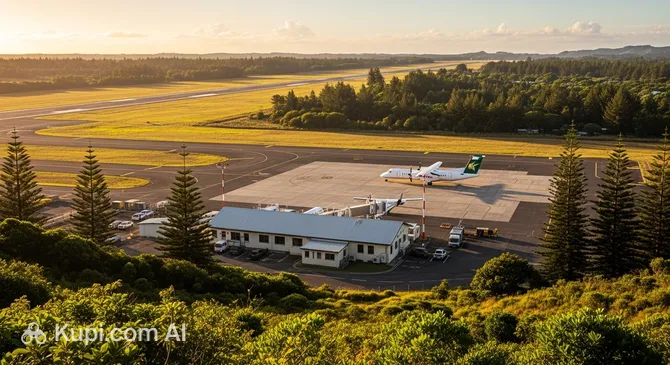
Norfolk Island Airport. Illustration.
Source: Kupi.com AI

Norfolk Island Airport (NLK) is not just a runway, but the only aerial gateway to the amazing world of Norfolk Island, lost in the Pacific Ocean. Built during World War II, when hilltops literally had to be levelled to create the airstrips, today it serves as a vital artery connecting this secluded paradise with mainland Australia. Every arrival and departure here is a small event, highlighting the special, slightly nostalgic atmosphere of island life that begins right at the aircraft steps.

PropertyValue
IATA CodeNLK
ICAO CodeYSNF
CityNorfolk Island
CountryNorfolk Island
TimezonePacific/Norfolk
Top AirlinesQantas
ScheduleOnline Timetable

The main advantage of Norfolk Island Airport is its compactness and simplicity. There are no long queues or the hustle and bustle of large aviation hubs here, allowing travellers to start their holiday as quickly and comfortably as possible. The airport is located just a few minutes' drive from the island's main town, Burnt Pine, where shops, cafes, and hotels are concentrated. You can reach your accommodation by taxi or via a transfer, which is usually provided by local hotels. Despite its modest size, the terminal offers basic amenities while maintaining the charm of a small and welcoming island airport.

Contact Information

  • Official website: www.norfolkislandairport.com
  • Information desk phone: +672 3 22445
  • Airport address: Douglas Drive, Norfolk Island 2899. This is the main aerial gateway of Norfolk.
  • Email: info@norfolkislandairport.com
  • Social media: The airport does not maintain active official pages on social media. For the latest information, it is recommended to consult the official website.
  • Lost luggage information: For issues regarding lost or damaged luggage, please contact your airline's representative directly.
  • Passenger support contacts: For general enquiries and information, please use the airport's main phone number or email address.

How to get to the airport

Getting to Norfolk Island Airport (NLK) from anywhere on the island is effortless due to its compact size. The airport is located just a few kilometres from the main town of Burnt Pine, so the journey takes no more than 5-10 minutes. The main mode of transport on the island is by car, and travel should be planned in advance.

Car rental is the most popular and convenient way to get around Norfolk Island, including trips to the airport. Many local rental companies offer meet-and-greet services at the airport, where you can collect the keys to your booked vehicle immediately. This gives you maximum freedom to explore the island at your own pace. Given the high demand, it is strongly recommended to book a car in advance, especially during the peak tourist season. The parking area near the airport is small but usually has enough available spaces.

Transfers and shuttles are an excellent alternative for those who do not plan to drive. Most hotels and apartments include a free airport transfer in the cost of accommodation. Be sure to confirm this service when booking your stay. Private companies also operate shuttle services on the island. This is a convenient and often cost-effective option, which also requires prior booking. The driver will meet you with a sign in the arrival hall.

It is important to note that Norfolk Island lacks a public transport system in the conventional sense — there are no regular bus routes or trains here. There are also no classic taxis that can be hailed by phone or stopped on the street. All transport services, whether a transfer or a private driver, are organised by prior arrangement.

Terminals and Map

Norfolk Island Airport (NLK) is a small and cosy aviation hub distinguished by its simplicity and compactness. It consists of one passenger terminal serving all arriving and departing flights. Whether you are flying from Australia or another destination, all procedures take place in one historic building.

The terminal layout is intuitive. The building is a single space where all key zones are within walking distance of each other. Getting lost here is practically impossible. Since there is only one terminal, the issue of transfers between them is irrelevant — everything is under one roof.

Departure and arrival zones are clearly separated but located nearby. The Departure Zone includes several check-in counters, a small security screening point, and a comfortable waiting lounge. The Arrival Zone consists of a hall for border control (as the island has a special status) and a baggage claim belt. Thanks to the low passenger flow, check-in and security screening times are usually minimal. Nevertheless, it is recommended to arrive at the airport 1.5–2 hours before departure to complete all formalities without rushing.

The terminal has preserved its historic appearance, which gives it a special charm. Inside, you will find only the most basic amenities: toilets, a small cafe where you can have coffee and a snack before your flight, and a souvenir shop. There are no huge Duty Free shops or numerous restaurants here, which is compensated by a calm and unhurried atmosphere.

The main advice for navigation at Norfolk Island Airport is simply to follow the signs. There are few of them, and they are extremely clear. This is one of those rare airports where the arrival or departure process is as calm and stress-free as possible, allowing you to immediately tune in to your holiday on this secluded island.

Airport History

The history of Norfolk Island Airport (NLK) is unique and closely linked to the events of World War II. Its construction began in 1942 through the joint efforts of engineers from Australia, New Zealand, and the USA. Initially, the facility was conceived as a strategic airbase for Allied forces, intended for patrolling the southwestern part of the Pacific Ocean. The first runway, built for heavy bombers, was commissioned as early as 1943.

After the war ended, the military significance of the airfield diminished, and it was converted into a civil airport, becoming a vital artery for the isolated island. This event was a turning point, opening Norfolk Island to regular passenger and cargo services. It was then that the tourism industry, which is today the foundation of the local economy, was born.

Over time, the airport underwent several key modernisations. The most significant of these occurred in the 1980s, when the runway was significantly lengthened and paved with asphalt. This allowed for the reception of modern jet aircraft, such as the Boeing 737, which sharply increased the flow of tourists. The passenger terminal was also renovated to ensure greater comfort and capacity.

An interesting fact from the airport's history: its original layout included two intersecting runways, allowing aircraft to take off and land in different wind directions — a typical solution for military airfields of that time. Today, Norfolk Island Airport is not just a transport hub, but a true road of life that ensures the island's connection with the mainland, supports tourism, and serves as a symbol of its amazing transformation.

Services and Facilities

Norfolk Island Airport (NLK) is a compact and welcoming airport that serves as the island's main aerial gateway. Despite its small size, it provides passengers with all the necessary services for a comfortable start or end to their journey.

Before your flight, you can relax in the local cafe, which serves light snacks, sandwiches, as well as hot and cold drinks. It is an ideal place to pass the time while waiting for your flight. There is also a shop in the terminal where you can purchase souvenirs, press, and travel goods. This is a great opportunity to buy gifts reminiscent of your trip to the island.

For those who need to stay connected, Wi-Fi access points may be available at the airport, but it is better to check their availability and terms of use on-site. There are also power outlets in the waiting hall for charging mobile devices. Financial services are represented by an ATM where you can withdraw cash.

The airport is adapted to the needs of passengers with reduced mobility, ensuring a barrier-free environment. For families travelling with small children, mother and child rooms are equipped, where you can take care of your little ones in a comfortable and quiet setting.

Due to the small size of the airport, there are no separate VIP lounges, business centres, or conference rooms here. There are also no hotels directly on the terminal grounds, but many accommodation options are located just a few minutes away by car. In case of necessity, basic medical assistance can be provided to passengers.

Where to Eat

Norfolk Island Airport (NLK) is a small and cosy regional airport, so the choice of establishments here corresponds to its compact size. Do not expect a large food court like in major international hubs, but having a snack or a coffee before departure is quite possible in a comfortable setting.

The main place for dining at the airport is the cafe located in the main terminal building. Typically, this is a branch of one of the popular local establishments, for example, "The Olive at the Airport". This cafe offers passengers and guests of the island a cosy atmosphere and quality food prepared with soul.

In the menu, you will find excellent coffee, tea, juices, as well as a variety of light dishes. Usually available to order are fresh sandwiches, rolls, quiches, salads, and famous local pastries — pies, cakes, and biscuits. This is a wonderful option for both a quick snack and a leisurely light lunch. The cafe strives to use fresh, locally sourced ingredients where possible, allowing you to taste the island even at the airport.

The cafe is located in the general hall of the terminal, in the area before security control (landside), making it accessible to those seeing passengers off as well. It is extremely important to remember that the establishment's opening hours depend directly on the flight schedule. It opens before departures and remains open for those meeting arriving flights. After passing through security (airside), dining options are generally unavailable.

Regarding dietary preferences, vegetarian options are usually present on the menu, such as vegetable sandwiches or fresh salads. Sometimes gluten-free desserts can be found. However, vegan options or strict halal dishes are likely to be unavailable. The price range is average, typical for a cafe, possibly slightly higher than on the mainland, which is normal for remote islands.

Thus, if you wish to have a cup of good coffee with fresh pastries before your flight, Norfolk Island Airport will provide you with that opportunity. For a more substantial and full lunch or dinner, it is recommended to visit one of the restaurants in the island's main town, Burnt Pine, before travelling to the airport.

Travel Tips

Travelling through Norfolk Island Airport (NLK) is generally a calm and predictable process, but a few tips will help make it even more comfortable. Considering that all flights from here are international, we recommend arriving at the airport at least 2–2.5 hours before departure. This time will be sufficient to check in, drop off luggage, and pass pre-flight control without rushing.

Check-in counters usually open 3 hours before and close 60 minutes prior to flight departure. Security checks here are standard but proceed quite quickly due to the low passenger flow. Special attention should be paid to carry-on luggage rules: besides general restrictions on liquids (in containers up to 100 ml) and sharp objects, remember the strictest bio-control rules on Norfolk. Ensure you are not accidentally carrying prohibited items with you (or onto the island), such as fresh fruits, vegetables, seeds, and honey, to avoid large fines at customs.

To save time, check in for your flight online if possible. And to save money, weigh your suitcases in advance to avoid paying for excess weight, as fees can be high. It is also better to buy souvenirs in town, where the selection is significantly wider. When choosing a seat on the plane, we strongly recommend booking a window seat. Views of the island and the endless ocean during take-off and landing are among the most vivid impressions of the trip.

Norfolk Island Airport is not a major transit hub, so passengers with connections are rare here. If you do have a connection planned, be prepared that you will likely need to collect your luggage yourself and check in for the next flight. In case of a flight delay, keep in mind that the terminal's facilities are limited: there is a small cafe, but no large shops or business lounges. Therefore, it is worth bringing a book, a charged power bank, and headphones to pass the time comfortably while waiting.

Reached the end of the page?

That means the route is fully explored