Support

Gurney Airport

About the Airport

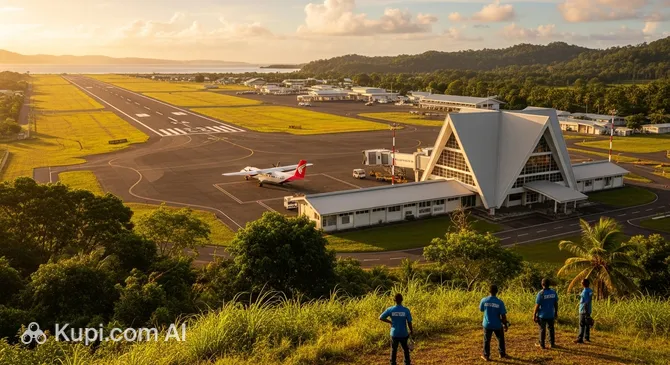
Gurney Airport. Source: Kupi.com Binoculars

Gurney Airport is not just a transport hub, but a true tropical gateway to the picturesque Milne Bay Province. Located amidst lush greenery and palm trees, it immediately immerses travelers in the relaxed atmosphere of island life, so characteristic of Papua New Guinea. The airport is named after aviation hero Charles Gurney and combines historical heritage from World War II with its vital role as a key link for tourists seeking the region's famous dive sites and coral reefs.

IATA Code GUR
ICAO Code AYGN
City Alotau
Distance to Center ~12 km
Status Domestic
Passengers per Year Statistics not published

Features and Advantages of Gurney Airport:

  • Historical Significance. The airfield was built in 1942 and played a decisive role in the Battle of Milne Bay. History enthusiasts will appreciate the fact that the runway is located on practically the same site where Allied fighters defending the region were based.
  • Major Modernization. Currently, the airport is undergoing a significant upgrade phase under the CADIP II project. Construction of a new modern terminal and apron expansion is underway, which will make passenger service even more comfortable and faster in the near future.
  • Scenic Approach. Flying into Gurney offers unforgettable impressions even before landing: aircraft often approach from the bay side, revealing breathtaking panoramic views of turquoise waters, coral islands, and dense tropical forests to passengers.
  • Compactness and Convenience. Thanks to its small size, navigation here is as simple as possible. The journey from the aircraft stairs to the terminal exit takes mere minutes, eliminating the long wanderings through corridors characteristic of major hubs.

Contact Information

Below is the main contact information for Gurney Airport (GUR). It is important to note that the airport is regional, and most contacts are handled by the head office of the National Airports Corporation of Papua New Guinea (NAC), which manages it.

  • Official Website: Gurney Airport does not have a separate website. It is managed by the National Airports Corporation (NAC). Information is available on their portal: www.nac.com.pg.
  • Help Desk Phone: The general telephone number of the managing company NAC for inquiries is: +675 324 4400.
  • Airport Address: Gurney Airport, Alotau, Milne Bay Province, Papua New Guinea.
  • Email: For general inquiries, you can use the email of the managing company NAC: info@nac.com.pg.
  • Social Media: There are no specialized social media pages for Gurney Airport. News can be tracked on the pages of airlines operating flights or on the general NAC Facebook page.
  • Lost Luggage Information: For all issues related to lost or damaged luggage, you should immediately contact your airline's representative at the airport. Airport staff do not handle the tracing of checked baggage.
  • Passenger Support Contacts: Support regarding tickets, schedules, and flight rules is provided directly by the airlines. For general questions about terminal operations, the NAC contacts listed above can be used.

How to Get to the Airport

Gurney Airport (AYGN) is located approximately 12 kilometers from the city of Alotau, the capital of Milne Bay Province. The trip from the city center to the terminal usually takes from 20 to 30 minutes, but the time may vary depending on road conditions and weather. Choosing transport for a trip to the airport has its own peculiarities characteristic of Papua New Guinea.

Taxis and Transfers. The most reliable and convenient way to get to the airport for tourists is a pre-booked transfer from a hotel or local tour operator. This guarantees you a fixed cost, safety, and timely arrival. You can also use taxi services available in the city. It is extremely important to agree on the cost of the trip with the driver before it begins, as taximeters are practically not used here. A taxi ride will cost more than public transport but will provide significantly greater comfort.

Public Transport. A budget alternative is served by PMVs (Public Motor Vehicles) — public route buses or small trucks. This is the main mode of transport for the local population. PMVs do not have a strict schedule, depart as they fill up, and can be overcrowded. A trip on a PMV is an authentic experience and the cheapest option, but it requires flexibility, patience, and is not recommended if you are in a hurry for a flight.

Car Rental and Parking. In Alotau, you can rent a car, which will give you freedom of movement. However, it is worth considering that roads outside the city may be unpaved and difficult to drive on, especially during the rainy season. For such trips, it is better to choose a four-wheel-drive SUV (4WD). Gurney Airport has basic parking where you can leave a car for a short time to drop off or pick up passengers. Long-term parking is generally not a sought-after service among tourists.

Terminals and Map

Gurney Airport (GUR) in Alotau is a small and compact regional aviation hub of Papua New Guinea, the structure of which is intuitively clear even for those visiting for the first time. Navigating through it will not cause any difficulties, making the journey more comfortable.

The airport operates one passenger terminal, which exclusively serves domestic flights. Due to its compactness, the terminal building does not have a complex layout. All key zones are located on one level and within walking distance of each other, so transitions between different parts of the airport take minimal time.

Departure and arrival zones are located under one roof. Immediately upon entering the terminal, you will see the check-in counters. After completing check-in and checking luggage, passengers proceed to the security screening area, and then to a small departure lounge. The arrival zone is just as simple: after disembarking from the aircraft, you enter the baggage claim hall, which is located near the main exit of the airport.

Check-in and screening procedures at Gurney Airport usually proceed quite quickly due to the low passenger flow. Nevertheless, it is recommended to arrive at the airport in advance — approximately 1.5–2 hours before departure. This will allow you to go through all formalities without rushing, especially if you are traveling with a large amount of luggage or during the peak tourist season.

Airport History

The history of Gurney Airport (GUR), located near the city of Alotau in Papua New Guinea, is inextricably linked with the events of World War II. It is not just a transport hub, but a place with a rich military past that played a key role in the region's history.

The airport was built in 1942 by Allied forces, including the Royal Australian Air Force (RAAF) and US Army engineering units. Initially, it was known as "No. 1 Strip" and was created as a strategic military airfield. Its location in Milne Bay was not chosen by chance: the airfield became the central point of defense during the famous Battle of Milne Bay in August-September 1942. It was air support provided from this strip that helped the Allies achieve the first land victory in history over Japanese forces in the Pacific campaign.

The airport received its current name in honor of the Australian pilot, Squadron Leader Charles Raymond Gurney, who died in this area during a combat mission in 1942. Thus, the name immortalized the memory of the heroism of the pilots who defended these lands.

After the end of World War II, the military airfield was converted into a civil airport, becoming the main air gateway to Milne Bay Province. Over the decades, it has gone through various stages of modernization to meet modern aviation standards and service the growing passenger flow. Reconstructions included improving the runway and upgrading the terminal, which allowed for the reception of more modern aircraft and contributed to the development of tourism in this picturesque corner of Papua New Guinea.

Services and Amenities

Gurney Airport (GUR) is an important regional air terminal for those traveling through Milne Bay Province in Papua New Guinea. It provides a basic set of services for a comfortable wait for your flight. Although the infrastructure here is not as extensive as in major international hubs, passengers will find everything essential. Inside the terminal building, there are small cafes and kiosks where you can buy light snacks, sandwiches, soft drinks, and hot beverages. You can also purchase local souvenirs and travel necessities here.

There are no specialized VIP lounges at Gurney Airport. Passengers have access to general waiting areas with standard seating. Options for connecting to Wi-Fi may be limited, so it is recommended to have mobile internet or download necessary content in advance. The number of power outlets for charging devices is also small, so a portable power bank will be your reliable helper.

Financial services at the airport are basic. There may be ATMs in the terminal, but for currency exchange, it is better to visit banks in the city of Alotau. It is recommended to carry some local currency (Kina) for small expenses. There is a first aid station on the airport territory for emergency cases. For serious health issues, one should contact medical institutions in the city.

The airport is equipped to receive passengers with special needs. There are ramps and specially equipped restrooms. To receive additional assistance, for example, for escort or wheelchair provision, it is recommended to contact your airline representatives in advance. For passengers with small children, changing tables may be provided in restrooms, however, there are no separate play areas.

There are no hotels directly on the territory of Gurney Airport. However, many accommodation options, from guest houses to comfortable hotels, can be found in the nearby city of Alotau, which is easily accessible by taxi or transfer. Business services, such as conference rooms or business centers, are absent at the airport. For conducting business meetings, it is better to use the infrastructure of hotels in the city.

Dining

Gurney Airport (GUR), serving the city of Alotau, is a small regional aviation hub, so the choice of catering establishments here is quite limited. Nevertheless, passengers can find basic options for a snack before departure.

In the main terminal building, as a rule, a small cafe or kiosk operates. It is located in the general area (landside), accessible to both departing and arriving passengers as well as those seeing them off. Here you can purchase beverages such as coffee, tea, bottled water, and carbonated drinks, as well as light snacks: sandwiches, pastries, chips, and chocolate. Sometimes simple local dishes can be found on the menu, but one should not count on full restaurant service.

The opening hours of the local cafe are usually tied to the flight schedule — it opens shortly before the first departure and closes after the departure of the last aircraft. Prices, as in most airports, may be slightly higher than in the city but remain within reasonable limits.

Unfortunately, specialized dining options, such as vegan, gluten-free, or Halal meals, are likely unavailable at Gurney Airport. Passengers with strict dietary restrictions are strongly advised to bring food with them. For a full lunch or dinner, it is better to choose one of the establishments in the city of Alotau itself before traveling to the airport.

Travel Tips

Traveling through Gurney Airport, the gateway to the charming city of Alotau and Milne Bay Province, will be easier and more pleasant if you follow a few useful tips. This airport, serving mainly domestic flights, has its own specifics, and knowing them will help avoid unnecessary stress.

Arrival Time at the Airport. Despite the fact that Gurney is a small regional airport, it is recommended to arrive here at least 1.5-2 hours before the departure of a domestic flight. This will give you enough time to check in, drop off luggage, and pass pre-flight screening without rushing, which, although simpler than in megacities, can take time, especially if several flights are departing simultaneously.

Check-in and Security. Make sure all your documents — ID and ticket — are at hand. Procedures at regional airports in Papua New Guinea may be less automated, so be prepared for manual checks. Security staff are generally friendly but strictly monitor compliance with rules, especially regarding prohibited items.

Seat Selection on the Plane. Flights in this region are famous for breathtaking views. To fully enjoy the panorama of coral reefs, islands, and emerald jungles, choose a window seat. If you prefer more legroom and the ability to stand up freely, your choice is an aisle seat.

Hand Luggage. Standard rules apply here as well: liquids in containers no larger than 100 ml, packed in a transparent bag, and no sharp objects. Pay special attention to the export of natural souvenirs: the export of certain types of corals, shells, and plants may be strictly prohibited. Always clarify the rules before purchasing to avoid problems at control.

Transit Passengers. If you have a connecting flight, allow enough time for the transfer. Schedules may change due to weather conditions. Clarify whether you will need to collect luggage and check it in again, especially if you are flying with different airlines.

Biosecurity Control. Strict biosecurity rules operate in Papua New Guinea to protect unique flora and fauna. Even on domestic flights between provinces, random checks are possible for the transport of certain plants, seeds, fruits, or products of animal origin. To avoid misunderstandings, refrain from transporting such goods or clarify the current rules in advance.

Saving Time and Money. Whenever possible, complete online check-in if your airline provides such a service. Travel light to avoid paying for excess baggage. Carry some local currency (Kina) for small purchases at the airport, as not all retail points may accept bank cards.

Flight Delays. In case of a flight delay, stay calm. Contact your airline representative for information and instructions. In a small airport like Gurney, waiting options may be limited, so it is useful to have a book, a charged power bank, or downloaded movies with you to pass the time.

Airports in nearby cities

Reached the end of the page?

That means the route is fully explored