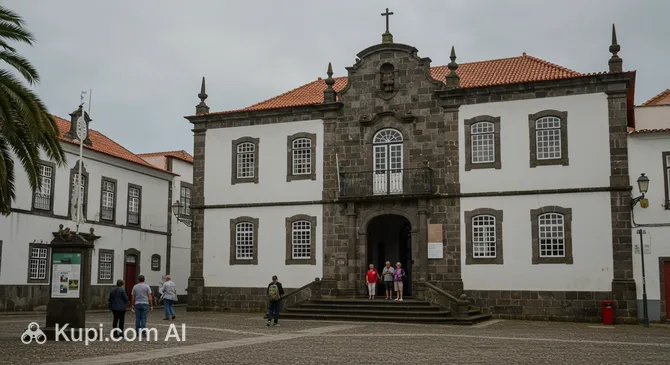
In the heart of the historic center of Angra do Heroísmo, a UNESCO World Heritage site, lies the Museum of Angra do Heroísmo (MAH). This is the main cultural institution of Terceira Island, housed in the monumental building of a former 17th-century Franciscan monastery. The museum serves as a mirror reflecting the centuries of history that Portugal preserves on its Atlantic borders.
Museum of Angra do Heroísmo. Illustration.
Source: Kupi.com AI
Traveler photos:
The museum's collection is surprisingly eclectic and broad in scope. The permanent exhibition "Do Mar e da Terra" (Of Sea and Land) tells the story of life in the Azores since their discovery in 1427. It features everything from fine porcelain and antique furniture to navigational instruments and military equipment, highlighting the city's role as a strategic crossroads between continents.
In addition to the main halls, the museum includes the magnificent São Francisco Church and a peaceful cloister, which are architectural masterpieces in their own right. This place is rightfully called a "museum of synthesis" as it combines ethnography, art, and maritime history, allowing visitors to journey through centuries of Atlantic history in a single visit.
Contacts
For more information on special exhibitions or group visits, you can use the museum's official contact details.
A visit to the museum is an opportunity to take a deep dive into the Age of Discovery. In the halls of the main exhibition, you will see how Terceira transformed from an uninhabited island into a key trading hub. Be sure to notice the navigational instruments and detailed models of forts, such as São João Baptista, which protected Angra Bay from pirates and invaders for centuries.
Art and architecture lovers should spend time in the Church of São Francisco. Its interiors are breathtaking: carved gilded altars, intricate sculptures, and traditional Portuguese azulejo tiles create a unique atmosphere. Following a recent restoration, the sacristy is also open to the public, featuring a unique 18th-century rosewood chest.
The museum's collection is remarkably diverse, making it interesting even for those who usually find historical halls dry. You can examine antique carriages and cars, a collection of cold steel and firearms, as well as everyday items used by Azorean farmers. The museum skillfully interprets Angra's urban planning and daily life, helping visitors understand why this city became a benchmark for colonial architecture of its time.
Getting There
Located in the heart of the historic center at Ladeira de São Francisco, the museum is within walking distance of most key landmarks in the city. A walk from the central square, Praça Velha, or the city port takes only a few minutes, allowing you to enjoy the unique UNESCO-recognized architecture along the way.
If you are arriving from Terceira Airport, the journey is about 10 kilometers. A trip by taxi or rental car via the EN1-1A highway will take approximately 15–20 minutes. Buses also run between the airport and the city center, stopping just a few minutes' walk from the entrance to the museum complex.
For those who prefer private transport, there are parking areas near the museum building. Navigator coordinates: 38.6570965, -27.2172055. A visit to the museum is easy to combine with a general walking tour of Angra do Heroísmo, as the city features a well-planned street grid and picturesque harbor views.
Nearest city: Angra do Heroismo
History & Facts
The official history of the museum began on March 30, 1949. Its first director was Manuel Coelho Baptista de Lima, who dedicated three decades to the development of this cultural institution. Initially, the collection was housed in the Bettencourt Palace, but in 1969, it moved to its current home within the walls of the majestic São Francisco Monastery.
The monastery building itself is an outstanding monument of 17th-century architecture. The construction of its church took place between 1666 and 1672. However, the museum's history has not been without its challenges: a powerful earthquake on January 1, 1980, caused serious damage to the buildings. A large-scale restoration began only in 1991, and it was not until 2000 that the museum was able to fully reopen all its exhibitions to the public.
The museum's significance is enhanced by its location in a city listed as a UNESCO World Heritage site. Angra do Heroísmo served for centuries as a vital Atlantic port and played a key role in the Liberal Wars of the 19th century. It was for its resilience during this period that the city received the honorary title — "do Heroísmo" (of Heroism), which is also reflected in the museum's collections.
Time Needed
To leisurely explore the main "Of Sea and Land" exhibition and visit the magnificent São Francisco Church, most travelers need about 1.5–2 hours. This is enough time to appreciate the diversity of the collection and the architectural details of the monastery complex.
If you plan to study the temporary exhibitions in detail, visit the sacristy, or are interested in the specialized military collections in the branches, it is better to allow 2.5–3 hours for your visit. The museum is quite large, and the abundance of small exhibits — from coins to vintage cars — may keep you engaged longer than originally planned.
Working Hours
The museum welcomes visitors from Tuesday to Sunday. The operating schedule is consistent: doors are open from 10:00 to 17:30. This is a convenient time to include the museum in your morning or afternoon stroll through the city.
Please note that Monday is a closing day, and the museum is completely closed to visitors. It is also recommended to check the schedule during Portuguese national and regional holidays, when opening hours may change.
Day
Opening hours
Monday
Closed
Tuesday
10:00 – 17:30
Wednesday
10:00 – 17:30
Thursday
10:00 – 17:30
Friday
10:00 – 17:30
Saturday
10:00 – 17:30
Sunday
10:00 – 17:30
Nearby
Angra do Heroísmo is a city with a high concentration of historical monuments, so after visiting the museum, your exploration of the island is just beginning. A walk through the surrounding streets will allow you to deeper experience the atmosphere of the "heroic" port and see the fortifications that protected these lands for centuries.