Support

Porto Santo Airport

About the Airport

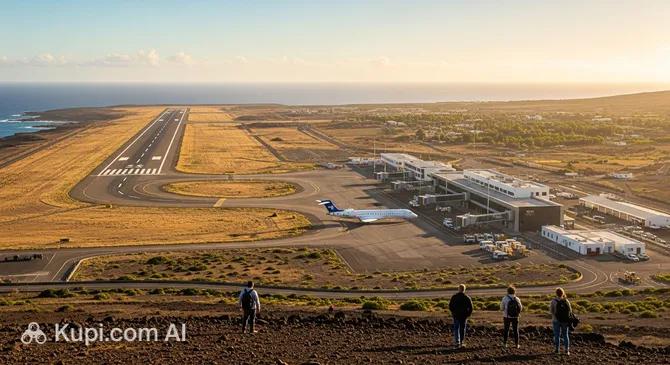
Porto Santo Airport. Source: Kupi.com Binoculars

Porto Santo Airport (PXO) serves as the air gateway to Portugal's charming "Golden Island," renowned for its 9-kilometre beach with therapeutic sands. As the first airport built in the Madeira archipelago in 1959, it plays a key role in the island's tourism appeal. Its impressive 3,000-metre runway spans a significant portion of the island, welcoming both scheduled and seasonal flights from various corners of Europe. This cosy and modern air harbour is the starting point for an unforgettable holiday in an atmosphere of tranquillity and seclusion.

IATA Code PXO
ICAO Code LPPS
City Porto Santo
Distance to Centre approx. 2 km to the town of Vila Baleira
Status International
Annual Passengers Over 106,000 (first half of 2024)
Popular Airlines TAP Air Portugal, easyJet, Binter Canarias
Schedule online flight information "Porto Santo Airport"

Despite its modest size, Porto Santo Airport possesses everything necessary for a comfortable start and end to your journey. Following a renovation in 1995, it acquired a modern passenger terminal capable of serving the growing flow of tourists. One of its unique features is that the airport shares its base with the military; however, this does not impact civil aviation operations. For the convenience of arriving passengers, car rental services and a taxi rank are available at the terminal, which are the primary means of getting around the island as there is no direct bus service to the airport.

Contact Information

  • Official Website: www.aeroportoportosanto.pt
  • Information Desk Phone: +351 291 980 120
  • Airport Address: 9400-110 Porto Santo, Madeira, Portugal
  • Email: For most enquiries, it is recommended to use the contact form on the airport's official website.
  • Social Media: News and updates are published on the official pages of the management company, ANA Aeroportos de Portugal, for example, on Facebook.
  • Lost Luggage Information: If your luggage has been lost or damaged, you must immediately contact your airline's Lost and Found service at the airport. For items left within the terminal, please contact the airport information centre.
  • Passenger Support Contacts: For general information and support, you may call the main airport telephone number or utilise the online services on the website.

How to Get to the Airport

Porto Santo Airport (PXO) is the sole air gateway to the enchanting island of Porto Santo, part of Portugal. Thanks to the island's compact size, getting to the terminal from its main town, Vila Baleira, or from popular hotels is very simple. On average, the journey from the town centre to the airport takes just 5–10 minutes.

Public transport on the island is represented by buses. This is the most budget-friendly way to travel. There is a route that connects the airport with Vila Baleira and the main hotel zones. It is important to note that the bus schedule is often adapted to flight arrival and departure times. The fare is very affordable — a ticket will cost approximately 1–2 Euros, making the bus an excellent choice for economical travellers. We recommend checking the current schedule on-site in advance.

Taxis and transfers are a more comfortable and faster option. A car can easily be found at the rank in town or ordered by phone. This is an ideal solution if you are travelling with a large amount of luggage. The trip will be very short, and the cost typically ranges from about 5–10 Euros. Additionally, many hotels offer an organised transfer service for their guests; it is worth enquiring about this when booking.

If you plan to actively explore the island, car rental is an excellent solution. By renting a car, you can not only visit all the attractions but also drive comfortably to the airport on the day of departure. Directly at the terminal, there is a car park where you can leave a vehicle for both short and long periods. Most rental agencies also allow you to return the car directly at the airport before your flight, which is very convenient.

Terminals and Map

Porto Santo Airport (PXO) is a modern and compact aviation hub distinguished by a simple and clear structure. Due to its small size, it is very convenient for passengers and does not require much time for orientation.

The airport has only one passenger terminal, serving both domestic flights (primarily to Madeira) and international seasonal charters. The terminal building has two floors, and its layout is extremely logical. On the ground floor are the arrivals area, check-in counters, and car rental desks. Arriving passengers exit into the general hall immediately after collecting their luggage.

The departures area is located on the first floor. After checking in on the ground floor, passengers proceed upstairs to pass through security control. Since there are no transfers between terminals, all services and boarding gates are located in one building, eliminating the possibility of getting lost. Navigation is intuitively clear thanks to distinct signs in Portuguese and English.

Completing all formalities typically does not take much time. Check-in and security screening usually proceed quickly, but during the peak tourist season (summer months), small queues are possible. It is recommended to arrive at the airport approximately 1.5-2 hours before an international flight and 1 hour before a domestic one, to go through all procedures without haste, have a coffee, and relax before the flight.

Airport History

The history of Porto Santo Airport (PXO) is inextricably linked to the development of tourism and the strategic position of the island in the Atlantic. Its official opening took place on 20 July 1960. Initially, it was a modest airfield with a short runway, built to break the island's isolation and establish regular air links with Madeira and mainland Portugal. The first flights were operated on small aircraft, such as the Douglas DC-3.

A key stage in the airport's development was its use for military purposes. In the 1970s, at the height of the Cold War, a NATO airbase was stationed here, which required significant infrastructure modernisation. The runway was substantially lengthened and strengthened to accommodate heavy military transport aircraft. This transformed the airport from a small regional hub into a strategically important facility in the Atlantic Ocean.

A new cycle of development began in the 1990s when the government focused on turning Porto Santo into a popular tourist resort. In 1995, a new, modern passenger terminal was opened, and the runway was reconstructed again and extended to an impressive 3,000 metres. This modernisation allowed the airport to receive almost any type of long-haul aircraft, opening the island to charter flights from various European countries.

Among the interesting facts in the airport's history, it is worth noting that for some time it bore the name "Columbus Airport" in honour of the great navigator who lived on the island. Today, Porto Santo Airport continues to perform a dual function: it serves as the main air gateway for tourists wishing to enjoy the island's golden beaches, and simultaneously acts as an important airbase for the Portuguese Air Force. Its long runway makes it a key alternative airfield for Madeira Airport, especially during difficult weather conditions.

Services and Amenities

Porto Santo Airport (PXO), despite its compact dimensions, offers passengers all necessary services for a comfortable wait before their flight. The terminal is designed to ensure convenience and quick access to all essential amenities.

Dining and Shopping. In the airport, you will find several cafes and bars where you can drink coffee, have a snack with sandwiches, or try local pastries. For those wishing to make purchases, there is a Duty-Free shop with an assortment of perfumes, alcoholic beverages, and tobacco products, as well as souvenir shops where you can acquire memorable gifts from the island.

Lounges and VIP Service. The airport has a general waiting hall for all passengers. The availability of a separate VIP lounge should be checked directly with your airline or on the official airport website, as the conditions for providing such services may change.

Connectivity and Charging. Free Wi-Fi is available throughout the terminal, allowing you to stay connected. Also, in the waiting hall, you can find stations for charging mobile phones and other electronic devices.

Financial Services. For the convenience of travellers, ATMs are installed in the terminal building where cash can be withdrawn. Currency exchange points are also available for those who need to exchange money upon arrival or before departure.

Additional Services:

  • Medical Assistance: A first aid point operates at the airport in case of unforeseen situations.
  • For Passengers with Children: Mother and child rooms are provided, equipped with changing tables and everything necessary for infant care.
  • For Passengers with Reduced Mobility: The airport is fully adapted for citizens with limited mobility. The MyWay assistance service is available, which is recommended to be booked in advance through the airline.

Hotels and Business Services. There are no hotels directly within the airport building; however, Porto Santo is a small island, and most hotels and apartments are just a 5-10 minute taxi ride away. Specialised conference rooms or business centres are absent in the terminal, which is typical for small regional airports.

Where to Eat

Porto Santo Airport (PXO) is small and compact, so the selection of catering establishments here corresponds to its size. The options are primarily designed for a comfortable snack while waiting for a flight, rather than for a full gastronomic experience. Nevertheless, passengers will not go hungry.

The main establishment is typically a café-bar located in the general area of the airport, before security control (landside). Here, both departing passengers and those seeing them off can have a snack. After passing through screening, in the departures area (airside), there is usually a small kiosk or coffee point where you can buy drinks and light snacks immediately before boarding the plane.

The menu features standard items for airports: sandwiches, pastries, crisps, chocolate, as well as hot and cold drinks. If you want to try something local, pay attention to traditional Portuguese pastries, for example, the famous pastel de nata cakes. This is a great way to enjoy the taste of Portugal before departure. The range of full hot meals is usually limited.

Establishments at Porto Santo Airport are ideal for a quick snack or a cup of coffee. For a full lunch or dinner, it is better to eat in town beforehand. Regarding prices, they are, as in most airports around the world, slightly higher than in city cafes. Specialised options, such as vegan, gluten-free, or Halal dishes, will most likely be absent or presented in very limited quantities. It is recommended to check the ingredients with staff if you have strict dietary requirements.

The opening hours of catering establishments at PXO Airport directly depend on the flight schedule. Usually, they open a few hours before the first departure and close after the last plane leaves, ensuring service for all passengers.

Travel Tips

To ensure your journey through Porto Santo Airport passes as comfortably as possible, make use of these helpful tips. Porto Santo Airport (PXO) is small and modern, but proper preparation will help avoid unnecessary stress. It is recommended to arrive at the airport 2–2.5 hours before international flights and 1.5–2 hours before domestic ones. During the peak tourist season (summer), it is better to allow extra time due to a possible increase in passenger flow.

To save time, use online check-in for your flight if your airline offers this option. This will allow you to proceed immediately to baggage drop (if you have any) or to the security checkpoint. The security procedure here is standard, but since the terminal is not large, be prepared for potential queues, especially before the departure of several flights simultaneously.

When choosing a seat on the plane, opt for a window seat. This way, you can enjoy breathtaking views of the island's golden beaches and the boundless Atlantic Ocean during take-off or landing. Views of the island part of Portugal are particularly picturesque from the air.

Hand luggage rules are standard for most airlines. Liquids (creams, gels, drinks) must be in containers with a volume of no more than 100 ml and packed in a single transparent bag. All sharp and cutting objects must be placed in checked luggage. Electronic devices, such as laptops and tablets, as well as portable chargers (power banks), should be carried only in hand luggage and be ready to be presented separately at security.

Porto Santo Airport mainly serves direct flights, so long layovers here are a rarity. If you do have a connection planned, check in advance whether you will need to collect and re-check your luggage. Given the airport's compact size, moving between zones will not take much time, but it is always useful to have a buffer of time in case of unforeseen circumstances.

Customs control for passengers arriving from European Union countries usually passes quickly and is of a formal nature. If you are arriving from outside the Schengen area, follow the standard "green" and "red" channel system for declaring goods. Customs officers may selectively check luggage, so ensure you are not carrying anything prohibited.

To save money, take an empty reusable water bottle with you and fill it at drinking fountains after passing security control. Prices in airport shops and cafes can be higher than in the city. Time savings are achieved through online check-in and preparing all necessary documents in advance: passport, boarding pass, and visa (if required).

In the event of a flight delay or cancellation, first find the information board to get current information. Then contact your airline representative — their counter is usually located in the departures area. Passengers flying on flights from the EU are protected by rights that may provide for compensation, meals, or hotel accommodation depending on the length of the delay. In the small airport terminal, there are cafes and shops where you can spend time while waiting.
Airports in nearby cities

Reached the end of the page?

That means the route is fully explored