Support

Bratsk

About

Discover Bratsk, a prominent industrial and cultural center situated in the heart of Siberia. Located in the Irkutsk Oblast of the Russian Federation, this city offers a unique blend of impressive engineering marvels and breathtaking natural landscapes. With a population of over 230,000 residents, it serves as a vital hub on the banks of the mighty Angara River, surrounded by the endless beauty of the taiga.

The city's climate is distinctly continental, characterized by crisp, snowy winters and surprisingly warm, sunny summers. While the modern development is closely tied to industrial growth in the 20th century, the history of Bratsk actually dates back to 1631 when it was founded as a fortress. Today, it stands as a testament to human resilience and ambition, bridging the gap between ancient traditions and modern power.

Bratsk. Source: Kupi.Binoculars

Travelers are often drawn to the Bratsk Hydroelectric Power Station, one of the largest and most powerful dams in the world, which creates the vast Bratsk Reservoir, locally known as the "Bratsk Sea." For a change of pace, the Angara Village (Angarskaya Derevnya) open-air ethnographic museum offers a fascinating glimpse into the past, featuring preserved wooden architecture and exhibits on the indigenous Evenki people and early Russian settlers.

Whether you are fascinated by monumental industrial achievements or seeking the tranquility of Siberian nature, Bratsk welcomes you to explore its unique character. It is an authentic destination where the scale of human creation meets the wild grandeur of the North.

Weather Overview

Bratsk features a sharp continental climate with extreme seasonal variations typical of the Siberian region. The winter months are severe and long-lasting, particularly in January when the average temperature drops to -20.3°C, with lows plunging even further. Conversely, the summer season is short but delightful, with July offering the warmest conditions and average daily highs reaching 23.4°C.

Precipitation is distributed throughout the year, with the frequency of wet days ranging from about 5 in February to 13 in September. To help you pack the right gear for your specific travel dates, you can consult the detailed report on the weather in Bratsk. Generally, visitors should expect warm summers with occasional rain and very cold, dry winters.

Interesting Facts

Beyond the main attractions, Bratsk holds many fascinating secrets that reveal its unique character. From its unusual urban layout to the hidden history beneath its waters, there is much to uncover in this Siberian powerhouse.

  • A City in the Forest: Unlike typical cities with a centralized grid, Bratsk consists of several detached districts separated by vast stretches of wild taiga. Traveling between neighborhoods often feels like a journey through the deep woods, giving the city a distinctive, decentralized structure.

  • The Sunken Fortress: The original 17th-century settlement of Bratsk lies submerged beneath the waters of the reservoir. Before the area was flooded to create the dam, historical experts carefully dismantled and relocated ancient wooden towers to save them, preserving a piece of the region's origins.

  • Siberian Beach Life: Despite its location in the heart of Siberia, the city boasts a vibrant summer beach culture. The shores of the reservoir, particularly at Padun Beach, transform into lively recreational hubs where locals swim and sunbathe during the warm months.

  • Altered Climate: The sheer volume of water in the Bratsk Reservoir, often called the "Bratsk Sea," has created a unique microclimate. The massive body of water retains heat, leading to longer, milder autumns and slightly less severe frosts in the immediate vicinity compared to the surrounding taiga.

Padun Beach. Source: Kupi.Binoculars

How to Get There

Reaching this Siberian industrial center is an adventure in itself, offering travelers a chance to experience the vastness of the region. You can find more details about how to get to Bratsk in our dedicated guide, but the city is generally well-connected by both air and rail, serving as a key transport hub for Northern Irkutsk Oblast.

The most direct and convenient entry point is Bratsk Airport (BTK), located approximately 8.7 km from the city center. This international airport handles the majority of traffic and connects the city with major Russian hubs. The journey from the terminal to the downtown area is short, typically taking around 15 to 20 minutes by taxi or shuttle. Alternatively, travelers exploring the wider region might consider Ust-Ilimsk (UIK) in the city of Ust-Ilimsk or Ust-Kut Airport (UKX) in Ust-Kut. However, it is important to note that these airports are significantly farther away—about 212 km and 255 km respectively—meaning a transfer to Bratsk would require a long drive.

For clarity, here is a summary of the main airports:

Airport Name City Passenger Traffic Km from City
Bratsk Airport Bratsk Moderate 8.7
Ust-Kut Airport Ust-Kut Low 254.8
Ust-Ilimsk Ust-Ilimsk Low 211.6

The railway network is another popular option, especially for those who enjoy the scenic routes of the Baikal-Amur Mainline region. The most significant stop within the city limits is Padunskie Porogi Station, situated just 1.9 km from the center. It sees a high volume of passengers and serves as a convenient arrival point; a taxi ride from here takes only about 5 to 10 minutes. Travelers might also arrive at Vikhorevka Station in the neighboring town of Vikhorevka. Although it is a busy hub, it is located 38.9 km away, so expect a transfer time of roughly 45 to 60 minutes to reach Bratsk.

Below is a list of the nearest railway stations:

Station City Passenger Traffic Km to Center
Padunskie Porogi Station Bratsk High 1.9
Vikhorevka Station Vikhorevka High 38.9
Gidrostroitel Station Bratsk 11.5
Anzebi Station Bratsk 21.4
Bratsk Railway Station Bratsk 21.7

Main Attractions

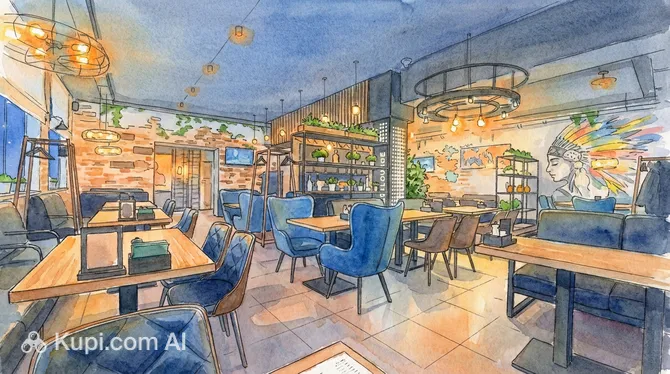
While the city is globally renowned for its industrial achievements, it also boasts a variety of venues where visitors can relax, dine, and shop. The local culinary scene offers a welcoming respite for travelers. One of the notable spots is Köster, a restaurant known for its pleasant atmosphere and satisfying menu, making it a great place to unwind after a day of sightseeing.

Köster. Source: Kupi.Binoculars

For those seeking a different flavor, Hollywood provides another excellent dining option. This establishment is a popular choice for both quick bites and leisurely meals, adding a touch of vibrancy to the city's gastronomic landscape.

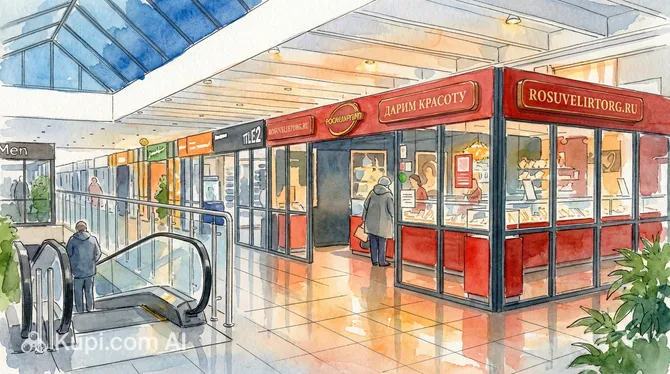
Shoppers will find plenty to explore in the city's modern retail centers. Pursey Shopping Mall stands out as a key destination, offering a wide array of goods ranging from fashion to daily necessities. It is a bustling hub where you can experience the local commercial pulse.

Pursey Shopping Mall. Source: Kupi.Binoculars

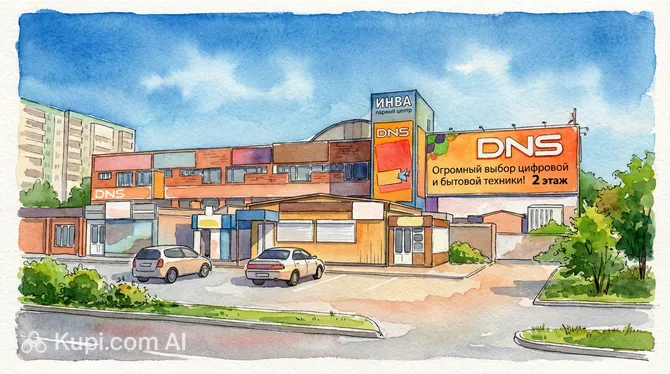
Another convenient location for retail therapy is TTS Inva. This shopping complex provides additional opportunities to browse for souvenirs, clothing, and other items, ensuring that visitors have access to everything they might need during their stay.

To experience the natural beauty of the area, a visit to Padun Beach is highly recommended. Situated along the expansive Bratsk Reservoir, this scenic area allows you to enjoy the fresh breeze and stunning water views, serving as a perfect outdoor escape within the city limits.

Padun Beach. Source: Kupi.Binoculars

Local Cuisine

The local cuisine in Bratsk is deeply influenced by its location in the heart of Siberia, offering hearty and warming dishes designed to sustain people through the long, cold winters. Visitors can expect a focus on natural, locally sourced ingredients, particularly meat, river fish, and forest treasures like berries and mushrooms. The food culture here is unpretentious but flavorful, characterized by generous portions and a love for traditional Russian recipes prepared with a Siberian twist.

One of the absolute must-try dishes is Siberian pelmeni. These dumplings are typically filled with a mixture of minced meats—often beef, pork, and sometimes game like venison or moose—and are traditionally frozen outdoors in winter before being boiled. They are usually served with sour cream, butter, or a splash of vinegar. Another local staple is fish from the Angara River and the Bratsk Reservoir. You might find delicious smoked or salted varieties of pike, perch, or even grayling, which are popular appetizers among locals.

When it comes to beverages, the region is famous for its non-alcoholic berry drinks. Mors, made from cranberries or lingonberries harvested in the surrounding taiga, is a refreshing and vitamin-rich choice found in almost every café. For something warmer, herbal teas brewed with local plants like blooming sally (ivan-chai) or thyme are perfect for chilly evenings. Of course, traditional Russian vodka is also a standard accompaniment to festive meals and hearty dinners.

Dining out in Bratsk ranges from casual canteens to more modern establishments. Locals enjoy spending time in places that offer a mix of European and Russian cuisine. For instance, Hollywood is a well-known restaurant where tourists can experience the local hospitality and a diverse menu in a lively setting.

Hollywood. Source: Kupi.Binoculars

In the summer, the food scene expands outdoors. The aroma of shashlik (marinated meat skewers grilled over charcoal) fills the air near recreational areas and beaches. It is a favorite seasonal activity for residents to gather for a barbecue by the water. For a more refined indoor experience, Köster offers a cozy atmosphere where you can enjoy grilled specialties and other savory dishes that highlight the region's love for fire-cooked flavors.

Travel Tips

Welcome to the heart of Siberia! To ensure your visit to Bratsk is comfortable and hassle-free, we have compiled a set of essential guidelines that will help you navigate the city's unique layout and adapt to the local environment.

  1. Clothing and Gear: The contents of your suitcase should depend entirely on the season. If you visit in winter, prepare for severe cold; thermal underwear, a heavy down jacket, a warm hat, and non-slip insulated boots are mandatory. In summer, the weather is warm and sunny, so light clothing is suitable, but always pack a light jacket for cool evenings. A universal adapter for Type C and F plugs (standard European) is necessary for your electronics.

  2. Transportation: Bratsk is unique because its districts are separated by vast stretches of forest, making the city feel like several towns in one. While buses and marshrutkas (minibuses) connect these areas, the distances can be long. The most convenient way to get around is by taxi. downloading a ride-hailing app like Yandex Go is highly recommended, as it overcomes language barriers and offers fixed pricing.

  3. Finances: The local currency is the Russian Ruble (RUB). It is important to note that credit and debit cards issued outside of Russia may not work at local terminals or ATMs. Therefore, it is crucial to bring sufficient cash in major currencies (such as US Dollars or Euros) in pristine condition to exchange at local banks. Tipping is appreciated but not mandatory; leaving about 10% in cafes is a standard gesture.

  4. Health and Safety: Pharmacies, marked by a green cross and known as Apteka, are widespread, and some operate 24/7 in the central district. While the city is generally safe, it is wise to stick to well-lit areas at night. As a precaution, avoid drinking tap water; buying bottled water from supermarkets is the safest and most convenient option for tourists.

  5. Communication: The primary language is Russian, and English is not widely spoken outside of major hotels or by younger people. It is essential to download an offline translation app before you arrive. Buying a local SIM card (MTS, Beeline, Tele2, or MegaFon) is easy at the airport or mobile shops in the city center; you will just need your passport.

  6. Local Etiquette: Siberians are known for their hospitality, though they may appear reserved at first. A firm handshake is the standard greeting for men. If you are invited to someone's home, the golden rule is to remove your shoes immediately upon entering; hosts will usually provide you with slippers.

  7. What to Avoid: Do not underestimate the travel time between districts. The Central District and the Padun District (where the dam and beach are located) are nearly 30 kilometers apart. Avoid planning back-to-back activities in different districts without allowing at least 45 minutes for travel.

  8. Nature Tip: If you are visiting in late spring or summer (June to August), be prepared for insects. The city is surrounded by taiga, so mosquitoes and midges can be active. Carrying a good quality insect repellent will make your walks along the Angara River much more enjoyable.

By keeping these practical tips in mind, you will be well-prepared to experience the best of Bratsk. Whether you are here to marvel at the massive hydroelectric dam or explore the Siberian taiga, a little preparation goes a long way in ensuring a memorable trip.

Entertainment & Nightlife

Nightlife in Bratsk is primarily concentrated in the Central District, where the city's energy shifts from industrial hustle to a more relaxed, social vibe. Unlike the sprawling club scenes found in larger metropolises, the evening culture here revolves around lively restobars, karaoke lounges, and late-night dining venues. The atmosphere is generally casual and welcoming, with locals gathering to unwind after work, enjoy live music, or celebrate special occasions.

For a taste of the local evening scene, Hollywood is a popular destination. It transitions seamlessly from a dining spot to a vibrant venue where guests can enjoy cocktails and music in a spirited setting. If you prefer a warmer, more intimate ambiance, Köster offers a stylish environment perfect for savoring grilled dishes and drinks. These venues typically operate late into the night on weekends, often hosting DJs or themed parties that draw a mix of young professionals and couples.

When planning a night out, it is important to consider logistics. The city's districts are far apart, so it is best to pick one area—usually the Center—and stay there. Public transport stops running relatively early, so downloading a taxi app like Yandex Go is essential for getting back to your accommodation safely. The dress code is generally "smart casual"; while you don't need formal wear, looking neat and stylish is appreciated. Prices are quite reasonable compared to larger Russian cities, with the average bill for dinner and drinks being affordable for most travelers.

Beyond the nightlife, Bratsk offers engaging daytime entertainment. Cultural enthusiasts should check the schedule at the Bratsk Drama Theater, which stages high-quality productions ranging from classics to modern plays. For a more leisurely afternoon, the city's shopping centers provide a mix of retail and recreation. TTS Inva is one such hub where visitors can shop, grab a coffee, or catch a movie at the cinema, making it a great option for families or those looking to escape the weather.

TTS Inva. Source: Kupi.Binoculars

Safety is generally not a major concern in the main entertainment districts, but standard precautions apply. Stick to well-lit streets, avoid walking alone through the forest belts that separate neighborhoods at night, and always use official taxi services rather than hailing private cars from the street.

Parks & Museums

While Bratsk is primarily known for its industrial might, the city is surprisingly green and rich in cultural history. Visitors will find that the urban landscape is deeply intertwined with the surrounding Siberian taiga, offering a unique combination of engineering monuments, open-air museums, and scenic natural retreats.

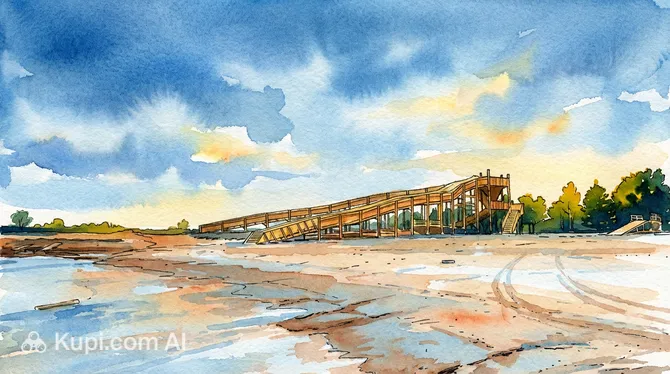
One of the most beloved natural spots in the city is Padun Beach. Located on the shores of the vast Bratsk Reservoir, this area serves as the city's main summer playground. It is not just a place for swimming; the beach is framed by fragrant pine forests, making it an excellent location for picnics and long walks along the water's edge. The sheer size of the reservoir, often referred to as the "Bratsk Sea," creates a maritime atmosphere in the heart of the continent, offering stunning sunsets and a refreshing escape from the urban center.

Beyond the developed beach areas, the city is encompassed by the wild Siberian Taiga. Unlike typical municipal parks, Bratsk's green spaces are often slices of genuine forest preserved between the city's districts. These areas provide endless opportunities for hiking, cross-country skiing in winter, and simply breathing in the crisp, pine-scented air. For a more structured park experience, the Park of the Millennium offers paved paths and recreational facilities, serving as a popular gathering spot for families and locals.

For a deep dive into the region's heritage, the Angara Village (Angarskaya Derevnya) is an absolute must-visit. This open-air architectural and ethnographic museum is located in a picturesque forest setting overlooking the river. It transports visitors back in time with its collection of preserved wooden buildings, including a church, peasant houses, and a reconstructed fortress tower from the 17th century. The museum also features a sector dedicated to the Evenki people, the indigenous inhabitants of the region, displaying their traditional dwellings and tools, which provides fascinating insight into life before the arrival of modern industry.

To understand the modern history of the city, travelers should visit the Bratsk City Museum of History Development. The exhibits here focus heavily on the heroic and arduous construction of the Bratsk Hydroelectric Power Station. Through photographs, documents, and personal items of the builders, the museum tells the story of how a major industrial center was carved out of the dense wilderness. It is a compelling stop for those interested in the Soviet era and large-scale engineering projects.

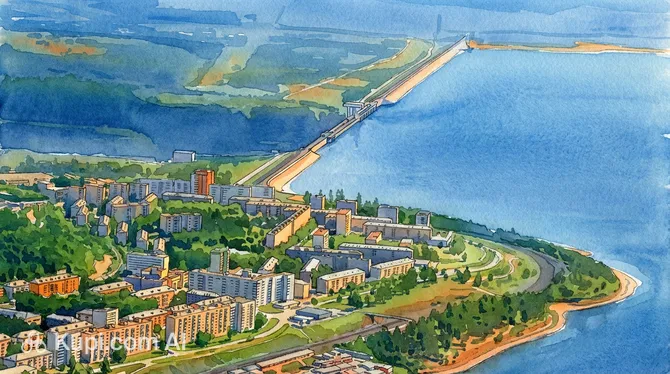
Architecturally, the city is dominated by the Bratsk Hydroelectric Power Station itself. While it is a functioning utility, its scale makes it a monumental landmark. The dam's massive concrete wall holds back the Angara River, creating a breathtaking spectacle of human achievement against the forces of nature. Another significant site is the Memorial of Glory, a striking concrete monument dedicated to the soldiers who died in World War II. Shaped like stylized flames, it is an emotional and architecturally impressive structure that reflects the solemn respect the locals hold for their history.

For a truly authentic experience, try visiting the observation deck near the dam during the winter months. The sight of the Angara River, which does not freeze immediately downstream due to the rapid water flow, creating a mist against the snowy landscape, is a hauntingly beautiful scene known primarily to locals and adventurous photographers.
Getting Around

Navigating Bratsk requires a bit of planning due to the city's unique geography. Unlike compact urban centers, Bratsk is spread out over a vast area, with its main residential districts—Central, Padun, and Gidrostroitel—separated by kilometers of taiga forest. The public transport system is the lifeline that connects these detached neighborhoods, relying primarily on a network of buses, trolleybuses, and marshrutkas (minibuses). There is no metro system in the city, but the existing ground transport is extensive and generally reliable.

Buses and trolleybuses form the backbone of the municipal transport fleet. Trolleybuses operate exclusively within the Central District, providing an eco-friendly way to move between major streets and industrial zones. Large municipal buses serve both intra-district routes and the longer "inter-district" lines that connect the city center with the Padun and Right Bank areas. These longer journeys can take anywhere from 40 to 60 minutes, so it is important to budget your time accordingly.

For faster and more frequent service, locals often prefer marshrutkas. These private minibuses duplicate many official bus routes but stop on demand and move more quickly through traffic. They are particularly useful for traveling between the distant districts if you missed a municipal bus. While they can be crowded during peak hours, they are often the most efficient way to get around without a car. Additionally, a commuter train (elektrichka) runs through the city, connecting stations like Anzebi, Padunskie Porogi, and Gidrostroitel. While less frequent than buses, the train is a scenic and traffic-free alternative for crossing the city.

The payment system is straightforward. On municipal buses and trolleybuses, you typically pay a conductor who circulates through the cabin, or the driver upon entry if no conductor is present. In marshrutkas, payment is usually made to the driver upon exiting. While cash remains the most reliable option—especially in smaller private minibuses—contactless bank card payments are becoming increasingly common on municipal vehicles. Fares are affordable, generally ranging from 30 to 60 RUB depending on whether you are traveling within a district or crossing between them.

For tourists, the most practical advice is to carry small change, as drivers may not always have change for large banknotes. Transport generally operates from around 6:00 AM to 11:00 PM, but the frequency drops significantly after 9:00 PM. Since stops are rarely announced in English, it is highly recommended to use mobile map apps like Yandex Maps or 2GIS to track your route and know exactly when to get off.

If you prefer comfort or need to travel late at night, taxis are the best alternative. Ride-hailing apps like Yandex Go work well in Bratsk, offering fixed prices and eliminating the language barrier. This is often the most convenient choice for travelers, especially given the long distances between the airport, the train stations, and the hotels. Car-sharing services are not widely developed here, and while bike rentals exist in parks, they are intended for leisure rather than commuting.

Accommodation

Accommodation in Bratsk is functional and practical, reflecting its status as a working industrial city rather than a dedicated resort destination. Visitors will not find ultra-luxury international chains here; instead, the hospitality sector is dominated by mid-range local hotels, renovated Soviet-era establishments, and a growing number of modern mini-hotels. For those seeking a more "home-like" environment, short-term apartment rentals are extremely popular and widely available, often offering better value and amenities than standard hotel rooms.

Choosing the right area is critical due to the significant distances between the city's districts. The Central District is the most convenient choice for business travelers and those who want easy access to the main transport hubs, administrative buildings, and shopping centers like Pursey Shopping Mall. Staying here places you in the middle of the urban action, with the widest selection of cafes and restaurants within walking distance.

Alternatively, the Padun District is ideal for tourists interested in the city's history and nature. Located approximately 30 kilometers from the center, this area is home to the famous hydroelectric dam and the scenic shores of the reservoir. Accommodation here tends to be quieter and offers quicker access to sights like the Angara Village museum and Padun Beach. Travelers should select their base depending on their primary activities to avoid long daily commutes through the taiga.

Booking and Prices: The general price range for accommodation in Bratsk is budget to mid-range, making it an affordable destination for most travelers. While you can often find a room upon arrival, it is highly recommended to book in advance, especially during the summer months or when major industrial conferences are taking place in the city. Reservations can easily be made through major online booking platforms or map services, which is often the safest way to secure a spot in smaller private hotels.

Nearby Cities

For those looking to explore the surroundings, Bratsk serves as an excellent base for day trips to several interesting nearby locations. Given the vast distances in Siberia, a "nearby" trip often implies a journey of a few hours, but the unique character of the region makes it worthwhile.

One of the most logical destinations for a short visit is Ust-Ilimsk. Often seen as a younger sibling to Bratsk, it is famous for its own massive hydroelectric power station and the scenic Ust-Ilimsk Reservoir. The city is known for its unusual high-speed tram line that runs through the picturesque taiga forest, a favorite attraction for transport enthusiasts. Further afield lies Ust-Kut, one of the oldest Russian settlements in Eastern Siberia. Situated on the Lena River, it serves as a crucial river port and a key station on the Baikal-Amur Mainline (BAM), offering a glimpse into the history of Siberian exploration and logistics.

City Population Distance (km)
Kansk 89,508 371
Ust-Ilimsk 81,976 198
Usolye-Sibirskoye 77,407 412
Cheremkhovo 50,819 362
Ust-Kut 41,689 256

These nearby destinations offer a glimpse into the diverse culture and landscapes of the region, ranging from industrial powerhouses to historic river gateways.

Shopping & Souvenirs

Shopping in Bratsk is a practical and authentic experience, reflecting the city's status as a working industrial center rather than a dedicated fashion destination. Visitors will not find high-end luxury boutiques here, but they will discover a solid selection of modern shopping centers and lively markets. The retail scene is excellent for stocking up on travel essentials, outdoor gear suitable for the Siberian climate, and finding unique local food products that define the region's culinary identity.

The primary commercial activity is concentrated in the Central District. While the city lacks a traditional pedestrian shopping street, the area around Kirova Street and Lenin Avenue serves as the main retail artery. Here, numerous standalone shops, pharmacies, and smaller plazas are clustered together, allowing tourists to browse for clothing, electronics, and books within a relatively compact area.

For a more comprehensive shopping experience, the city's malls are the go-to destinations. Pursey Shopping Mall is one of the most prominent complexes in the city. It offers a wide variety of stores ranging from popular apparel brands to cosmetics and home goods, making it a convenient one-stop shop for visitors. Another key location is TTS Inva, a modern center where you can find everything from fashion and accessories to gifts. These malls also typically house food courts, providing a comfortable place to rest after a shopping spree.

To truly understand the local lifestyle, a visit to a traditional market (rynok) is essential. The Central Market is a bustling hub where farmers from the surrounding villages sell fresh produce. This is the best place to find seasonal treasures from the taiga, such as wild berries (lingonberries, cranberries) and mushrooms. It is also the ideal spot to purchase fresh or smoked fish from the local rivers, which is a staple of the Bratsk diet.

When it comes to souvenirs, the best items to bring back are gifts of nature. Bratsk is located in the heart of the taiga, so look for pine nut products—shelled nuts, cedar oil, or cedar grill (a sweet treat). Local honey is also of exceptional quality. For non-edible gifts, traditional Russian handicrafts made from birch bark (beresta) are lightweight, beautiful, and uniquely Siberian. You might also find magnets and memorabilia depicting the Bratsk Hydroelectric Station, the city's most famous landmark.

Opening hours in Bratsk are standard for Russia. Major shopping malls like Pursey and TTS Inva are generally open daily from 10:00 AM to 10:00 PM. Smaller street shops usually operate from 9:00 AM or 10:00 AM until 7:00 PM or 8:00 PM. Regarding payment, credit and debit cards are widely accepted in malls, supermarkets, and restaurants. However, if you plan to visit the markets or buy souvenirs from small kiosks, carrying cash in Rubles is highly recommended, as digital payment terminals may not be available.

Reached the end of the page?

That means the route is fully explored