Support

Igarka

About the Airport

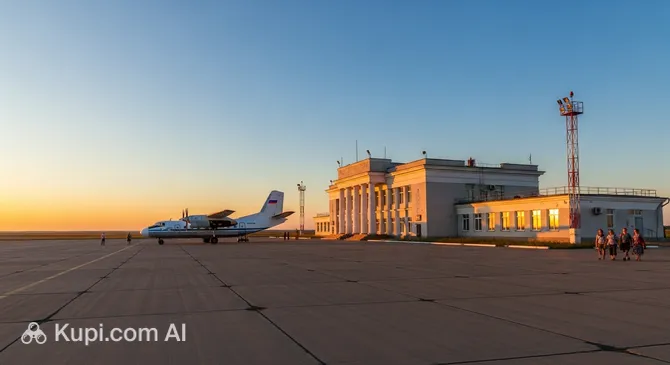
Igarka. Illustration.
Source: Kupi.com AI

Igarka Airport is not merely a transport hub, but a true aerial gateway to the heart of the Russian Arctic. Located on an island in the middle of the mighty Yenisey River, it serves as a key point on the map for anyone heading to this harsh yet uniquely beautiful region. The airport plays a crucial role in connecting with the Vankor oil and gas field and serves as a reliable alternate aerodrome for flights heading to Norilsk. Its history is closely intertwined with the exploration of the Arctic, making it a strategically important facility for the entire country of Russia.

PropertyValue
IATA CodeIAA
ICAO CodeUOII
CityIgarka
CountryRussian Federation
TimezoneAsia/Krasnoyarsk
Top AirlinesKrasAvia
ScheduleOnline Timetable

The main feature of Igarka Airport is its location on an island in the permafrost zone, which significantly impacts logistics: in summer, passengers reach the city by ferry, and in winter, via an ice crossing. Despite the extreme climatic conditions, the airport operates year-round and rarely closes due to bad weather. Recent modernization of the runway and infrastructure has allowed it to accommodate modern medium-haul aircraft, such as the Boeing 737. The main passenger flow consists of rotational workers, highlighting the industrial significance of this northern aviation hub.

Contact Information

  • Official Website: аэропортигарка.рф
  • Information Desk Phone: +7 (39172) 2-15-51
  • Address: Airport, Igarka, Turukhansky District, Krasnoyarsk Krai
  • Email: office@igarka.kras.aero
  • Lost and Found: For issues related to lost or damaged luggage, please contact the transportation organization service at +7 (39172) 2-15-74.
  • Passenger Support: For general information and assistance, you may contact the airport information desk.

How to Get to the Airport

The Igarka Airport has a unique location—it is situated on an island in the Yenisey River, opposite the city. This geographical factor is key when planning your route, as the mode of transport depends directly on the season and the condition of the river.

Seasonal Transport: Summer and Winter

In the summer period, during the navigation season (usually from June to October), passenger boats or a small ferry operate between the city and the island where the airport is located. After crossing to the island, you can reach the terminal building by a special bus, which usually awaits passengers, or by taxi. In winter, when the Yenisey is covered with solid ice, an official ice crossing ("zimnik") is organized. During this time, vehicles, including taxis and buses, can drive from Igarka directly to the airport terminal, which significantly simplifies logistics.

Transition Period Challenges

The most difficult time to travel to the airport is the transition period—during the spring ice drift (May-June) and autumn freeze-up (October-November). At this time, when neither the ferry nor the ice road is functioning, connection with the island is maintained via helicopter service. The helicopter shuttles between the city and the airport, transporting passengers. This is the most expensive, but the only possible way to get to your flight during this period. It is extremely important to check the schedule and cost of the helicopter transfer in advance.

Taxi and Parking

Taxi is the most convenient way for tourists to get to the airport. Drivers are well-acquainted with the seasonal peculiarities and crossing schedules. It is recommended to book a car in advance, especially if you are travelling during the transition season. The journey from the city centre to the banks of the Yenisey takes 5-10 minutes; however, the total travel time, including the crossing, can range from 30 minutes to 1.5 hours. Car rental services are practically non-existent in the city. For those arriving by private vehicle in winter, there is a simple parking area at the airport.

Terminals and Map

Igarka Airport (IAA) is a small regional aviation hub characterized by a simple and intuitive structure. There is one passenger terminal functioning here, which handles all flights—both arrivals and departures. The terminal building is compact, making navigation extremely easy even for those visiting for the first time.

The airport layout is very straightforward. All main zones are located in a single two-storey building. The ground floor usually houses the check-in counters, security screening area, and the waiting hall for departing passengers. The baggage claim area for arriving travellers is also located here. Thanks to the terminal's small size, all procedures take place in a single flow, and moving between different zones takes just a few minutes. Naturally, there are no separate buildings or complex transfers between terminals.

The departure zone consists of a general check-in hall and a small waiting area after security control. The arrival zone is a hall with a baggage belt located in immediate proximity to the city exit. Since the airport primarily serves domestic flights, standard border and customs controls are absent, which significantly speeds up the formalities.

Check-in and screening procedures at Igarka Airport usually proceed quickly due to moderate passenger traffic. Nevertheless, it is recommended to arrive at the airport generally 1.5-2 hours before departure to check in luggage and pass through security without rushing. Orienting yourself in the terminal is very easy: signs and indicators will help you quickly find the necessary zone, and in case of difficulties, you can always ask the airport staff for assistance.

Airport History

The history of Igarka Airport (IAA) is a chronicle of Arctic exploration and the development of aviation in the Far North. Its story began in the 1930s, when a hydro-aerodrome was founded on the Yenisey. It became an important base for polar aviation and for servicing ships traversing the Northern Sea Route. The first aircraft here were seaplanes that landed directly on the water.

The post-war period marked a transition to land-based aviation. In 1947, the first dirt runway was built, allowing the reception of Li-2 aircraft, and later Il-14 and An-2. This made air connection with the "mainland" more regular and reliable. For the growing city, completely dependent on air and river transport, this was a real breakthrough.

A key stage in the airport's development was the construction of a concrete runway in the 1960s. This opened the "jet era" for Igarka—the airport began receiving Yak-40 and An-24 aircraft, and later the Tu-134. The air harbour became an important transit hub on the way to Norilsk and other northern cities, serving both passenger and cargo transport for the needs of the developing industry.

One of the most interesting facts about the airport is its unique geographical position. It is located on Igarka Island in the middle of the Yenisey, while the city itself is on the mainland. Because of this, passengers have to undertake a small journey to reach the city: by ferry in summer, and by ice crossing directly over the frozen river in winter. Recent reconstructions of the runway have allowed it to maintain its functionality and the ability to receive modern types of aircraft.

Today, Igarka Airport continues to fulfill its vital mission. It is not just a transport facility, but a strategic gateway connecting the isolated Arctic city with the rest of the world, ensuring the delivery of passengers, mail, medicines, and cargo all year round.

Services and Amenities

Igarka Airport (IAA) is a small regional aviation hub serving one of the northernmost cities in Russia. Given its size and location, the range of services here is basic but sufficient for a comfortable wait for your flight. A general waiting hall is available for passengers to rest before departure. For those who value extra comfort, a VIP lounge may be available, usually for an additional fee.

Inside the terminal building, there is a buffet or small café where you can have a snack or drink hot tea or coffee. There is also usually a small kiosk selling newspapers, magazines, and essential items. Wi-Fi may be available on the premises to stay in touch with loved ones, though it is worth checking the terms of use—it may be paid. Opportunities for charging electronic devices are generally limited, so it is best to bring a portable power bank.

A medical point operates within the airport territory, where you can seek first aid. For passengers with small children, a Mother and Child Room is equipped—this is a standard feature in Russian airports, providing a quiet place for infant care. Passengers with reduced mobility are provided with assistance in moving around the airport and boarding the aircraft; however, it is necessary to notify the airline in advance.

There is no hotel directly within the airport building. All hotels are located in the city of Igarka itself, on the other bank of the Yenisey channel. You can reach them by ferry during the navigation season or via the ice crossing in winter. Bank branches and currency exchange points are absent at the airport, but an ATM may be installed. Specialized business centres and conference halls are not provided.

Where to Eat

When planning a trip through Igarka Airport (IAA), it is important to understand that this is a small regional terminal serving the remote city of Igarka in northern Russia. Dining options here are quite limited and correspond to the size and traffic of the airport, so do not expect a wide variety of restaurants and cafés.

Typically, there is one buffet or small café operating in the terminal building. It is located in the general hall before the security check area (landside), making it accessible for departing and arriving passengers, as well as those seeing them off. Here you can have a snack before your flight or drink hot tea or coffee to warm up in the harsh northern climate.

The assortment in the café is usually simple but filling. Here you will find:

  • Hot drinks: Tea, coffee.
  • Pastries: Pies (pirozhki), buns.
  • Simple hot dishes: For example, soup of the day, dumplings, or sausages with a side dish.
  • Ready-made snacks: Sandwiches, chocolate, biscuits, and other packaged snacks for a quick bite.

Specialized offerings, such as vegetarian, vegan, or gluten-free dishes, are likely unavailable. Please note that Halal-certified food is generally not available in this region. If you have strict dietary restrictions, it is strongly recommended to bring food with you. It is worth noting that prices in the café may be higher than average due to the cost of delivering products to this remote region. The establishment's opening hours are usually tied to the flight schedule—it opens shortly before departures and closes after aircraft have taken off.

Tips for Travellers

To ensure your journey from Igarka Airport is as comfortable and hassle-free as possible, follow our tips. This airport, located in the harsh climate of Russia, has its own peculiarities, and preparation will help you avoid unpleasant surprises.

Arrival Time and Check-in. For domestic flights, it is recommended to arrive at the airport 2–3 hours before departure. This time will be sufficient to calmly check in luggage and pass through security. To save time, use online check-in, which usually opens 24 hours before departure. This allows you to choose your seat on the plane in advance and, upon arrival at the airport, go straight to the baggage drop-off counter or, if travelling light, directly to security.

Security Control and Hand Luggage. The screening procedure is standard. Be prepared to present electronics (laptops, tablets) and liquids separately. We remind you that liquids in hand luggage are permitted in containers with a volume of no more than 100 ml, packed in a single transparent bag. Sharp objects, weapons, and flammable substances are prohibited in the cabin. Portable batteries (power banks) must be carried only in hand luggage.

Seat Selection and Transfers. If you have the opportunity to choose a seat, consider your preferences. Window seats will allow you to enjoy breathtaking views of northern landscapes during takeoff and landing. Aisle seats are convenient if you need to get up during the flight. Since Igarka Airport serves mainly direct domestic flights, customs control is not conducted here. If you have a transfer in another city, check at registration whether you will need to collect and re-check your luggage.

Actions in Case of Flight Delay. Weather conditions in this region can be unpredictable, sometimes leading to flight delays. In case of schedule changes, contact your airline representative for the latest information. Depending on the duration of the delay, the carrier is obliged to provide you with drinks, meals, and, if necessary, hotel accommodation. Keep your boarding pass and listen for announcements.

Saving Time and Money. Book a taxi to the airport in advance to avoid inflated prices. Bring a light snack and an empty water bottle, which can be filled after passing security—this will help save on purchases in the departure area.

Reached the end of the page?

That means the route is fully explored