Support

Sim

About

Sim is a picturesque town in the Ashinsky District of the Chelyabinsk region, nestled comfortably on the western slope of the Southern Urals. Surrounded by dense forests and mountain ranges, it attracts travelers with its panoramic views and the special atmosphere of the Ural heartlands. The town stands on the banks of the river of the same name, whose winding channel gives the landscape a unique charm.

Located within Russia, Sim has a moderate continental climate typical of the region, with snowy winters and warm, comfortable summers. The population is small, around 13,000 people, which creates a sense of peace and a slow pace of life, allowing tourists to take a break from the hustle and bustle of major metropolises.
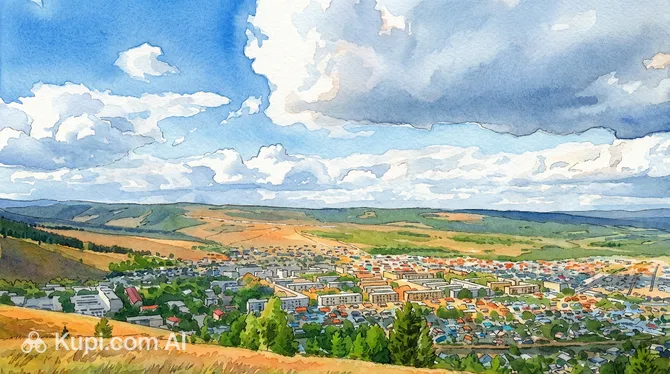
Sim. Illustration.
Source: Kupi.com AI

The unique history of Sim is inextricably linked with the development of the mining and factory civilization and the name of the "father" of the Soviet atomic bomb, Igor Kurchatov, who was born here. The town was founded in the middle of the 18th century as a settlement for an ironworks, and echoes of that time can still be found in the local architecture and monuments.

One of the town's main landmarks is the Sim Pond and the Zhukova Shishka mountain towering over it. This solitary, cone-shaped mountain covered with spruce and fir forest looks incredibly impressive against the backdrop of the water and the surrounding hills. Travelers should also see the old dam and memorials dedicated to the history of the region.

Sim is often called the "gateway" to the mountainous part of the Chelyabinsk region for those traveling from the west. It is a wonderful place to stop, enjoy the majesty of Ural nature, and take memorable photos of the scenic landscapes.

Weather Overview

The climate in this Ural town is moderate continental, due to its location among the mountains. Winters here are frosty and long, perfect for lovers of snowy landscapes. The coldest month is usually January, with an average temperature of about -12.4°C, while night frosts can reach -15.7°C or lower.

The summer period brings long-awaited warmth, but not exhausting heat. In July, the warmest month of the year, daytime temperatures often rise to a comfortable +23.5°C, although the average value stays around +18.4°C. When planning a trip, keep in mind that the weather in Sim can be changeable: even in the middle of summer, the number of rainy days can reach 14 per month.

Spring and autumn here are quite short and cool. By November, negative temperatures are already established (averaging -4.8°C), and in May, the air quickly warms up to +11.2°C. Expect a warm summer with occasional rain and cold, snowy winters.

Average monthly temperature

Average monthly precipitation

Interesting Facts

In addition to the main attractions, Sim holds many fascinating secrets that reveal themselves only to the most curious travelers. This Ural town will surprise you not only with its landscapes but also with unexpected historical details and legends.

  • Birthplace of the "father" of the atomic bomb. Few know that the famous physicist Igor Kurchatov was born right here in 1903. His ancestors worked at the local factory, and although the family later moved, the town is proud of its great native, immortalizing his memory in monuments and street names.

  • The Legend of Zhukova Shishka. The famous mountain, which projects into the pond like a peninsula, bears its name for a reason. According to local legend, it is named after a clergyman named Zhukov, who in old times conducted services right on its summit, under the open sky.

  • A "Tasty" River Name. Linguists and local historians still debate the origin of the town and river's name. One of the most beautiful versions states that the name goes back to a Bashkir word meaning "sweet drink" or "mead," which speaks to the crystal purity and taste of the local water in ancient times.

  • Unique 18th-Century Trout. The famous traveler and scientist Peter Simon Pallas, who visited the Sim factory in 1770, left amazing records. He enthusiastically described that a special fish lived in the factory pond—the "kutema," a variety of salmon or trout that reached impressive sizes.

How to Get There

Sim is located in a picturesque mountainous area of the Chelyabinsk region, and you can get here by various means of transport. Since the town is situated far from major metropolises, travel often involves combined routes. You can find out more about how to get to Sim by studying all available options; below, we consider the main transport hubs through which tourists reach this region.

There is no active civilian airport in the town of Sim itself, so travelers must use the air hubs of neighboring large cities. The most convenient option is the international Ufa Airport (IATA: UFA), located in the city of Ufa, approximately 125 km from Sim. This is a major transport hub with a high passenger volume. The journey from the airport to the town by taxi or bus will take roughly 3 hours and 30 minutes.

Another popular option is flying into Balandino Airport (IATA: CEK), which is located in the regional center, the city of Chelyabinsk. The distance from there to Sim is about 246 km. The airport receives many flights from different regions of the country. The journey by ground transport from here will be longer, taking approximately 6 hours and 30 minutes.

For clarity, here is a summary of the main airports:

AirportPassenger trafficDistance
Ufa4.8 mln125 km
Magnitogorsk Airport280 000191 km
Balandino2.2 mln246 km
Koltsovo8.0 mln276 km

Railway connection is another reliable way to reach these parts. The nearest station is Simskaya, which is located directly within the administrative boundaries of the settlement, just 7.6 km from the center of Sim. Both suburban electric trains and some long-distance trains traveling along the Trans-Siberian route stop here.

You can also use the station in the neighboring town of Asha—Asha (Railway Station), located 26.8 km from Sim. This is quite a busy transport hub. From the Asha station, you can reach Sim by taxi or scheduled bus in about an hour.

Below is a list of the nearest railway stations:

StationPassenger trafficDistance
Simskaya Station8 km
Minyar Railway Station150 00013 km
Kropachevo Station19 km
Asha Railway Station350 00027 km
Ust-Katav Railway Station220 00032 km
Vyazovaya Station43 km

Main Attractions

The attractions of Sim are a harmonious blend of majestic Ural nature and a rich historical heritage. The town is small, so exploring its iconic sites does not require long travel times, but it will leave a lasting impression on lovers of quiet and educational tourism.

Zhukova Shishka Mountain is the undisputed dominant feature of the local landscape and the town's main symbol. This perfectly cone-shaped mountain, covered with dense coniferous forest, rises spectacularly above the water, resembling a giant green dome. Tourists climb here for the breathtaking panorama: the summit offers a magnificent view of the town's buildings, the bends of the river, and the endless mountain ranges of the Southern Urals. It is an ideal location for panoramic photography.

At the foot of the mountain lies the picturesque Sim Pond. Created back in the 18th century for the needs of the ironworks, today it is the heart of the town and a favorite vacation spot. A walk along the shore of the pond brings peace, and in calm weather, the surrounding hills and sky are reflected in the water like a mirror. Here you can have a picnic, go fishing, or simply enjoy the silence away from the city noise.

A special place in the cultural landscape is occupied by the Monument to I.V. Kurchatov. Since Sim is the birthplace of this outstanding physicist, the monument holds special significance for local residents. It is located in a well-maintained park area, perfect for a walk after exploring the historical streets. The monument serves as a reminder of the contribution that natives of this small town have made to world science and history.

Architecture enthusiasts should pay attention to the Church of St. Demetrius of Thessaloniki. This church, which has faced a difficult past, has been restored and now pleases the eye with its neat forms and bell tower. The church is not only a spiritual center but also serves as an ornament to the cityscape, adding historical depth and completeness.

Local Cuisine

The gastronomic traditions of Sim are a vivid reflection of the culinary culture of the Southern Urals. Located in the heart of Russia, this town offers travelers hearty and simple dishes perfectly suited to the local climate. Russian culinary traditions and a noticeable influence from neighboring Bashkiria intertwine harmoniously here, creating an interesting mix of flavors.

The king of the local table is rightfully the Ural pelmeni. Locals know the secret to making them: the filling is often made from three types of meat (beef, pork, and lamb) to ensure it is as juicy as possible. Pelmeni here are not just food, but a real ritual, usually served with homemade sour cream, vinegar, or broth. Thick, rich soups such as shchi (cabbage soup) and solyanka are also popular, providing excellent warmth after walks along mountain trails.

Forest gifts hold a special place on the menu. Since the town is surrounded by dense taiga, mushrooms and berries are an important part of the local cuisine. Travelers should try salted milk mushrooms (gruzdi) with sour cream or fried potatoes with porcini mushrooms. In season, they bake magnificent pies filled with wild strawberries, blueberries, or lingonberries.

The influence of neighboring regions has brought a love for pastries and honey to Sim's cuisine. For dessert, chak-chak is often offered—pieces of dough deep-fried and drizzled with honey syrup. It is customary to wash down such treats with fragrant herbal tea featuring oregano (often called "matreshka" locally) and St. John's wort, collected on the ecologically clean slopes of the surrounding mountains.

Travel Tips

A trip to Sim is an immersion into the calm atmosphere of the Ural heartlands, where nature meets history. To ensure your visit to this cozy corner of Russia goes smoothly and comfortably, we've gathered some practical recommendations to help you plan the perfect itinerary.

  1. Clothing and Equipment. Given the town's location in a mountainous area, the weather can change rapidly. Even in summer, we recommend bringing a windbreaker and a raincoat. If you plan to climb Zhukova Shishka or walk in the forest, comfortable trekking shoes with non-slip soles are essential. In winter, you'll need thermal underwear and windproof outerwear.
  2. Transport. Sim is a compact town, and its historical center is best explored on foot to enjoy the views. Public transport consists of buses running between districts, but they operate at specific intervals. For trips to remote natural locations, it's more convenient to use local taxi services or a private car.
  3. Finances. Standard rules apply: the currency is the ruble. Bank cards are accepted without issues in chain supermarkets and most shops. However, for purchases in small kiosks, at the market, or for paying bus fares, we strongly recommend having cash. ATMs from major banks are available but are limited to the town center.
  4. Health and Safety. Sim is a peaceful and safe town, but as elsewhere in the Urals, be mindful of tick activity during the spring and summer. Be sure to use repellents when heading into nature and check your clothes after walks. There may not be 24-hour pharmacies, so it's best to bring a basic first-aid kit with you.
  5. Communication and Navigation. The main language is Russian; English is rarely used here. Mobile service and 4G work stably within the town but may drop in low-lying areas or dense forest. We recommend downloading offline maps of the region in advance to navigate confidently without internet access.
  6. Local Etiquette. Residents of Sim are known for their provincial hospitality and simplicity. It's customary to greet shopkeepers in small stores and taxi drivers. Pay special attention to respecting nature: leaving trash on the pond shore or in the forest is considered poor form and is strongly disapproved of by locals.
  7. What to Avoid. Don't attempt to swim in the Sim River in unofficial spots: the current can be fast, and the water is cold due to underwater springs, even in the heat. Also, avoid solo hikes deep into the forest without knowledge of the area—it's easy to lose your bearings in the taiga.
  8. Useful Tip. If you find yourself in Sim during the summer, be sure to try the local honey or herbal blends. The ecology in this area is excellent, and bee products bought from local beekeepers are of high quality and incredibly fragrant.

Following these simple rules will make your introduction to Sim easy and pleasant. Enjoy the clean mountain air, the silence, and the magnificent landscapes of the Southern Urals!

Entertainment & Nightlife

Nightlife in Sim has its own special, measured rhythm, fundamentally different from noisy metropolises. Since it is a small town with a population of about 13,000, you won't find districts with neon signs or world-class 24-hour nightclubs. Evening leisure here primarily consists of cozy gatherings in local cafes, romantic walks, and events at the local community center.

The center of evening activity is traditionally the main streets and the embankment of the Sim Pond. With the onset of twilight, this place is transformed: the streetlights reflect in the water, creating a calm and peaceful atmosphere. It is an ideal location for a leisurely stroll before bed. Local youth and tourists often gather here to enjoy the view of the darkening silhouette of Zhukova Shishka mountain.

As for venues, the choice is limited, but no less heartwarming for it. Several cafes and bars operate in Sim, which transform into music and dance floors on weekends. The format of such places is casual: there is no strict dress code or face control, and the crowd is simple and friendly. The average bill will pleasantly surprise guests from large cities with its affordability. The main influx of visitors occurs on Friday and Saturday after 8:00 PM.

In terms of safety, Sim is a peaceful town. The central streets are lit, and evening walks here do not cause concern. However, if you decide to stay out late in remote areas, it is wiser to use a taxi. It is worth noting that common taxi apps may work sporadically or be unavailable, so it is better to find out the numbers of local dispatch services in advance or ask the cafe staff to call a car.

Speaking of daytime and cultural entertainment that flows into the evening, the town's Palace of Culture is worth mentioning. It often hosts concerts, theatrical performances by local groups, and festive events. Guests of the town will also be interested in the local history museum, where they can learn more about the past of this industrial settlement before heading to dinner.

Parks & Museums

The cultural and recreational life of Sim is inextricably linked to its unique landscape and rich past. Despite its modest size, the town offers tourists cozy green areas for peaceful relaxation and educational museum spaces that tell the story of the development of the Ural industry and its great scientists.

The main place for walking within the town is the Park at the Palace of Culture. This is a classic example of Soviet park art, which remains a center of attraction for locals and guests today. It's pleasant to stroll through the shady alleys, rest on the benches, and enjoy the silence. The park adjoins the majestic Palace of Culture building, creating a unified architectural and landscape ensemble perfect for a leisurely promenade with the family.

For those who prefer a more "wild" experience, the natural areas around the Sim Pond are a real find. Although it is not a park in the traditional sense, the developed sections of the shore and the paths leading to the foot of Zhukova Shishka mountain serve as the main recreational zone. In summer, you can find excellent spots for picnics by the water, and in autumn, the surrounding forests turn gold, turning a walk into a true aesthetic pleasure.

You can immerse yourself in the history of the region at the Sim Local History Museum. The museum's exhibition covers several eras: from the founding of the ironworks in the 18th century to the present day. Special attention is paid to the daily life of factory workers, antiques, and, of course, history related to the mid-20th century. For tourists, it's a great opportunity to understand how the Ural factory-town lived through the centuries.

The theme associated with the name of Igor Kurchatov deserves a separate mention. The town carefully preserves the memory of the great physicist. Memorial corners and exhibitions dedicated to the life and scientific activity of the "father" of the Soviet atomic project have been created in the museum and educational institutions of the town. Here you can see rare photographs, documents, and personal belongings related to the Kurchatov family who lived in Sim.

Fans of industrial architecture and history should pay attention to the old factory dam. This engineering structure is not just a technical object, but a real monument of industrial architecture under the open sky. The view of falling water and powerful structures against the backdrop of the mountains makes a strong impression and serves as an excellent location for atmospheric photos.

Insider Tip: If you want to see the town from an unusual angle, try to find the observation deck on the old road leading toward Minyar. From there, you can see the "postcard" view of the church, the pond, and the mountain that is often printed in guidebooks but is hard to capture from the town center.

Getting Around

Sim's transport system perfectly matches its status as a small and cozy town. You won't find a metro, trams, or trolleybuses here. The town is compact enough that public transport is simple and functional, focusing on the basic needs of residents and guests. The main means of transport are buses and fixed-route taxis (marshrutkas) that run on several internal routes.

The bus network connects the town center with remote residential areas, the factory gates, and the Simskaya railway station, which is located a significant distance from the residential area (about 7–8 km). Service intervals depend on the time of day: during peak hours, transport runs regularly, but during the day and on weekends, the wait can be long. The buses themselves are most often small and medium-class vehicles.

The fare payment system here is conservative. Validators and contactless payment by card or smartphone are not found in all vehicles. The most reliable way is to have cash, preferably in small bills or coins. Payment is usually made to the driver upon entry. The fare within the town is very affordable and lower than in the regional center.

Taxis are an important alternative to buses. Both local call services and popular network aggregators operate in Sim, although the car arrival time via an app may be longer than in large cities. A taxi is especially relevant if you need to get to the railway station with heavy luggage or if you are planning a trip late in the evening when public transport has already stopped running.

Currently, there are no car-sharing or electric scooter rental services in the town. However, thanks to the picturesque landscape and short distances, many tourists prefer to get around on foot. A walk through the center won't take much time, but the terrain should be considered: the town is located on slopes, so be prepared for climbs and descents. A bicycle can also be a great option if you are traveling with your own equipment.

When planning your movements, take the transport schedule into account. Buses in Sim start their routes early in the morning, around 6:00 AM, to transport factory shifts, but they finish running quite early—it may be problematic to get around by public transport after 8:00 PM or 9:00 PM. If you arrive at Simskaya station on a night train, you should arrange for a transfer (taxi) in advance.

Accommodation

When planning a stay in the town of Sim, it's important to keep in mind that this is a small settlement, and the hotel infrastructure is developed in accordance with its scale. Travelers should not expect luxury chain resorts or massive hotel complexes. The core offerings consist of cozy mini-hotels, guest houses, and motels catering to transit passengers and fans of quiet vacations. The sector of private apartments and flats for daily rent is also widely represented.

In terms of location, the most attractive area for tourists is the historical center, located in the lowlands by the river. Staying here will put you within walking distance of the main landmarks—the Sim Pond and the picturesque Zhukova Shishka mountain. This is an ideal choice for those who want to enjoy the morning mist over the water. Another category of housing is concentrated closer to the town exits and the M-5 federal highway. These options are convenient for car travelers who prioritize quick road access and parking availability.

Booking Tip: Since Sim is located on a busy transport artery connecting the European part of the country and Siberia, demand for overnight stays can be high, especially during the summer holiday season. We strongly recommend booking accommodation in advance, as good value-for-money options are snapped up quite quickly.

The price range in the town varies from budget to mid-range. The cost of living here is generally more affordable than in the region's major tourist centers. Regarding booking methods, while some properties are listed on major online platforms, direct booking by phone is still very common in small towns in Russia. Owners of small guest houses often prefer personal contact, and it's better to have cash for payment, as terminals may not be available everywhere.

Nearby Cities

For those who want to explore the surrounding area, Sim serves as an excellent starting point for day trips to several interesting nearby locations:

Just a couple of hours' drive away is Ufa—the capital of the neighboring Republic of Bashkortostan. This is a large and colorful city standing on hills. People come here to see the famous monument to Salavat Yulaev, stroll along modern embankments, visit the hippodrome, and try national cuisine.

Lovers of mountain landscapes and industrial history should visit Zlatoust. It is the highest city in the Urals, the birthplace of Russian bulat steel and unique steel engraving. Additionally, the city serves as the main gateway to the Taganay National Park, where tourists from all over the country flock to conquer mountain peaks.

Equally interesting is Miass, known for its mineralogical museum and history of gold mining. However, the main point of attraction here is Lake Turgoyak—the "pearl of the Urals." The water in it is so clean and transparent that it is often compared to Lake Baikal.

CityPopulationDistance
Minyar8 76813 km
Asha29 69226 km
Ust-Katav22 04231 km
Katav-Ivanovsk15 87243 km
Yuryuzan11 41550 km

These nearby destinations offer an insight into the diverse culture and landscapes of the region.

Shopping & Souvenirs

Shopping in the town of Sim is more practical and utilitarian than for entertainment. This is a small town, so you won't find huge shopping malls or global brand boutiques. However, the infrastructure is well-developed enough for travelers to restock provisions, buy necessary items for the road, or purchase commemorative gifts. A feature of local trade is its orientation toward transit tourists traveling along the M-5 "Ural" highway.

The main shopping activity is concentrated on the central streets, where clothing stores, hardware shops, and small stalls are located. Another important commercial artery is the section of the federal highway passing in the immediate vicinity of the town. Here, at roadside markets and in specialized pavilions, life is bustling: they sell auto parts, food, and souvenirs for those on a long journey.

There are no large malls in the usual sense in Sim. Instead, there are small shopping houses and general stores where departments for clothing, electronics, and household chemicals are gathered under one roof. Well-known federal grocery chains are widely represented in the town, which guarantees a familiar assortment and prices. This is a convenient option for tourists accustomed to certain standards of service.

The town market is of particular interest to guests. This is a place where you can feel the true local flavor. Here, residents sell fresh agricultural products from their gardens: seasonal vegetables, berries, homemade pickles, and jam. The market is an excellent opportunity to buy natural, high-quality products at affordable prices and chat with the local population.

If you're looking for what to bring back from your trip, look for traditional Ural souvenirs. Since Sim is located in a mountainous area, items made of ornamental stones are popular: boxes, jewelry, and figurines made of serpentine or jasper. Also, thanks to the proximity to Bashkiria, you can buy magnificent flower or linden honey in Sim, as well as bee products. A popular gastronomic souvenir is dried or smoked fish, often offered at shops along the highway.

Store hours in Sim are standard for small Russian towns. Grocery supermarkets are usually open from 8:00 AM to 10:00 PM or 11:00 PM. Small private hardware stores and souvenir shops generally work from 9:00 AM or 10:00 AM to 6:00 PM or 7:00 PM. Roadside services and minimarkets on the highway are often open 24 hours.

Regarding payment, bank cards are accepted without issues in chain stores and most stationary retail points. However, if you plan to shop at the market, in small kiosks, or from private sellers along the road, it is strongly recommended to have cash, preferably in small bills.

The Tax Free system does not operate in Sim, as there are no shops participating in the international duty-free trade system for tourists.

Reached the end of the page?

That means the route is fully explored